
His Skin Looked Like Cement, But Poleng’s Heart Was Still Beating and Waiting for Love
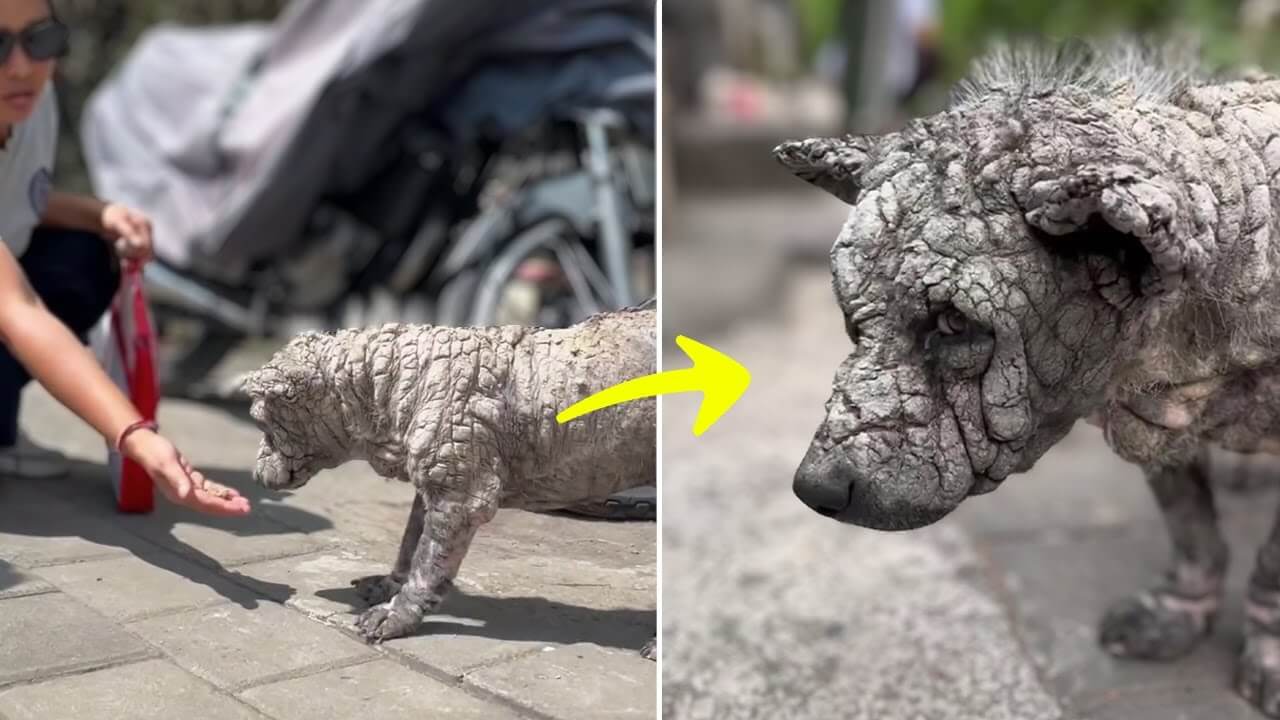
No one who saw Poleng that day could forget him.
At first glance, he barely looked like a dog. His skin was cracked, layered, and hardened, almost like dried cement clinging to his body. Every step looked painful. Every breath seemed like work.
“We had never seen a dog in a condition this severe,” rescuers from Little Steps Matter said. “It was shocking, even for people who do this work every day.”
Poleng was still alive. And he was still waiting.
Abandoned When He Needed Help the Most
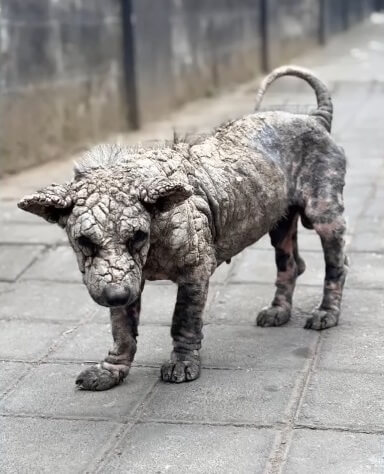
Villagers later shared what had happened.
Poleng once had an owner. When his illness began to worsen, treatment was not pursued. As his skin deteriorated and his condition became harder to ignore, he was left behind.
Instead of care, there was abandonment.
“We can’t imagine the pain he must have been in,” the rescue team said. “Both physically and emotionally.”
Suffering from advanced mange and estimated to be around six years old, Poleng wandered through the area searching for food. Sleep offered no relief. The itching never stopped. Rest never came.
Why Mange Can Become So Severe
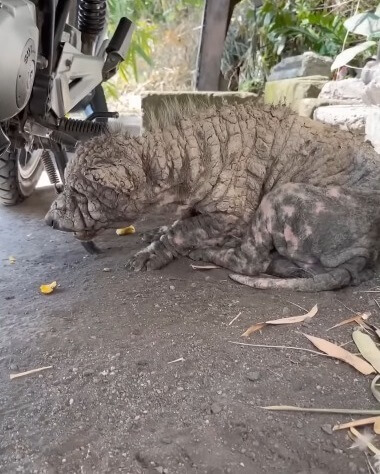
Here is why Poleng’s skin looked the way it did.
Veterinary guidance explains that untreated mange allows mites to multiply rapidly, leading to thickened, cracked skin, hair loss, and relentless itching. In advanced cases, dogs struggle to sleep, move, or regulate body temperature.
The American Kennel Club notes that severe mange can cause skin to harden and become painfully inflamed when treatment is delayed.
Poleng’s body had been fighting alone for a long time.
Kindness Found Him Where No One Expected It
Then something unexpected happened.
Poleng wandered into an area where a group of men noticed him. Instead of chasing him away, they fed him and allowed him to stay.
“We thought they might send him off,” one rescuer admitted. “But instead, they protected him.”
Because of the nature of their work, one man later brought Poleng to a farming family in a nearby village. They welcomed him without hesitation.
“They were honest, gentle people,” the rescue team said. “They felt sorry for him and truly wanted to help.”
Children played around him. Neighbors accepted him. The alley became his home.
For the first time in a long while, Poleng was not alone.
When Love Was Not Enough
The family did what they could. Food was given. Shelter was offered.
Still, Poleng’s condition was beyond what local veterinary care could treat.
The itching continued. The skin remained thick and painful. Rest was still impossible.
Even then, Poleng was not pushed away.
“He belonged to that neighborhood,” the rescue team said. “People looked out for him.”
The Moment Little Steps Matter Found Poleng
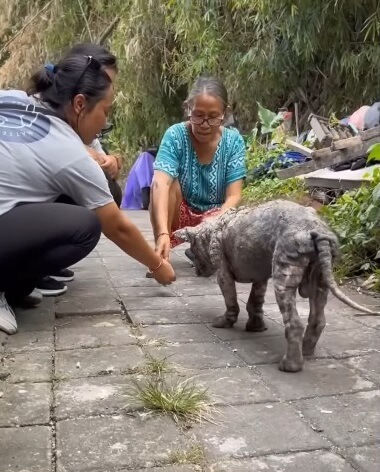
By chance, rescuers from Little Steps Matter crossed paths with a woman from the village.
“That meeting changed everything,” they said. “The moment we saw him, we knew we couldn’t leave him behind.”
Seeing Poleng up close was overwhelming.
“His skin was damaged down to deep layers,” the rescue team recalled. “We knew this was an emergency.”
Next steps were clear.
Saying Goodbye to the Only Home He Knew
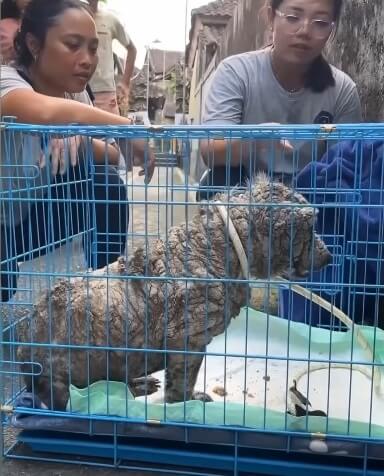
Taking Poleng was not easy.
“He didn’t want to leave,” one rescuer said. “This neighborhood was the first place he had felt loved in a long time.”
Children came out to say goodbye. Poleng hesitated, confused and afraid.
But his journey had to begin.
A Medical Emergency Unlike Any Other
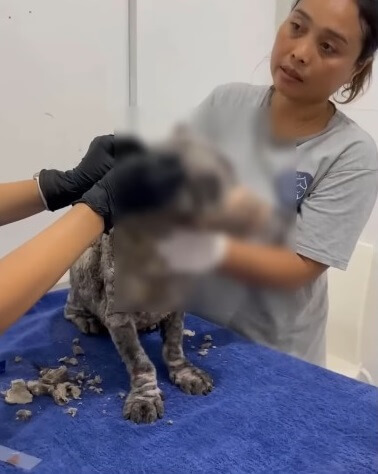
Veterinarians were stunned when they examined Poleng.
“Even the doctor was shocked,” the rescue team said. “They had never seen mange this advanced.”
His skin was thick, cracked, and deeply inflamed. Scales clung together like hardened clay. The itching had prevented proper sleep for weeks.
Veterinary sources explain that severe mange often requires aggressive treatment, including antibiotics and parasite control, to prevent infection and allow the immune system to recover.
PetMD notes that dogs with advanced mange may show extreme discomfort and exhaustion before treatment begins.
High-dose antibiotics were started immediately.
“The doctor warned us this wouldn’t be easy,” the rescuers said. “Recovery would take time, patience, and careful care.”
Healing Through Food, Care, and Trust
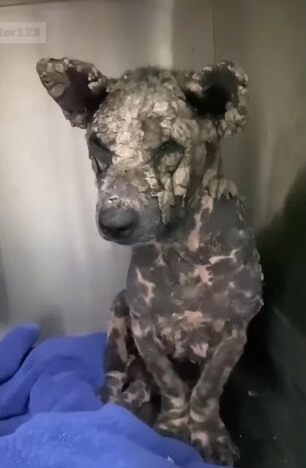
Alongside medical treatment, Poleng received home-cooked meals, vitamins, and supplements.
“He ate everything with so much joy,” the team shared. “It was like his body finally realized help had arrived.”
Despite the itching, Poleng began to relax. He allowed gentle touches. He started recognizing the people helping him.
“He realized we weren’t here to hurt him,” a rescuer said. “That was a turning point.”
Seven Days That Changed Everything
Seven days after treatment began, something shifted.
The thick scales began to fall away. His eyes softened. The fear faded.
“Seven days,” the rescue team said. “That’s all it took to see real hope.”
Veterinary guidance from the Companion Animal Parasite Council explains that once mites are controlled and infections addressed, improvement can begin quickly, even after severe cases.
Doctors were amazed by Poleng’s response.
“He set a recovery record,” the veterinarian later told the team. “Everything is going very well.”
Learning to Feel Safe Again
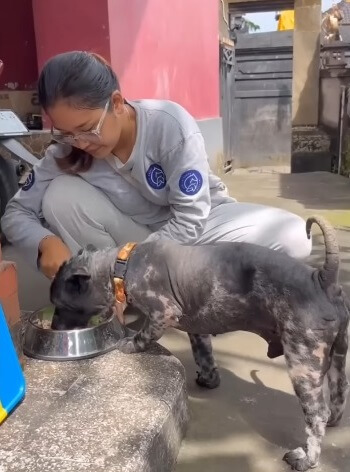
Three weeks later, Poleng was cleared to go outside.
Fear still lingered.
“He would step out, eat, then rush back inside,” a rescuer explained. “That cage made him feel safe.”
With patience, reassurance, and quiet affection, Poleng began to trust the world again.
“There was a moment when he looked at us with tears in his eyes,” the team shared. “We couldn’t hold ours back either.”
That night, he fell asleep in a rescuer’s arms.
A New Life With the Family Who Never Gave Up
Poleng was officially discharged by the veterinarian.
His face healed completely. Soft fur began growing back across his body.
Then came the ending no one expected.
He was adopted by the same farming family who had taken him in when no one else would.
“Love gave him a new chapter,” the rescue team said. “And this time, it’s permanent.”
Today, Poleng is healthy, joyful, and deeply loved. Not just healed on the outside, but safe inside too.
Video Documentation of Poleng’s Rescue and Recovery
Poleng’s rescue and recovery were documented on video by Little Steps Matter and later shared through the Animal Shelter YouTube channel.
The footage shows his condition before treatment, the early days of care, and the visible changes as healing began. It provides visual documentation of the rescue process and the patience required to help Poleng recover.
Source video: Animal Shelter YouTube channel
Why Poleng’s Story Matters
Poleng survived because kindness showed up in unexpected places. Farmers. Neighbors. Rescuers who refused to walk away.
Many animals with treatable conditions are still abandoned when care becomes inconvenient.
Sharing Poleng’s story helps bring attention to those still waiting.
Sometimes, awareness is what reaches them first.
Also check out these rescues:
She Spent 10 Years Locked in a Cage. One Open Door Changed Everything
She Walked Miles on Empty, Carrying a Secret That Broke Hearts


Thank you for the rescue and recovery. 💕
Thank you for your sharing. I am worried that I lack creative ideas. It is your article that makes me full of hope. Thank you.