
Rio Was Left to Die in a Sewer. His Comeback Shows Why So Many Animals Never Get the Chance
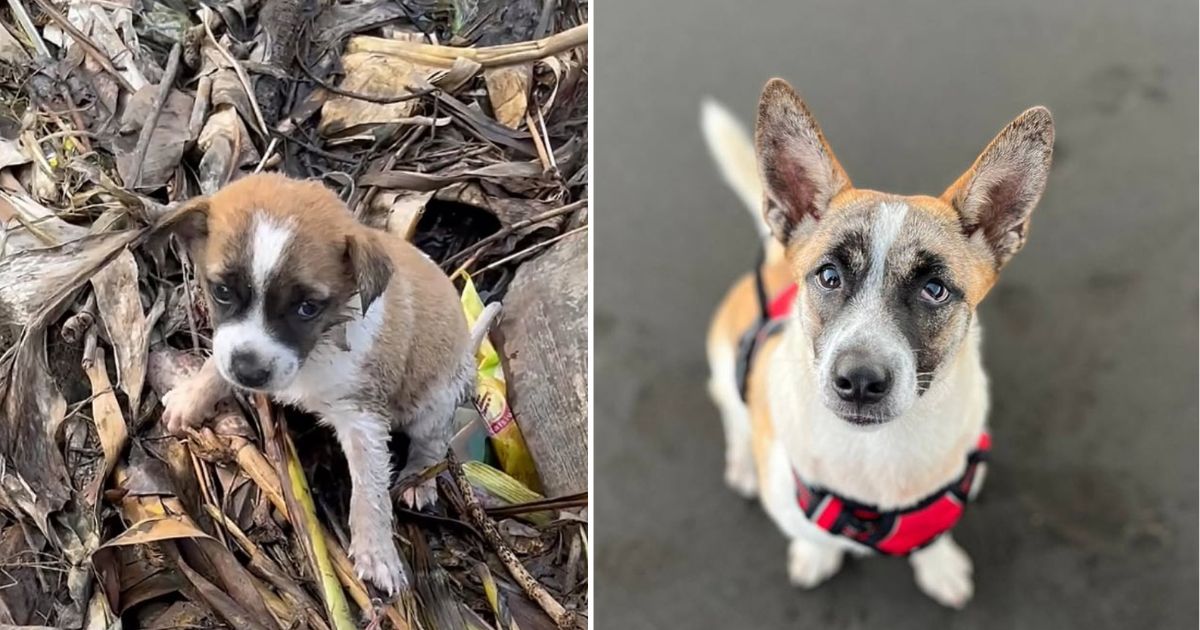
The sound was faint at first — a thin, trembling whimper echoing up from a narrow sewer drain. Most people walking by didn’t hear it at all. A few slowed down, pausing long enough to sense that something wasn’t right. When they leaned closer, the truth settled in: a puppy was crying below the street.
Rio lay wedged against cold concrete, soaked and freezing. His sister, Ria, was curled beside him, just as helpless. Both pups were abandoned there — no food, no warmth, no mother, no chance of climbing out on their own. Hours passed while the world continued above them.
When neighbors finally called Little Steps Matter, rescuers arrived fast. They reached into the darkness, lifted the two newborns out, and carried them toward safety. Rio’s body shook with exhaustion, but he was alive.
When I lifted Rio out of that sewer, his little body trembled more from fear than cold. But the moment he looked up at me, I knew he wasn’t giving up — and neither were we. – A rescuer from Little Steps Matter.
Why a Puppy’s Cry Is More Than Sound: The Biology of Distress
A crying pup isn’t “being dramatic.” Behavioral scientists studying separation responses in dogs have shown that vocalizations like whining and whimpering are tied to fear, panic, and survival instincts. These sounds are a biological plea for help — the only communication tool young animals have when danger becomes unbearable.
Abandonment activates a dog’s stress systems, pushing them to cry louder and more urgently as their fear rises. If no one responds, the emotional fallout can linger long after the physical wounds heal.
But recovery brings its own kind of science. Research on dog–human bonding found that when dogs and humans share mutual gaze, both experience a rise in oxytocin — the hormone that nurtures trust and emotional connection.
That hormonal loop plays a powerful role in helping a traumatized dog learn safety again. Rio’s transformation from a trembling pup in a sewer to a dog who leans into a gentle hand reflects what biology makes possible once fear begins to lift.
A Crisis Far Beyond One Drainpipe: Millions of Pets Enter Shelters Each Year

Rio’s rescue feels extraordinary, but the scale of the problem he represents is overwhelming.
Across the United States, about 5.8 million dogs and cats entered shelters in 2024, according to new data from the ASPCA. The majority — roughly 60% — arrived as strays rather than owner surrenders.
Shelter Animals Count reports that millions of animals continue to cycle through the system every year, with only minor fluctuations in intake. Overcrowding remains a constant challenge, despite increased community awareness and spay/neuter efforts.
Worldwide, the situation expands even further. Some animal-welfare groups estimate hundreds of millions of stray dogs and cats live in cities, fields, industrial zones, and alleys, surviving without steady access to food, shelter, or veterinary care. Many end up in drains, garbage piles, or abandoned buildings because there is simply nowhere else for them to go
Rio and Ria are two faces of a much larger, silent population.
Life After Rescue: Healing Isn’t Just Medical — It’s Emotional

Once the rescuers carried Rio out of the sewer, the real work began. His belly was filled with worms. His immune system was fragile. His tiny frame and cautious posture showed what fear had carved into him.
Trauma changes the way dogs respond to the world. Many pups who survive abandonment develop hesitancy around strangers, slow attachment patterns, and a cautious, watchful demeanor. But those traits can soften once they experience consistency and kindness.
With time, Rio started to eat with confidence. He played. He wagged his tail. He watched people with curiosity instead of fear.
Then came an unexpected setback — another dog snapped at him during play, injuring his eye. It required surgery, and for a moment it looked like his vision might be lost.
He recovered again.
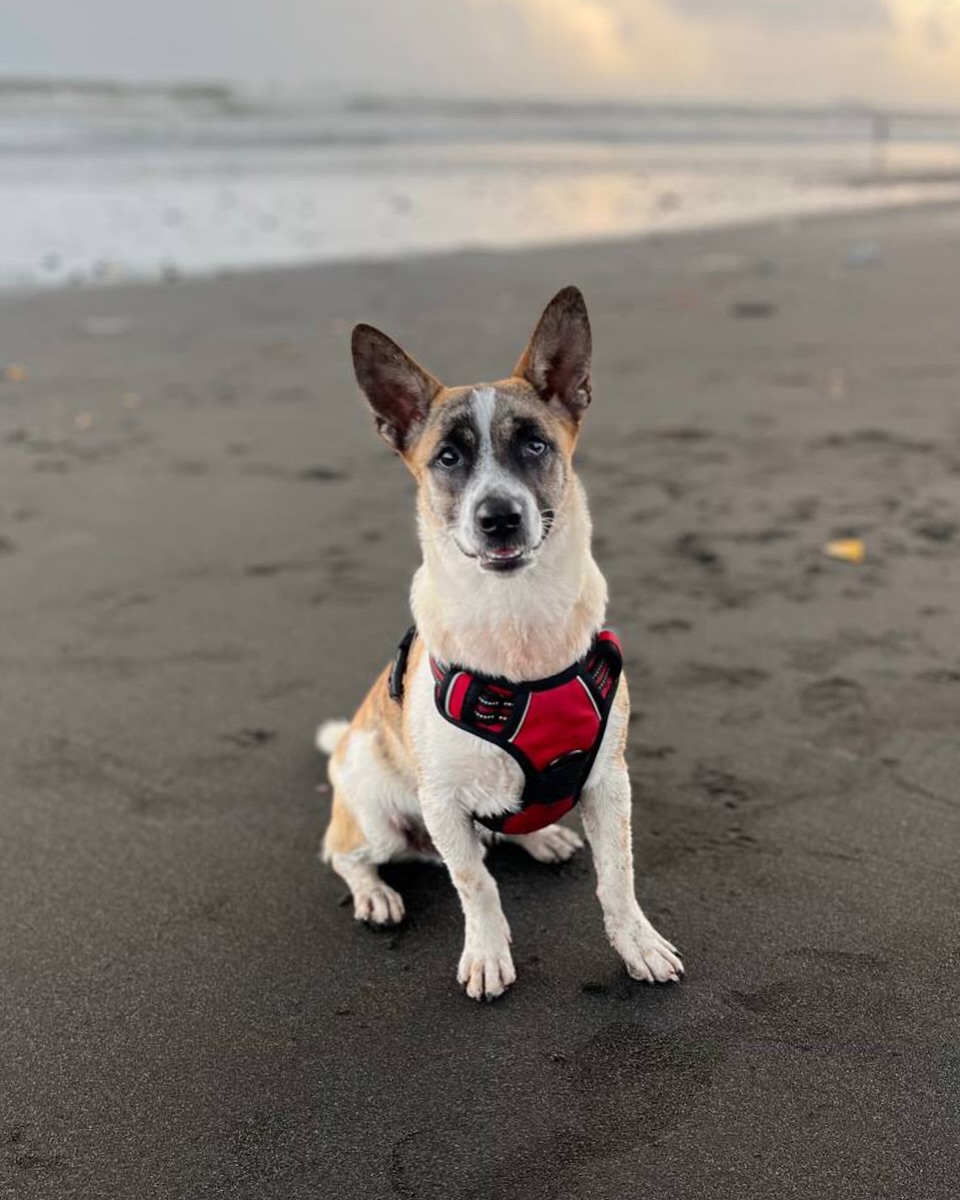
Today, his eyesight is intact. His spirit is brighter. He walks calmly on leash, responds to commands, and bonds deeply with caregivers who move at his pace.
Why Some Dogs Get Passed Over Even When They’re Ready for Homes
Despite all his progress, Rio remains one of the dogs that adopters tend to overlook. Shy dogs, small mixes, or pups with early trauma rarely get chosen first. Many people want confident dogs, or puppies that rush forward wagging.
But science paints a different picture of what “attachment” means. Studies on bonding show that once a dog like Rio learns trust, the connection can be incredibly strong. Dogs who start out timid often become the most loyal because their confidence grows out of real healing — not instinct alone.
For the right adopter, Rio is not a “project.” He is a deeply affectionate dog who will give more love than he ever received.
Why Abandonment Happens: A Social Issue, Not a Simple Act of Cruelty
A puppy doesn’t end up in a sewer by accident, but the reasons behind abandonment are layered.
Studies on pet relinquishment suggest that financial pressure is one of the most common factors. Pet owners struggling with food costs, medical bills, or restrictive housing policies often feel cornered into surrendering animals. In many cases, they lack access to affordable veterinary care or low-cost spay/neuter programs that prevent unwanted litters.
At the same time, rescue organizations strain under the weight of rising stray populations. Groups like the RSPCA report saving and rehoming tens of thousands of neglected and abandoned pets each year — and that is only in one region.
When communities lack resources, education, or support, animals like Rio become collateral. Their suffering reflects a broader gap in public infrastructure, not just individual cruelty.
What You Can Do When You See a Stray or Injured Animal
Animal-welfare guidance urges people to follow simple, safe steps when encountering an abandoned or injured animal:
- Stay calm and keep a safe distance.
- Avoid sudden movements, especially with frightened or reactive dogs.
- Contact a local rescue group, animal control, or a nearby veterinary clinic that handles emergency intake.
- Offer water or food only if it doesn’t escalate fear.
- Share photos or videos online to help locate owners or attract rescuers.
Many successful rescues begin with one person staying present long enough to make a call or send a message. Awareness is often the first lifeline.
Rio Is Ready for a Home — He Just Needs Someone to See Him
Rio survived the sewer. He survived hunger, fear, parasites, and an injury that nearly stole his sight. Today, he’s playful with other dogs, gentle with people he trusts, and eager to be part of a home that understands slow beginnings don’t mean slow love.
Shy dogs aren’t broken. They’re learning what safety feels like.
His story began in the dark under a street. It doesn’t have to end there. Someone reading this might share his story, foster him, or — if the timing is right — adopt him.
For one small dog, that might be the moment everything changes.
A Small Ask That Could Change Rio’s Life
Many people walked past the sewer that day. They heard nothing. They saw nothing. Rio survived because just a few people stopped long enough to listen.
If this story reached you, it can reach the person who might be his future family. Sharing it could be the reason someone chooses to foster, adopt, or even support a rescue that saves dogs like him every day.
A share isn’t small.
It’s visibility.
And visibility is often the difference between a forgotten life… and a safe one.
Please share Rio’s story. Someone out there might be the home he’s been waiting for.
You can also read these rescues:
Chained for Years, Now Free: Maximus’ Emotional Recovery Story
She Was Stabbed Twice and Left to Die. A Rescuer Gave Her a Second Chance


