
She Was Handed Over Like She Didn’t Matter, But Gaviota Refused to Disappear
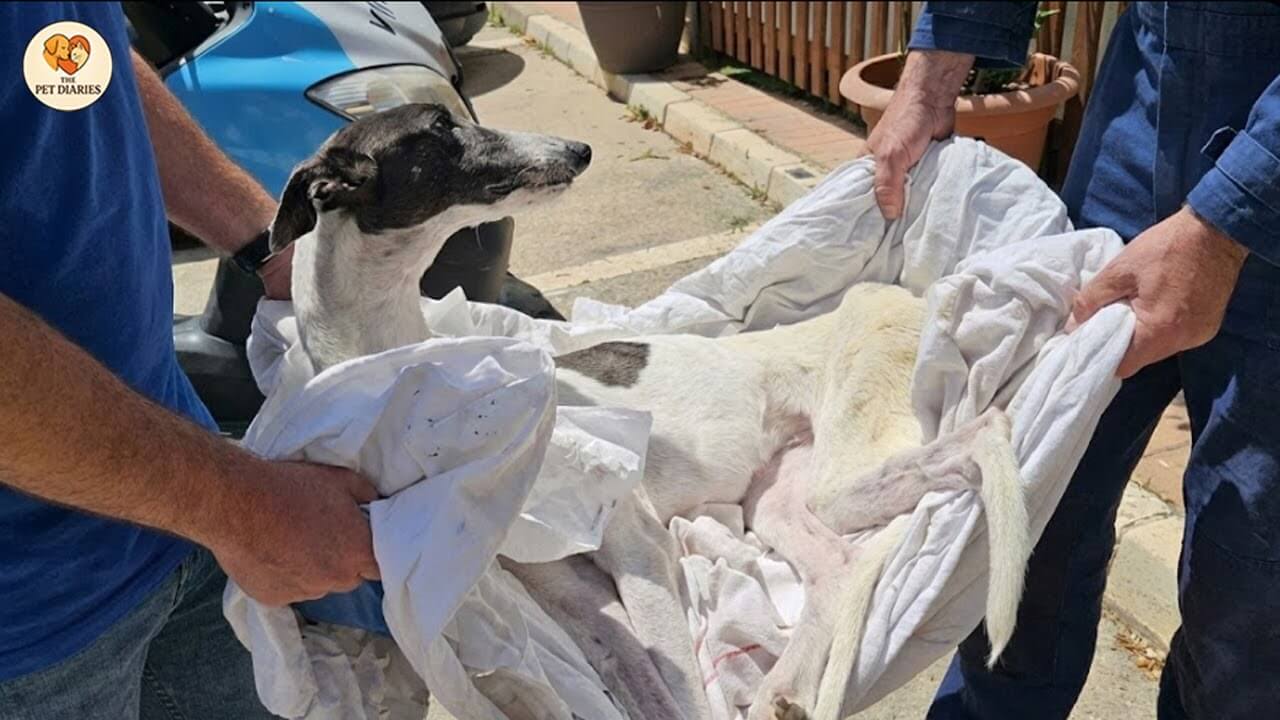
Why would a dog be handed over as if her life no longer mattered?
That question lingered the moment Gavi arrived at the rescue. Later, she would be renamed Gaviota. The new name felt softer. Kinder. More fitting for the fragile soul trembling quietly in front of the team.
She did not arrive barking.
She did not resist.
She barely moved.
Gaviota came in painfully still, shaking with each breath, as if every motion required permission from the pain locked inside her body. Her former owner said she had always been this way, as if suffering were simply her natural state.
The rescuers knew better.
“No soul is born broken like that,” one caregiver said.
What no one knew yet was how serious her condition really was, or how little time there might be to understand it. Early examinations raised more questions than answers, and every hour that passed carried risk.
The moment she was placed in their care, everything depended on whether this would finally be the time someone refused to give up on her.
A Body That Could Not Respond and Eyes That Never Looked Away

Gaviota was heartbreakingly thin. Her back legs did not respond at all. Her front legs and neck were stiff, as though her body had forgotten how to move freely.
Any attempt to shift her position sent gentle shivers through her small frame. Even resting seemed to hurt.
Her eyes told a different story.
Quiet. Searching. Always watching the people around her.
Was she afraid? Confused? Or still hoping that this time, someone would help?
Knowing that every hour mattered, the team at Fundación Benjamín Mehnert moved quickly.
What the First Tests Could and Could Not Explain
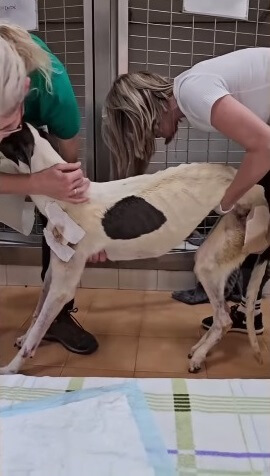
Initial X-rays and blood tests ruled out broken bones and common infectious diseases. The news brought cautious relief. It also deepened the mystery.
If nothing was structurally broken, what was stealing her ability to move?
A dog can appear paralyzed for many reasons. Trauma is one. Infection is another. Sometimes the cause hides deeper, beyond what early tests can reveal.
An MRI ruled out skull fractures and major cervical spine injuries. It hinted at possible internal bleeding. The answers were partial. Frustrating. Incomplete.
The veterinary team pressed on, easing her pain and stabilizing her condition while searching for the invisible enemy inside her body.
When Complications Begin to Stack Up
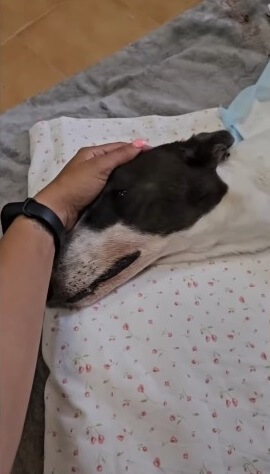
Then new problems appeared.
Gaviota developed anemia. Blood showed up in her bladder. For a terrifying moment, the possibility of a tumor loomed over everyone involved.
A follow-up scan finally brought relief. There was no tumor. The bladder issue was linked to a urinary tract infection, a known risk for animals with limited mobility.
The American Kennel Club explains it plainly. “There are many different diseases and conditions that can cause blood in dog urine, including urinary tract infections, trauma, toxins, like rat poison, and in rare cases, even cancer.”
One fear eased. The larger question remained.
What was really happening to Gaviota?
The Diagnosis That Changed Everything
The turning point came with a repeat blood test.
Earlier screenings had missed it.
Leishmaniasis.
Suddenly, many of her unexplained neurological symptoms made sense. This was not just an injury. It was a complex disease affecting her entire system.
VCA Animal Hospitals notes that “the parasite is transmitted by small biting sand flies.”
For dogs, leishmaniasis can quietly affect organs, blood, and nerves. The signs do not always appear all at once. That delay is often what makes diagnosis so difficult.
The path forward became clearer. It also became heavier. Treatment would be long. The outcome uncertain.
And yet, something shifted.
After the diagnosis, her behavior began to change. Her eyes brightened. Small signs appeared before the medicine had time to take full effect.
When Treatment Begins and Hope Follows

Medication started. Around-the-clock care followed.
Here is why that mattered.
When pain eases and the body begins to stabilize, behavior often changes first. Appetite returns. Eyes brighten. The will to engage reappears.
Gaviota began eating with more interest. One day, she managed to stand briefly. Wobbling. Trembling. Determined.
It felt like a statement.
“I’m still here. I’m still fighting.”
Back at the rescue home, surrounded by familiar voices and gentle hands, her spirit continued to grow stronger, even when her body lagged behind.
She greeted caregivers with soft tail movements. She leaned into their touch with quiet trust.
Every finished meal. Every calm nap. Each peaceful moment pushed back against the future that once seemed inevitable.
What Did Not Return and Why That Still Matters
Sensation never returned to Gaviota’s back legs.
That reality did not erase her progress.
Spinal and neurological recovery does not follow a straight line. Some functions return. Others do not. What matters most is comfort, stability, and quality of life.
The American Animal Hospital Association explains that “physical rehab primarily focuses on reducing pain and inflammation while restoring mobility and function.”
For Gaviota, that meant protecting her body, supporting her posture, and keeping her engaged with the world around her.
Next steps focused on adaptation, not surrender.
One Last Scan and Many Possibilities
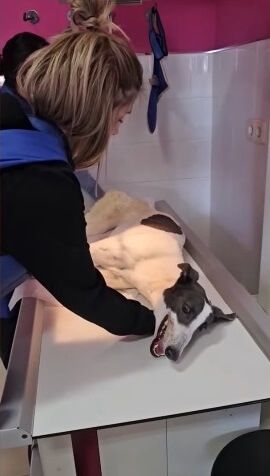
All hopes now rest on one final MRI. The scan may unlock the full truth behind her condition and guide the next phase of treatment.
The team prepares for every possibility, including the chance that Gaviota may live with long-term paralysis.
This time, it does not feel like defeat.
With specialized care, physical therapy, and constant support, her life can still be full of comfort, dignity and joy.
Public health research from the CDC adds context that explains why prevention matters long after diagnosis. “Companion animals should be protected from phlebotomine sand fly bites to prevent either leishmanial primary infection or spread from already infected dogs.”
Protection, care, and consistency can change the course of a life.
A Dog No Longer Invisible

Today, Gaviota is no longer the trembling dog who arrived in silence.
She is calmer. Present. Connected.
Her caregivers celebrate her smallest progress as if it were a miracle. They speak to her as if she understands every word. Maybe, in her own way, she does.
In her calm gaze, they often find something that feels like trust. Or gratitude. Or simply love.
Her story was shared through The Pet Diaries, though its meaning reaches far beyond a single video.
Lives do not lose value because they are complicated.
Somewhere right now, another dog like Gaviota is waiting. Quiet. Overlooked. Still hoping someone will look twice.
If Gaviota’s journey stayed with you, consider sharing it. Every share helps stories like hers reach further and brings animals like her one step closer to the homes they deserve.
Stories like Gaviota’s are unfolding every day. You may also want to read:
Scheduled to Die, She Crawled Toward the Only Hand That Didn’t Turn Away
Rio Was Left to Die in a Sewer. His Comeback Shows Why So Many Animals Never Get the Chance


