
German Shepherd vs Belgian Malinois: What Most First-Time Owners Get Wrong

This comparison is for people who want a capable dog, not a cautionary tale.
If you are a first-time owner, live with family, or feel drawn to working breeds because they look confident and loyal, this choice deserves more thought than most guides give it.
German Shepherds and Belgian Malinois are often grouped together. In real life, they demand very different kinds of commitment, and the wrong match shows up fast.
I learned this after spending time around both. On paper, they looked similar. In daily routines, they were nothing alike. One fit into my life with structure. The other required my life to revolve around it, every single day.
This guide focuses on what ownership feels like after the excitement fades. You’ll see where people misjudge these breeds, what usually goes wrong first, and how to decide honestly before frustration sets in.
Let’s break it down.
A Quick Lifestyle Snapshot
Before getting into details, here is a snapshot many first-time owners wish they had seen sooner. This isn’t a verdict. It’s a mirror you can hold up to your own routine.
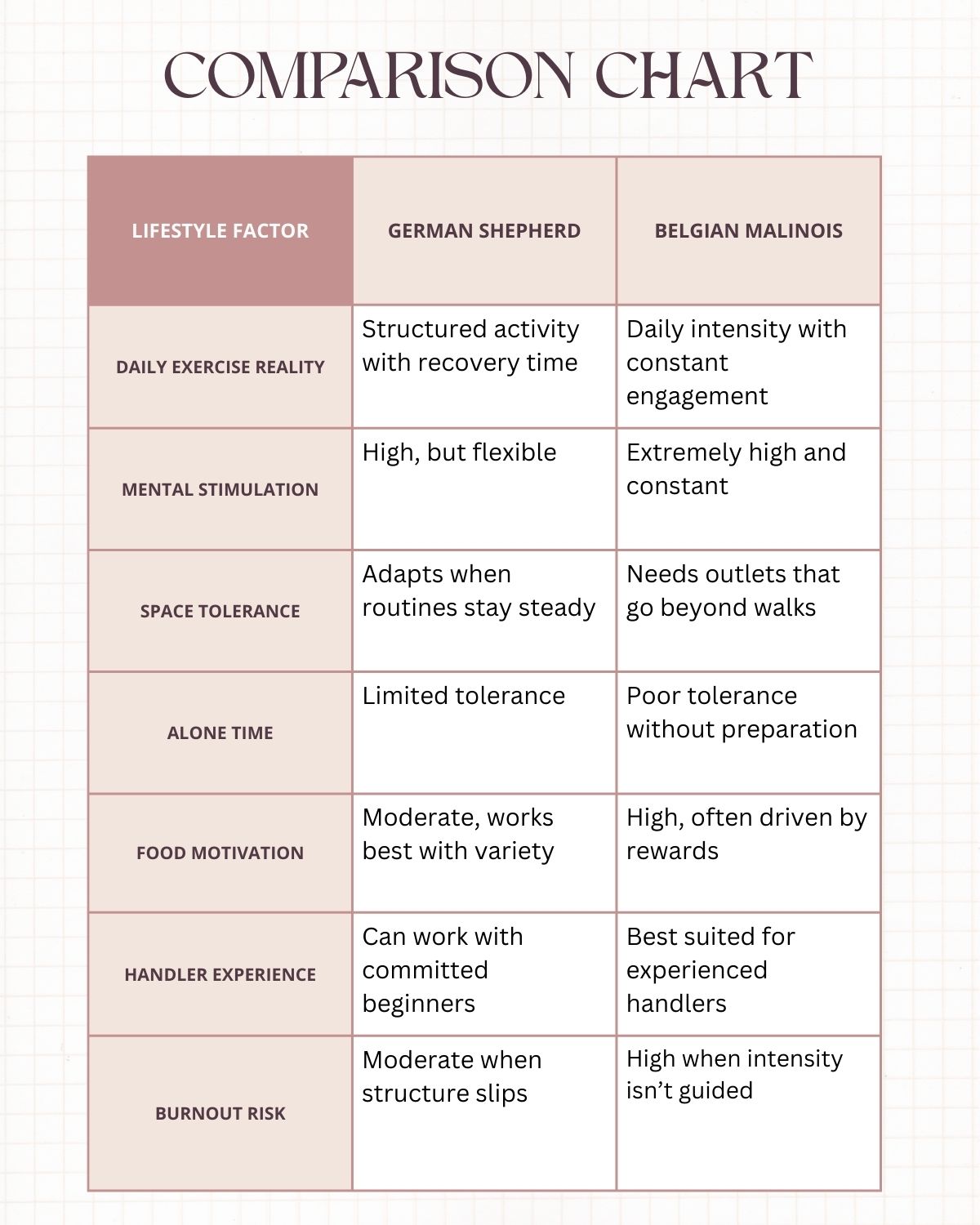
Most long-term problems show up when one of these lines gets dismissed early. People don’t usually fail these dogs. They underestimate how much daily pressure adds up over time.
As you read on, notice which column feels manageable and which one feels heavy. That reaction matters.
Next, let’s look at what a normal day actually demands.
Energy Levels and the Reality of a Normal Day
Energy labels don’t help much. What matters is how energy shows up from morning to night, and what happens when plans change.
A German Shepherd often starts the day alert and ready to work, then settles once structure is clear. A long walk, a training session, and a defined role help them relax. When routines stay steady, they know how to switch off.
A Belgian Malinois wakes up ready to engage at full speed. Movement alone doesn’t satisfy them. They look for direction, problem-solving, and constant feedback. Without that, frustration builds and spills into behavior quickly.
Breed standards explain part of this gap. The Fédération Cynologique Internationale describes the German Shepherd as steady and adaptable when properly handled. The same body describes the Belgian Shepherd, including the Malinois, as intensely alert and always ready to act. Those traits don’t fade inside a home.
I’ve seen how this plays out. Skipping one structured session barely rattled a German Shepherd. Missing structure with a Malinois shifted the entire day. The dog didn’t slow down. The pressure just moved into pacing, noise, and tension.
Action you can take today: After exercise, check in two hours later. Calm focus means the routine fits. Pacing, restlessness, or fixation means adjustment is needed.
That difference shows up even more clearly once training timelines enter the picture.
Trainability and What Progress Looks Like Over Time
Both breeds learn fast. That’s not the problem most owners run into.
German Shepherds tend to learn in layers. Skills build steadily when routines stay predictable. Impulse control improves with repetition and clear boundaries. Many first-time owners do well because progress shows up in small, visible steps, which keeps motivation steady.
Belgian Malinois also learn commands quickly, but maturity takes longer. Speed does not equal stability. Without patience, training can sharpen reactivity instead of control. What looks like progress early can unravel later when structure slips.
This difference matters more than people expect. The American Kennel Club notes that Belgian Malinois thrive on close partnership and daily work. That expectation doesn’t pause on busy days. When training gaps appear, behavior fills the space.
This is where timelines get misread. Puppy classes don’t finish the job. These breeds mature slowly, both mentally and emotionally. Skipping structure during adolescence often creates problems that feel sudden but aren’t.
Action you can take today: Pick one cue your dog already knows and practice it during three calm moments. Morning, afternoon, evening. Short, repeatable sessions build steadiness faster than longer drills.
That training rhythm shapes how behavior shows up once the day gets busy.
Behavioral Tendencies Without the Stereotypes
German Shepherds are not naturally aggressive. Belgian Malinois are not uncontrollable.
German Shepherds tend to scan their environment and respond based on leadership. When stress enters the home, it often shows up as tension or watchfulness. Calm, consistent direction helps them settle and regain balance.
Belgian Malinois amplify what surrounds them. Energy feeds energy. Without guidance, intensity turns inward and outward at the same time. What begins as drive can slide into restlessness or fixation if left unchecked.
The Royal Kennel Club describes the Malinois as alert, devoted, and naturally vigilant. That vigilance needs direction every day. It doesn’t settle on its own, even in familiar spaces.
Boredom also looks different. A bored German Shepherd may pace, disengage, or hover quietly. A bored Malinois often creates work, whether invited or not. Recognizing that difference early changes how owners respond.
Action you can take today: Notice how your dog handles quiet moments. Pulling inward calls for reassurance. Escalation calls for structure and redirection.
Those responses matter most before habits harden.
Common Mistakes First-Time Owners Make
The most common mistake is choosing based on image. Police work clips, protection videos, and social media posts hide the daily workload and recovery time these dogs need.
Health screening is another area where corners get cut. The German Shepherd Dog Club of America outlines expectations for hips, elbows, temperament, and inherited conditions. When proof of testing is missing, risk increases long before symptoms appear.
Transparency matters. The Orthopedic Foundation for Animals explains that CHIC screening results should be publicly available. If records are hard to verify or avoided altogether, that’s not a small detail. It’s a signal.
Socialization errors also show up later. The American Veterinary Society of Animal Behavior explains that early social exposure plays a major role in preventing fear and aggression. Missed windows don’t announce themselves right away. They surface under stress months or years later.
Action you can take today: Look at your dog’s day as a whole. Add one calm exposure, one structured task, and one true recovery period. Balance matters more than volume.
Those daily choices shape where and how a dog can live long term.
Which Breed Fits Which Lifestyle

A German Shepherd fits best when life allows steady routines, consistent leadership, and time for structured work without constant intensity. They do well when expectations stay clear and days follow a rhythm.
A Belgian Malinois fits best when daily training, problem-solving, and hands-on involvement are part of normal life, not an extra task. They expect direction every day, even when plans change.
Neither breed fits a lifestyle built around long absences, low engagement, or uneven follow-through. That mismatch causes most regret, not a lack of love or effort.
If this section feels uncomfortable to read, that reaction is worth paying attention to.
Choosing the Dog You Can Show Up For
These breeds give back exactly what they’re given, no more and no less.
The right choice isn’t about toughness or reputation. It’s about capacity. Time, patience, and steady follow-through matter more than prior experience. Good intentions don’t fill gaps in routine.
When the fit is honest, these dogs become steady partners. When it isn’t, pressure builds quickly and stays loud, often in ways owners don’t expect.
Next steps: Look at your schedule. Look at your energy on ordinary days. Then choose the dog you can support every single day, not just the exciting ones.
By this point, most readers have a strong sense of which breed feels closer to their real life. What usually remains are the doubts people hesitate to voice, especially first-time owners who want to avoid regret later.
These questions come up again and again.
Frequently Asked Questions
Are German Shepherds or Belgian Malinois good for first-time dog owners?
German Shepherds can work for committed first-time owners who are ready for structure, consistency, and ongoing training. Belgian Malinois are rarely a good first dog because their daily need for direction and engagement is high. Most first-time owners struggle not with learning commands, but with sustaining the routine long term.
Can either breed live in an apartment?
Both can live in apartments under the right conditions, but expectations matter. German Shepherds usually cope better when walks, training, and rest follow a steady rhythm. Belgian Malinois need daily outlets beyond walks, such as structured training or problem-solving work. Without that, small spaces feel overwhelming fast.
How much time do these breeds really need each day?
Both breeds need daily involvement, but the type differs. German Shepherds need structured activity and clear roles, then recovery time. Belgian Malinois need active engagement spread across the day. Skipping one day often shows up immediately with a Malinois, while German Shepherds tend to show stress over time.
Do these breeds become aggressive if handled wrong?
Aggression usually develops from fear, stress, or poor guidance, not breed alone. German Shepherds may become overly watchful when stress goes unmanaged. Belgian Malinois may become reactive when intensity lacks direction. Early structure, calm leadership, and proper exposure reduce risk for both.
Is professional training required?
Many owners benefit from professional guidance, especially during adolescence. German Shepherd owners often use trainers to fine-tune structure. Belgian Malinois owners often need ongoing support to channel drive safely. Seeking help early is a strength, not a failure.
What’s the biggest red flag that a breed may not be a good fit?
Feeling exhausted or resentful early on is a warning sign. These breeds demand time, attention, and follow-through. When ownership feels overwhelming instead of challenging in a manageable way, the fit may be off.
If you’re still unsure, revisit the sections that matched your daily routine most closely. That’s where the answer usually sits.
Also read:
Best Dog Breeds for Apartment Living: What Actually Works for Noise, Space, and Energy
How Long House Training Really Takes (A Realistic Timeline by Age)


