
He Was Found Chained in the Snow, Guarding a Home That No Longer Existed
The barking came at night.
Not the sharp kind that guards a fence. This sound carried through the dark and stayed there, steady and strained, as if it needed someone to hear it. A neighbor noticed it once. Then again. Night after night, the sound returned, always after the street went quiet.
At first, he brushed it off. Stray dogs pass through all the time. Still, something felt wrong. The tone did not change. It did not wander. It stayed in the same place, waiting.
On one freezing evening, when the barking cut through the silence again, he grabbed a flashlight and stepped outside.
He did not know it yet, but following that sound would uncover a dog fighting to survive exactly where he had been left behind.
Where he stayed after his family left

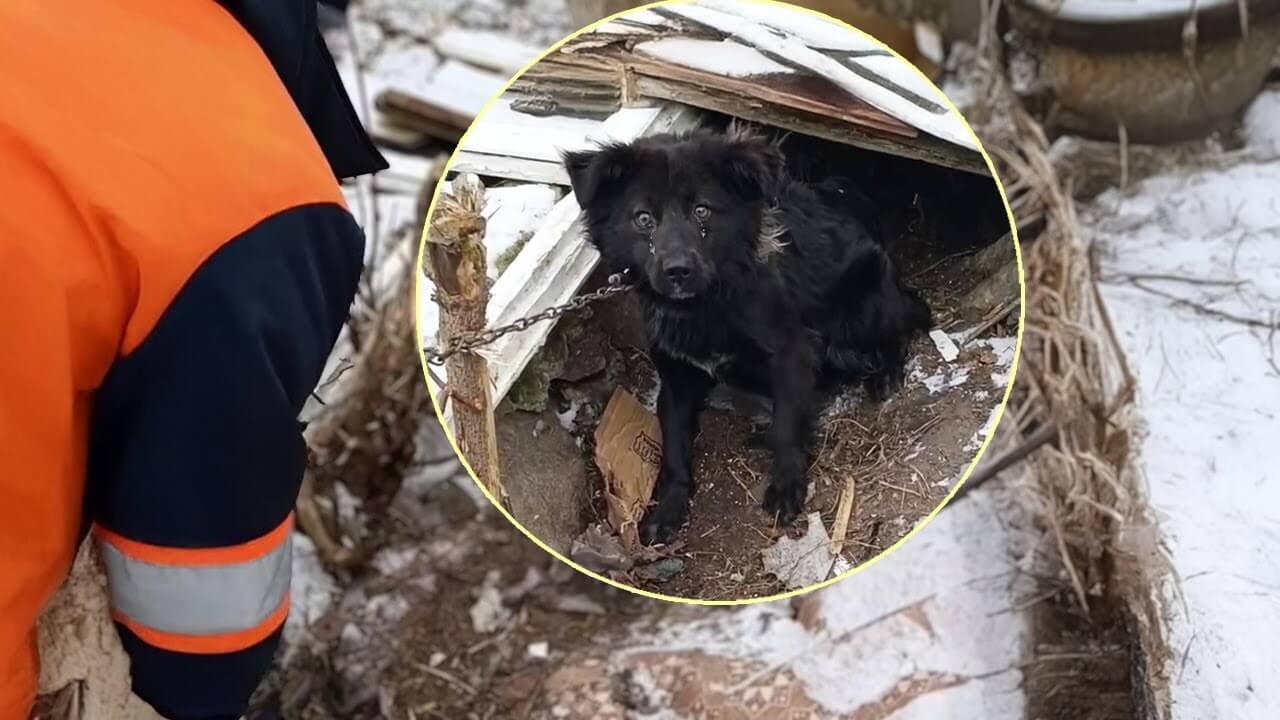
What he found looked like a cave from a distance. Up close, it was rubble. Broken concrete. Collapsed walls. The remains of a house that no longer stood.
Inside that pile of debris was a dog.
He was chained.
The chain was long and rusted, anchored to what used to be a home. Trash surrounded him. This was how he survived. He dug through scraps and stayed hidden. When anyone stepped closer, he lunged and barked, driven by fear.
Then the neighbor realized something that stopped him cold.
This was not a stray.
This was his former neighbor’s dog. The family had moved away long ago. He never followed.
“He was guarding the house that no longer existed,” one rescuer later said. “That loyalty crushed us.”
The rescue was later documented by Oksana Savchuk and shared through the Animal Shelter rescue channel.
Why rescuers struggled to move him
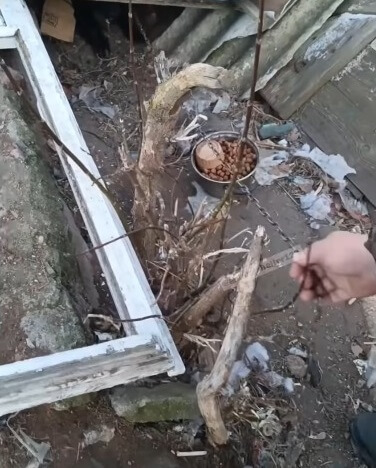
Rescuers began visiting him each day. They brought food. They spoke softly. They stayed at a distance.
He refused to move.
Every attempt to guide him away ended the same way. He crawled back into the rubble, pressing himself against the debris as if it could protect him. This place was all he had left. Fear made the rules.
Here is why that reaction mattered.
Animal welfare research shows that long-term chaining does more than restrict movement. It changes behavior. According to the RSPCA Knowledgebase, “Long term tethering with no exercise has been shown to increase frustration and aggressive behaviour towards people and other dogs.”
Situations like this are often misunderstood by people who pass by. A chained dog who lunges or barks can look aggressive. In reality, fear and isolation shape that behavior. Knowing this difference can change how quickly help arrives.
He was not dangerous. He was surviving.
When the weather turned
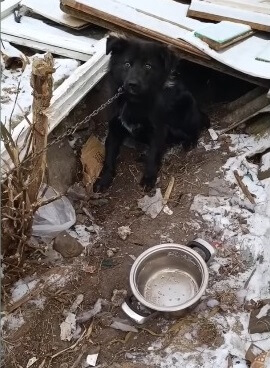
Then the snow came.
Overnight, the ground disappeared under white. Temperatures dropped fast. The rescuers feared they had waited too long. In the morning, they found empty food containers. He had eaten everything. Hunger finally outweighed terror.
Cold exposure puts dogs at serious risk, especially when they cannot move freely. The ASPCA warns that “Pets can freeze, become disoriented, lost, injured or even killed from being left outdoors in the cold.”
The team knew they had to act.
When they approached his chain, he dropped to the ground and braced himself. His legs spread wide. His body trembled. He refused to stand.
The moment he looked back
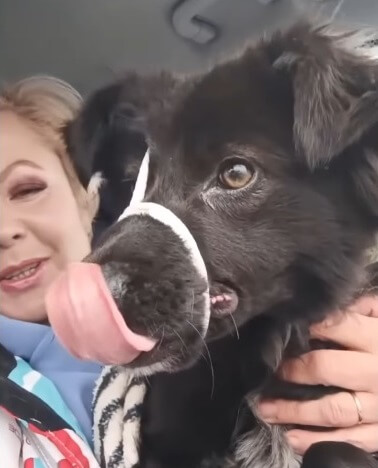
They removed the chain.
As they guided him away, he stopped again and again. Each time, he turned his head back toward the rubble. Toward the place that had hurt him. Toward the place he still believed was home.
The rescuers cried with him.
They knew what he did not yet understand. Leaving was the only way he would live.
A fight for survival at the clinic
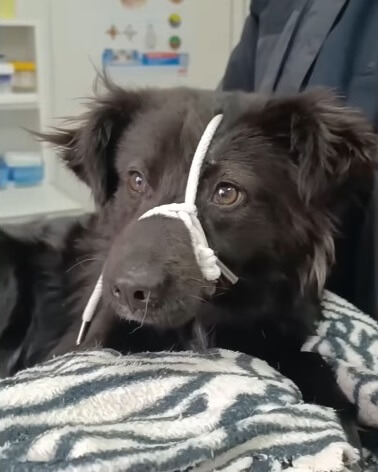
At the veterinary clinic, the damage became clear.
He was severely underweight. Dehydrated. Exhausted beyond what his body could carry. His temperature spiked to 105.8°F. Blood tests showed infection. His hip was displaced. His fur had grown thick and matted, holding months of neglect.
The medical risk was real and immediate. Cold exposure can turn deadly fast. The American Kennel Club explains that “If left untreated, hypothermia can also result in cardiac and respiratory failure, brain damage, coma, and even death.”
The veterinarian was clear. Another winter outside would have ended his life.
Learning what safety feels like
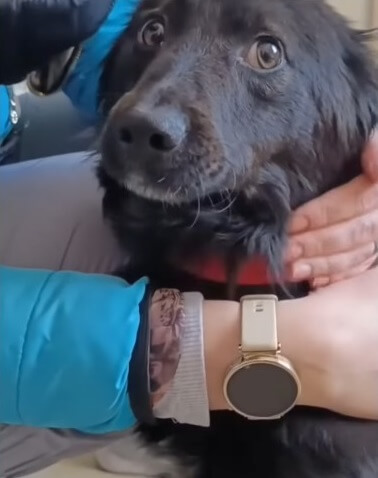
Treatment began right away.
IV fluids helped stabilize him. Nutritious meals followed. For the first time, he slept somewhere warm. The fear did not disappear overnight. He watched every movement. He flinched at unfamiliar sounds.
Then, two days later, something changed.
He ate from a rescuer’s hand.
It was a small moment. It meant everything.
His body grew stronger. His eyes softened. Aggression faded into shyness. He began to ask a quiet question with every glance.
Can I trust you?
A name and a future
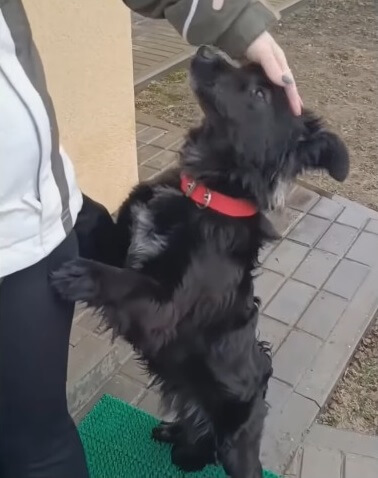
When he was strong enough to leave the clinic, the world opened up. Grass replaced rubble. Space replaced chains.
He made a friend. Another dog showed him how to run and play. The dog who once hid among ruins sprinted across open ground, his joy impossible to miss.
He was given a name.
Mashimka.
His former owner later claimed he forgot about him and believed he was lost. Authorities continue to handle that matter. The rescue team focused on what mattered most. Mashimka was safe.
He no longer waits for someone who will never return.
Why stories like his still happen
Stories like Mashimka’s are not rare. Dogs are still left behind when families move, chain restrictions still go ignored, and winter still arrives without mercy. What saved him was not a rescue truck arriving on time. It was one person deciding that a sound in the dark deserved attention.
Animal welfare groups say that when a dog is found chained and left outdoors overnight, especially in winter conditions, the safest response is to contact local authorities or a rescue organization rather than assuming the owner will return.
If this story stayed with you, consider sharing it. One neighbor listening changed everything for Mashimka. One more voice can help the next dog who is still waiting to be heard.
If you want to read more verified rescue stories, here are two that stayed with our team:
He Guarded the House That Broke Him. Then a Stranger Opened the Cage
Chained for 5 Years, He Offered a Cucumber for Love — His Rescue Changed Everything


