
Owner Wanted to Return This Cat After One Day — What Happened Next Will Stay With You
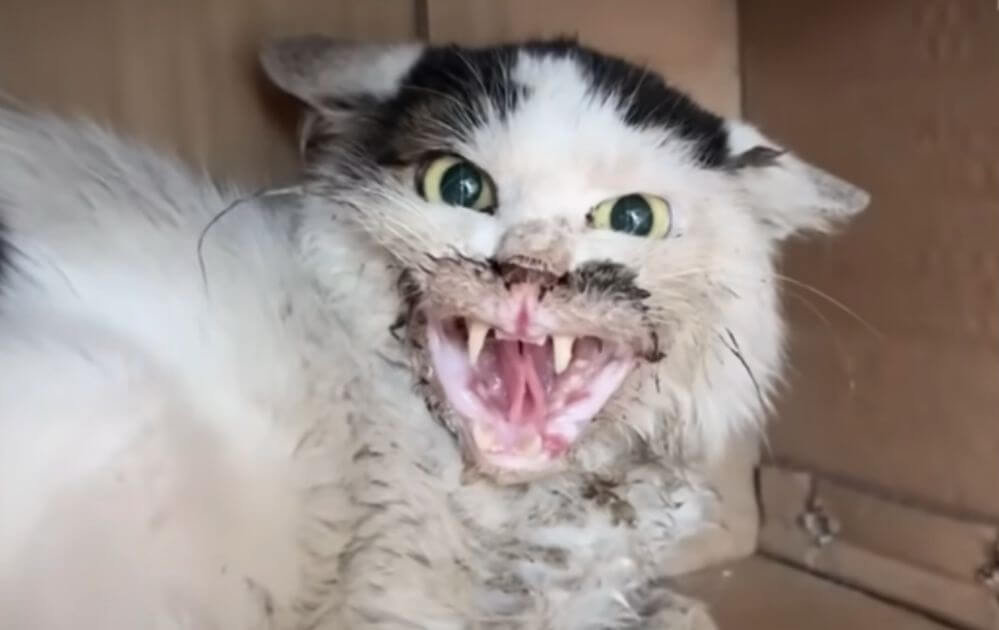
She didn’t look like a cat searching for food. She looked like a cat searching for a place where nothing could hurt her again.
The rescuer found her pressed against the edge of a shop entrance, thin and trembling, as if bracing for whatever might come next.
Her ribs showed. Her coat was rough. Her eyes carried the kind of fear that comes from life lived outdoors without safety.
When she tried to dart away, her legs wobbled from exhaustion. Something about that moment made the rescuer crouch down and wait.
No rushing. No noise. Just a quiet invitation for a cat who seemed to believe the world had already made up its mind about her.
She didn’t accept help right away. But she didn’t fully run either. And that tiny pause — barely a few seconds — was enough for the rescuer to decide she deserved a chance at something better.
They brought her home later that day, not knowing the next thirty days would reveal just how deep fear can run in a traumatized animal… and how far patience can carry them back toward trust.
Why Fear Turns into Aggression in Rescued Cats
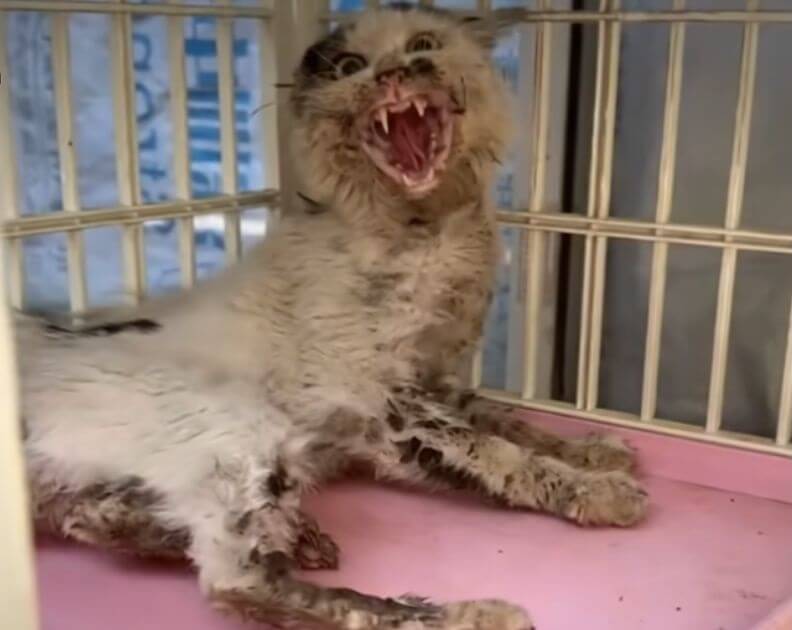
The behavior she showed in those early days isn’t unusual.
Veterinarians describe this pattern as fear aggression — a defensive reaction that happens when a cat believes it’s in danger.
According to PetMD, “Fear aggression is one of the more common causes of aggressive behavior in cats.”
Those lunges, those hisses, the rigid posture — these are less about hostility and more about survival instinct.
A cat that has spent years on the street learns that every sound or movement may cause harm. So even a gentle touch can be misinterpreted as threat.
That’s why patience is not just kind — it’s necessary.
Inside a Small Apartment, Healing Begins
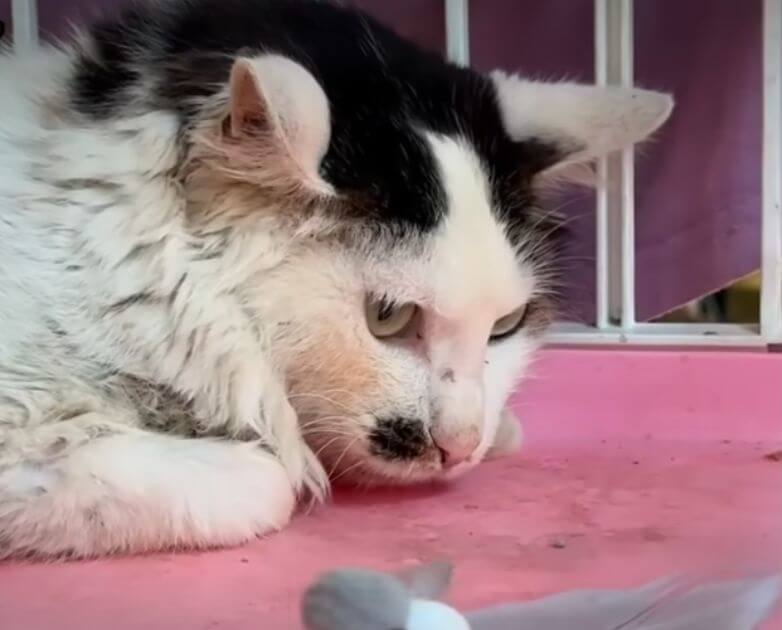
The rescuer created a quiet corner of their home and kept the cat there for the first few nights. No loud sounds. No rushed movements. Soft, steady words were used to help her adjust.
This approach matches what animal-welfare groups recommend for traumatized cats.
According to Maddie’s Fund, “Fearful cats usually do best in relatively quiet homes or quiet areas of the home.”
And slowly, subtle changes began to appear.
On day five, her tail relaxed just a little. On day six, the hissing softened. By day twelve, she touched a toy for the first time, extending her paw like she wasn’t sure if she was allowed to play.
By day fifteen, she responded to the rescuer’s voice by rolling over slightly — curious, though still guarded.
By day eighteen, she could sleep with someone in the room. She wasn’t fully trusting, but she wasn’t terrified anymore.
The shift was fragile, but real.
A Face in a Much Bigger Crisis
Her story reflects a larger pattern. The number of abandoned or homeless animals is staggering.
According to Shelter Animals Count, “Around 6.3 million companion animals enter shelters each year around the country.”
That figure includes both cats and dogs — many surrendered by owners, many pulled from the streets, and many arriving with injuries or fear like the stray in this story.
Beyond the United States, the crisis is even larger.
A global welfare organization reports that stray populations stretch far beyond what shelters alone can manage.
According to FOUR PAWS, citing WHO data, “The World Health Organisation (WHO) estimates there are nearly 200 million stray dogs worldwide and an even higher number of stray cats.”
This means the cat rescued here is one of countless animals who depend entirely on a stranger’s choice to stop and help.
What Happened in the Days that Followed
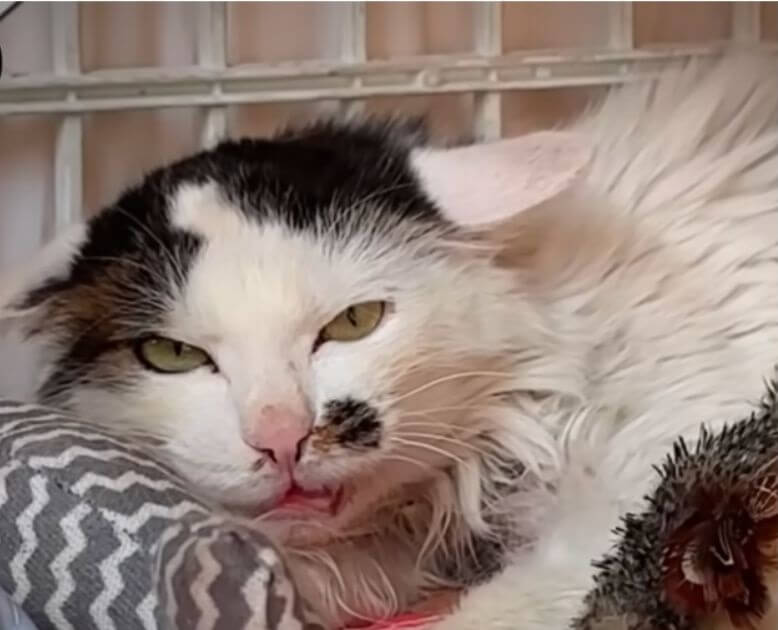
By day twenty, something remarkable happened. She allowed a soft touch on her head. Instead of pulling away, she leaned into it. Her shoulders dropped. Her breathing slowed.
She even began to treasure catnip toys — tucking them under her chin when she slept.
By day twenty-five, her tail lifted in greeting rather than fear.
And by day thirty, the transformation was steady enough to say: this was the same cat only in body, not in spirit.
She could be held. She could play. She could trust.
The past hadn’t disappeared, but it no longer controlled her every move.
What You Can Do if You Meet a Fearful or Traumatized Stray
Many adopters experience the same early panic this rescuer felt — the moment of thinking, Did I make a mistake?
But there are simple steps that help build trust:
1. Start small.
Give the cat a quiet room or corner. Limit stimulation. Let the cat stay hidden if needed.
2. Keep routine steady.
Regular feeding times, soft voices, predictable footsteps — these signs teach a frightened cat that it’s safe.
3. Don’t force physical contact.
Curiosity will surface on its own. Forced interaction can set progress back.
4. Provide comfort objects.
Toys, blankets, and boxes give them control over their environment.
5. Remember the fear is not personal.
A hiss is a story, not an attack. With time, the story can change.
What This One Rescue Says About Compassion
The cat at the center of this story didn’t grow calm because her past disappeared. She grew calm because someone refused to leave when fear made her push the world away.
The patience she received became the safety she never had on the street.
Across the world, countless animals wait for someone willing to offer that same steadiness.
Rescue work may seem small in a crisis this large, but to the animal on the receiving end, it can shift everything.
Her journey — from flinching at shadows to sleeping with a toy tucked beneath her paws — shows how trust can slowly return when fear finally loses its place.
It wasn’t rushed. It wasn’t easy. But it happened because someone stayed long enough for her to understand she deserved care.
Watch Her Full Transformation
If you want to see her change unfold step by step — the small breakthroughs, the pauses, the quiet moments when she begins to let go — the full rescue video captures it exactly as it happened.
It shows every early hiss, every attempt to hide, and the soft, unmistakable signs of trust returning.
You can watch her story here:
Video credit: MeowTales YouTube channel
If her healing moved you, consider sharing this story.
Even one share can help more people understand what frightened animals endure — and maybe help the next scared stray find the person who won’t walk away.
FAQs About Helping Fearful or Newly Rescued Cats
How long does it usually take for a rescued cat to trust again?
Some rescued cats relax within days, while others need weeks or months. Each small shift — softer eyes, slower breathing, or a tail that lifts instead of tucking — signals progress.
Is it normal for a rescued cat to hiss or hide for weeks?
Yes. Hissing and hiding are common in cats who feel unsafe. These behaviors aren’t personal. They show the cat is trying to protect itself while adjusting to new sounds, scents, and routines.
What should I do if a rescued cat refuses contact or becomes aggressive?
Give the cat space, keep the room quiet, and avoid forced interaction. Predictable routines help nervous animals feel secure. If progress stalls, a vet or behavior specialist can help check for pain or deeper trauma.
Do toys and comfort items help fearful cats settle?
Yes. Boxes, blankets, and toys create control and comfort. Many fearful cats become curious once they feel safe in their environment.
Should I worry if a rescued cat isn’t eating right away?
Stress can briefly affect appetite. Offer food near hiding spots and keep the environment calm. If the cat doesn’t eat for more than a day, a vet should take a look.
Also check out these rescues:
Old Racing Dog Abandoned and Left to Starve Until One Person Refused to Walk Away
Locked Away for a Decade – Rusty’s Incredible Journey from Neglect to Freedom


Thank you sooooo much for saving her & adopting her & for not giving up on her & for loving her & having sooo much patience with her too amen.
She’s a gem