
Abandoned Between Two Walls. How One Forgotten Dog Fought Her Way Back
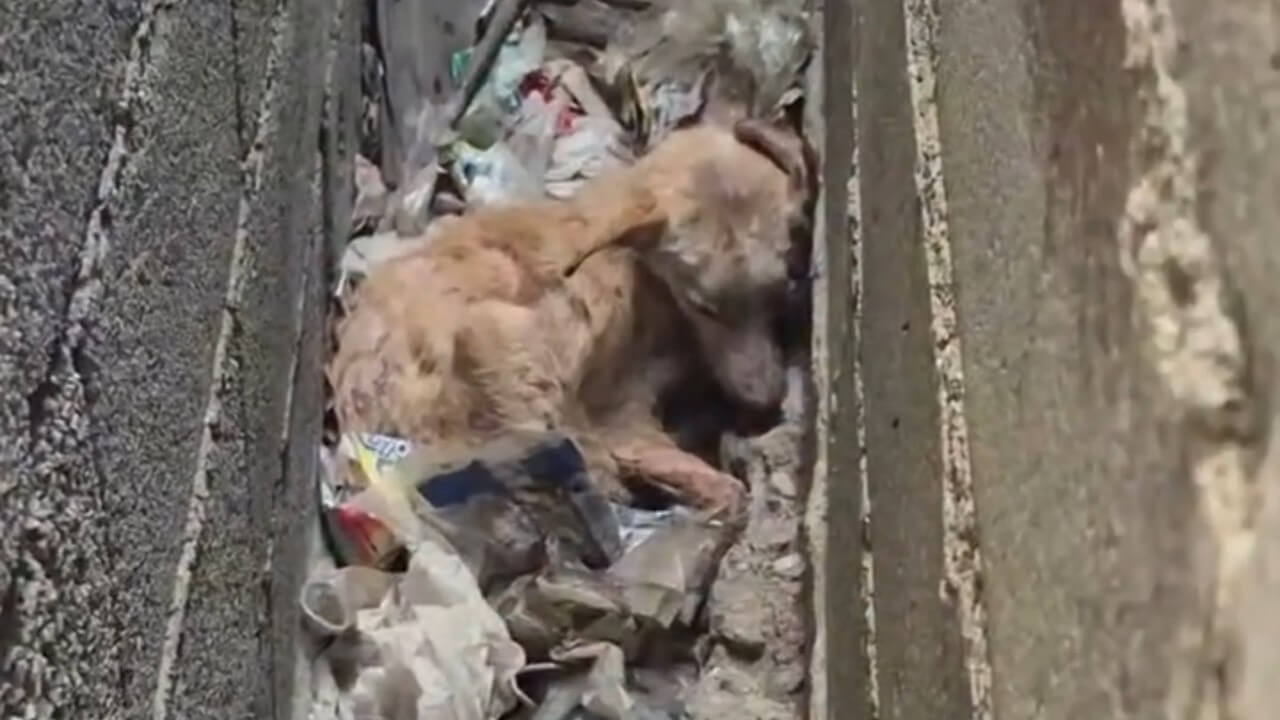
She was never meant to be seen.
Hidden between two houses, wedged into a gap so narrow it barely let light through, a dog lay trapped and silent. No shelter. No water. No way out. The walls pressed in on her body as time worked against her.
By the time rescuers reached her, she had been there long enough for her skin to begin failing. Infection had already taken hold. Her strength was nearly gone.
What followed was a documented rescue, led by an animal welfare team responding to a real emergency, and a race against shock, wound infestation, and the kind of abandonment that does its damage long before anyone notices.
A Call From a Place No One Checks
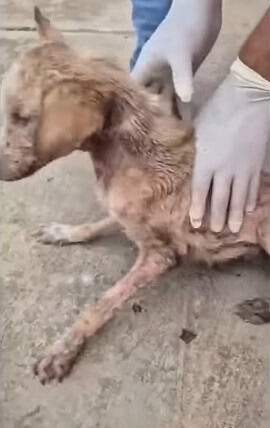
The report was brief. A dog stuck between two homes.
When rescuers arrived, the scene told a deeper story. The gap between the buildings was dangerously tight, the sort of space where fear has nowhere to go. No one could explain how she ended up there. What was clear was how long she had been alone.
“She was quite scared and her skin condition is in a bad shape,” one rescuer later shared.
The location made everything harder. Firefighters had to be brought in to help extract her safely. Every movement risked causing more harm. Every delay carried consequences.
Here is why timing mattered so much.
Who Answered the Call
The rescue was led by Fundación J.R Rescata, a team known for responding to severe neglect cases. Their work often begins after prolonged suffering, when animals are already paying the price for being left behind.
Once she was freed from the narrow space, the full extent of her condition became clear.
When Wounds Become a Living Threat

Her injuries were not only infected. They were alive.
The team discovered more than a thousand maggots inside her open wounds.
“First, we have to remove 1000+ maggots in her wounds,” a rescuer said.
This condition is known as myiasis. It occurs when flies lay eggs on untreated wounds or soiled fur, often when an animal cannot move, clean itself, or escape. Veterinary guidance from the American Kennel Club explains that fly eggs can hatch fast, sometimes in less than 48 hours, which is why untreated injuries can turn dangerous in a short window of time.
Maggots do not appear without cause. They take hold when an animal is immobilized, exposed, and unseen. Abandonment creates the conditions where this happens quietly.
Veterinary guidance from VCA Animal Hospitals explains that treating myiasis requires thorough cleaning and flushing of wounds, removal of damaged tissue, and close monitoring for secondary infection. When infection has already taken hold, antibiotics are often part of care.
After the removal process, her body could not keep up.
She collapsed.
The Moment Everyone Held Their Breath
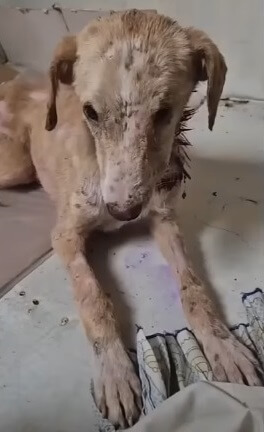
She was placed in special care. The team waited, watching closely for signs that her body was still fighting.
Then something small happened.
“Luckily she still has an appetite and started to eat,” the rescuer said.
That mattered more than it might seem. Appetite is one of the clearest indicators that a dog’s system is still trying to recover. When trauma, infection, and exhaustion collide, eating can be the thin line between decline and survival.
That moment changed the plan. The team committed fully to her recovery.
One Week That Rewrote the Outcome
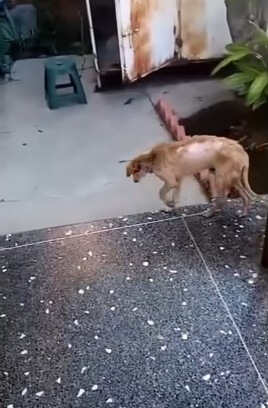
The next seven days told a different story.
Each day brought small changes. Her skin began to respond to treatment. The infection eased. Caregivers watched her test her weight again, unsteady at first, then stronger with each attempt.
She stood. She took a few steps.
A follow-up health check confirmed what everyone had hoped for. She was stabilizing. Almost healthy. Almost ready.
Next steps meant patience, monitoring, and rest.
A Second Call From the Same Place
Just as hope settled in, the team was called back to the same area.
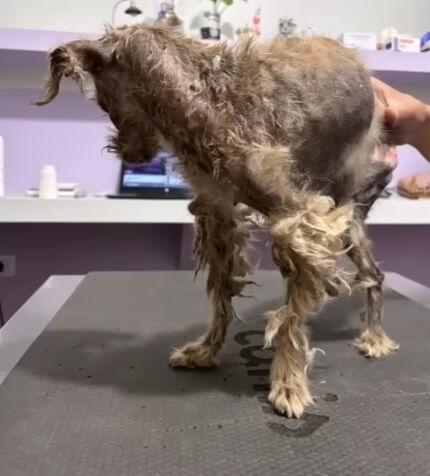
Another dog had been found wandering nearby. People said she had been on the streets for about a week. The resemblance was hard to ignore. Rescuers suspected both dogs had been abandoned by the same owner.
This second dog showed signs of long-term neglect. Nearly seventy percent of her hair was gone. Her body carried the markers of prolonged starvation. Fear shaped every movement she made.
“She was so scared, she kept hiding into my body,” a rescuer recalled.
This response is common in abused dogs. When safety finally appears after extended neglect, fear often comes first. It is not affection. It is survival.
Healing Beyond the Skin

At the shelter, recovery continued.
Within a week, new hair began to grow. Weight returned. Her posture softened. Her eyes changed first, no longer fixed on escape.
Fear did not disappear overnight, but it loosened its grip.
By the final update, she was healthy, warm, and cleared to leave the clinic.
Both dogs were alive because someone noticed. Someone paused. Someone made the call.
Why Stories Like This Still Matter
Abandonment does not always look dramatic. Sometimes it looks like silence between two walls. Sometimes it looks like a dog wandering for days while people assume someone else will step in.
Guidance from the Companion Animal Parasite Council notes that serious fly infestations require careful identification and handling. In some cases, larvae are collected from the deepest area of the wound to assess severity, and certain forms of myiasis are considered reportable due to the risks they pose.
Somewhere between those two walls, her life nearly ended without a sound.
It took attention, time, and care to bring her back. What saved her was not luck. It was someone noticing what others missed.
If this story stayed with you, sharing it could help the next injured animal be seen in time.
Also check out these rescues:
They Threw Him Out When He Became Sick, But He Stayed Hoping His Owner Would Come Back
Locked in a Basement, Dumped in a Landfill. How Angelito Fought Back


