
A Leash, a Roadside, and a Puppy Who Didn’t Move
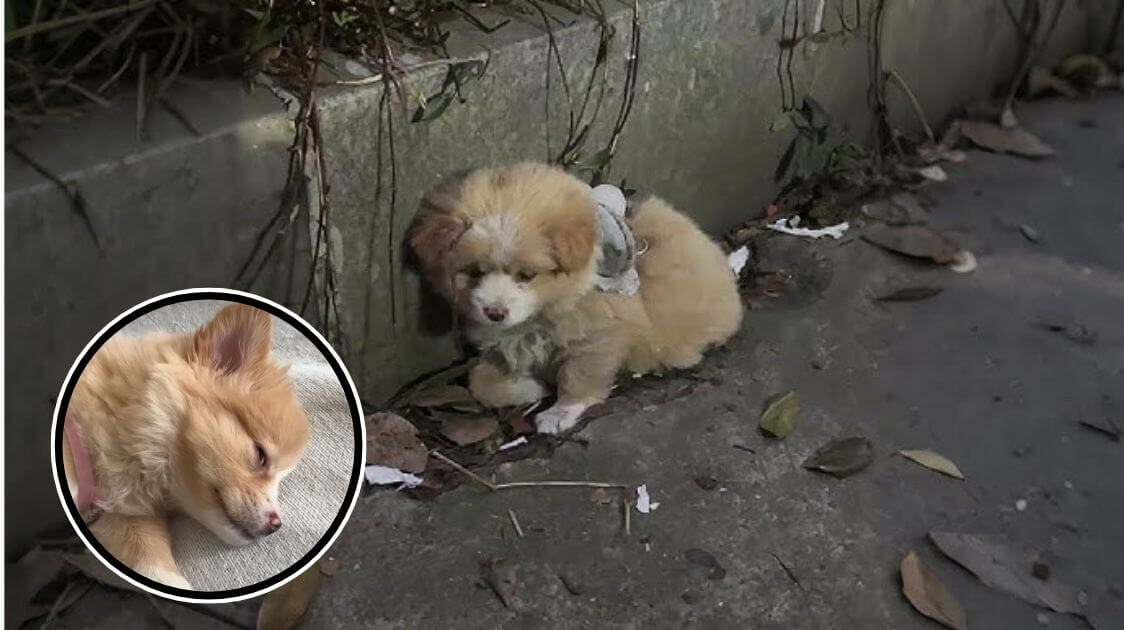
Abandoned puppies often still wear collars or leashes, which can mislead people into thinking a dog is simply lost or taking itself for a walk.
Shelter data backs that pattern. According to the Humane Society’s “Pets by the Numbers” report, millions of companion animals enter shelters each year, with strays making up a large share.
Young puppies like Latte rarely roam far from the spot where they’re left. Their size, fear, and lack of navigation instincts keep them frozen in place — which is exactly what happened in those two days he spent lying on the edge of a busy street.
Alone for Days — Latte’s First Hours in the Open
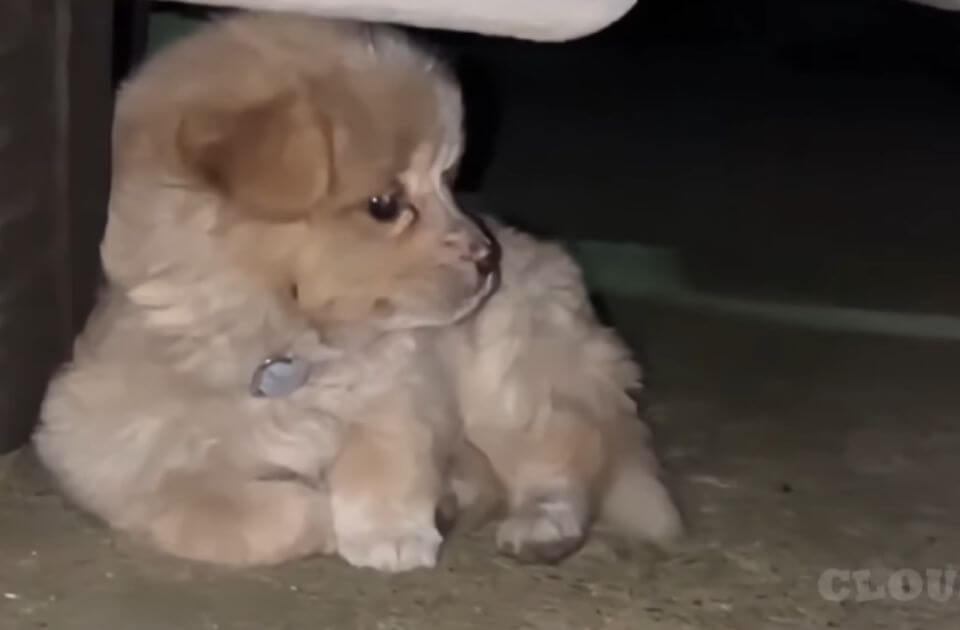
A passerby first noticed Latte lying beside the road, leash on, head low. He didn’t cry out. He didn’t try to stand. His stillness created the illusion of calm, but it was a sign of something deeper.
Two days later, a local resident posted about him in a community chat. The message reached a young woman who felt compelled to go see the puppy herself. When she approached, Latte panicked. He scrambled under a parked car, trembling so hard his body knocked against the gravel.
That moment revealed a truth many don’t see: puppies don’t always signal distress by barking. Sometimes they go silent.
Fear, Freeze, and Shutdown — The Hidden Signs of Puppy Trauma
According to the Cummings School of Veterinary Medicine at Tufts University, dogs experiencing fear often show subtle signs — shrinking their posture, shaking, hiding, or refusing to engage.
Another layer explains Latte’s behavior even more clearly. The Veterinary Partner resource from VIN describes a “freeze” response in dogs facing extreme fear: a quiet, motionless state where the animal shuts down to cope with stress.
Latte wasn’t shy. He was terrified.
His silence wasn’t calmness — it was survival.
Many puppies also go through developmental “fear periods,” where unfamiliar experiences can feel overwhelming.
The American Kennel Club notes that these stages make very young dogs particularly sensitive to loud sounds, sudden movements, or new environments.
All of this helps explain why a puppy as small as Latte chose stillness over sound.
The Rescue — And the First Moment He Felt Safe
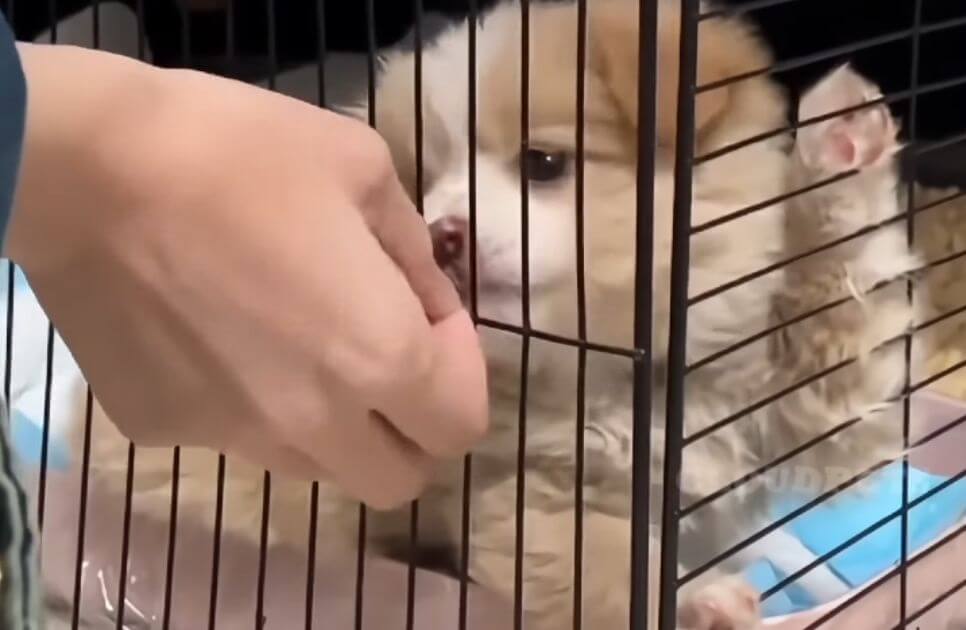
The young woman didn’t walk away.
She crouched, waited, and kept her voice soft. Minutes passed before Latte finally crawled out from the shadows. His legs wobbled. His tail stayed tucked. But he allowed himself to be lifted.
For the first time in days, he felt the warmth of a human hand.
It was the moment his life split in two: the world before he was seen, and the world after.
A Dangerous Diagnosis — And Why Time Was Running Out
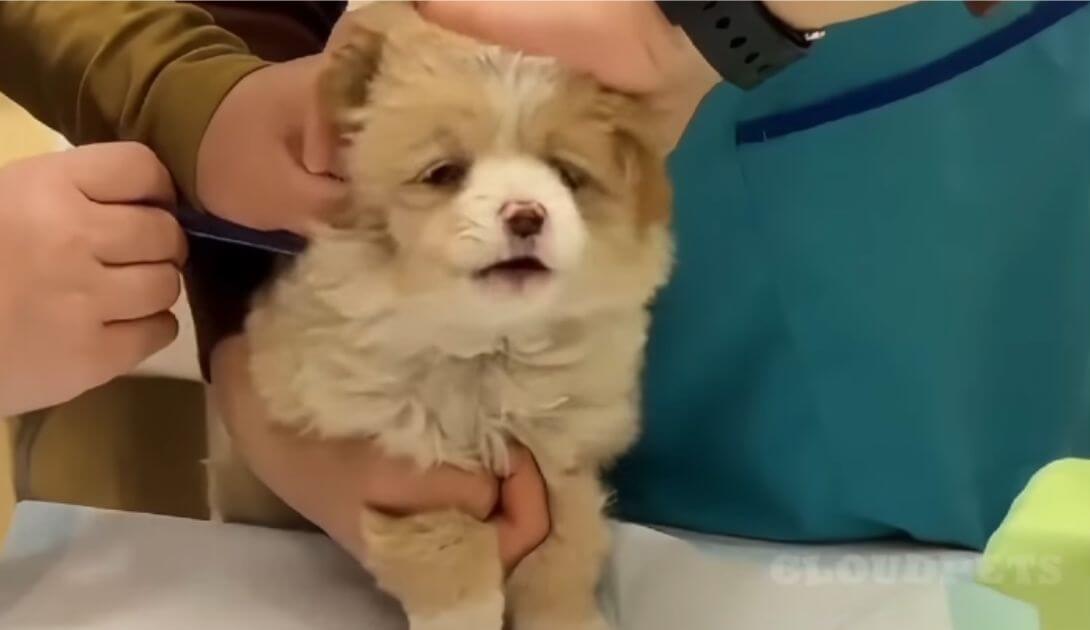
At the veterinary clinic, the news was sobering. Latte tested positive for canine coronavirus, known as CCoV.
According to VCA Animal Hospitals, this virus is highly contagious among dogs and hits puppies hardest, often causing diarrhea, lethargy, and rapid dehydration.
The MSD Veterinary Manual classifies CCoV as one of several intestinal infections that affect the digestive system in dogs — a category that can be especially risky for young animals.
For a puppy barely 40 days old, the danger was real.
But the puppy fought.
And his rescuer stayed.
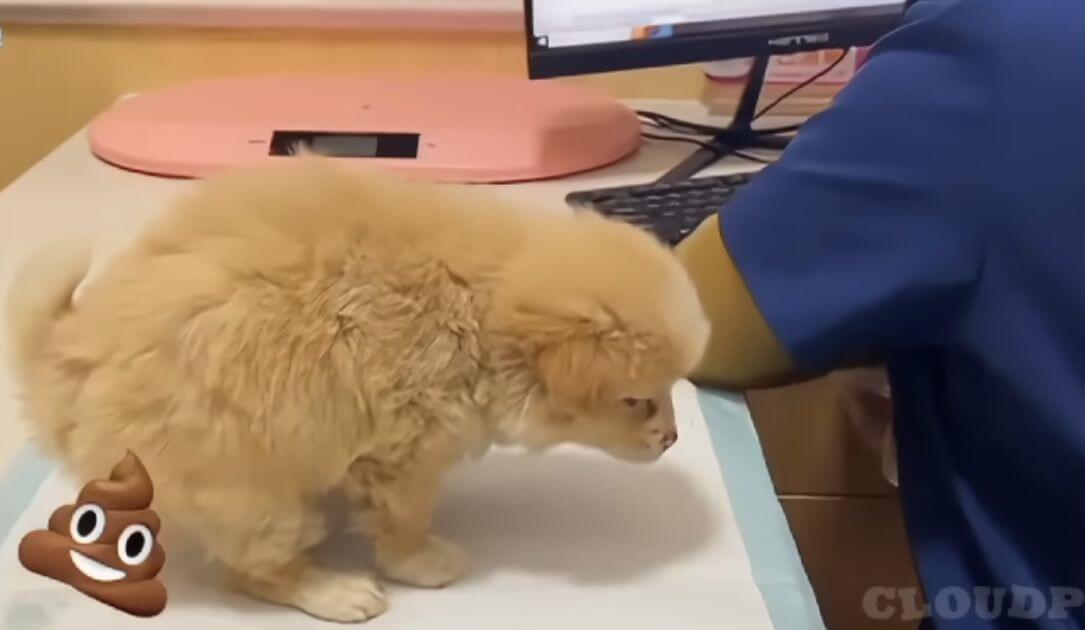
In the middle of the exam, Latte even had an unexpected moment — a messy accident right on the vet’s table — a strangely hopeful sign that his digestive system was still functioning.
Understanding Canine Coronavirus — What It Is and Isn’t
Canine coronavirus has nothing to do with the human coronavirus responsible for the global pandemic.
The CCoV strain is species-specific and affects a dog’s intestines, not the respiratory system.
In older dogs, symptoms can be mild.
In puppies like Latte, the illness can cause severe gut inflammation and dangerous dehydration. Recovery depends on hydration, warmth, nutrition, and careful monitoring — which are exactly the conditions Latte received once he left the clinic.
Warmth, Food, and Routine — The Steps That Helped Latte Heal
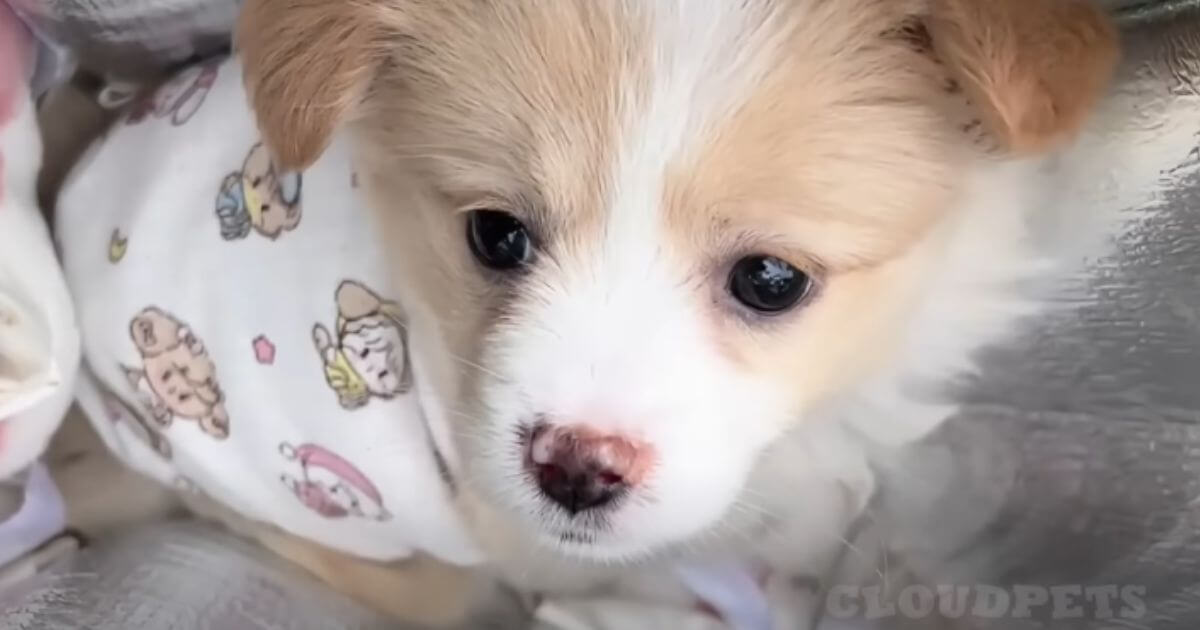
At home, Latte’s rescuer treated him like a newborn. She soaked his food in goat milk to avoid stressing his stomach. She wrapped him in warm clothes when temperatures dropped. She offered small meals, hydration, and a quiet space so his body could rest.
Guidance from PetPlace highlights these same steps for caring for stray or abandoned dogs — immediate vet assessment, soft feeding, controlled warmth, and a stable environment.
As the days passed, Latte nibbled more.
Then he played.
Then he wagged.
Trust began blooming where fear once lived.
When a Personality Returns — Latte Finds His Voice

Weeks after the rescue, Latte transformed. The timid creature under the car became a lively, expressive puppy. He barked at phone noises, demanded attention, explored the backyard, learned “shake,” “sit,” and “spin,” and curled up in warm sleep that was once impossible when survival was his only focus.
His healing wasn’t just physical — it was emotional.
Safety allowed his personality to surface.
Why Latte’s Rescue Matters — Beyond One Puppy’s Story
Stray abandonment isn’t rare.
The Humane Society’s shelter statistics show that large numbers of dogs enter shelters each year, many with unknown backgrounds or signs of neglect.
Latte is a small example of a larger issue — puppies being left behind during their most vulnerable weeks. His rescue underscores how a quiet dog on the street might not be “resting.” Silence can mask illness. Stillness can hide trauma.
And one person’s decision to stop can rewrite everything.
If You Ever Find a Stray Puppy — What Experts Recommend
Guidance from PetPlace outlines several steps to follow:
- Approach slowly and stay low to avoid overwhelming the dog.
- If the puppy freezes or hides, give space until the fear eases.
- Use a towel, leash, or carrier for gentle containment.
- Visit a veterinarian immediately for an exam and parasite or virus testing.
- Provide small, soft meals and warmth.
- File a found-pet report with shelters or local authorities.
- If you can’t keep the puppy, connect with a rescue or foster network.
A few minutes of attention can change a trajectory — just as it did for Latte.
Also check out these rescues:
Left for Dead After a Truck Hit Her, Matilda Fought Back in a Way No One Expected
The Dog Left to Starve in a Locked Cage — and the Rescue That Saved His Life
Latte Today — Healthy, Vaccinated, and Loved
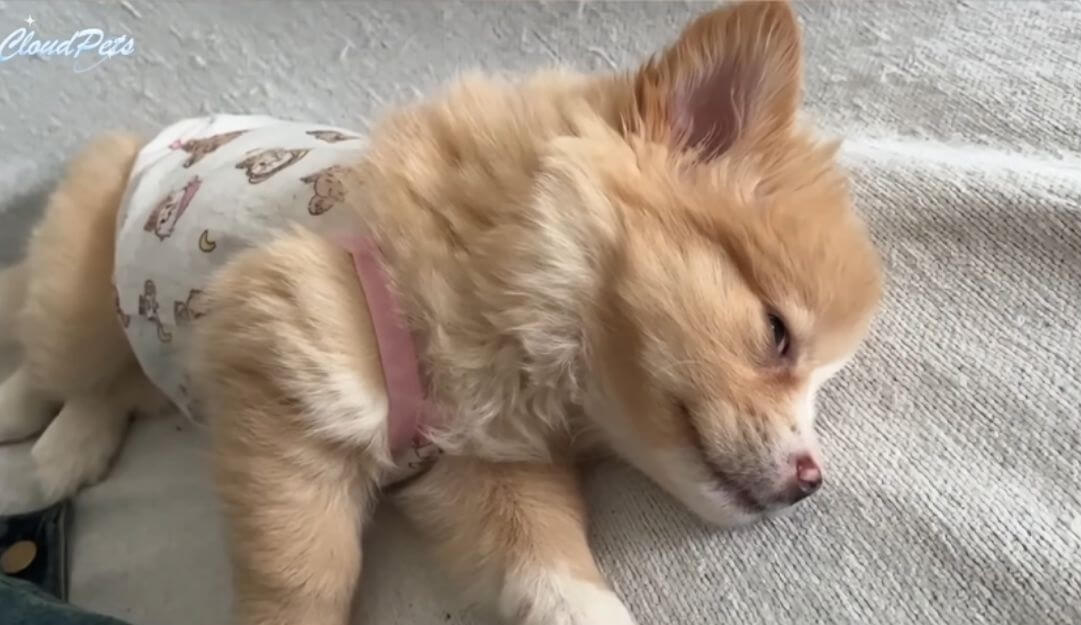
Months after his rescue, Latte recovered fully. He gained weight, built confidence, and received his vaccines — an important part of long-term health that the AAHA Canine Vaccination Guidelines emphasize for all dogs.
His eyes, once dull and scared, now shine with curiosity.
He has a home.
He has a family.
He has a childhood he almost never had the chance to experience.
Latte’s life didn’t change because he was lucky — it changed because someone stopped, looked closer, and chose compassion over hesitation.
And sometimes, that’s all a frightened puppy needs.


