
He Spent 8 Years on Cold Tile. Then Someone Finally Noticed
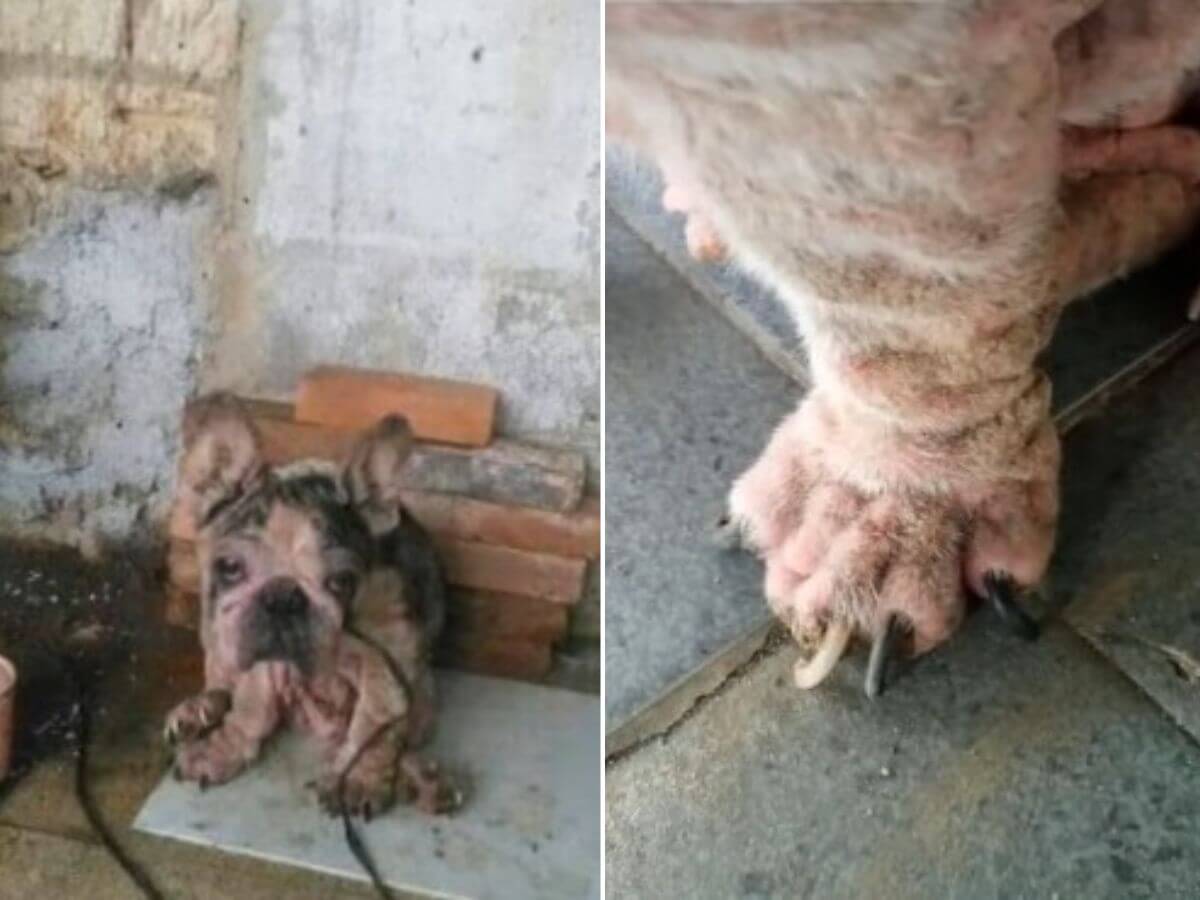
For eight years, Bama slept on tile.
Not a blanket over tile. Not a mat placed gently beneath him. Just hard flooring that held the night’s chill and gave nothing back.
A chain marked the limits of his world. Step forward. Stop. Turn around. Repeat. Day after day. Year after year.
If you’ve ever walked past a yard and seen a dog tied in one spot, you know how easy it is to look away. It blends into the background. It feels ordinary.
For Bama, it was his entire life.
His rescue was documented by Ismawanty and later shared on the Animal Shelter YouTube channel. By the time help arrived, his body carried the evidence of long confinement. Worn joints. Irritated skin. A posture shaped by restriction.
He was not dramatic. He was not loud.
He was quiet in the way long suffering often is.
And for nearly a decade, no one stopped it.
Until someone finally did.
A Life Shrunk to the Length of Metal

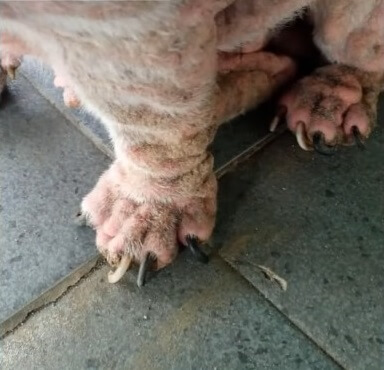
The space where he lived was dim and unclean. Dust clung to corners. The air felt stale. His nails had grown long from lack of trimming. His spine showed strain from restricted movement. His knee joints were painful. Large sections of fur were missing, replaced by irritated, inflamed skin.
He scratched constantly.
Not casually. Not occasionally. It was a reflex born from untreated mange and allergies that had spread across his body.
Neglect often hides in routine. A dog tied up behind a house. A bowl set down once a day. A glance from a distance that says he’s fine.
But the definition of neglect is clearer than that.
According to the ASPCA, “Animal cruelty includes intentional acts of abuse as well as neglect (which is most commonly failure to provide necessary food, water, shelter, or veterinary care.)”
Food alone does not equal care. Shelter is more than a roof. Veterinary treatment matters. Movement matters.
For eight years, those gaps compounded.
What Long-Term Tethering Does
Dogs are built for motion and connection. When those two things are restricted for long stretches of time, the body adapts in unhealthy ways.
Muscles weaken. Joints stiffen. Stress hormones remain elevated. The nervous system never fully settles.
Humane World for Animals states it plainly: “Tethering is not only bad for dogs—it is a high-risk factor in serious dog bites and attacks.”
That sentence speaks to public safety. Beneath it sits something quieter. Chronic restraint can create frustration and psychological strain. Even dogs who never show outward aggression can suffer internally.
In Bama’s case, the strain did not show as biting.
It showed as withdrawal.
He avoided eye contact. He held his body low. He reacted to touch with uncertainty, not hostility.
That kind of silence can be mistaken for calm.
It is not.
The Day Someone Paid Attention
The turning point did not begin with flashing lights or raised voices.
It began with a neighbor noticing that something was wrong.
Reports of neglect often come from ordinary people who decide that silence feels heavier than speaking up. In many communities, that report leads to inspection.
As Best Friends Animal Society explains, “In most places, an owner may be cited by animal control if food, water and shelter are not provided.”
That framework exists so that dogs like Bama are not left invisible.
When rescuers reached him, they described a stillness in the room. He did not lunge. He did not bark. He simply watched.
When they lifted him, his body felt lighter than it should have. He continued scratching in their arms at first. Then one of them held him closer, pressing him gently against their chest.
He stopped.
The scratching paused.
For the first time, he leaned in.
It was a small moment. But it carried weight. As if his body had been waiting years for that kind of contact.
The First Weeks Away From Tile

Recovery began with basics.
Frequent meals to rebuild weight. Medication for mange. Careful treatment for inflamed skin. Monitoring for joint pain and spinal strain.
He was introduced to a soft bed.
At first, he did not step onto it willingly. The surface was unfamiliar. After years on tile, comfort required learning.
The rescuers guided him gently onto the cushion. He sat stiff, uncertain. His body remained tense even while resting.
Then something shifted.
He lowered his head.
Healing did not rush in. It unfolded slowly. The scratching eased as treatment worked. His appetite steadied. Small patches of fur began returning. He rested longer without shifting from discomfort.
Pain management continued. Damage from long confinement does not disappear overnight. But his body began responding to care.
Learning That Space Can Be Safe
Behavioral healing often trails physical recovery.
A dog who has known only one confined space can hesitate in open rooms. Freedom can feel confusing. Silence can feel suspicious.
Bama moved cautiously at first in his new environment. He paused before crossing thresholds. He watched before lying down.
Then he began leaning into touch.
He no longer flinched when approached. He rested without curling into himself. The chain that once set his limits was gone, but the memory of it lingered.
Day by day, that memory softened.
The Home That Changed His Ending

When a family stepped forward to adopt him, the final chapter of his old life closed.
The change was not loud. It was steady.
He had his own bed. His own bowls. Clean floors beneath his paws. Hands that reached for him without restraint.
The dog who once measured his world in inches began moving through rooms without hesitation. He explored corners, then hallways, then doorways. He stretched without hitting metal.
Most of all, he slept deeply.
The kind of sleep that comes when the body finally believes it is safe.
Why This Story Reaches Beyond One Dog
Neglect does not always look extreme. It often looks ordinary. A dog tied up long enough that the years blur together.
Bama’s life might have continued that way if no one had spoken up.
Reporting concerns can feel uncomfortable. It can feel intrusive. But silence can stretch into years.
Eight years passed before someone intervened.
That is a long time for a dog to wait.
No Longer Measured in Chains
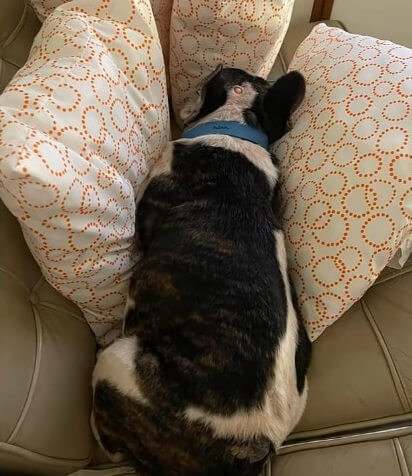
Today, Bama’s life is not defined by tile or metal.
It is defined by warmth. By movement. By quiet routines that include him instead of restrain him.
Eight years left marks on his body. They did not erase his ability to heal.
Someone noticed.
And that noticing changed everything.
If Bama’s story stayed with you, share it with someone who believes small actions matter. Sometimes awareness is the first step toward change.
You may also want to read:
She Was Chained and Couldn’t See, Yet Still Wagged Her Tail at Everyone. Read Shampoo’s rescue story here.
Chained and Forgotten, Lucky’s Life Changed the Moment Someone Climbed the Fence. Read Lucky’s rescue story here.


