
Bibo Bowed His Head and Waited to Die: What Happened Next Saved His Life
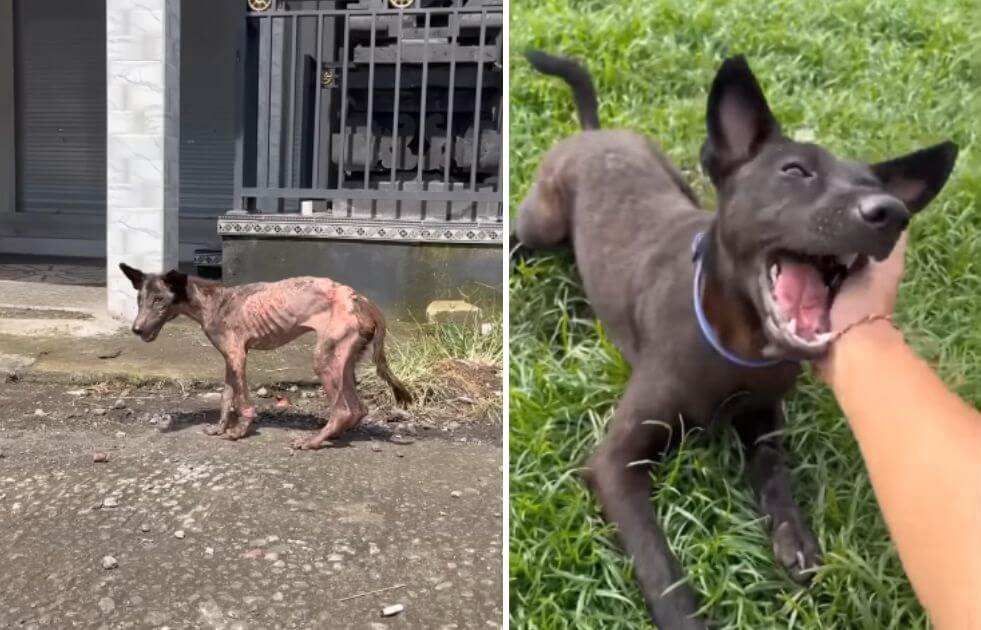
Bibo was only eight months old when his body began to fail him.
Rescuers spotted him on a rural road, moving with the slow, uncertain steps of a dog who no longer expected kindness. His skin was cracked and bleeding, covered in hard scabs formed from untreated mange and weeks of infection.
The bones along his ribs shifted under his thinning coat, and his head hung so low it barely cleared the ground.
Residents had pushed him away for days. Some were frightened by how sick he looked. Others simply turned aside, unsure what to do with a puppy who seemed beyond help.
But even in that state, Bibo kept searching. His chest rose with steady effort. His eyes followed anyone who passed, waiting for someone to stop.
That flicker of hope — small but unmistakably alive — became the reason his life changed that day.
A Body Failing, But a Spirit Still Reaching for Help
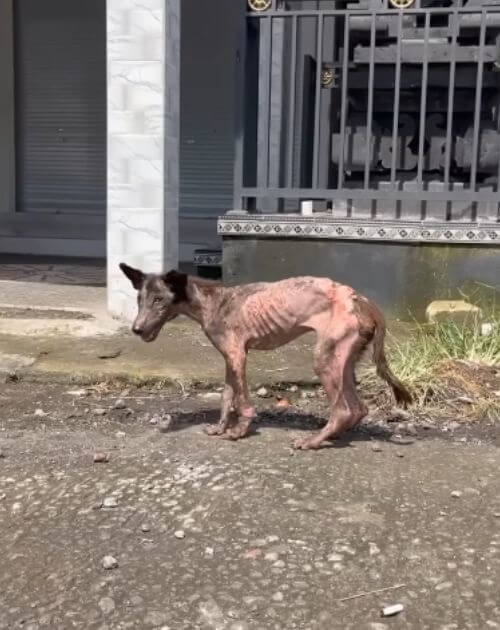
Up close, his condition was worse than rescuers expected. Mange had eaten away most of his coat. Thick scales clung to his skin like plates, but instead of protection, they trapped infection. His ribs showed through his frame. His wounds leaked pus and blood.
Veterinarians often stress how dangerous advanced mange becomes when untreated.
The American Veterinary Medical Association explains that dogs with sarcoptic mange “require medication to kill the mites and additional treatment to soothe the skin and resolve related infections,” noting that reinfestation is a risk when the environment isn’t cleaned.
Bibo didn’t just carry the disease — he carried the consequences of weeks, maybe months, without care.
And he carried something else too: quiet sorrow.
Cornell University’s College of Veterinary Medicine notes that pain can trigger both vocalizations and silence. Their guide lists “vocalizations: whimpering, yelping, or groaning,” alongside “social withdrawal: hiding or avoiding interaction.”
Bibo wasn’t whining. He wasn’t barking. He was shutting down.
His silence was a language of its own.
The Medical Reality Behind His Collapse
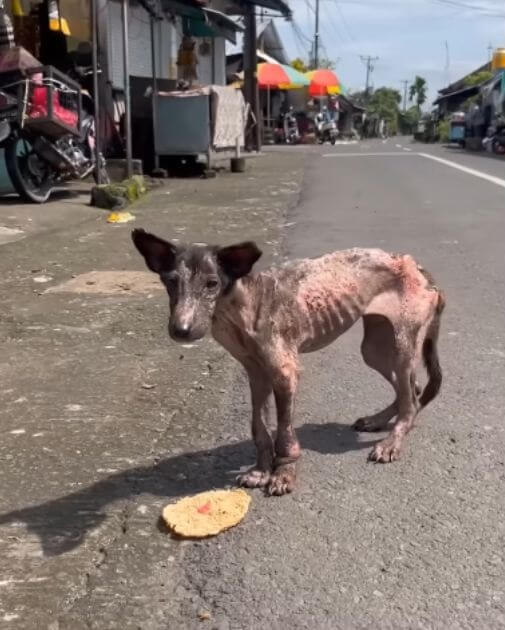
Severe mange leaves a dog vulnerable to infections that spread fast. Starvation weakens the immune system, eroding the body’s ability to fight back.
When rescuers found Bibo, his skin was raw, his temperature unstable, and his body too weak to stand for more than a few seconds.
He tried to drink. He tried to eat. That effort told the team everything they needed to know.
He still wanted life.
Rushed to a clinic, he received antibiotics, parasite medication, hydration, and small amounts of food. Every swallow mattered. Every heartbeat mattered.
Survival wasn’t guaranteed, but Bibo held on.
What Hope Looks Like When It Returns Slowly
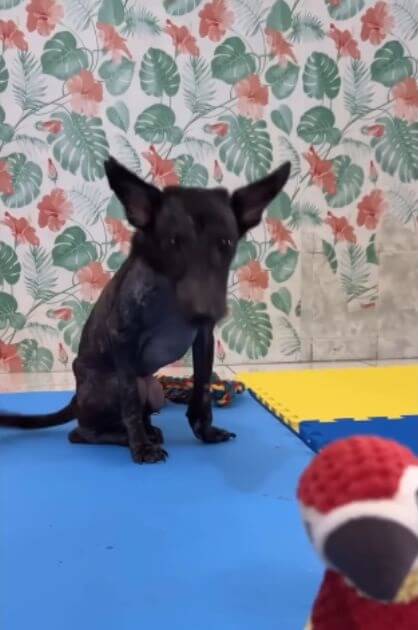
Recovery didn’t come overnight. It came in small, fragile steps.
At first, Bibo flinched when touched. He didn’t know that hands could help.
But the rescue team spoke to him softly, tended to his wounds, and sat beside him during long nights when he could barely lift his head.
Then one day, his tail moved.
Then his eyes softened.
Then he leaned into someone’s palm instead of pulling away.
This wasn’t just physical healing.
It was the slow rebuilding of trust.
When he became stable enough to leave the clinic, Bibo was moved to a foster home where other rescued dogs welcomed him. He watched them closely, learning what safety looked like.
For the first time in his short life, he wasn’t alone.
The Hidden Injury That Nearly Stole His Mobility
Even after his skin improved, one problem remained. Bibo walked with a limp that didn’t match his level of recovery.
Under his mange and infection, an untreated leg injury had been hiding — the kind that twists or heals incorrectly when left ignored for too long.
The vet fitted him with a splint, and his routine shifted again. Rehabilitation exercises. Gentle stretching. Short walks. Rest. Then more walking.
Through it all, he greeted caretakers with sloppy kisses, as if thanking them with every breath.
And then came the moment no one expected:
Bibo ran.
Not a stumble.
Not a slow walk.
A full, joyful run.
His rescuers cried watching him.
From Desperation to a Life Filled With Comfort
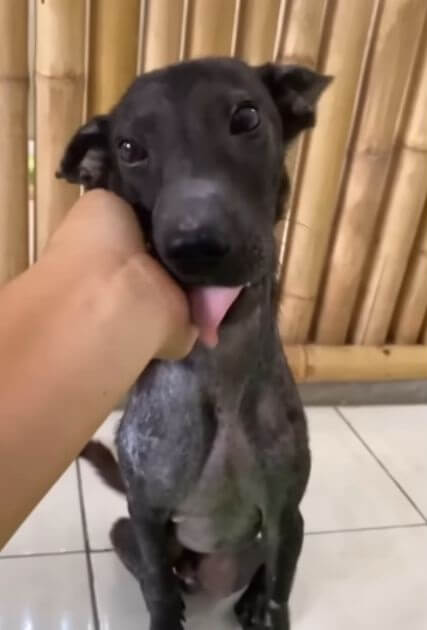
His fur is growing now. His weight is healthy. His tail rarely stops moving.
He naps in sunny corners, plays with other dogs, and seeks cuddles from humans he once feared.
Bibo didn’t just recover.
He reclaimed life.
A Crisis Bigger Than One Dog
As moving as Bibo’s comeback is, he represents something global.
FOUR PAWS, citing the World Health Organization, reports that there are nearly “200 million stray dogs worldwide,” with even more stray cats struggling on the streets. Most fight daily for food, water, and shelter — just like Bibo.
Many never make it to a rescue. Many never receive medication, clean water, or a gentle touch.
His story brings visibility to a problem most communities overlook.
Why So Many Sick Dogs Are Ignored
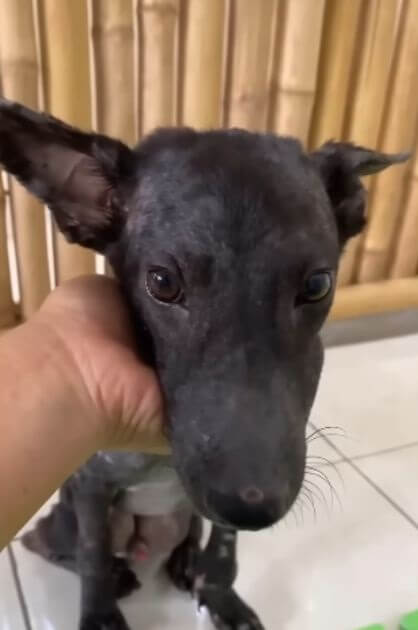
Villagers avoided Bibo not because they were cruel, but because fear and misunderstanding shape human responses to diseased animals.
Behavioral researchers point out that people often distance themselves from what they don’t understand — especially when illness is visible and severe.
When dogs suffer from mange, infections, or starvation, their appearance can trigger avoidance instead of assistance. This avoidance, repeated across towns and villages worldwide, leaves millions of animals suffering in silence.
Bibo was one of them. Until someone finally stopped.
What You Can Do When You Find a Dog Like Bibo
Many people want to help but don’t know where to start. Following guidance from Humane World for Animals can prevent harm and protect both the animal and the person assisting.
1. Approach calmly
Move slowly. Speak softly. Sick dogs are easily startled.
2. Don’t use home remedies
Never apply oil, powders, or household products. These make infections worse.
3. Contain gently
A towel or crate works well if the dog can be moved safely.
4. Report cruelty or medical emergencies
Humane World recommends: “Call your local animal control agency, or 9-1-1 if you’re unsure. Document what you see and provide as much detail as possible.”
5. Seek veterinary care immediately
Dogs with severe mange and infections need professional treatment — not temporary fixes.
Your intervention can be the difference between slow suffering and a new beginning.
A Final Look at What Bibo Teaches Us
Bibo teaches what happens when someone refuses to look away.
He teaches that even the most broken body can rise again with care.
He teaches that kindness is not small — it changes lives.
There are thousands like him waiting for someone to stop, kneel, and offer help.
Also check out these rescues:
Bonnie Was Left Paralyzed on the Road: What Happened After Will Break You
Watch Bibo’s Rescue Video
His full journey was documented in detail, from the moment rescuers found him bowing his head in defeat to the day he walked confidently across the clinic floor.
The transformation is heartbreaking, powerful, and unforgettable.
You can watch the complete rescue on the Animal Rescue YouTube Channel:
Share Bibo’s Story
Sharing brings visibility to dogs who look just like Bibo — the ones people pass by, the ones who need compassion most.
Your share might inspire someone to stop for a dog in the same condition.
If Bibo’s comeback touched you, let others feel it too.
A single post can open a door to hope for another life waiting on the street.


