
Her Spine Was Bent From Hunger. Then One Simple Meal Saved Blair’s Life
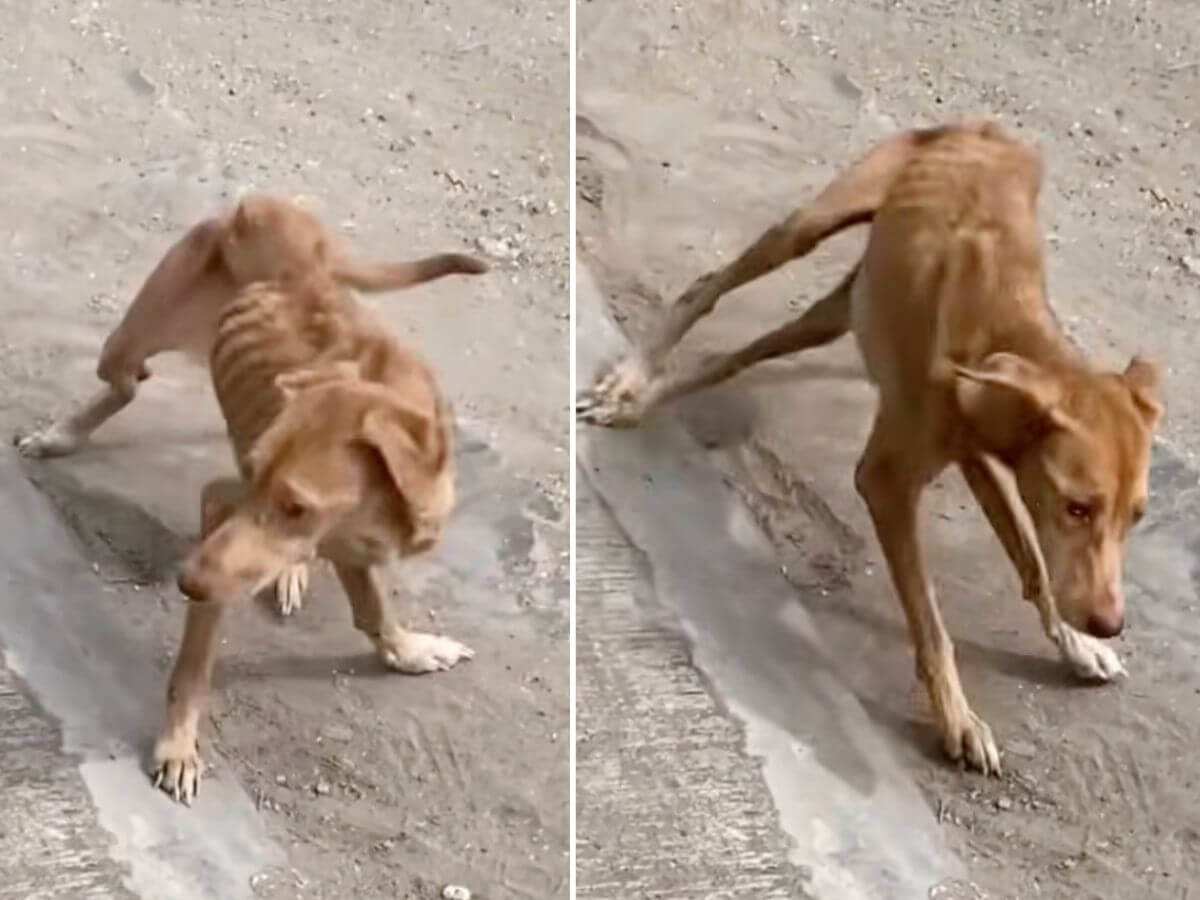
On a quiet street in the Philippines, a small stray dog named Blair was barely holding on.
Her body was painfully thin. Hunger had drained nearly every ounce of strength from her fragile frame. Long weeks without food had begun to twist her posture, leaving her spine bent and her movements slow and uncertain.
Each step looked like work.
Anyone passing by could see she was struggling just to stay upright.
Then something caught her attention.
A rescuer was walking nearby carrying food.
Despite the weakness in her legs, Blair rushed forward as fast as she could manage. Her paws slipped against the ground as she stumbled, her body struggling to keep up with the urgency of her hunger.
She looked as if she had nothing left.
Yet she kept moving.
Rescuers later said the moment was difficult to forget. The dog clearly had almost no strength remaining, but she was still trying to reach the one thing that might keep her alive.
They said, “When Blair saw me carrying food, she rushed straight to me.”
That single moment revealed just how desperate her situation had become.
What happened next would determine whether Blair survived the week.
A dog running on nothing but hope
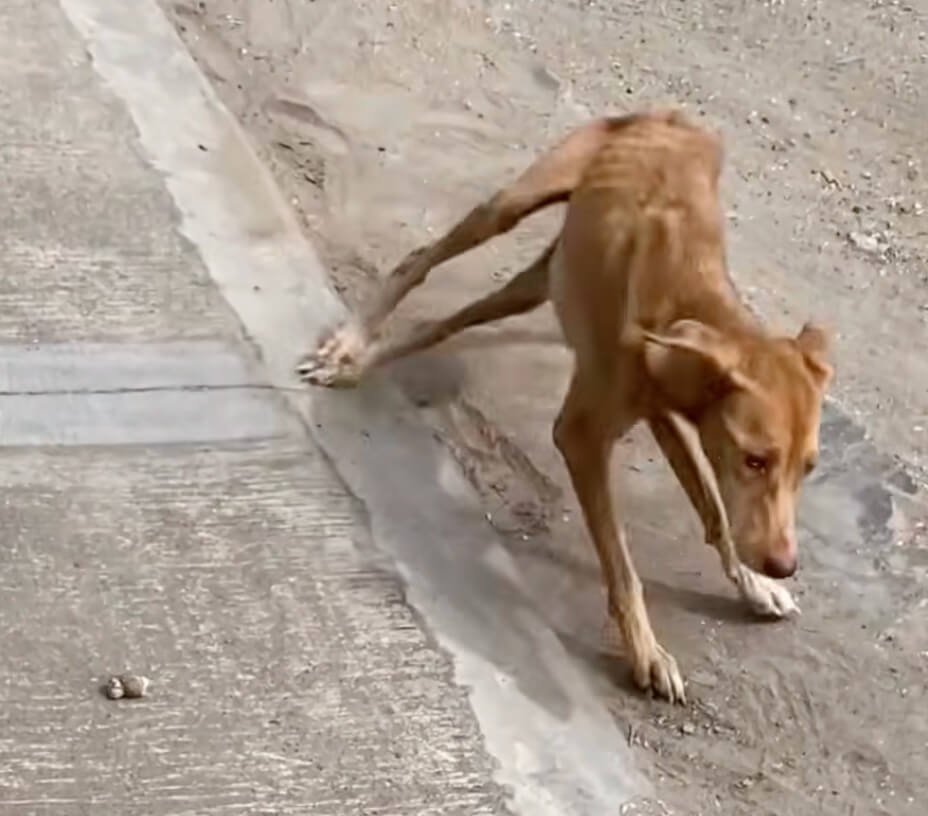
Up close, Blair’s condition told a difficult story.
Her ribs showed through her thin coat. Her body trembled with exhaustion. The effort of walking just a few steps left her unsteady.
But it was her eyes that stayed with the rescuer the most.
They were cautious and uncertain. They watched every movement carefully, as if she expected the kindness to disappear at any moment.
When food was placed in front of her, Blair began eating right away.
She devoured every bite with urgency. At the same time, she kept glancing around nervously, unsure whether the moment would last.
For dogs living on the streets, hunger can slowly shut down the body. Veterinary guidance explains that “If a dog does not get these essential nutrients, he can fall victim to a number of different health issues, causing him to become weak, lethargic, or even threatened by death.”
Without proper nutrition, a dog’s muscles weaken, organs struggle to function, and even basic movement becomes difficult.
Blair looked dangerously close to that point.
The rescuer understood something right away.
One meal would not be enough.
The decision that saved her life
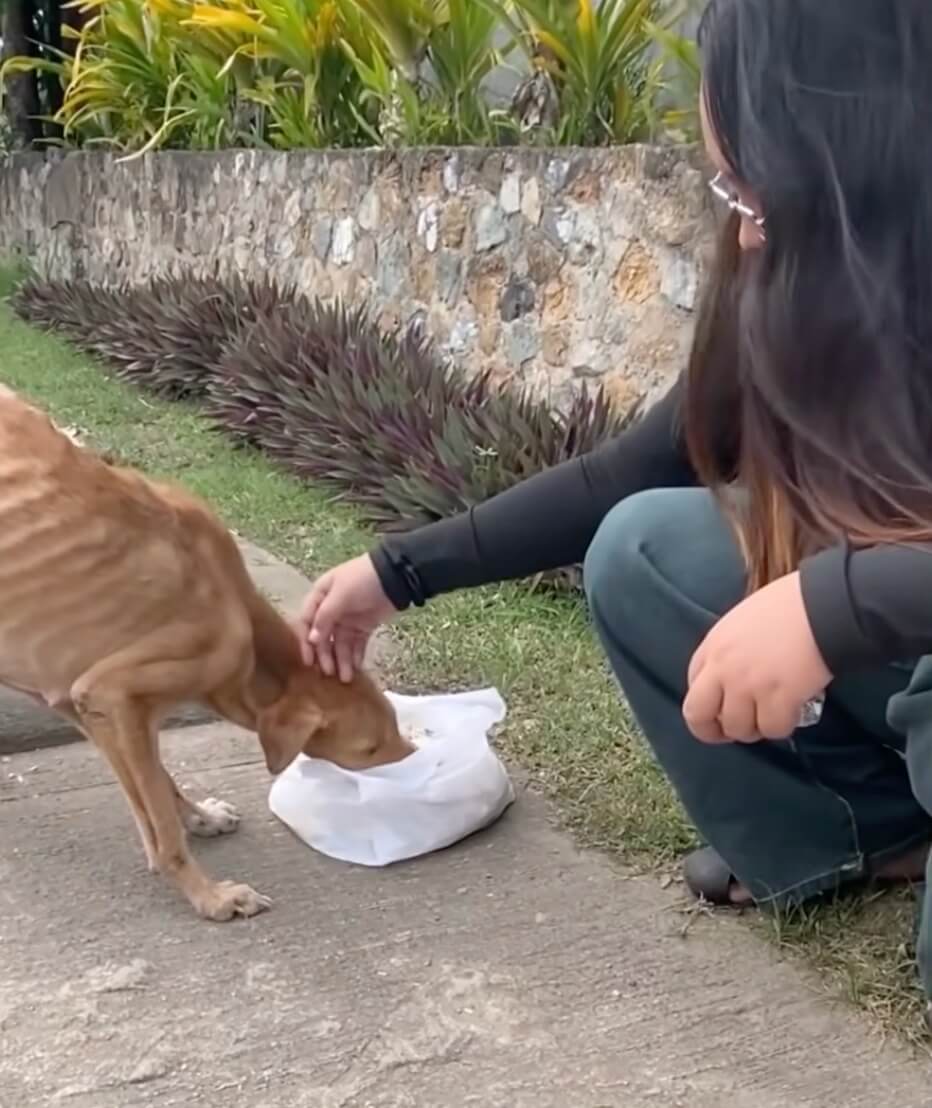
After Blair finished eating, the rescuer gently approached her.
Despite the fear in her eyes, Blair remained calm. She allowed herself to be picked up, her body too weak to resist.
The decision was immediate.
She needed medical help.
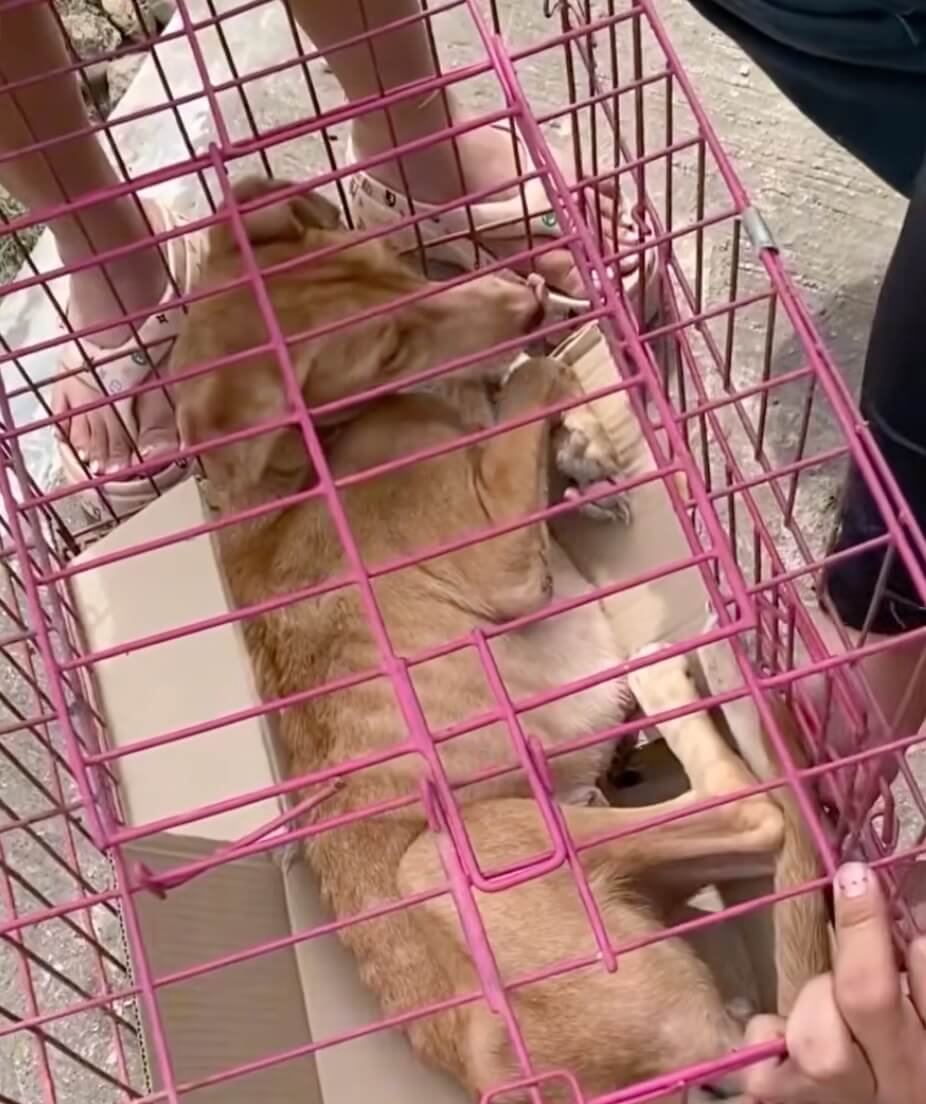
Blair was placed in a vehicle and taken straight to a veterinary clinic. The trip introduced her to unfamiliar sounds, strange places, and new people. For a dog that had likely spent much of her life surviving alone, the experience must have been overwhelming.
Yet she stayed quiet.
She lay still during the journey, watching the rescuers carefully as they tried to help her.
At the clinic, veterinarians began examining her condition.
What they discovered showed just how close Blair had come to losing her fight.
What the veterinarians found
Blair’s weight was dangerously low.
Her muscles had weakened from prolonged hunger. Her body was severely dehydrated, and her energy reserves were nearly gone.
Veterinary teams often see these same symptoms in animals rescued from long periods of starvation. According to shelter medicine guidance, “Dogs who are malnourished are also usually dehydrated.”
Dehydration makes starvation even more dangerous because the body loses the fluids needed to support organs and circulation.
That combination can quickly become life-threatening.
The bent spine that worried everyone at first was not caused by permanent injury. Instead, veterinarians believed it was the result of extreme weakness and malnutrition.
With proper care, they believed there was still hope.
But Blair’s condition left little room for delay.
Treatment had to begin immediately.
Feeding Blair back to life
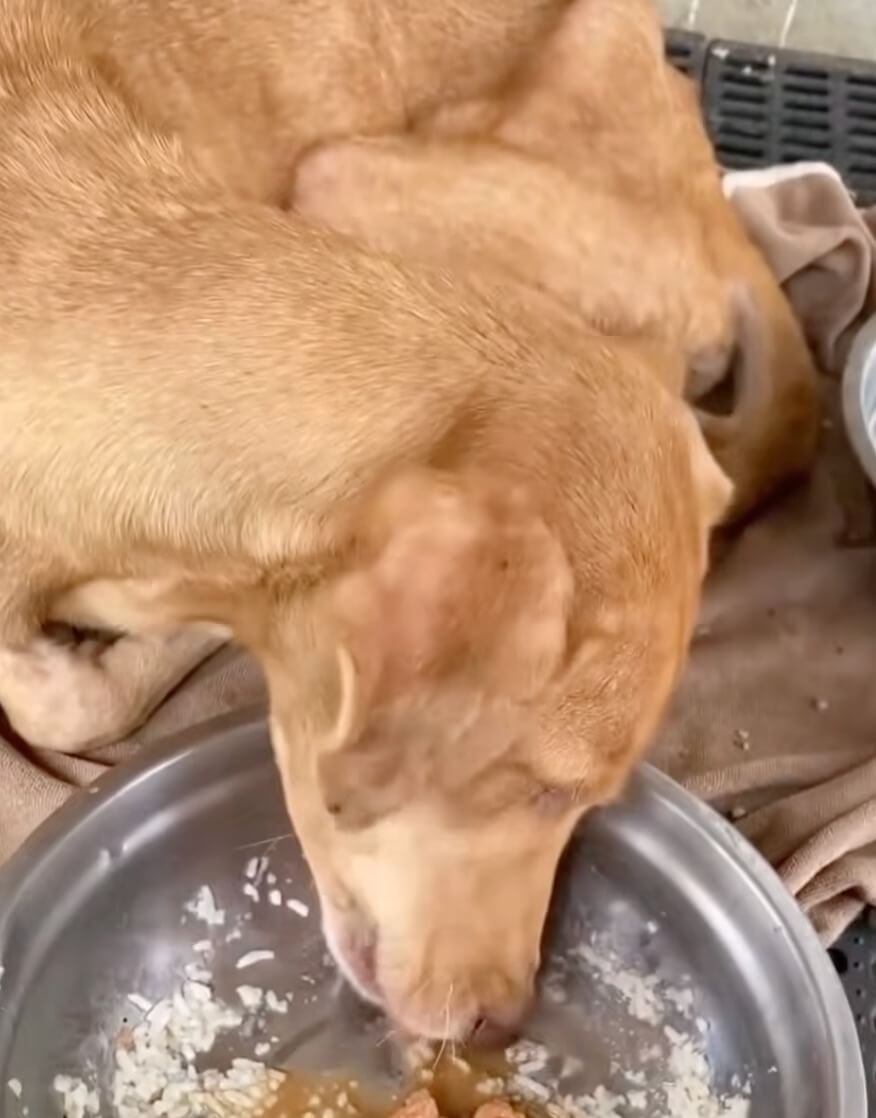
The rescue team created a careful recovery plan.
Blair would receive hydration, medication, and a controlled feeding schedule designed to rebuild her strength slowly.
Starving animals cannot safely eat large amounts right away. Their bodies need time to adjust. Veterinary shelter medicine programs warn that “The major complications of refeeding are related to electrolyte imbalance.”
When animals begin eating again after severe starvation, sudden nutritional changes can disrupt the body’s chemistry.
Because of that risk, Blair was given small meals several times throughout the day.
And she ate.
Every meal seemed to bring a little more life back into her body. Her appetite was strong, as if her instincts knew she had finally found safety.
Over the next few days, subtle changes began to appear.
Her condition stabilized. The trembling in her body started to ease. With rest and proper nutrition, the curve in her spine slowly began to relax as her muscles regained strength.
The rescuers later reflected on how close Blair had come to death.
As one of them explained, “If she had stayed on the street for another week, she wouldn’t have survived.”
It was a sobering thought.
Blair had been living on borrowed time.
The slow return of strength
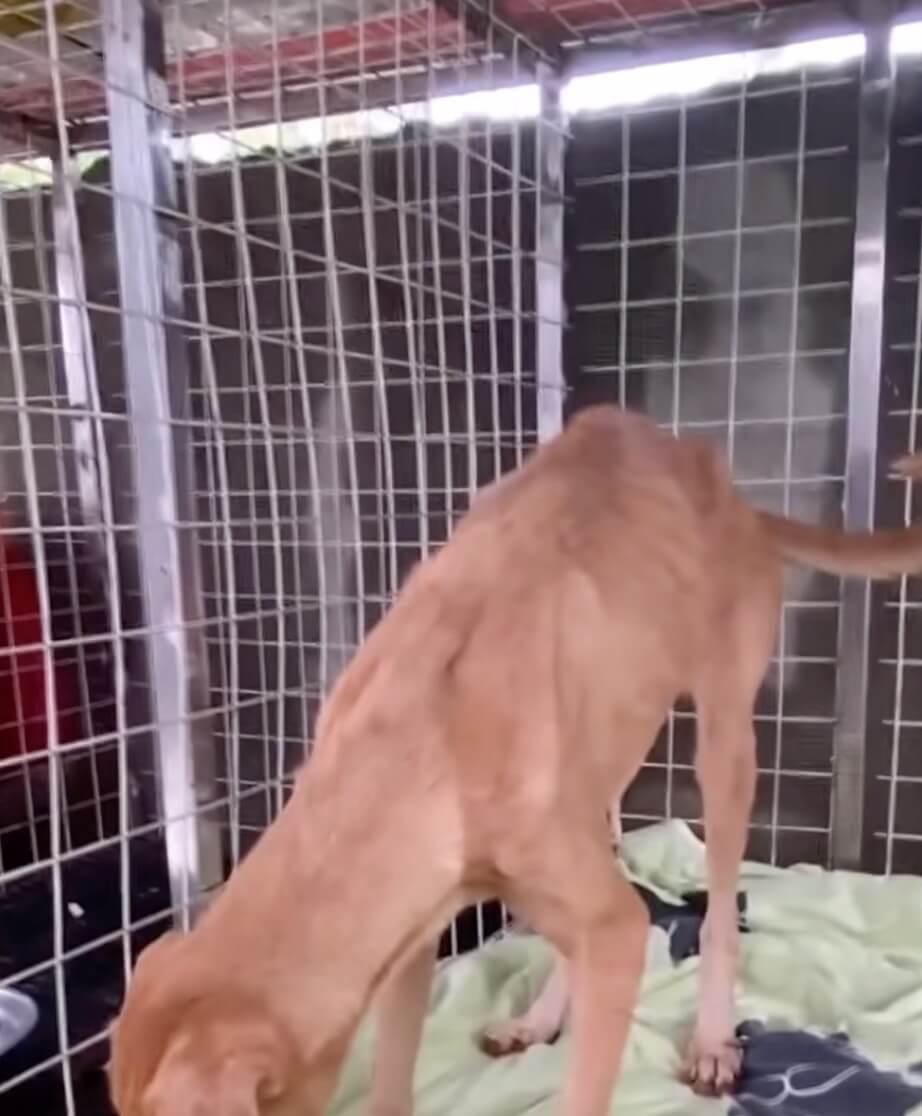
Days passed. Then weeks.
With each passing day, Blair looked a little stronger.
Her body began filling out again. Her steps became steadier. The fragile dog who once struggled just to walk was now moving with growing confidence.
For the rescuers watching her recovery, the transformation was deeply rewarding.
Every small improvement felt like a victory.
Blair’s personality also started to show. She became curious about her surroundings, watching people closely and slowly learning that gentle hands could mean safety.
Eventually, the day arrived when the veterinary team felt confident enough to send her home.
But Blair was not returning to the streets.
A permanent home
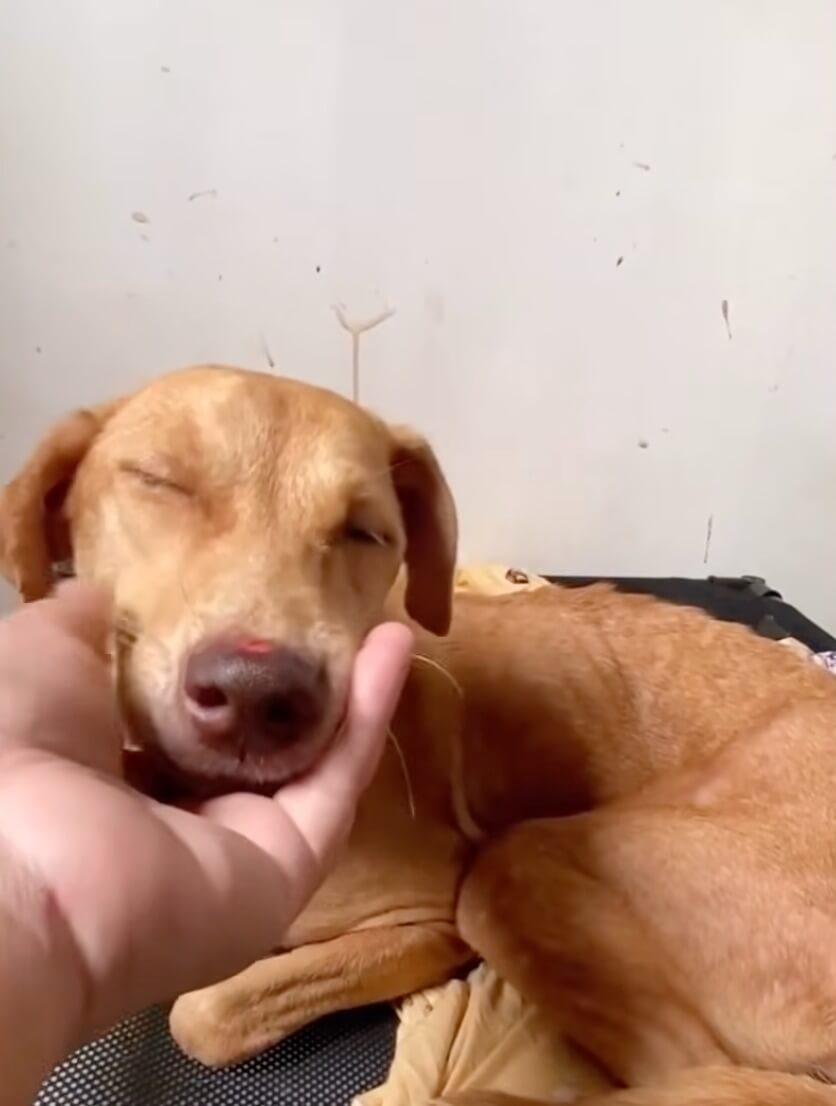
By the time Blair was ready to leave the clinic, one thing had already become clear.
The rescuer who first fed her could not imagine sending her anywhere else.
The same person who had offered her that first lifesaving meal made a decision that would change Blair’s life forever.
She would stay.
Blair was welcomed into the rescuer’s home as a permanent member of the family.
For a dog that had once struggled to survive alone, the change was profound.
The frightened stray who had trembled on the street was now surrounded by warmth and care.
From starving stray to beloved family dog
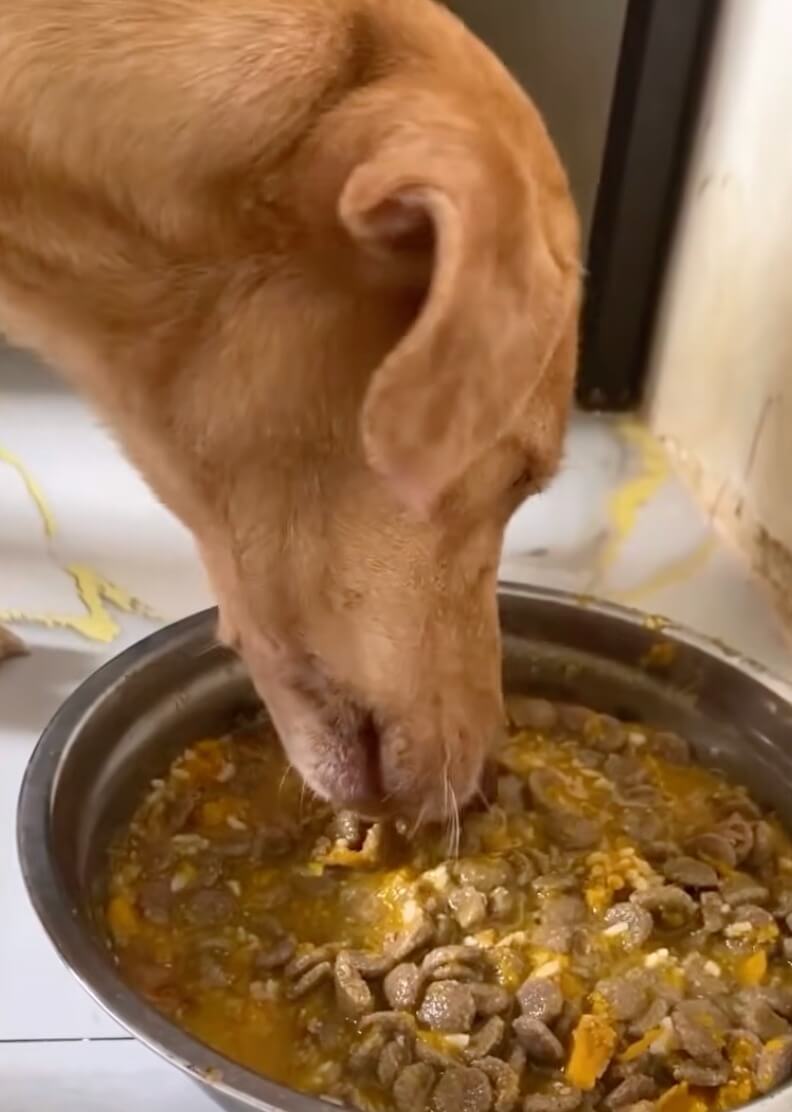
Today, Blair’s life looks very different from the one she once endured.
Her body is healthy again. She runs, plays, and moves freely without the weakness that once bent her spine.
She follows her rescuer around the house and sleeps peacefully beside the person who first showed her kindness.
The bond between them began with something simple.
A bowl of food.
For Blair, that small act became the moment that changed everything.
The dog who once had nothing now has a safe place to rest, regular meals, and a family that cares for her every day.
And the dog who once struggled just to stand now wakes up each morning knowing she is safe.
Why stories like Blair’s matter
Blair’s rescue story offers a reminder of how fragile life can be for stray animals.
Many dogs living on the streets face hunger, illness, and constant uncertainty.
Sometimes survival depends on a single moment.
One person noticing.
One act of kindness.
One meal placed in front of a dog who has almost given up.
Blair’s story shows what can happen when compassion arrives at exactly the right time.
If her journey moved you, consider sharing it so more people can see how a small act of care can change an animal’s life forever.
You may also want to read these rescue stories:
She Crawled Toward a Food Bowl After Years in Darkness. Rescuers Realized She Still Wanted to Live
He Waited Outside a Grocery Store. What He Was Hoping For Wasn’t Food


