
They Painted This Kitten Blue and Left Her in the Rain: Her Rescue Will Break and Heal You
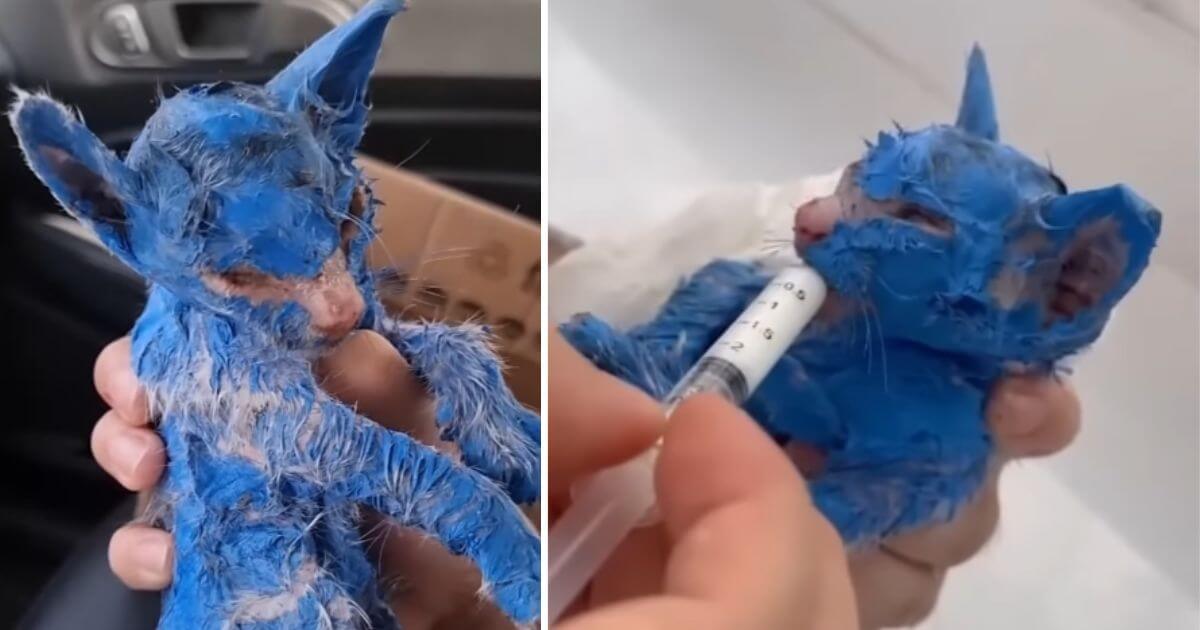
Blue wasn’t supposed to be blue.
She was just a kitten trying to survive a storm when her rescuer Amauri Gomes spotted her moving slowly down an empty road, rain beating against her tiny body.
Under the streetlights, her fur looked almost unreal—coated in hardened layers of cheap blue paint that split apart every time she tried to take a step.
Each crack revealed patches of raw skin beneath, the kind that form only after long exposure to chemicals and cold.
She paused when the rescuers approached, as if she no longer had the strength to run or protest.
She was wrapped gently in a towel and lifted her from the pavement. She didn’t claw or cry. She didn’t flinch. She only stared, worn down in a way no kitten should ever be.
That night wasn’t just the start of her rescue.
It was the moment a painted stray became a symbol of a much larger problem.
Used as a Toy, Treated as Trash
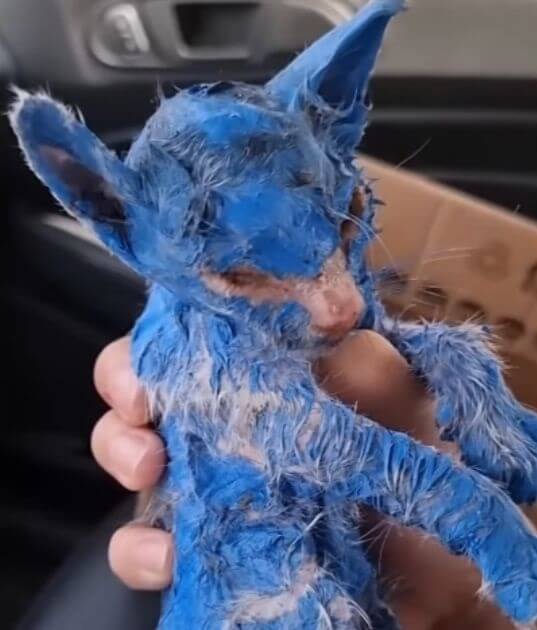
Blue’s natural fur—soft white and gray—was barely visible beneath the layers of paint. Rescuers suspected she had been handled like an object meant for entertainment. The hardened coating across her fragile body told its own story.
This wasn’t an accident. Someone had painted her for amusement, then abandoned her in the rain when the fun was over.
Cruelty toward small animals often stems from a deeper behavioral pattern.
American Humane notes that “a correlation between animal abuse, family violence and other forms of community violence has long been established,” adding that when an animal in a home is harmed, “others in the household may not be safe.”
This pattern helps explain why cases like Blue’s surface across neighborhoods every year, often unnoticed until a helpless animal becomes the evidence.
Paint itself adds another layer of danger.
The American Veterinary Medical Association warns that “paint thinners, mineral spirits, and other solvents are dangerous and can cause severe irritation or chemical burns,” and some paints contain “heavy metals or other substances that could be harmful if inhaled or swallowed.”
For a kitten barely old enough to survive on her own, this level of exposure is life-threatening.
Inside the Rescue: What Her Body Endured
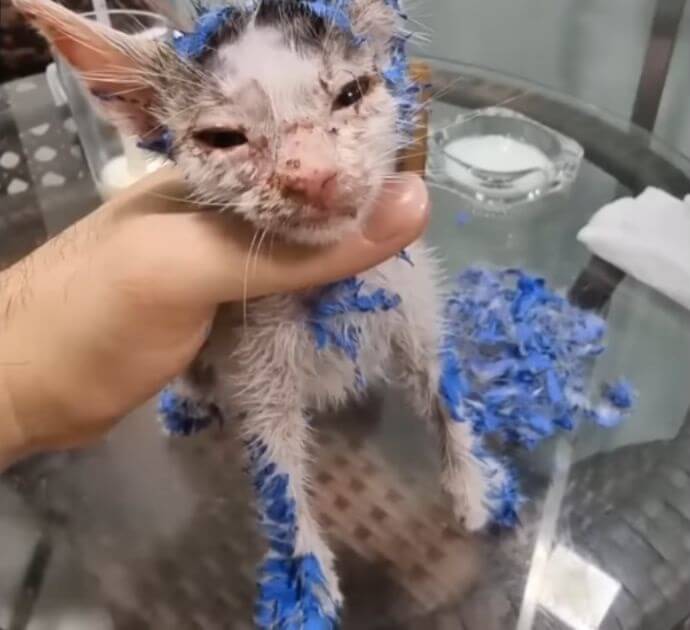
The first bath was almost ceremonial. Rescuers used pet-safe cleaners, oils, and warm water to soften the paint. Clumps of fur slid away with each rinse. Some areas were raw from the chemicals. Blue winced, but she never lashed out.
Many abused cats express pain through vocalization.
Veterinarians at SplootVet explain that “increased meowing, yowling, or crying” can signal pain-related distress. Blue didn’t cry much—another behavioral response often seen in terrified animals who have been punished for making noise.
Her silence said more than sound ever could.
She was dehydrated, weak, and unable to eat. For days, she had to be syringe-fed while staff monitored her vitals and kept her warm under soft blankets.
The Science Behind Her Recovery
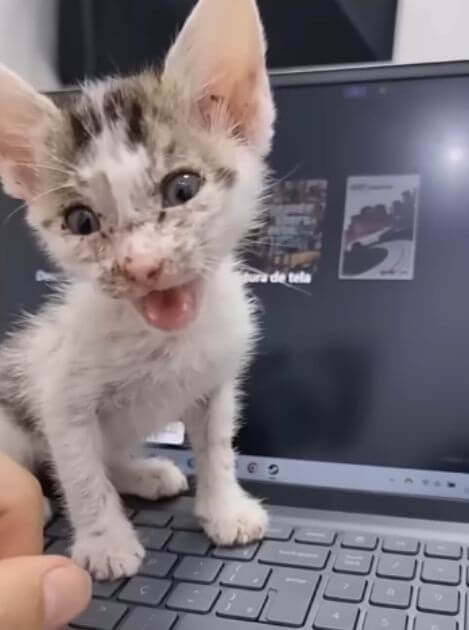
Slowly, the layers of paint disappeared, and her natural fur began to reappear. Blue’s eyes softened as her strength returned. Trust seemed to take root the moment she realized no one would hurt her again.
Behavioral specialists often describe this shift as an emotional thaw. A safe environment changes how an injured kitten behaves. Blue’s willingness to be handled, even through discomfort, showed she still believed in people.
Sunlight became her therapy. As her skin healed, she spent long stretches resting in warm rays, blinking with a calmness that had been absent on the night she was found.
From Victim to a Life Reclaimed
Weeks passed, and Blue became a different cat. Her appetite returned. Her weight increased. She started chasing toys, jumping on soft beds, and playing with other rescued kittens as if she had always belonged among them.
One year later, she’s nearly unrecognizable. Her once-painted fur is thick and clean. Her movements are confident. She curls into laps and purrs with a softness that makes her past feel distant.
She went from a discarded kitten in a storm to a beloved companion with a full life ahead.
Why Blue’s Story Mirrors a Global Crisis
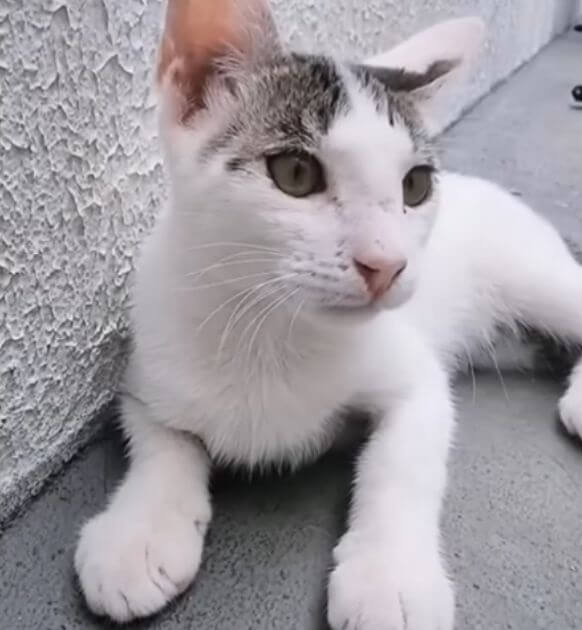
Blue is safe now, but millions of animals never make it to this point.
The ASPCA reports that “5.8 million dogs and cats entered shelters and rescues in 2024” and that “approximately 607,000 animals were euthanized in shelters in 2024.”
These numbers show just how many pets are abandoned, surrendered, or neglected every single year.
Every kitten left outdoors becomes part of that statistic. Every cruelty case that goes unreported contributes to the crisis.
Blue survived because someone saw her and cared enough to stop.
Why Some Animals Are Harmed: What Experts Say
Psychology researchers often point to a combination of factors that shape cruelty toward animals:
- Lack of empathy modeling in childhood
- Exposure to violence in early life
- Viewing pets as objects instead of living beings
- Desire for control or dominance
As American Humane outlines, this link between animal harm and household violence is a warning sign that extends far beyond pets. Blue’s case is small compared to what happens behind closed doors across thousands of homes worldwide.
What You Can Do When You Find an Injured or Painted Animal
Many people want to help but aren’t sure how. The following steps align with guidance given on leading animal welfare sites:
- Approach Carefully
Move slowly and speak softly. Injured cats often react out of fear.
- Avoid Home Remedies
Never try to remove paint or chemicals yourself. Many products worsen chemical burns.
- Contain Safely
Use a towel or small carrier. Keep the animal warm.
- Contact Local Authorities or Shelters
Both the ASPCA and the Humane Society encourage reporting cruelty immediately. In the U.S., Animal Control and local shelters handle these calls. For instance, you can even dial 9-1-1 and report
- Request a Veterinary Evaluation
Paint, adhesives, and solvents require professional treatment.
These small steps can turn one frightened animal into another survival story like Blue’s.
Also check out these rescues:
Bibo Bowed His Head and Waited to Die: What Happened Next Saved His Life
Bonnie Was Left Paralyzed on the Road: What Happened After Will Break You
A Larger Reflection: What Blue Tells Us About Our World
Cruelty toward animals often reveals something broader about society. When a kitten can be painted and abandoned in the rain, it reflects a deeper disregard for the powerless.
And when communities step in to help, it shows how compassion can change the course of a life.
Awareness saves animals. Reporting saves animals. Sharing stories like Blue’s pushes cruelty out of the shadows and into the public eye, where it can be challenged.
Watch Blue’s Rescue Video
For anyone who wants to understand the full weight of Blue’s journey, her rescue was documented by the team who found her shivering in the rain.
Their footage shows the careful steps it took to remove the layers of hardened paint and the quiet moments when her trust began to return.
Her transformation is visible in every frame, from the first fragile bath to the day she finally curled into a soft bed without fear.
You can watch the complete rescue on the Pray4Dogs YouTube channel to see how her story unfolded from the very beginning.
Share Blue’s Story
Blue’s future changed because someone stopped to help her. Many animals never reach that moment of safety.
Stories like hers travel far when readers share them, and that ripple effect often leads to more rescues, more reports, and more awareness in communities that need it.
If Blue’s recovery moved you, sharing her story might bring attention to an animal facing the same pain right now.
A single post can push cruelty into the light, where more people can step in and act.


