
Left to Fade in the Forest, Bono’s Fight for Life Became a Second Chance No One Saw Coming
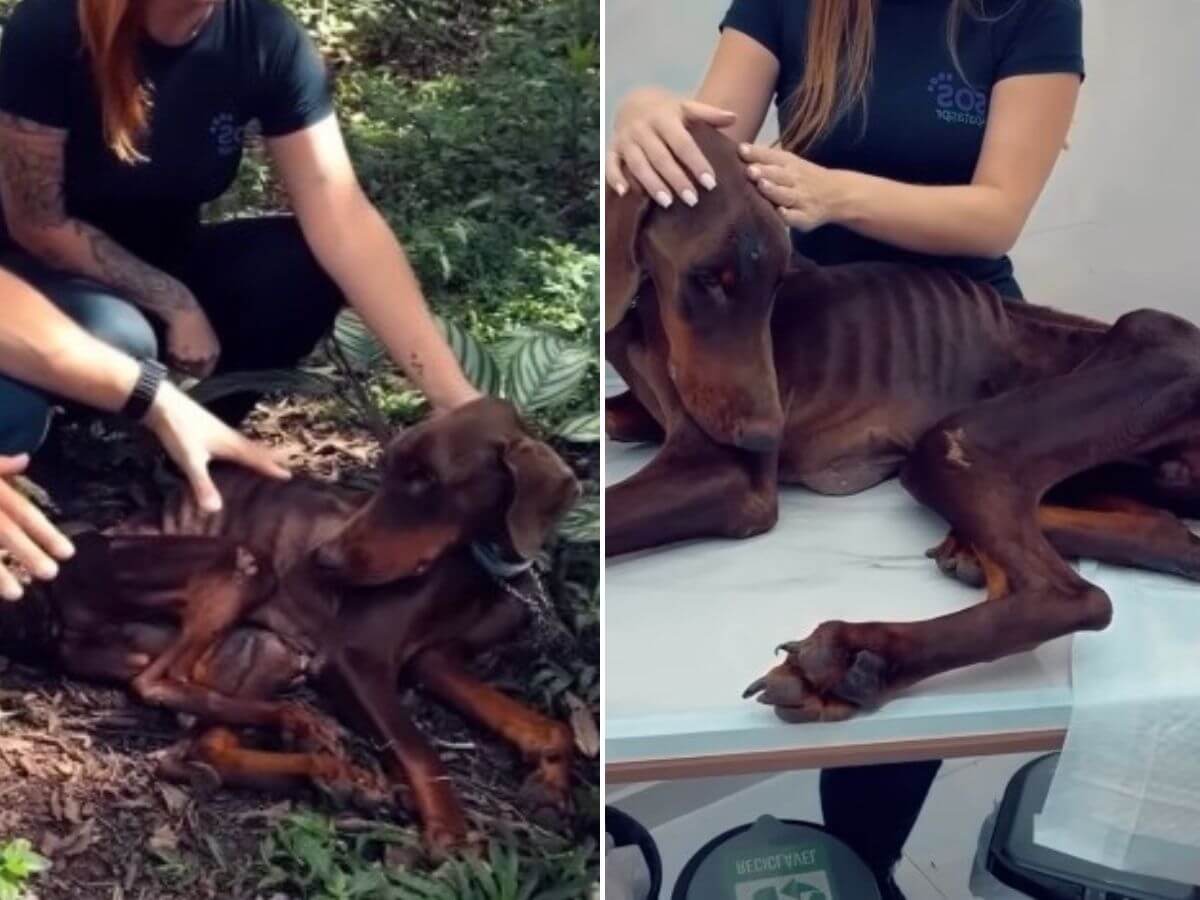
Deep in a quiet stretch of forest, far from traffic and homes, seven dogs were fighting to stay alive.
There were no bowls. No shelter. No water in sight. No sign that anyone planned to return.
When rescuers from SOS4Patas arrived with police after receiving a disturbing video from the area, they stepped into something far worse than the footage suggested.
The dogs were skeletal. Their ribs pressed sharply against paper-thin skin. Some could not lift their heads. One collapsed when volunteers tried to help him stand.
One of them barely moved at all.
His body was so depleted that even breathing looked exhausting. He did not resist. He did not bark. He simply lay there.
His name would later be Bono.
Rescuers would later admit that “The situation was truly frightening.”
They were not exaggerating. What they found was not recent neglect. It was prolonged starvation. And for one dog in particular, survival would depend on what happened in the next few hours.
The Scene No One Was Meant to See
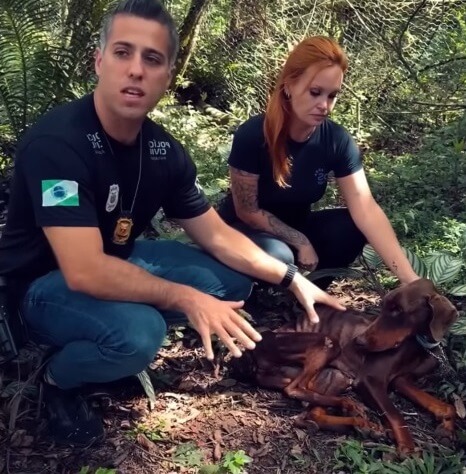
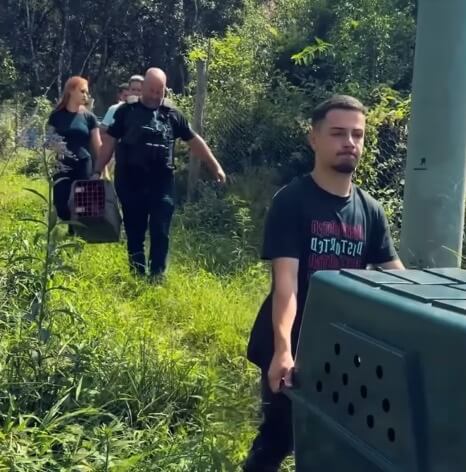
The property belonged to a pet store owner. Authorities moved quickly once the location was confirmed. Police secured the area while volunteers carried each dog out one by one.
Some dogs trembled when lifted. Others were too weak to react at all.
They were transported straight to a veterinary hospital.
Doctors who received them were stunned. The level of starvation was extreme. Staff began stabilizing body temperature and administering fluids before even discussing long-term care.
Seven dogs. Shorty. Florinda. Bono. Jalak. Rafael. Mabel. Shaka.
All hospitalized. All under monitoring.
Virus tests came back negative. That small result gave the team room to focus on the real threat: malnutrition.
Bono was the worst case.
When Starvation Becomes Life-Threatening
Severe malnutrition affects far more than body weight. Organs shrink. Muscles weaken. Immune defenses collapse.
Many people believe the solution is simple. Feed the dog immediately. Feed them a lot.
Veterinary science says otherwise.
According to ASPCA Pro, “The desire to generously feed a starving animal is human nature, but can have disastrous consequences if done incautiously.”
That sentence guided every decision.
Feeding too much too quickly can trigger refeeding syndrome. Electrolytes shift rapidly. The heart can struggle. Internal organs can fail.
PetMD states the risk plainly: “In extreme cases, organ dysfunction can become severe enough that the dog dies.”
That was the risk Bono faced.
His muscles were weak. His temperature unstable. He was too fragile for surgery, even though doctors already knew he would need one to correct underlying issues.
Too Weak for the Operation That Could Save Him
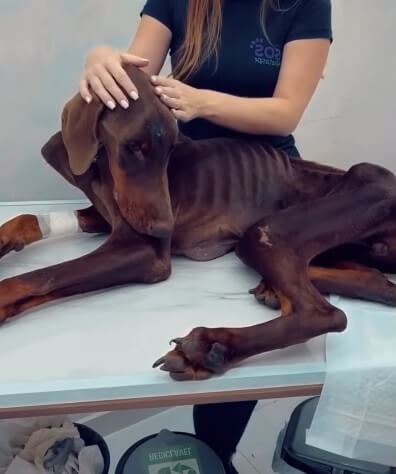
While the other dogs slowly gained strength, Bono lagged behind.
Doctors made a careful decision. Surgery would wait.
First came controlled feeding. Small portions. Timed intervals. Bloodwork checked daily.
The ASPCA outlines this process clearly: “Dogs on a re-feeding diet are initially fed small amounts of food that are slowly increased over about two weeks.”
Those two weeks became the line between life and death.
Day by day, Bono gained small amounts of weight. He lifted his head longer. He attempted to stand.
The progress was quiet. It did not make headlines. But inside the clinic, it meant everything.
The other six dogs improved steadily and began moving toward adoption clearance.
Bono remained fragile.
Watching the Others Leave
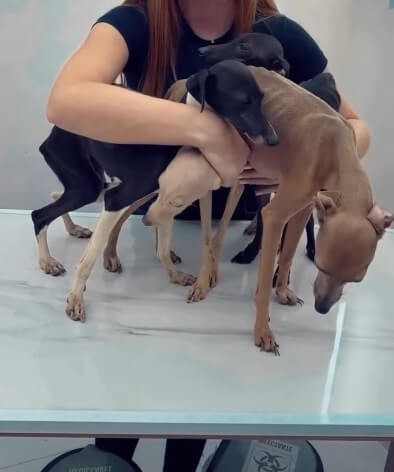
As the days passed, people across the world began watching the rescue video shared by SOS4Patas through the Dog Haven YouTube channel.
Messages poured in. Donations covered mounting medical bills. Adoption requests arrived even before the dogs were ready.
One by one, Bono’s companions were matched with families.
They left the hospital.
Bono stayed behind.
Rescuers later described how he seemed quieter as the others departed. He watched from his kennel as familiar faces disappeared.
Recovery from starvation is rarely predictable. Relapses can happen. Organs need time to stabilize. That earlier warning from ASPCA Pro was not theoretical. It shaped every feeding decision and every delay.
No shortcuts.
The Surgery That Changed Everything
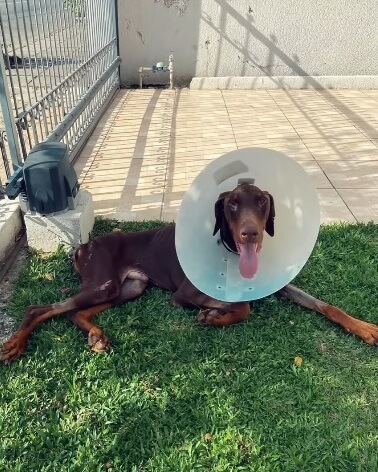
At last, bloodwork stabilized. His weight had improved enough for anesthesia. The veterinary team cleared him for surgery.
It was successful.
But success did not mean instant strength. His body was rebuilding from depletion that had taken weeks, maybe longer, to develop. Muscles that once held him upright had wasted away. Even standing without trembling became a quiet victory inside the clinic.
Recovery moved steadily. His appetite strengthened. His coat began to regain texture. His posture shifted from guarded to alert. The change was subtle at first. Then undeniable.
His eyes changed before anything else. They no longer looked distant. They tracked movement. They reacted to voices.
Then something even more unexpected happened.
A family stepped forward.
They had followed his story from the forest to the hospital. They knew how severe his condition had been. They understood the work still ahead.
They chose him anyway.
According to the rescue team, “He made a complete recovery.”
Not only physically.
Emotionally too.
Why Bono’s Story Matters
Cruelty cases often stay hidden. When they surface, they expose how quickly neglect can become life-threatening.
Starvation is not only visible in ribs and hollow eyes. It alters organ function. It weakens the immune system. It destabilizes the heart. That is why rushed feeding can be dangerous.
Many people assume the kindest response is a full bowl of food. Veterinary guidance says otherwise.
Those measured steps are not caution for caution’s sake. They are what allow the body to recover safely.
If you ever encounter a severely underweight dog, the safest response is immediate veterinary care. Large meals can do harm. Professional monitoring matters. Reporting suspected neglect to local authorities ensures proper investigation.
Bono’s survival was not random. It was structured care. Law enforcement intervention. Medical restraint. And a community willing to support the process from beginning to end.
Rescue is rarely dramatic in real time. It is disciplined.
Today
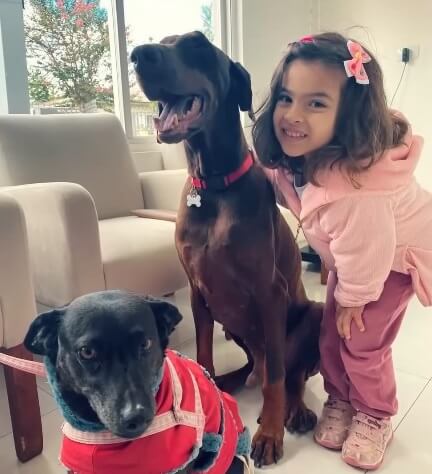
Bono now lives in a home where food arrives every day without fear of scarcity. Water is clean. His name is spoken with warmth.
He runs without hesitation. He rests without anxiety. He greets his family with the kind of trust that only grows when safety becomes routine.
The forest is no longer part of his life.
His survival was not luck. It was intervention at the right moment. It was patience when urgency felt overwhelming. It was people refusing to walk away from a case that would have been easier to ignore.
If this story moved you, share it. Someone in your circle may be considering adoption, supporting a local rescue, or reporting a situation that does not feel right. Stories travel farther than we realize.
And sometimes, that reach is what gives the next animal a second chance.
More Rescue Stories
They Left Her Paralyzed in the Snow. One Woman Refused to Let Her Fade
They Found Him Crying Alone in the Woods. What Freddy Survived Changed Everything


