
He Didn’t Cry. He Didn’t Move. Buddy Just Lay There, Refusing to Let Go of Life
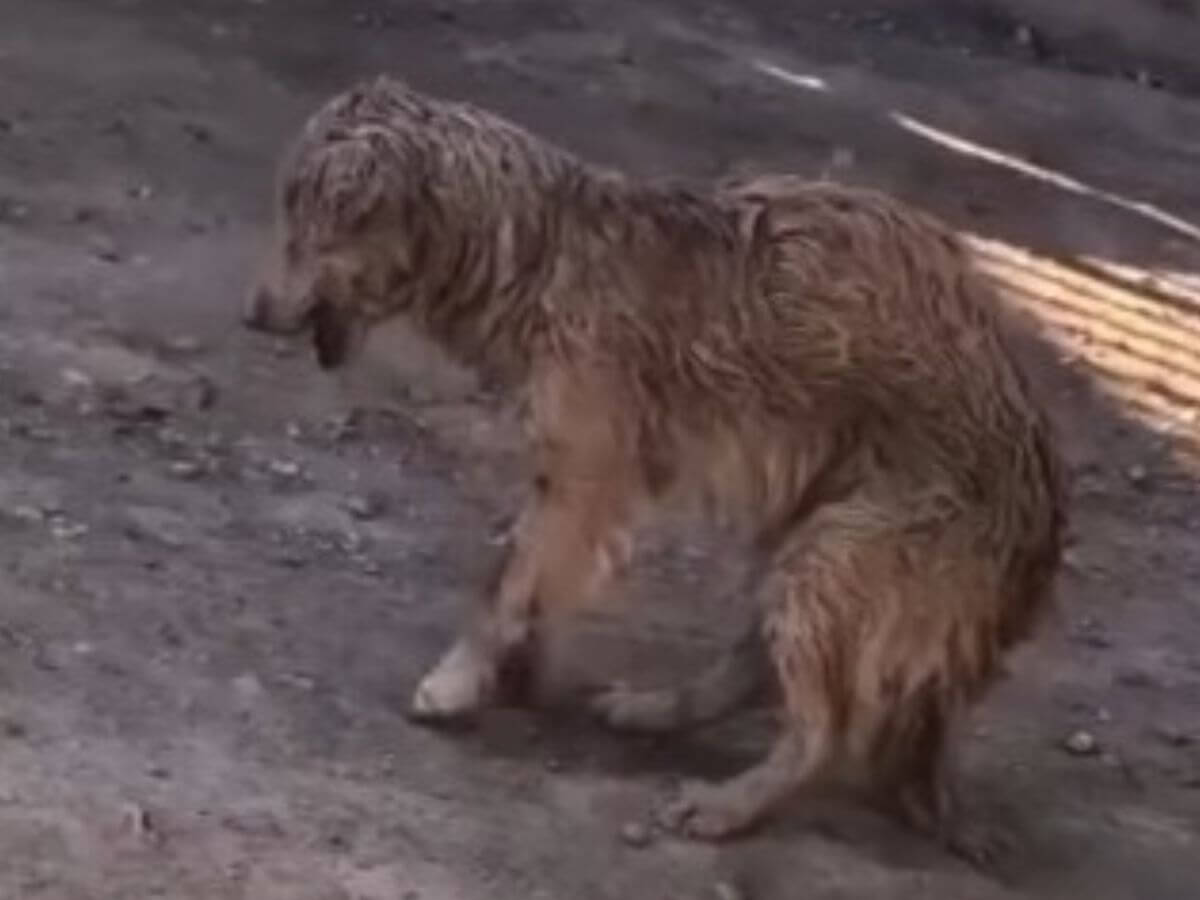
Buddy didn’t cry out for help.
He lay there in silence, holding on with everything he had left. Five hours from the nearest city, in a quiet and remote place, pain had pinned him to the ground. This was not somewhere people passed by. It was not somewhere help usually arrived.
Buddy was an adult dog, alone and badly injured, lying exactly where he had been left.
His body was still. His breathing was shallow. He did not move when the wind shifted the dust around him.
When rescuers finally reached him after the long journey, time seemed to slow. Buddy looked up with tired eyes. Alert. Aware. Deeply exhausted.
He didn’t try to run. He didn’t growl. He simply waited.
Here is why that mattered.
Dogs who lose hope often shut down completely. Buddy did not. Even there, even then, he was still holding on, choosing endurance over surrender.
When Endurance Shows Up as Stillness
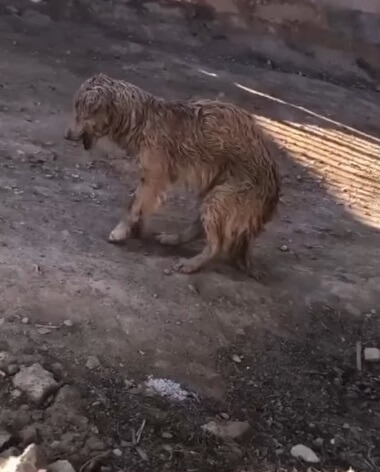
The rescuers felt it the moment they reached him. A tightness in the chest that comes when you realize how long someone has been hurting alone.
The rescue team had responded to many calls before, but injuries like this often carry a different kind of urgency.
One of the rescuers later reflected on that moment, saying “this was not a dog giving up.” They added that “this was a dog enduring more pain than he should ever have to.”
Buddy’s jaw hung unnaturally. The lower part was severely damaged, making it impossible for him to eat, drink, or even whimper. Hunger had hollowed him out. Thirst burned quietly behind his eyes.
Still, he stayed calm. Almost apologetic. As if he did not want to be a burden.
That calm was not weakness. It was resilience.
Why Jaw Injuries Take Away a Dog’s Voice
Buddy’s injury explained much of his silence.
According to the Merck Veterinary Manual, “fracture of the mandible can cause an acute malocclusion, pain, and an inability to eat.” When the jaw cannot open or align properly, even basic needs like swallowing become a struggle.
That was Buddy’s reality. He was not choosing silence. His injury had taken away his ability to ask for help.
Understanding this changes how we read his stillness. It was not resignation. It was survival.
Trust, Even When It Hurt
Every small movement caused visible discomfort. The injury was old enough to have weakened his entire body.
Yet when gentle hands touched his head, Buddy did not pull away. He leaned into the contact, just slightly.
That tiny gesture said everything.
Beneath the pain and exhaustion, trust was still alive.
The decision came without debate. Buddy was lifted carefully, wrapped in soft blankets, and placed into the rescue vehicle. As the engine started, he rested his head against a rescuer’s arm. His eyes slowly closed, not in defeat, but in relief.
Inside the Veterinary Room Where Buddy Was Treated
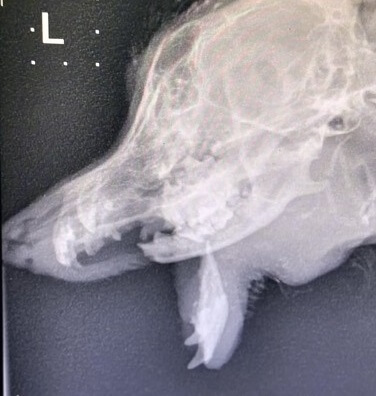
At the veterinary hospital, examinations confirmed what everyone feared. Buddy had a severe fracture of the lower jaw, with part of the bone beyond saving. Surgery was the only way forward.
It was risky.
It was urgent.
And through it all, Buddy remained calm.
As he was prepared for surgery, his breathing steadied. It was as if he understood this was his chance.
The surgery was long, but successful.
When Buddy woke up, his mouth felt different. Lighter. The pain that had ruled his days was finally gone.
Why Recovery Starts With Careful Feeding
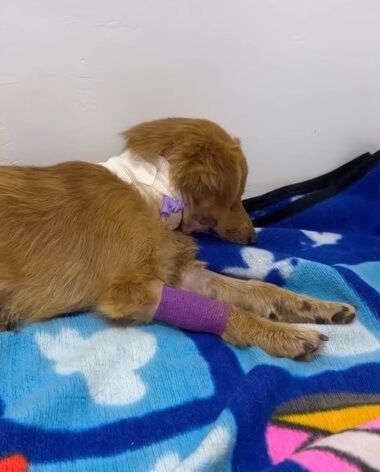
Healing did not end with surgery. It began again.
For dogs recovering from trauma and surgery, nutrition plays a central role. According to the World Small Animal Veterinary Association, “for dogs and cats in the hospital, providing optimal nutrition and careful monitoring is key to recovery.”
That careful monitoring shaped Buddy’s first days.
Soft food was prepared just for him. On the second day, it was offered gently. Buddy hesitated, then took a small bite.
Everyone held their breath.
He swallowed. Then tried again.
That small moment felt like a victory because it was one.
The First Week of Buddy’s Recovery
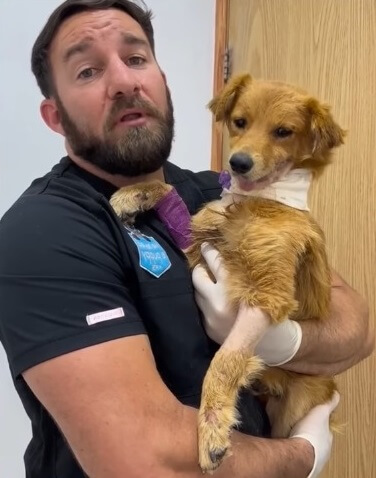
The first night was quiet. Buddy slept deeply, uninterrupted, for the first time in what may have been weeks. Nurses checked on him often. Each time, his tail moved gently against the blanket.
Over the next few days, Buddy grew stronger. His eyes brightened. He began sitting up on his own. He watched people move around the room with curiosity instead of fear.
By the end of the first week, he recognized his caregivers. He leaned into touch instead of flinching.
Healing was happening, not loudly, but steadily.
Reading Trust the Right Way
As Buddy recovered, his behavior shifted in subtle ways. Calmer movements. Softer eyes. A body no longer braced for pain.
It is easy to misunderstand signs of emotion in dogs. According to Best Friends Animal Society, “a high, stiff wag can mean: “I am agitated or aroused.” What mattered with Buddy was not speed or excitement, but ease.
His tail moved gently. His body stayed loose. Trust returned without force.
Learning to Live Fully With What Remains
After ten days, Buddy surprised everyone. His recovery moved faster than expected. Though part of his jaw was gone, he adapted with quiet determination.
Eating became routine. Pain no longer defined his days. Comfort did.
Once discharged, Buddy continued healing under close care. He walked around, sniffed the air, rested peacefully after meals, and slowly opened his heart again.
Today, Buddy is stable, healthy, and full of quiet joy.
He may never have a complete jaw again, but he has something far more important. A life without pain. A heart that still believes in people.
As the rescuers reflected on his journey, they said “Sometimes, it’s about learning to live fully with what remains.”
Still Waiting, Still Worthy

Buddy has not been adopted yet.
He waits patiently, surrounded by care, showing everyone that being imperfect does not mean being unworthy.
Stories like Buddy’s are easy to overlook, not because they matter less, but because they unfold quietly.
This rescue story was shared by wesavedapuppy and told through a video uploaded on the Pets In Love YouTube channel, using the rescuers’ own words to honor Buddy’s journey.
If Buddy’s story stayed with you, consider sharing it with someone who cares about animals.
Quiet fighters like Buddy often rely on others to help their stories travel farther than they ever could on their own.
You may also want to read:
He Collapsed in Traffic and Couldn’t Stand. Then One Person Stopped
He Crawled Across a Busy Road Because He Didn’t Know Where Else to Go


