
He Was Found Chained and Hungry. But This Gentle Dog Still Had Love Left to Give.
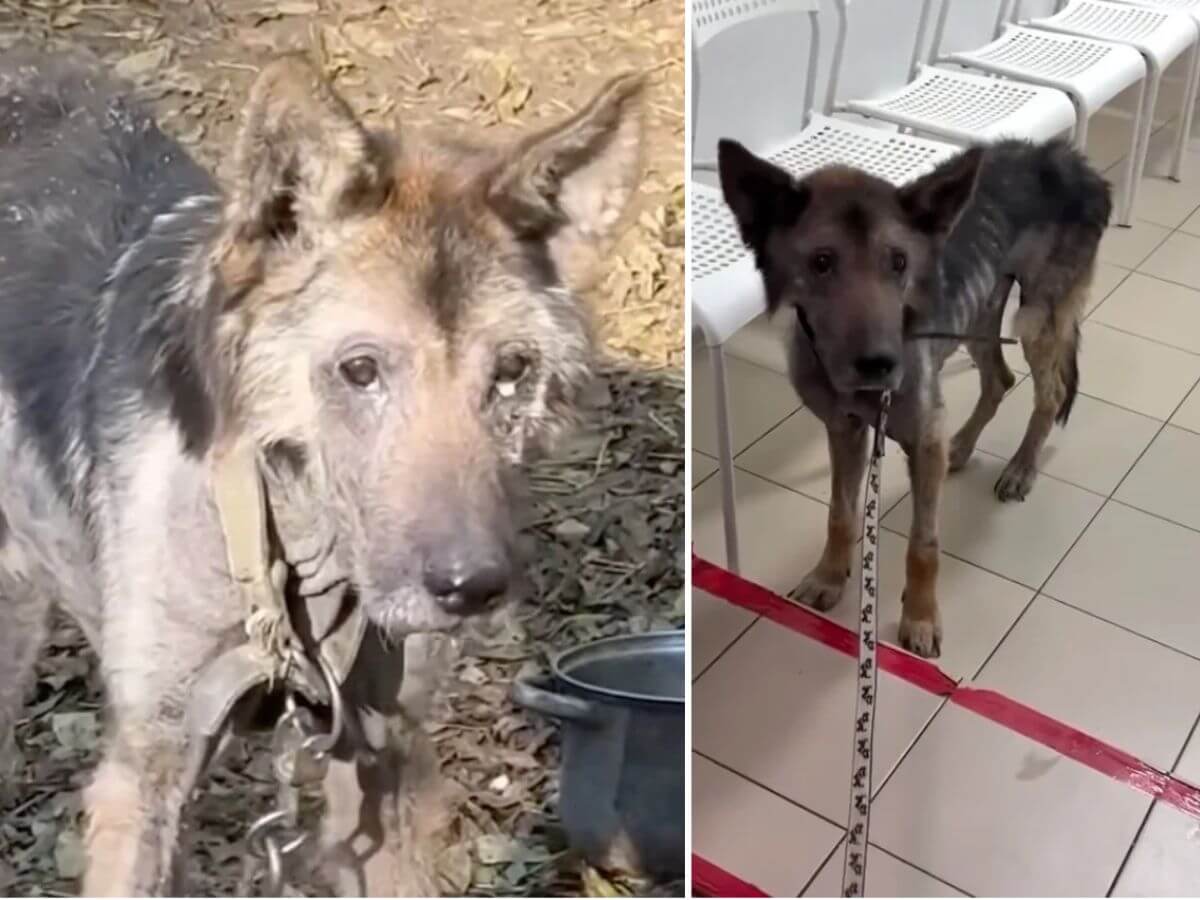
Buran had a name, a place to live, and people who were responsible for looking after him. Yet when help finally reached him, the gentle dog was so thin and exhausted that even standing seemed to take an enormous effort.
His ribs were visible beneath his patchy coat, and the chain around his neck had left signs of irritation. He had spent so much time in one place that the world beyond it must have seemed unfamiliar.
But something about Buran surprised the people who came to help him.
Despite his weakened condition, he showed no aggression toward his rescuers. He eagerly accepted the food they offered and quietly allowed them to take him away.
Getting him off that chain was only the beginning. Buran still needed medical treatment, regular meals, and patient care from people who understood that healing wouldn’t happen overnight.
And even after finding safety, he would face one more challenge.
He had to learn that the kindness around him wasn’t going to disappear.
He Had Owners, Yet He Was Living on a Chain
Buran’s story began attracting attention in October 2026, when a visitor discovered the severely underweight dog at a tourist facility in Crimea’s Bakhchisaray district.
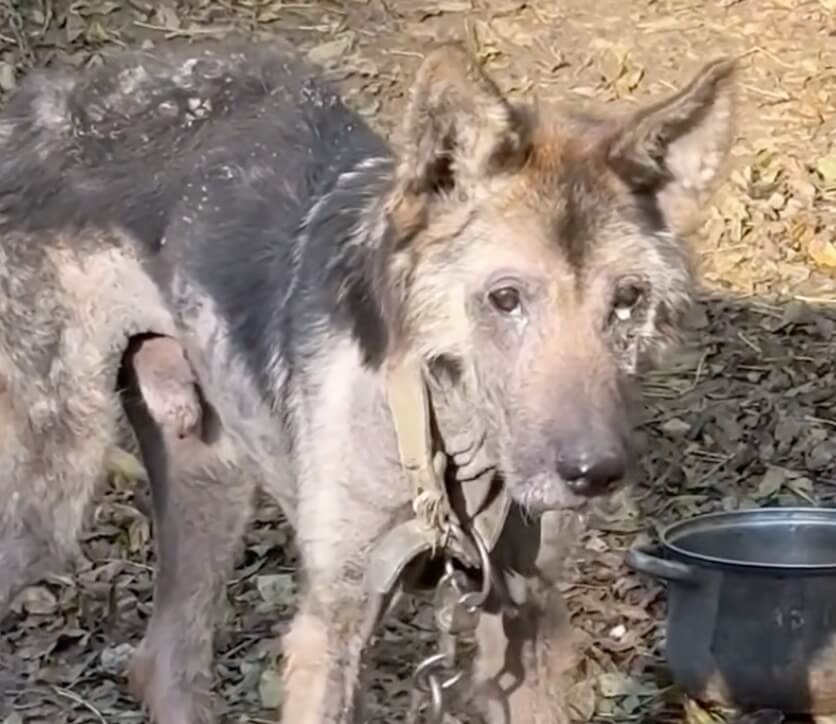
The East European Shepherd had been living on a chain near the facility’s parking area. His coat was in poor condition, his body looked painfully thin, and the bowl beside him reportedly contained dirty water and fallen leaves.
A visitor named Anastasia noticed his condition while visiting the area with her family.
She couldn’t ignore what she saw.
According to local reporting, Buran eagerly ate the food offered to him. His condition was so concerning that Anastasia contacted the facility’s management and later shared photographs and footage to draw attention to his situation.
The facility’s representatives disputed accusations of neglect. They maintained that Buran was being fed twice daily and attributed his appearance and skin problems to illness.
But his condition raised serious concerns among the people who saw him, and the attention surrounding his situation soon brought animal welfare volunteers to the facility.
Buran wasn’t a stray wandering the streets in search of somewhere to belong. He had been living under someone’s care, yet he desperately needed medical attention.
When volunteers finally arrived to take him away, they found a dog whose body had suffered terribly.
What happened next revealed something they might not have expected.
When Help Finally Arrived, Buran Did Something Unexpected
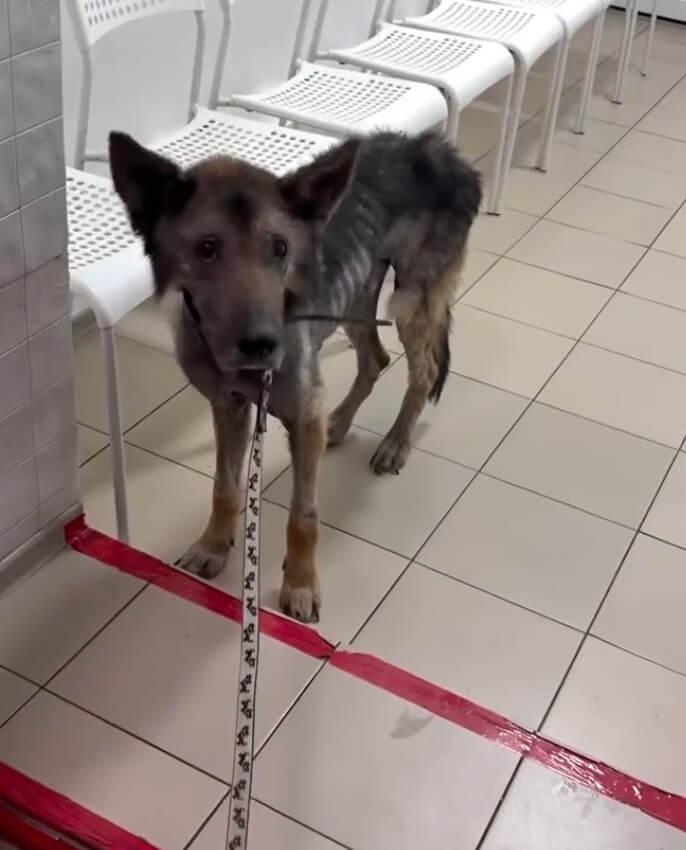
Buran was exhausted.
His weakened body had little strength to spare, but when food was placed before him, he began eating eagerly.
The rescue footage credited to the animal welfare account @doroga_domoy1857 captured the difficult condition in which he was found.
According to the rescuers, “When we found him, he was painfully thin and incredibly weak.”
Yet Buran remained remarkably gentle.
He didn’t try to attack the people approaching him. When volunteers removed him from the chain and prepared to take him for treatment, he offered little resistance.
Local reporting described him remaining quiet during the journey and cooperating with the veterinary staff who examined him.
No one could know exactly what Buran understood about the unfamiliar people surrounding him.
Perhaps he was simply too exhausted to resist. Perhaps his calm temperament helped him accept their presence.
Whatever the reason, his gentle behavior made an already emotional rescue even more moving.
For the people who had stepped in to help, the immediate concern was getting him somewhere safe.
Buran was finally leaving the place where he had spent so much time confined.
But the effects of his ordeal couldn’t be left behind quite so easily.
Getting Him Away Was Only the First Step
Once Buran reached veterinary care, the extent of his health problems became clearer.
He wasn’t just underweight.
Medical examinations identified anemia, cystitis, severe dermatitis and enterocolitis. His skin was in poor condition, and veterinarians had concerns about his overall health.
An early examination recorded his weight at just 21.3 kilograms, approximately 47 pounds.
For a young East European Shepherd of his size, that was an alarming condition.
According to local reporting, veterinarians were also concerned about the risks associated with sedating him while he was so severely weakened.
Buran needed medication, veterinary monitoring, nutritious meals and time to regain his strength.
But feeding an extremely underweight animal isn’t always as straightforward as filling a bowl.
Veterinarian Jennifer Coates explains in PetMD why severely starved dogs need careful nutritional support. She warns, “When dogs that have essentially been starved suddenly have free access to large amounts of food, they can become very sick and even die.”
For anyone who discovers an extremely thin dog, that advice is worth remembering. A veterinary examination can help determine how much food the animal needs and how quickly feeding should increase.
Buran’s recovery would require more than a few generous meals.
After his rescue, he was placed in foster care in Saky, Crimea, where volunteer Irina took on much of his daily care.
There, he could receive regular food, prescribed medication and the attention needed to monitor his progress.
His days began to look very different.
There were meals to look forward to, veterinary appointments to attend and people making sure he received the care he needed.
Yet even in those safer surroundings, some of Buran’s behavior suggested that adjusting to his new life wouldn’t be easy.
Even With a Full Bowl, Buran Was Still Afraid
One of the most heartbreaking parts of Buran’s recovery wasn’t something that could be measured during a veterinary examination.
It was the way he sometimes behaved around food.
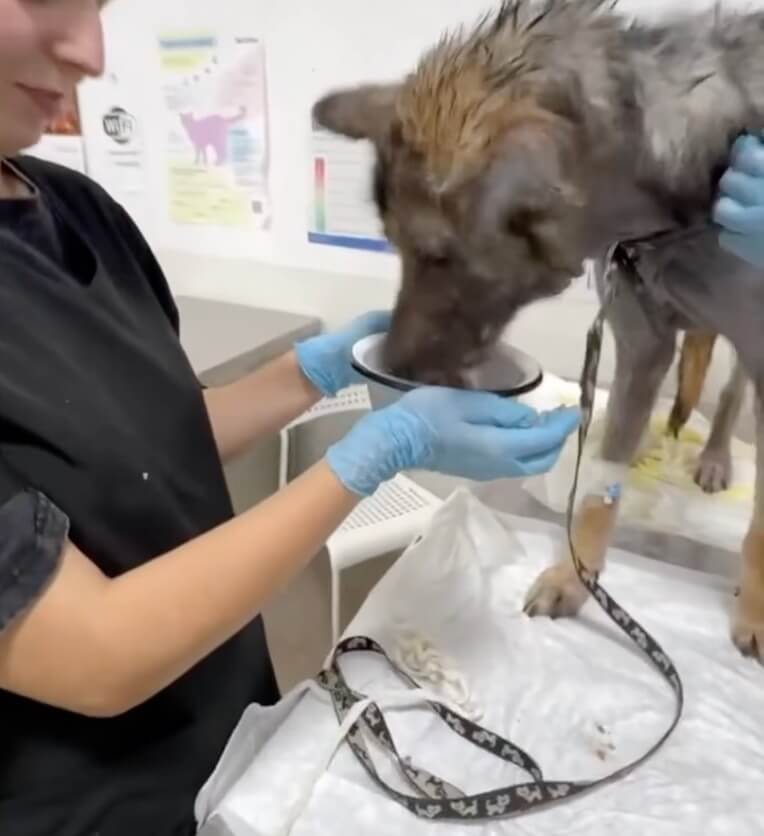
After his rescue, Buran was finally receiving regular meals. But he could become protective of his bowl when other dogs approached, barking as though he needed to defend what was his.
His behavior didn’t necessarily mean he wanted to hurt anyone.
Dogs can guard food for many reasons, and the behavior can appear even in animals that have never experienced prolonged hunger.
For Buran, though, it was difficult not to think about the condition in which he had been found.
The ASPCA explains that some owners manage food guarding by giving their dogs a quiet place to eat without interference. Its guidance says, “They leave their dogs alone while they’re eating, or they might even feed their dogs in a separate room, in a crate or behind a barrier.”
It’s helpful advice for anyone caring for a dog who becomes uncomfortable when people or other animals approach a food bowl.
Providing space during meals can reduce unwanted confrontations. If a dog shows more serious guarding behavior, professional guidance may also be needed.
Buran’s caregivers had to be mindful of those needs while helping him adjust.
There were other signs of nervousness, too.
Sudden movements could make him uneasy, and sometimes an ordinary touch seemed to catch him off guard.
He also appeared more comfortable spending time outside in the yard than coming indoors.
His new surroundings offered food, shelter and medical care, but those changes didn’t mean he would immediately feel secure in every situation.
The people caring for him couldn’t rush that adjustment.
They could only continue offering a dependable routine and allow him to become comfortable at his own pace.
And slowly, the work began to show results.
Then the Small Changes Started Adding Up
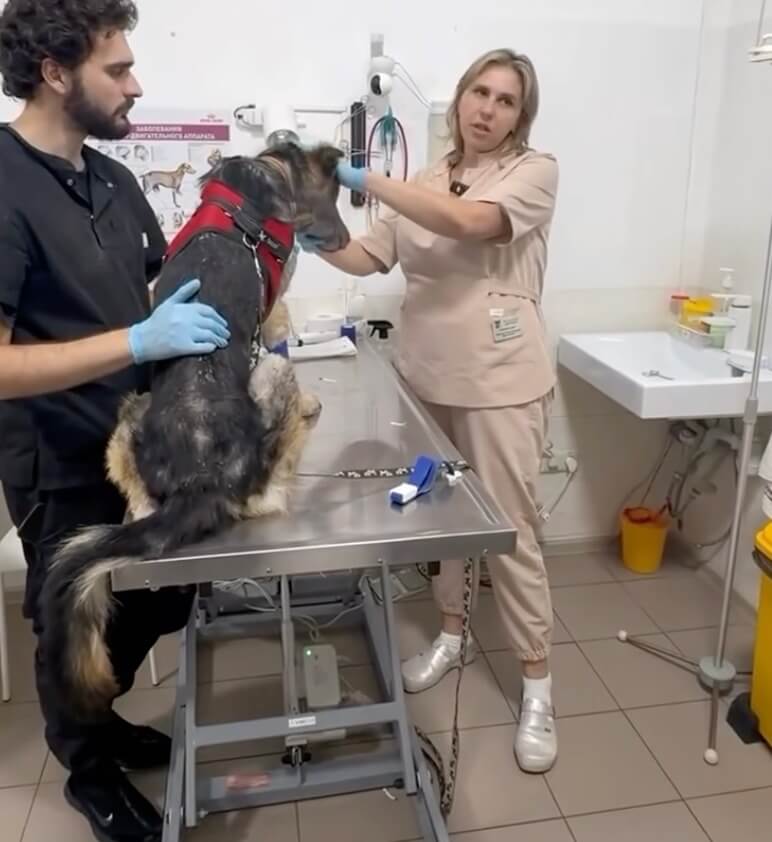
Buran didn’t recover in one dramatic moment.
There were more veterinary appointments, medication, skin treatments and ordinary days when Irina and the other volunteers focused on keeping him comfortable.
But gradually, encouraging changes began to appear.
His appetite improved, and his body started gaining the weight it had been missing.
In the rescue updates, one veterinary measurement showed Buran weighing 23.1 kilograms, approximately 51 pounds.
A later measurement showed that he had reached 28.4 kilograms, nearly 63 pounds.
That was a gain of 5.3 kilograms, almost 12 pounds, between those two appointments.
The wider recovery was even more encouraging.
According to a November 9, 2026, local news update, Buran had gained approximately 7 kilograms during his first two weeks in foster care, rising from about 21 kilograms to 28.4 kilograms.
For a dog who had arrived so severely underweight, the change was welcome news.
His bloodwork also began showing improvement.
Irina reported that Buran’s anemia and elevated white blood cell count had been brought under control, although he still needed antibiotics, skin treatment and further veterinary attention.
His eyesight remained another concern.
The medical progress was encouraging, but Buran wasn’t completely healthy yet.
Still, there were changes that had nothing to do with test results.
He was moving around more comfortably and becoming familiar with his surroundings. He was also beginning to learn commands and respond to the people caring for him.
For Irina and the other volunteers, those small changes offered reasons to feel hopeful.
A dog who had once struggled with exhaustion was gaining strength.
And a dog who had spent so long living on a chain was finally getting the chance to experience a different kind of life.
The Kindest Part of His New Life Wasn’t the Food
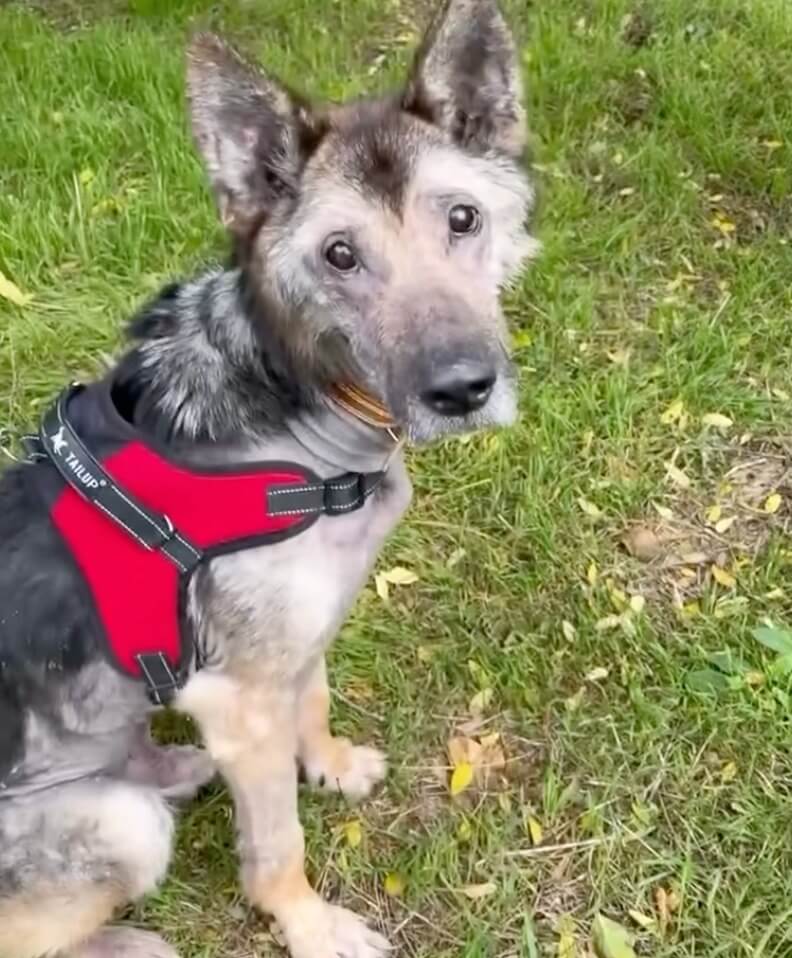
Buran’s weight gain was encouraging, but his caregivers still had another challenge ahead.
They needed to help him become comfortable around people.
Although he had remained gentle throughout his rescue, he could still become nervous when someone moved unexpectedly or approached him too quickly.
His reactions were a reminder that physical improvement and emotional adjustment don’t always happen at the same pace.
A dog can be eating well and gaining strength while still needing time to feel comfortable in unfamiliar surroundings.
Best Friends Animal Society offers guidance for helping fearful and unusually shy dogs become more comfortable with human contact. The organization explains, “The most important way to build this trust and create a relationship is to give the dog space.”
That means allowing a nervous dog to approach when ready rather than insisting on attention or unwanted petting.
For anyone welcoming a frightened rescue dog into their home, those quiet moments of patience can mean a great deal.
Buran needed that kind of understanding.
His caregivers couldn’t expect him to become confident simply because his surroundings had changed. They had to respect his reactions while continuing to provide the food, treatment and daily attention he needed.
Irina remained involved in his care, keeping track of his progress and helping him through the routines of recovery.
And little by little, Buran began responding to his new life.
He was eating well, learning commands and becoming more familiar with the other dogs around him.
He still had nervous moments, but his growing strength and willingness to interact offered hope that he could continue adjusting.
For the people helping him, the work wasn’t finished.
There would be more medical appointments, more treatment and more days of patient care.
But the rescue team made it clear that Buran wouldn’t be abandoned during that process.
As the rescuers said, “But this time, he won’t have to face it alone.”
Those words carried a promise that went beyond the moment he was taken off the chain.
Buran needed people willing to keep showing up for him, even after the immediate danger had passed.
And that was exactly what his new caregivers were trying to do.
Buran’s Story Isn’t Finished, but His Life Has Already Changed
By the November 9, 2026, recovery update, Buran had made encouraging progress.
He had gained approximately 7 kilograms, received treatment for several medical conditions and begun adjusting to life in foster care.
But he still had a way to go.
His caregivers expected further treatment to continue over the following months. His skin needed attention, he was still receiving medication, and his eyesight remained a concern.
Irina also reported that he was eating well but continued to show some nervousness.
That detail made his progress feel especially meaningful.
Buran was getting stronger, but he was still adjusting to a life where people looked after his needs.
He no longer had to spend his days chained at the tourist facility.
He had a place where someone prepared his meals, watched his health and paid attention when something seemed wrong.
And while his future hadn’t been fully settled at the time of the last confirmed update, the difference between his condition at rescue and his early recovery was clear.
The dog who had once been painfully thin was gaining weight.
The dog who had endured serious health problems was receiving continued medical treatment.
And the gentle animal who had quietly accepted help from strangers was beginning to experience the comfort of consistent care.
Buran’s recovery was still underway.
But he had already been given something he had needed for a long time.
A chance to feel safe.
A Second Chance for a Dog Who Deserved Better
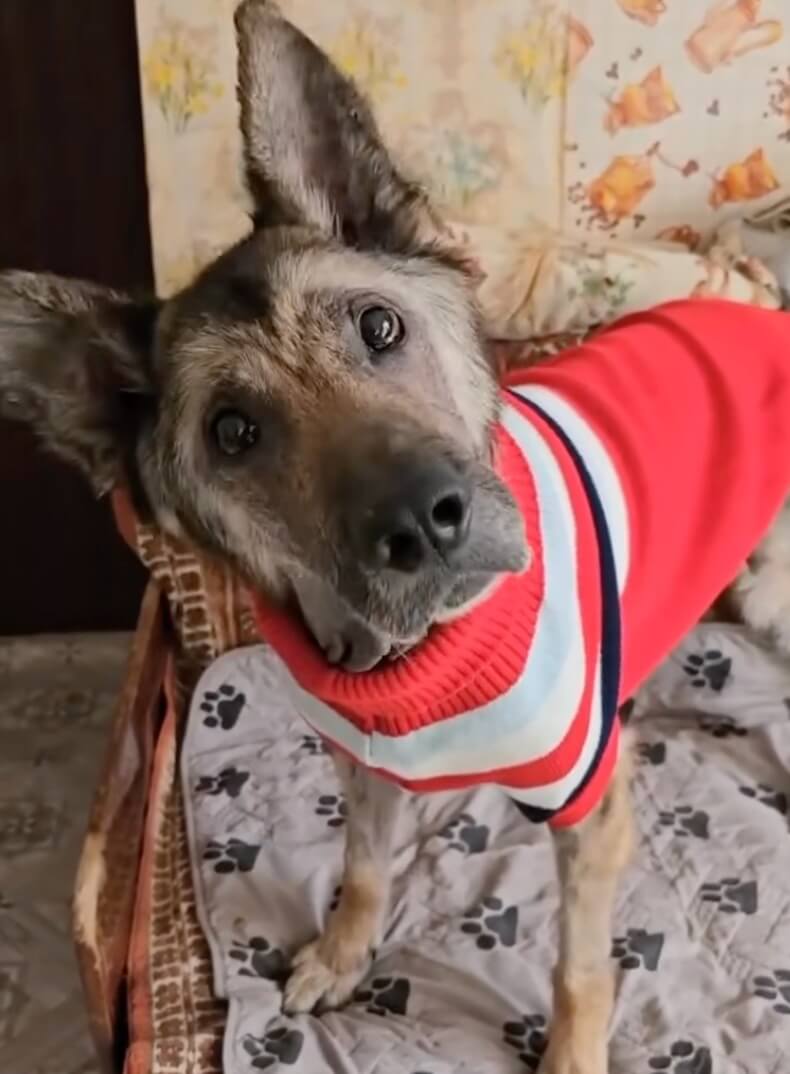
There’s something moving about a rescue that continues long after an animal has been taken somewhere safe.
The moment a dog is freed from a chain may be the part everyone remembers.
But the days afterward matter just as much.
Someone still has to prepare the food, arrange veterinary appointments, give medication and notice the small changes that show whether recovery is progressing.
Someone has to remain patient when an animal becomes nervous or needs more time to adjust.
For Buran, those ordinary acts of care have already made a difference.
His body is growing stronger, and he is beginning to experience a life where his needs matter.
There may still be difficult days ahead. His medical treatment isn’t finished, and no one can know exactly how long it will take for him to become completely comfortable.
But his story has already changed.
A concerned visitor noticed his suffering. Volunteers stepped in to help, and Irina continued caring for him after the rescue.
Together, they gave Buran a chance at a life beyond the chain.
And for a gentle dog who had endured so much, that new beginning means everything.
If Buran’s journey touched your heart, consider sharing his story. It might encourage someone else to notice an animal in need and help give another dog a second chance.
Also read:
Ango Could Barely Walk When He Was Found. By Day 90, He Was Wagging His Tail at the Park.


