
Why Do Cats Come To The Bathroom With You? Mystery Revealed
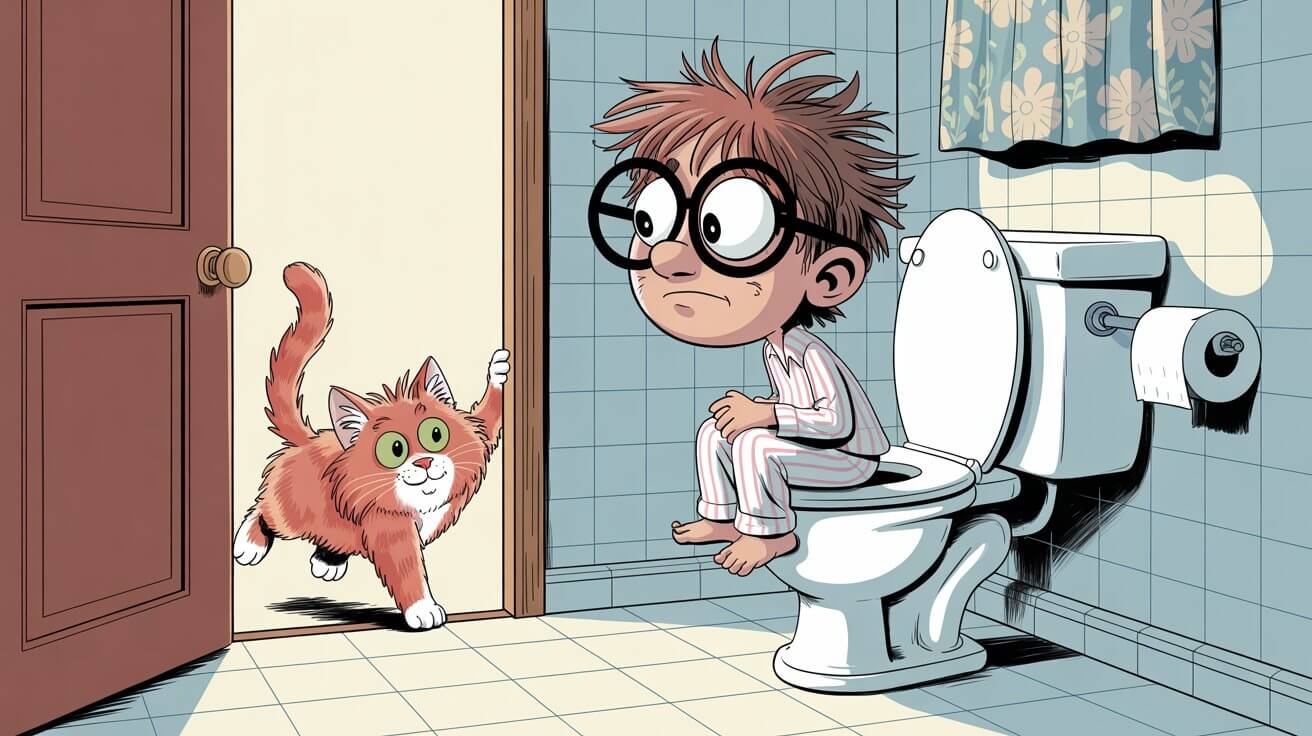
Every cat parent knows the routine. You close the bathroom door for a moment, and your feline reacts as if you’ve slipped into another dimension. A paw slides under the gap. A dramatic meow rattles the hallway.
Or worse — they barge in and lock eyes with you like a tiny supervisor overseeing a confidential operation.
It’s funny, a little unsettling, and strangely endearing. And while it feels random, their behavior has structure behind it. Cat specialists point out that bathroom shadowing sits at the intersection of instinct, routine, territorial comfort, and pure feline curiosity.
According to Chewy, “following you to the bathroom is completely normal behavior for cats,” often rooted in curiosity, affection, or a desire for comfort.
So what’s actually happening when your cat insists on attending your most private moments?
Here’s the deeper story — shaped by science, psychology, and the unmistakable drama that comes with living alongside a cat.
The Real Science Behind Bathroom Shadowing
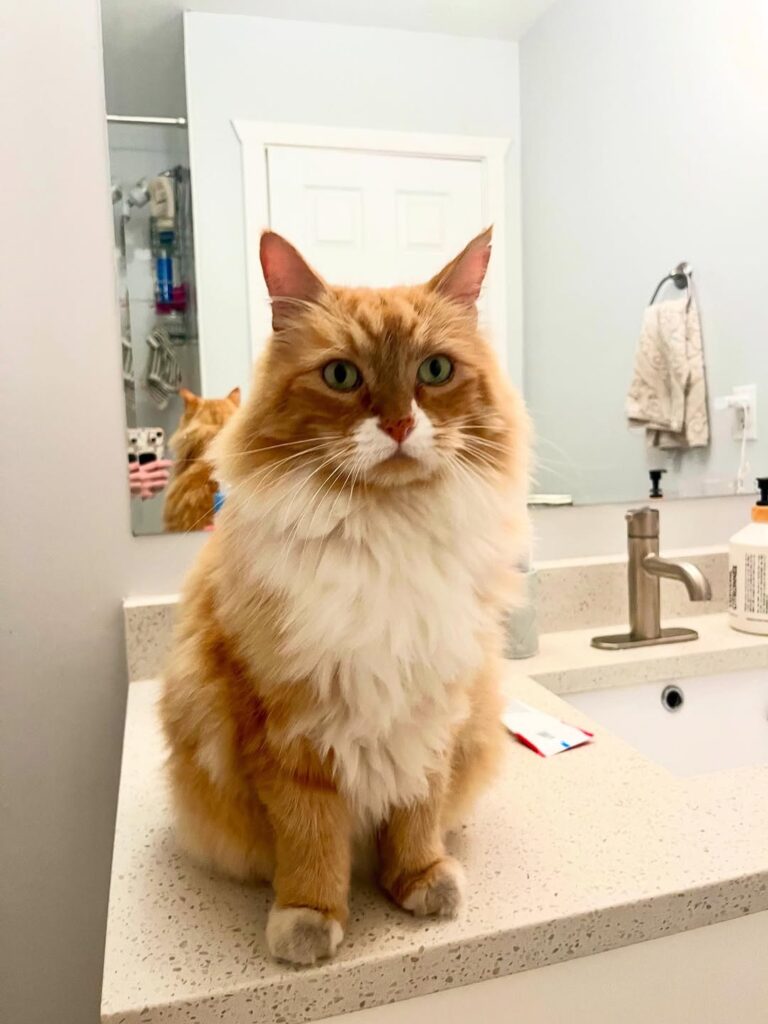
Cats don’t see a closed bathroom door the way humans do. To them, it’s a puzzle, a barrier, and a sensory disruption all at once.
Bathrooms are sensory-rich environments: shifting sounds, running water, cool tiles, confined space. Cats are drawn to routine, and your bathroom habits become something they monitor daily.
Their instincts tell them to keep track of movement — especially when it involves their humans entering a room and shutting them out.
Attachment also plays a role. Research out of Oregon State University found that pet cats form bonds with their caregivers similar to the attachments seen in dogs and even children. That secure base makes them more likely to follow you — including into the bathroom.
1. They’re Incredibly Nosy
Cats are professional detectives. A closed door, especially one you disappear behind, sparks immediate investigation. You stepping into the bathroom triggers their curiosity radar.
Your cat knows the house. They track its patterns and its energy. The moment you close that door, you’ve changed the natural flow of their territory. They need answers.
2. The Bathroom Is VIP Territory
Cool tiles. A soft bathmat. A sink shaped like a built-in feline throne. Rolling toilet paper. A tub that sounds different when they walk across it.
Bathroom spaces feel like a mini amusement park.
Once your cat falls in love with the textures, sounds, and lighting in that room, your presence there becomes part of their daily routine. You’re not getting privacy. You’re entering their lounge.
3. They Think You’re Vulnerable or Stuck
From a cat’s perspective, you walk into a tiny room and shut the door behind you. They hear unfamiliar sounds. Water. Echoes. Scraping. Flushing.
They don’t understand any of it.
To your cat, you might be stuck. You might be in trouble. Their pacing, pawing, or crying is a strange but sincere attempt at a rescue. Cats may act aloof, but many quietly worry when they can’t read what you’re doing.
4. They Want Uninterrupted One-on-One Time
Bathroom time is calm. You’re seated, still, and not rushing around the house. Cats sense this pause and often use it as their window for closeness.
They might hop into your lap, curl in the sink, or press their face into your leg. Moments like these mimic the soft bonding rituals they share with trusted companions.
5. They’re Studying Your Strange Human Rituals
Cats observe everything. Brushing your teeth. Washing your face. Turning knobs. Opening cabinets. Flushing a loud machine.
Your routines are bizarre, rhythmic, and impossible to ignore. Watching them is part of how cats understand their world — and you.
6. They’re Marking Their Territory — Including You
Cats spread scent through rubbing, tail wrapping, and leaning into you. The bathroom is a closed, scent-dense space, which makes it a perfect location to refresh their “ownership.”
When they rub against your legs while you’re on the toilet, hop onto your lap, or brush their face against the doorframe, they’re reinforcing the entire room — and you — as part of their territory.
7. They’re Supervising the Situation
Cats love to oversee operations. Laundry. Cooking. Cleaning. And yes — bathroom activities.
In their mind, you are a slightly unpredictable roommate who must be monitored. Bathroom time is no exception. They settle in, observe, and manage the scene with all the silent judgment of a furry supervisor.
8. They’re Just… Cats
Some behaviors are simply part of the feline personality: odd, chaotic, charming.
Bathroom companionship fits neatly alongside:
- Screaming at 2 a.m.
- Knocking things off surfaces
- Sitting in boxes two sizes too small
- Sneaking into drawers
Bathroom stalking is just another square in the Bingo card of cat quirks.
Expert Insight: What Behaviorists Say
View this post on Instagram
Bathroom-following can be a sign of normal curiosity, but it also overlaps with attachment and mild anxiety in some cats.
According to PetMD, “Research supports the fact that cats can develop separation anxiety syndrome, and they show many of the same signs that are seen in dogs.”
Cats may cling more when:
- They rely heavily on routine
- They dislike closed doors
- They struggle with quiet separation
- They form deep bonds with their humans
- They feel uncertain or bored
Bathroom time becomes a moment where they can keep watch, stay close, and feel secure.
When Bathroom Behavior Might Reflect Stress
Most bathroom-following is harmless. But there are situations where it may connect to anxiety:
- Loud crying when doors close
- Scratching the frame aggressively
- Destructive behavior when separated
- Over-attachment to one person
- Pacing or agitation when you leave the room
These signs point to stress more than quirkiness. It may help to increase stimulation, offer hiding spaces, or create predictable routines to ease their tension.
How to Create Healthy Bathroom Boundaries
If the behavior becomes disruptive or overwhelming, here are ways to gently set limits:
Leave enrichment outside the door
A puzzle feeder or toy can redirect attention.
Create a predictable routine
Cats settle down when they trust the flow of the day.
Practice short separation moments
Open, then close the door for brief intervals to reduce frustration.
Offer alternative cozy spaces
A soft blanket or perch gives them a different safe zone.
If You Don’t Mind the Company, Make It Cat-Friendly
Some people enjoy the company — and that’s okay.
A few small tweaks can make bathroom time more comfortable:
- Add a washable mat they can sit on
- Keep toilet paper out of swatting range
- Offer a small perch or safe spot
- Close cabinets with cleaners inside
This transforms the space from stressful to soothing.
A Wider Reality for Cats Everywhere
Bathroom antics are a sign of love, attachment, and curiosity. But not all cats get a home where they can follow someone around for fun.
According to ASPCA, “3.2 million cats enter shelters each year, of whom approximately 860,000 are euthanized.”
That number adds weight to the quiet moments we share with our own pets.
Their quirks — even the odd bathroom ones — come from a place of safety, routine, and comfort.
Final Thoughts: You’ll Never Pee Alone Again
The bathroom mystery isn’t a mystery at all. Your cat follows you because they’re bonded to you, curious about you, and comforted by your presence. Behind the staring, the pawing, and the dramatic meowing is a simple truth:
They love you — in their own intense, funny, slightly unhinged way.
And whether they sit by your feet or shove their face through the crack in the door, you’re part of their world.
A very important part.
Also read:
Why Your Cat Sleeps 16 Hours a Day — And Thinks That’s Productive
13 Times Pets Looked at Their Owners Like They Were Their Whole World


