
He Could Only Watch the World With His Eyes, Until a Tiny Twitch Sparked a Miracle
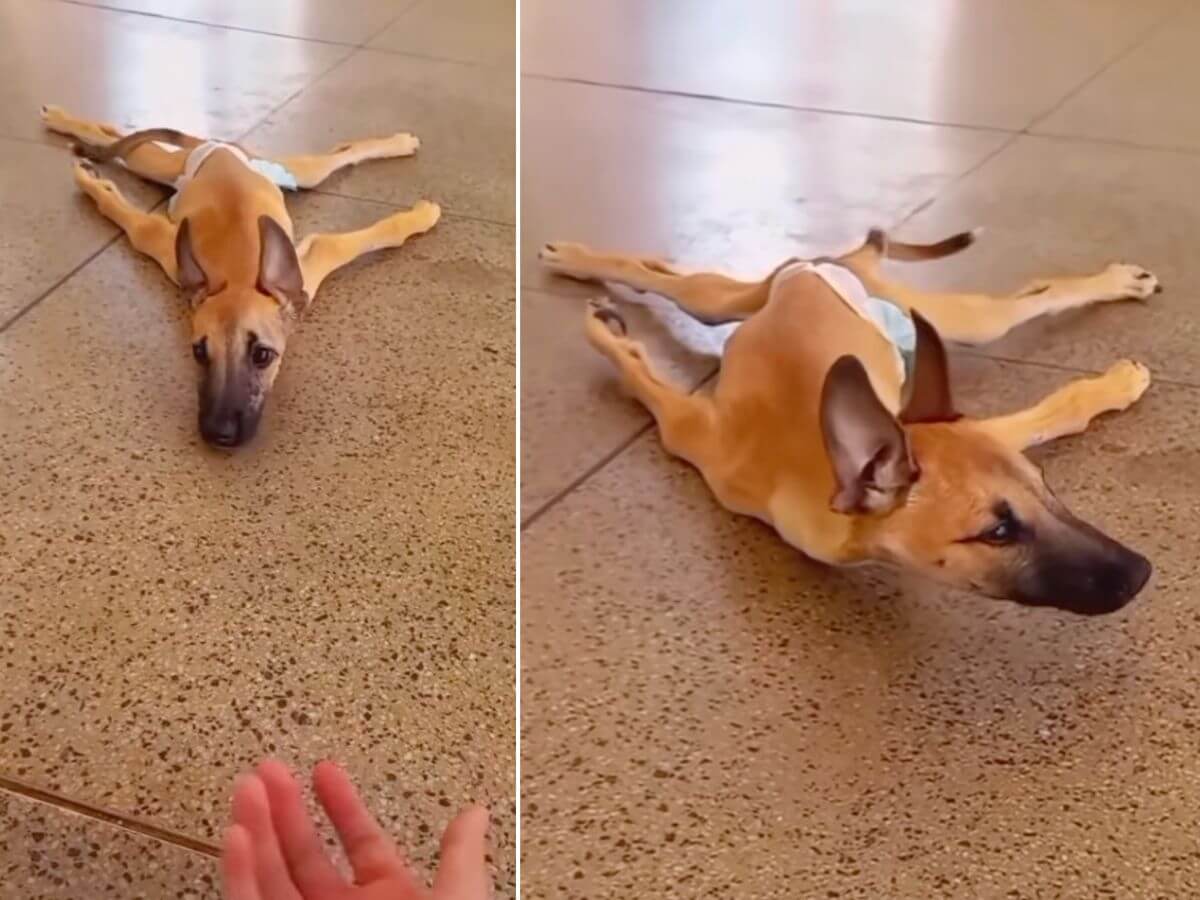
When rescuers first saw Cavalete, they weren’t sure he would survive the night.
He lay on his side in the open, completely still. There was no shelter above him, no familiar voice nearby, and no sign that anyone had been caring for him. His body looked frozen in place, as if time itself had stopped around him.
At first glance, he looked like a dog who had already given up.
Yet something about him made the rescue team stop.
His body could not move.
But his eyes could.
They followed every movement around him, quietly searching the faces of the people who had just arrived. It was the only part of him that seemed alive, the only sign that he was still aware of the world around him.
For the rescuers standing there, that gaze felt like a silent plea — a fragile signal that somewhere inside the motionless body, Cavalete was still fighting.
What no one knew in that moment was that the smallest movement imaginable would soon change everything.
A Dog Left Behind
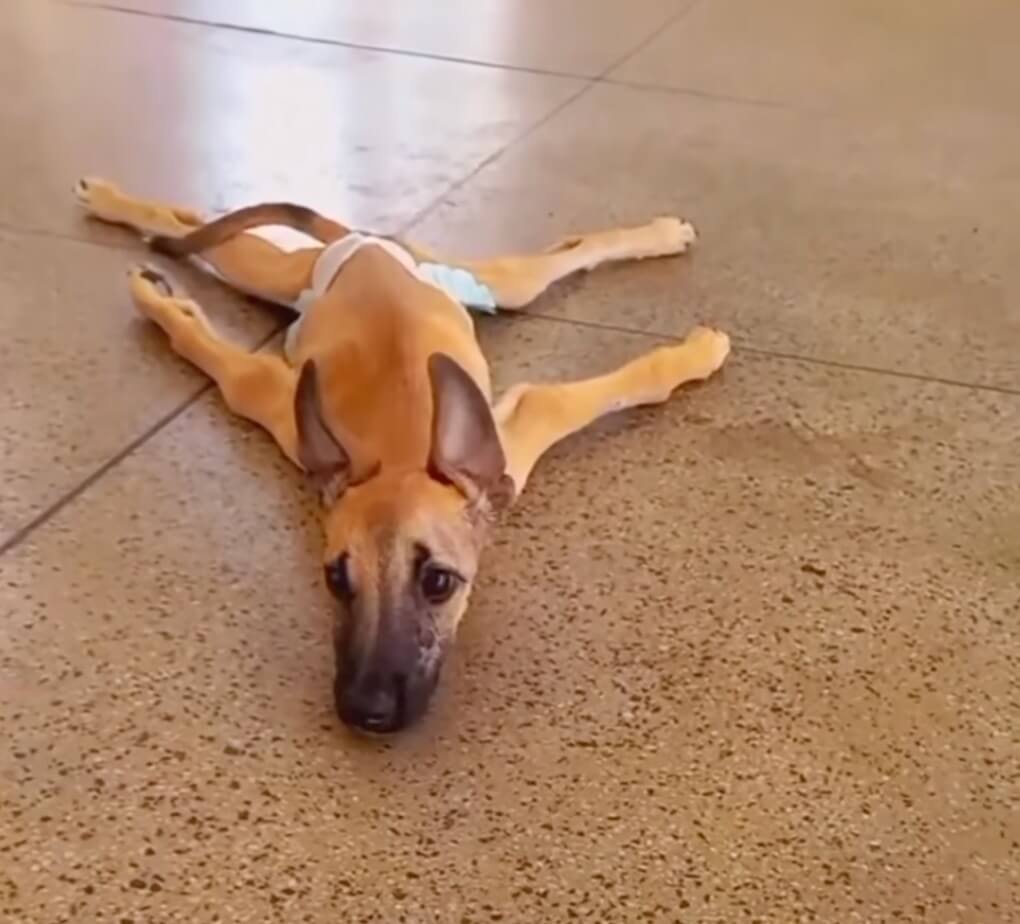
Cavalete was believed to be around four years old when he was discovered lying helpless and severely ill. His body had become rigid, every muscle locked tight in painful contraction.
He couldn’t stand.
He couldn’t even shift his weight to get comfortable.
The only sign of awareness came from his eyes, which slowly tracked the people standing around him.
Rescuers later described that moment, saying, “He was alive—but his body refused to move.”
Despite the uncertainty surrounding his condition, the team acted quickly. Cavalete was carefully transported to a veterinary hospital, where doctors could finally determine what was happening to his body.
A Devastating Diagnosis
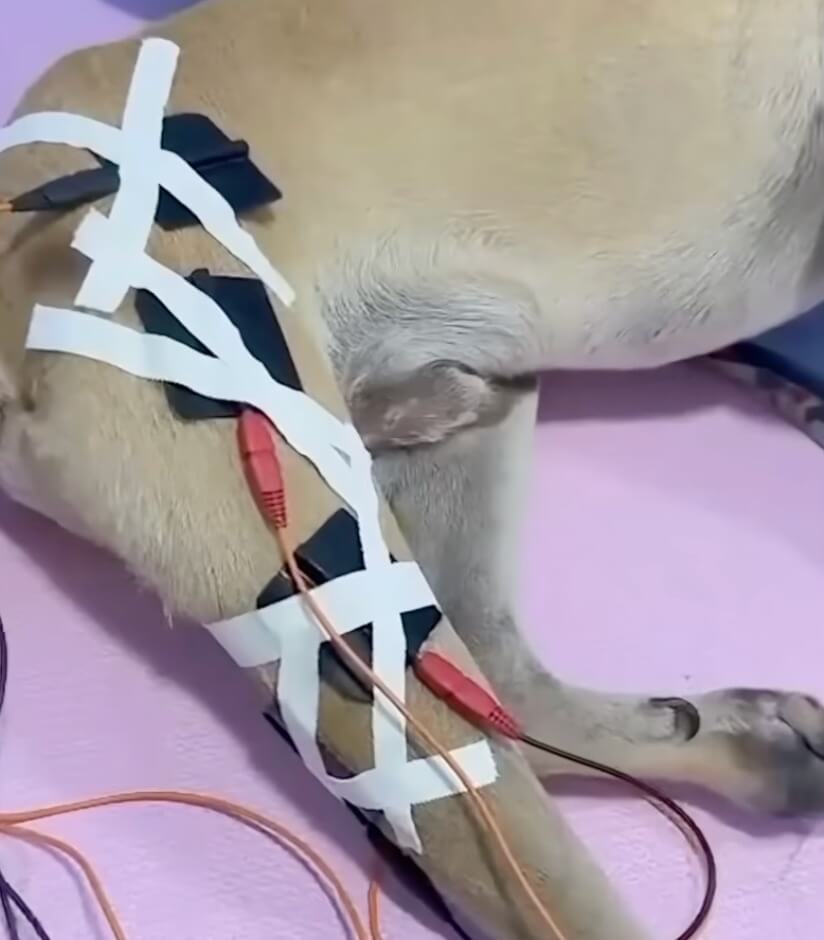
At the clinic, veterinarians soon identified the cause of Cavalete’s terrifying condition.
He had developed severe tetanus, a rare but extremely serious disease that affects the nervous system and muscles. The bacteria release toxins that interfere with normal muscle control, causing stiffness, painful spasms, and an inability to move.
In Cavalete’s case, the disease had already taken hold of nearly his entire body.
His muscles remained locked in constant contraction. Even the smallest disturbance in the room could trigger painful spasms.
Medical experts say this type of muscle stiffness is one of the most recognizable signs of tetanus in dogs.
According to VCA Animal Hospitals, “Affected dogs develop muscle rigidity (stiffness) in the limb or muscles closest to the wound.”
As the condition progresses, the stiffness can spread throughout the body, making even basic movements impossible.
For Cavalete, even swallowing food had become difficult.
Choosing to Fight for Him
The veterinary team explained the situation honestly.
His condition was serious. Recovery from tetanus can take weeks or even months, and not every animal survives the illness.
At one point, euthanasia was gently mentioned as a possibility.
But when the rescuers looked at Cavalete again, they noticed something that changed their minds.
His eyes were still alert.
They followed every movement in the room, watching the people trying to help him.
The rescue team decided to give him a chance.
Treatment began immediately. Antibiotics were administered carefully, while medications were used to reduce the painful muscle contractions that kept his body locked in place.
The environment around him also had to change.
Dogs suffering from tetanus can become extremely sensitive to stimulation, which means loud noises or bright lights can trigger severe spasms.
According to the American Kennel Club, “If your dog is recovering at home, she recommends keeping them in a dark and quiet environment since noise and bright lights can trigger muscle spasms.”
For Cavalete, that meant a quiet corner of the clinic where volunteers could monitor him without causing unnecessary stress.
They spoke softly when they approached him.
They kept the lights low.
And they stayed beside him, making sure he was never alone.
Veterinary research also highlights how crucial this calm environment can be during recovery.
According to Frontiers in Veterinary Science, “Any stimuli that could exacerbate spasms, e.g., pain, noise, manipulation, and light, should be avoided.”
So the rescue team waited patiently, giving Cavalete the quiet care his fragile body needed.
The Smallest Sign of Hope
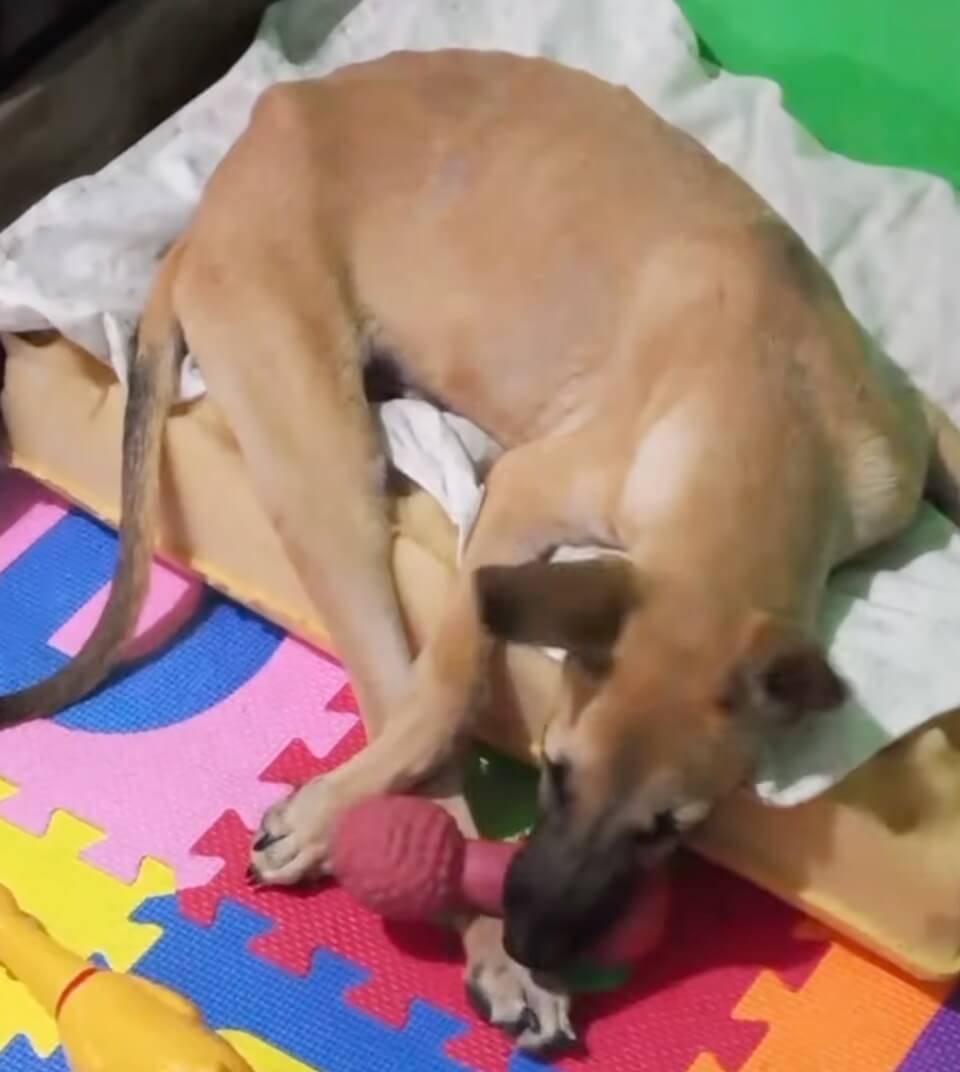
Days passed slowly.
For a long time, nothing seemed to change.
Cavalete remained mostly motionless, relying entirely on the people around him for food, comfort, and care. Volunteers gently repositioned him, monitored his breathing, and continued the careful treatment plan recommended by the veterinary team.
Then, near the end of the second week, something small happened.
So small that it might have gone unnoticed.
One of Cavalete’s back paws twitched.
The movement lasted only a moment.
But everyone in the room saw it.
No one knew if it was intentional or simply a reflex, yet the meaning felt clear. After days of stillness, his body had finally shown a sign of response.
Hope quietly returned to the clinic that day.
A Long Road Back
Recovery from tetanus rarely happens quickly.
For Cavalete, the journey would take nearly ninety days.
During the first weeks, he remained heavily dependent on the team caring for him. Volunteers hand-fed him small portions of soft food and carefully repositioned him to prevent discomfort.
Daily physical therapy became part of his routine.
Gentle stretches.
Slow movements of his legs.
Soft encouragement as his muscles slowly relearned how to move.
At first, his body resisted every attempt.
But little by little, things began to change.
The Moments That Changed Everything
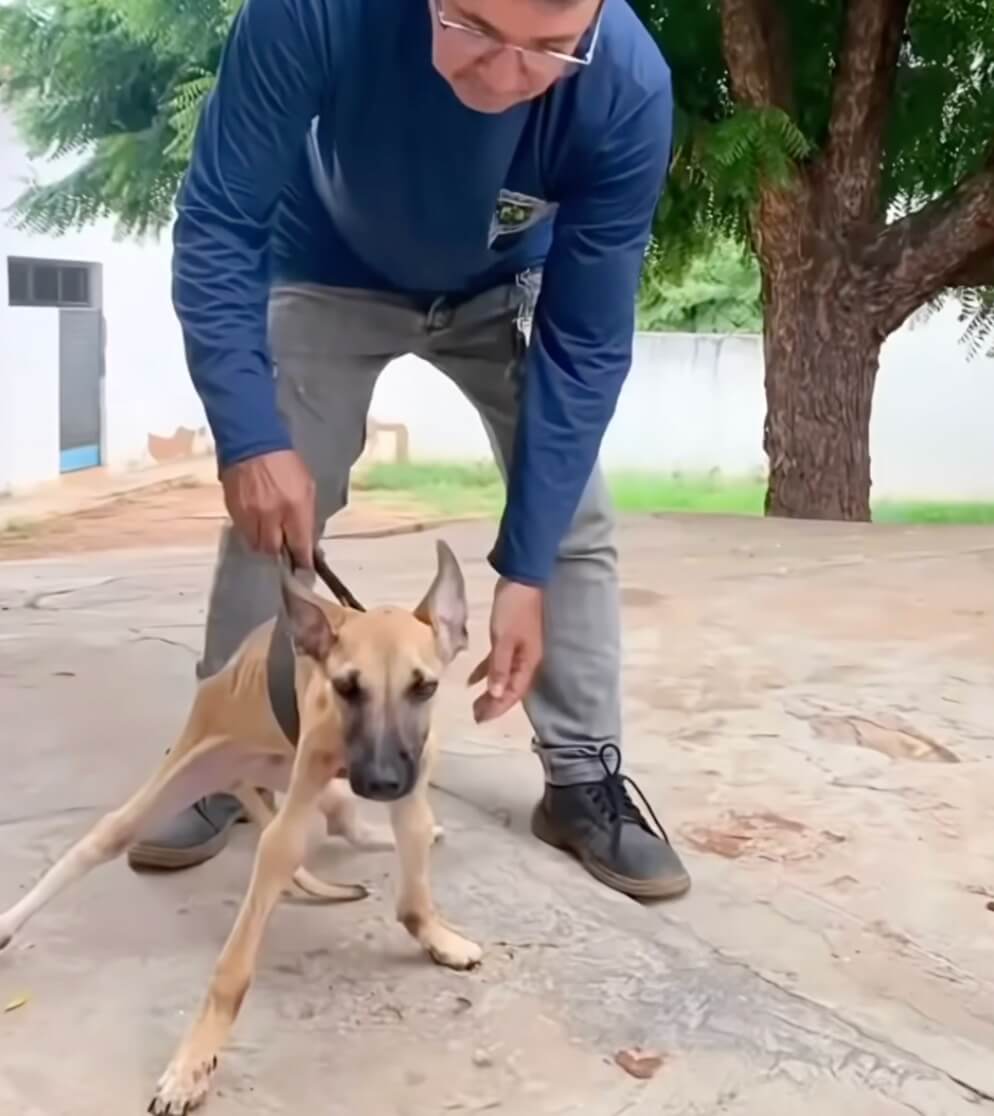
By the third week, Cavalete reached an important milestone.
He was able to swallow soft food on his own.
Soon after, another breakthrough arrived.
His tail wagged.
The motion was faint — just a small sweep across the bedding when a familiar caregiver approached.
But after weeks of stiffness and silence, that gentle wag felt like a celebration.
Over time, Cavalete also began sitting upright for short moments. His neck, once locked in place, slowly regained the ability to turn.
Every improvement, no matter how small, became a victory.
The Day He Finally Stood
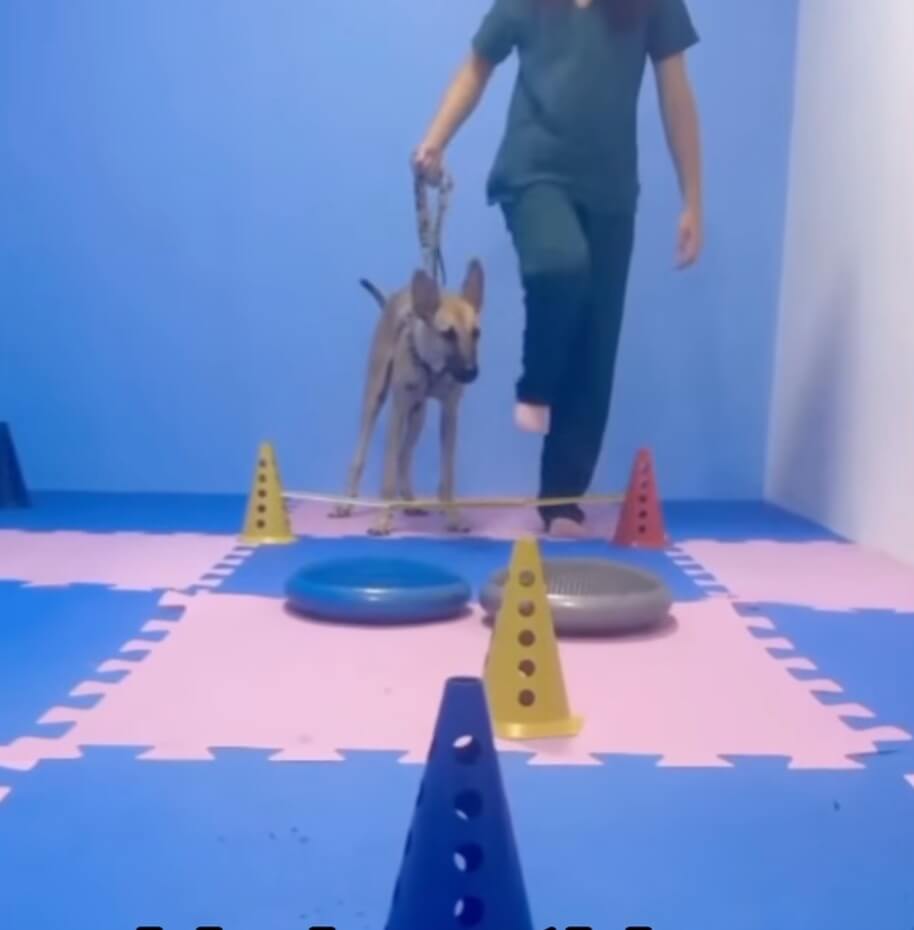
Then came the moment no one in the clinic would ever forget.
On day seventy-two, with careful encouragement from his caregivers, Cavalete gathered his strength beneath him.
His legs trembled as he pushed upward.
The room went quiet.
No one wanted to startle him.
Then, for the first time since his rescue, Cavalete stood.
Only for a few seconds.
But those seconds meant everything.
A New Life in Motion
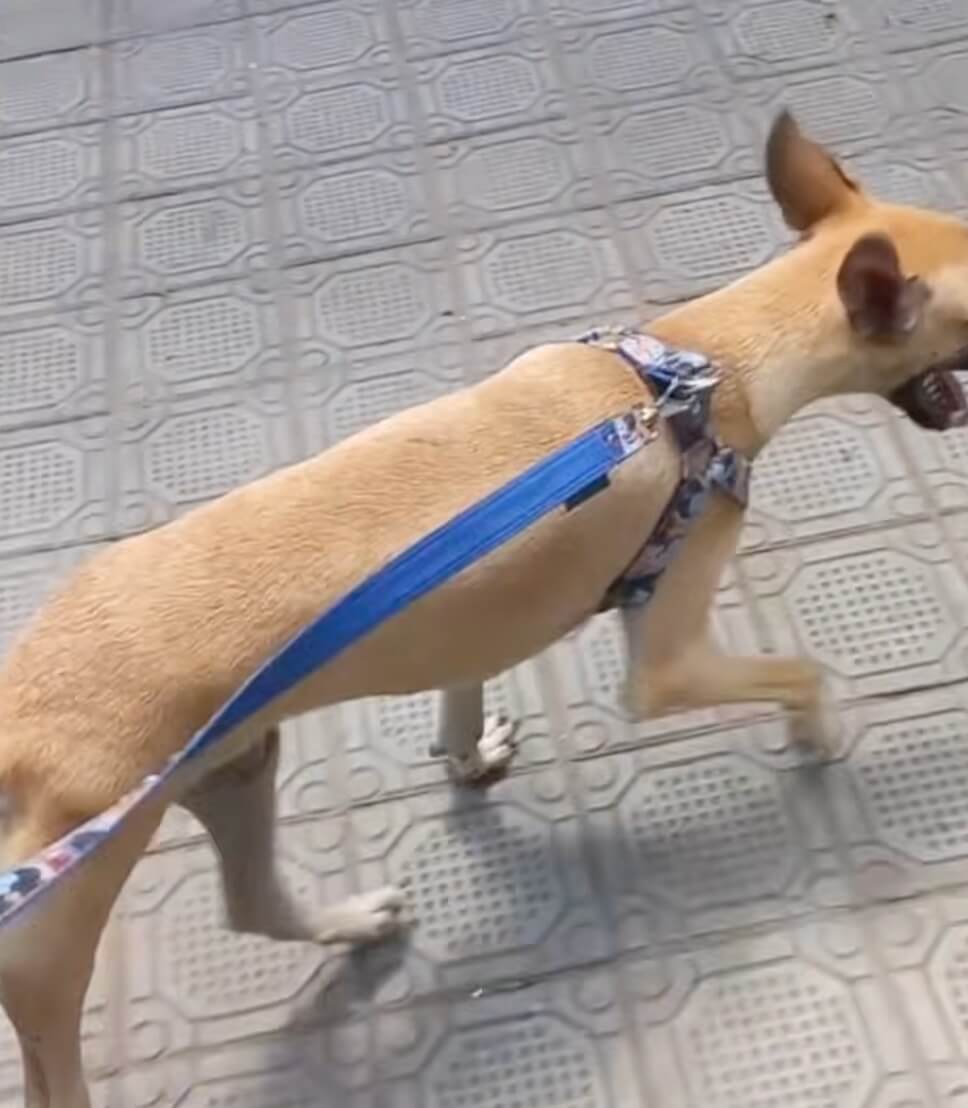
From that moment forward, his progress accelerated.
Standing turned into cautious steps. Those steps slowly became confident movement as his muscles continued to recover.
Today, Cavalete runs across the yard like any healthy dog.
He plays.
He greets his caregivers with bright eyes and enthusiastic tail wags.
Looking at him now, it’s almost impossible to imagine that he was once unable to move at all.
Reflecting on the journey, the rescuers shared a message that captured the heart of Cavalete’s story. As they explained, “sometimes, the difference between goodbye and a new beginning… is simply choosing not to give up.”
The Story Behind Cavalete’s Rescue
Cavalete’s rescue and recovery were documented by o.cavalete and shared through the Pets In Love YouTube channel, where rescuers regularly document the rehabilitation of vulnerable animals.
Through careful treatment, patience, and constant support from the rescue team, Cavalete’s life was given a second chance.
His journey is a reminder that sometimes the biggest turning points begin with the smallest signs of hope.
In Cavalete’s case, it started with a single twitch.
A Second Chance Worth Sharing
Today, Cavalete is living proof that recovery can happen even when the situation looks impossible.
The dog who once lay motionless now runs freely, surrounded by people who refused to give up on him.
If Cavalete’s journey touched your heart, consider sharing his story so more people can see how rescue teams are changing lives, one patient act of compassion at a time.
You may also want to read:
He Was Left Paralyzed on a Clinic Floor. Jack’s Rescue Shows What Love Can Save
Left on the Sidewalk: How Valentino’s Rescue Restored His Strength and Dignity


