
Chained for 5 Years, He Offered a Cucumber for Love — His Rescue Changed Everything

For more than five years, a dog in a quiet rural village lived inside a circle of packed dirt no wider than a few steps. His world ended where a rusted chain stopped.
His shelter was a patchwork of plywood scraps. His food was whatever landed in a bowl left to rot in the heat.
People walked past him daily. A few glanced. Most didn’t. And every time, he rose onto two legs, tail swinging in frantic hope, trying to catch even a second of kindness.
Through scorching summers and bitter cold, he stood watch outside an aging home, treated more like a living alarm than a companion.
Yet he kept greeting strangers the same way — as if someone, someday, might finally stop.
One visitor did. And her decision changed everything that followed.
A Dog Forgotten in Plain Sight
Neighbors said he had been chained outside an 83-year-old woman’s home for more than five years.
He wasn’t walked. He wasn’t trained. He wasn’t truly cared for. He simply existed.
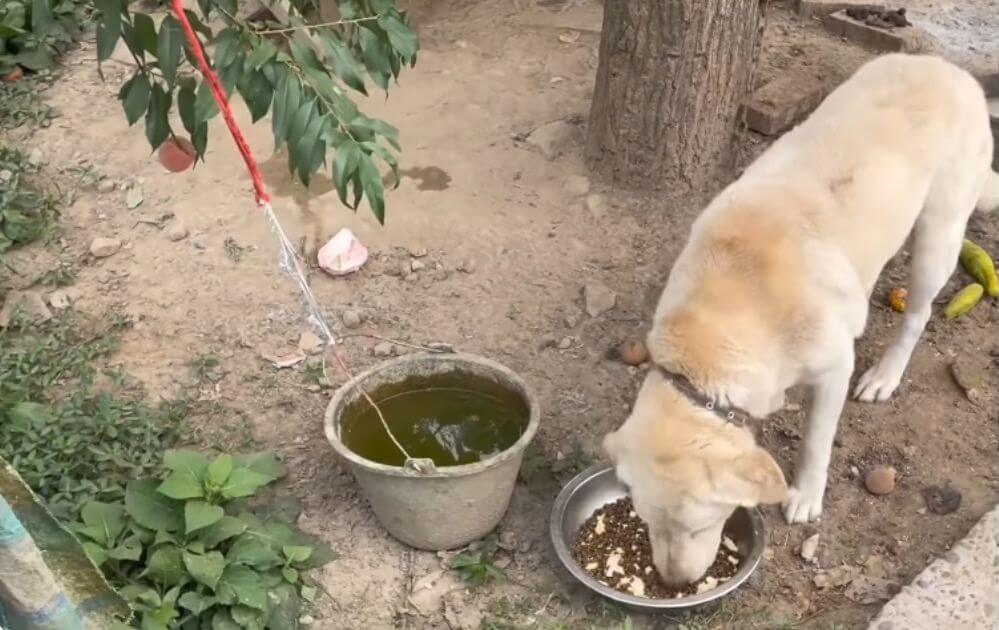
His food often sat spoiled in the 40°C heat, surrounded by insects. Flies swarmed his water bowl. His fur thinned. His skin cracked.
And yet, every time someone approached, he lit up—ears perked, tail swinging, body stretching desperately toward affection he never received.
Shelter behavior researchers have long warned that chronic isolation can distort a dog’s development.
As Texas A&M’s veterinary behavior team explains, “because dogs can suffer from psychological conditions like their human counterparts, owners can benefit from having an awareness of possible causes.”
Years of confinement create trauma that looks like hypervigilance, frantic attachment, or emotional shutdown.
This dog showed all of it.
But something else lived in him too—hope.
A Stranger Stops, and Everything Changes
One day, a woman visiting the village saw him and couldn’t shake the image from her mind.
She returned the next day carrying food.
When he spotted her, he bolted to the end of his chain with a joy so raw it startled her.
Then, in a gesture that said more than words ever could, he gently placed a cucumber at her feet—the only clean object in his reach.
It was a gift.
It was gratitude.
It was a plea.
She fed him small meals and watched him cling to the bowl as if afraid it would be taken away.
She cleaned his space. She stroked his head. She came back again and again, three times a week, trying to bring dignity to a dog who had never known it.
The Battle for His Freedom
When she asked the elderly woman if she could take the dog, the answer was no.
Not because she didn’t care, but because she didn’t understand.
She said she needed her children’s permission.
So the rescuer tracked down the daughter.
Her argument was simple:
“This dog has served your family for years. He deserves rest. He deserves care.”
The daughter refused.
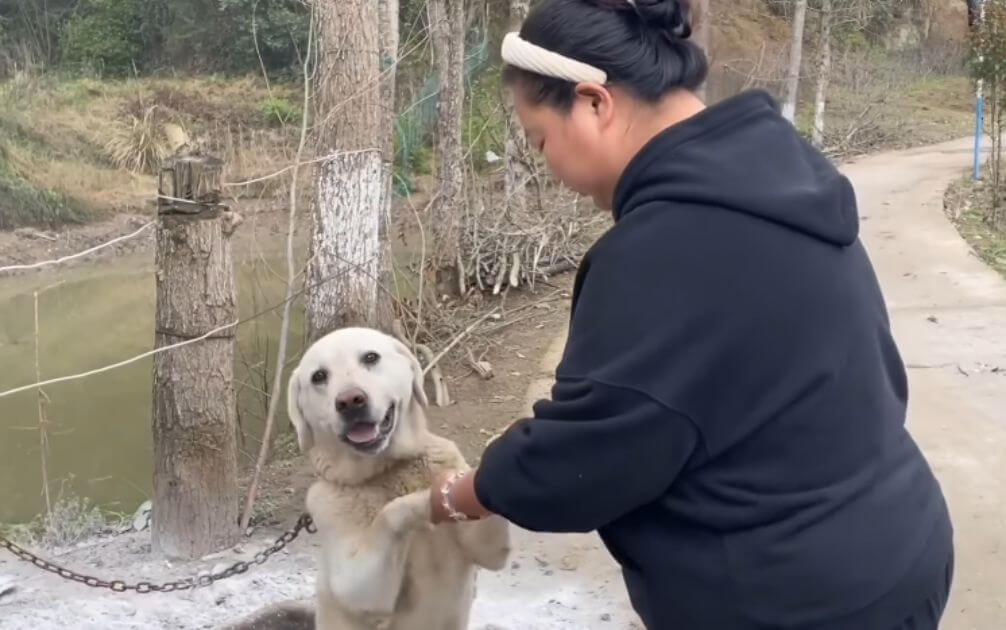
The dog seemed to understand the stakes. He stood on two legs, pressing his paws into the woman’s chest, almost begging her not to give up on him.
She didn’t.
She kept returning. She kept trying. She kept reminding him he wasn’t alone.
The Breakthrough — and the Price No One Expected

One day, the rescuer found the daughter at home again. She tried one more time. This time, after hours of pleading, the woman relented—with a condition:
50,000 yuan — nearly $7,000.
It was a sum far beyond anything the rescuer could provide.
But the story had already touched countless people online. Donations poured in.
When the money was raised, the chain was cut.
For a moment, the dog froze.
Then he sprinted, barking wildly—feeling freedom under his paws for the first time in five years.
Before he left, he turned back. Not with anger. Not with blame.
With a soft, forgiving expression, he pressed his nose against the old home one last time.
Even now, viewers say that moment stays with them.
What Years of Chaining Does to a Dog’s Body and Mind
Long-term tethering can cause:
- joint damage
- muscle wasting
- skin infections
- increased aggression or fear
- chronic stress behaviors
The American Veterinary Medical Association states plainly that “Tethering for long periods can cause physical injuries and increase the risk of aggressive behavior due to frustration and lack of socialization.”
His condition reflected this.
His fur had thinned. His skin carried years of untreated irritation. His movements were stiff from lack of exercise.
But beneath all that was a dog who still trusted people enough to give a gift to a stranger.
A Long-Awaited First Taste of Care

At the pet shop, staff stepped back at the smell. Dirt, sweat, and years of neglect clung to him.
And yet, he stood perfectly still during grooming, as if he understood it was the beginning of a new life.
Warm water ran over skin that hadn’t been washed in years. Clippers removed mats that had hardened like a shell. When they finished, the dog looked younger—lighter.
He received a veterinary exam next.
Surprisingly, his health issues were minor: skin irritation, inflammation, and the effects of poor nutrition. Nothing time, food, and affection couldn’t fix.
Why Animals End Up in Situations Like This

Neglect rarely looks dramatic from the outside. It often hides behind routine.
Animal welfare groups report the same patterns:
- families keeping dogs as “guards,” not companions
- elderly owners unable to provide care
- lack of knowledge about nutrition or medical needs
- cultural norms that treat dogs as property instead of sentient beings
- financial barriers preventing rehoming or vet care
The World Health Organization estimates there are more than 200 million stray dogs worldwide, many living in similar or worse conditions.
For every dog rescued, countless others remain invisible.
Reporting Neglect — What Every Reader Should Know
Anyone who suspects cruelty or long-term neglect can make a life-saving difference.
According to the Humane World, “Call your local animal control agency or dial 9-1-1 if you’re unsure who to contact.” They advise gathering:
- photos or video (if safe)
- location details
- time and date
- description of the animal
- description of people or vehicles involved
This documentation helps authorities act quickly and prevents animals from vanishing back into unsafe situations.
One reminder: never confront the owner directly. Personal safety always matters.
A New Life Filled With Soft Beds and Open Fields
Today, the dog who once stood on two legs begging strangers to notice him now sleeps on a soft bed in a warm home.
He eats full meals.
He runs across open fields without a chain holding him back.
He knows what affection feels like.
His rescuer says he still brings her small gifts—sticks, leaves, whatever he can find. The cucumber was never a one-time gesture. It was who he is.
He isn’t forgotten anymore.
He isn’t chained anymore.
He’s free.
Also check out these rescues:
They Painted This Kitten Blue and Left Her in the Rain: Her Rescue Will Break and Heal You
Bibo Bowed His Head and Waited to Die: What Happened Next Saved His Life
Watch His Full Rescue
The entire journey—from the first cucumber gift to the moment his chain was cut—was documented by the rescue team.
You can watch it here:
Credit: Animal Rescue YouTube Channel
Share His Story and Help Dogs Still Waiting
Somewhere right now, another dog is chained outside, wagging his tail at strangers, hoping one will stop.
Sharing his story raises awareness, encourages reporting, and reminds people how much power one act of compassion can hold.
If his journey moved you, pass it on.
You might inspire someone to save the next dog waiting behind a chain.


