
Charlie Was Found in Rough Shape—Then One Rescue Stepped In
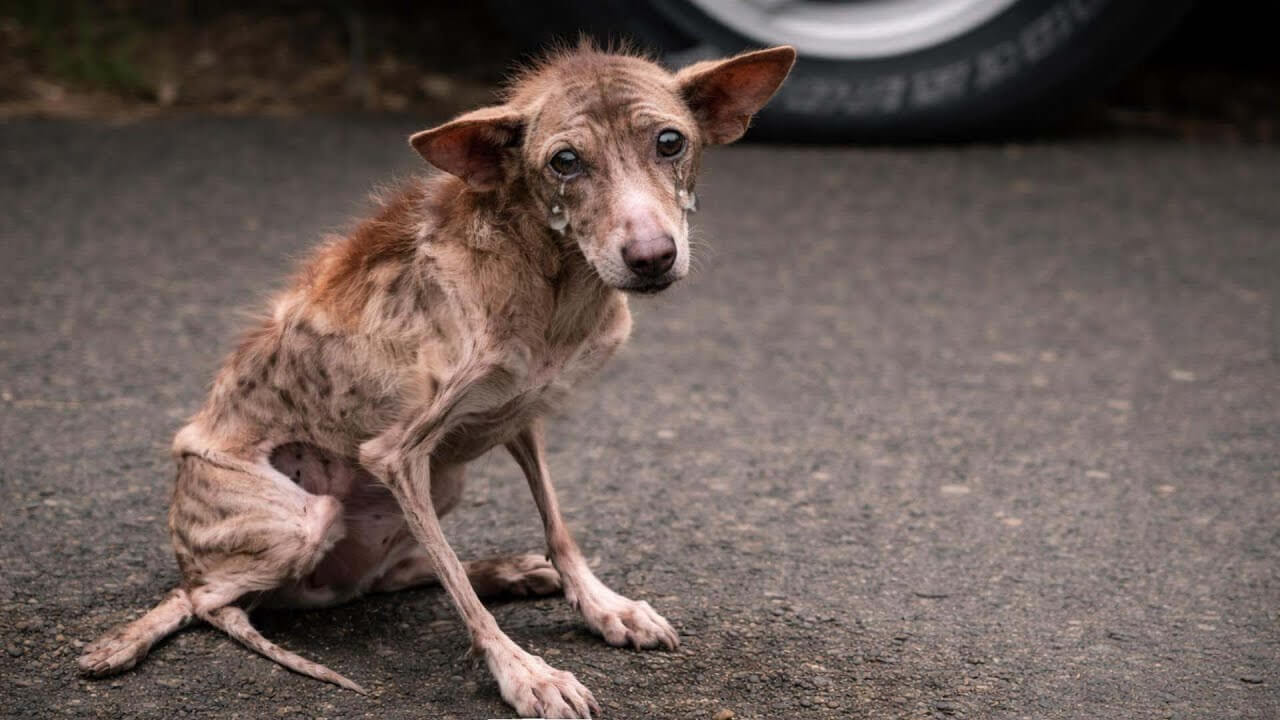
The call did not come from the public. It came from another rescuer who could not forget what they had seen.
“Charlie was reported to us by another rescuer.”
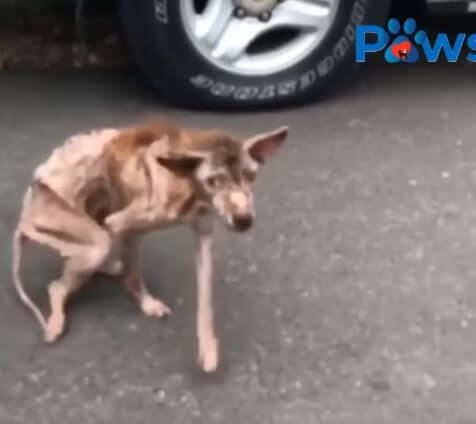
When the team arrived, the situation was immediately clear. Charlie was not roaming. He was not barking. He was barely moving. His body was hairless. Skin clung tightly to bone. One leg dragged behind him, broken and untreated. Every step came with pain.
Cases like this do not appear overnight. They build quietly, often behind closed doors, until a dog’s condition can no longer be ignored.
People later called Charlie a living skeleton. The words were harsh, but they reflected what rescuers found when they finally reached him.
The Part That Changed Everything Charlie Was Not a Stray
The most disturbing detail came next.
Charlie already had an owner.
Someone had watched his body fail. Someone had seen his weight drop, his fur disappear, his leg break. Nothing was done.
This is what prolonged neglect looks like. It does not arrive overnight. Veterinary professionals rely on body condition scoring to identify it. One clear marker states, “If ribs are very prominent, the dog may be underweight.” Charlie’s ribs were impossible to miss. His suffering had been visible for a long time.
The Call That Wouldn’t Let Go
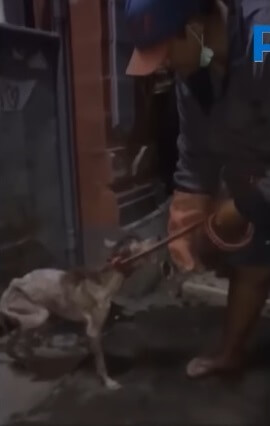
The rescue team from Mission Pawsible could not walk away.
As night settled, they returned. This time, they came with the dog catcher. Charlie did not resist. He did not have the strength.
They secured him gently and rushed him straight to the clinic.
Treatment began immediately.
“That night,” one rescuer said, “his fight to live finally mattered.”
Four Weeks Where Survival Was Not Guaranteed
Charlie remained under veterinary care for nearly four weeks. His condition was fragile. Infection was present. His broken leg could not be saved.
The decision to amputate was made to give him a chance at life.
Many people fear that outcome. Research tells a calmer story. In a large veterinary study examining life after limb removal, “58 of 64 (91%) owners perceived no change in their dog’s attitude after amputation.” Dogs focus on relief, not loss.
Charlie did too.
What Healing Looks Like When Trust Is Gone
Healing did not arrive all at once.
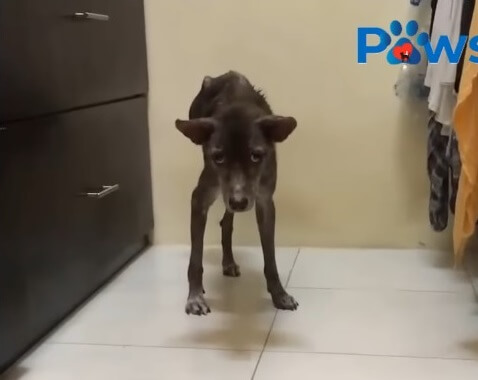
Fur returned slowly, patch by patch. Trust followed the same pattern. When Charlie finally left the clinic, he entered a quiet space that felt unfamiliar but gentle.
“He just looked at me with these big brown eyes,” the rescuer recalled.
The door was left open. Charlie explored in silence. He hid in the furthest corner of the room, unsure but curious.
Behavior experts recognize this response. One common stress signal in recovering animals is simple and telling: “Hiding or attempted hiding.” Charlie was not difficult. He was learning what safety felt like.
The Moment Charlie Chose to Stay Close
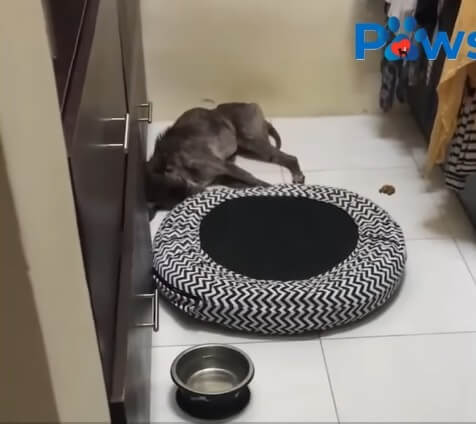
Food changed everything.
When the rescuer returned with a bowl, Charlie understood something new. The human in front of him was safe.
A soft bed was offered.
“He chose to sleep beside it, not on it.”
That quiet decision marked a turning point. Healing was no longer only physical.
Learning How Safety Works
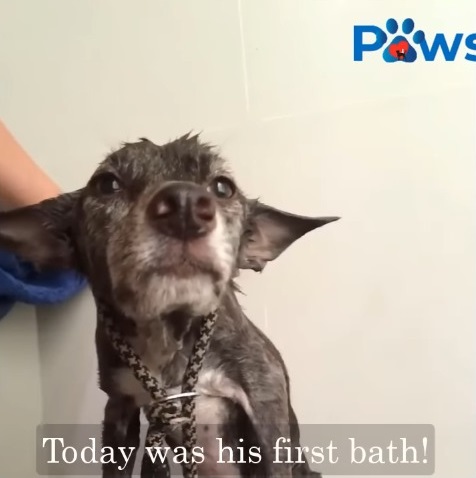
Six weeks into recovery, Charlie had his first bath. His confidence grew with each routine. He began to understand patterns. An opening door meant food. Hands meant care.
Then came the first walk.
It was slow and gentle. With every step, fear loosened its grip. The rescuers saw it clearly. A softness in his expression. A sense of relief.
“It’s hard to believe,” one rescuer said, “that Charlie was in such a bad condition only a few months ago.”
From Surviving to Belonging
Charlie did not simply recover. He joined a family.
There was a celebration. A cake. New siblings nearby. Charlie was given the first taste. He loved it.
The dog who once lived unseen now stood surrounded by warmth, noise, and attention.
Where Charlie Is Today
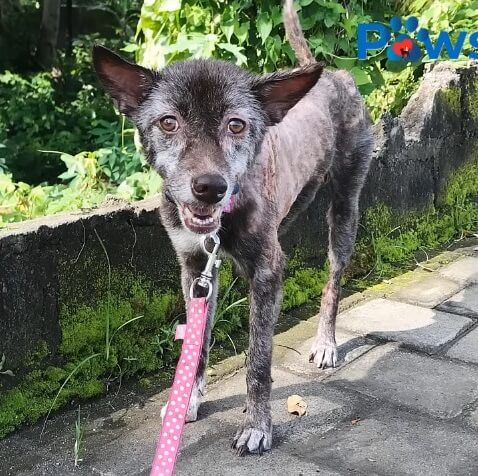
The update everyone hoped for finally came.
“Charlie has been adopted and found his forever home.”
Today, Charlie knows consistency. He knows affection. He knows what it means to belong.
His life did not begin with kindness. It ended with it.
Why Stories Like Charlie’s Matter
Charlie’s rescue story was shared publicly through the Paws Paws YouTube channel, offering transparency into his condition, treatment, and outcome.
Stories like Charlie’s are often the only public record of neglect cases that never reach court. They show what neglect looks like when it is ignored. They show what rescue makes possible when someone steps in.
Charlie was once a body barely holding on.
Now he is deeply loved.
This is the ending he always deserved.
If Charlie’s story stayed with you, please share it so more dogs like him get seen before it’s too late.
More rescue stories from our archives:
Chained for Years, Now Free: Maximus’ Emotional Recovery Story
She Was Stabbed Twice and Left to Die. A Rescuer Gave Her a Second Chance


