
They Thought It Was a Child Crying. It Was a Puppy Trapped Beneath Concrete for Four Days
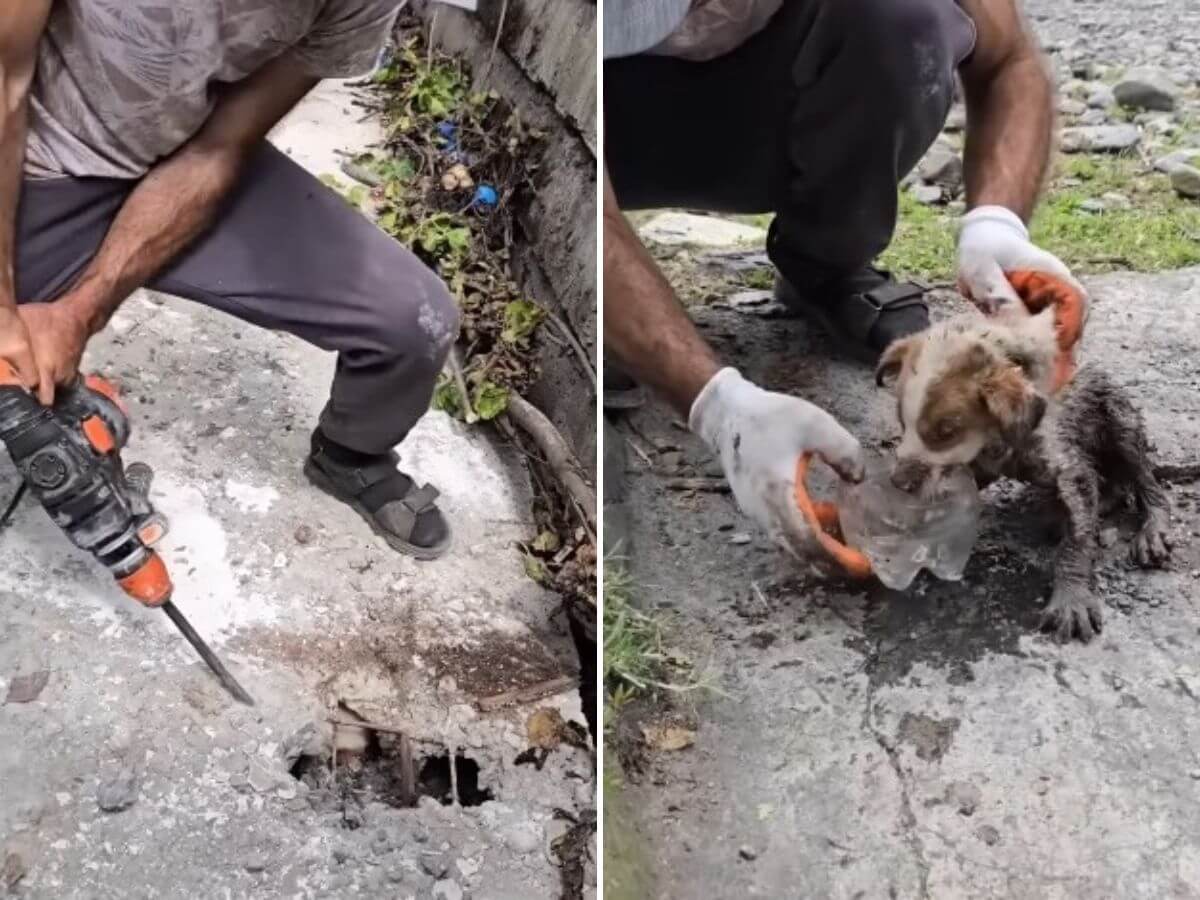
At first, it sounded like a child.
The sound was faint. Broken. Almost swallowed by wind and the hard echo of concrete. It echoed from somewhere beneath a construction site, where no one expected to hear anything alive.
Rescuers later described it as “a faint moan that took the soul and melted the heart.”
They searched the area for hours, trying to locate the source. The cries seemed to shift with the air. People nearby admitted they had heard it before but assumed it would fade.
It didn’t.
Then they found the gap.
Beneath heavy concrete slabs, inside a narrow hole partially filled with water, a tiny puppy was trapped. He could not move. He had been stuck there for four days.
Four days without food. Four days without safety. Four days exposed to cold and water beneath concrete.
And he was still alive.
What followed was not just a rescue. It was a complex puppy rescue operation that required heavy machinery, veterinary care, and careful decisions at every step.
Because surviving underground is only the beginning. Recovery is another fight entirely.
A Space Too Tight to Escape
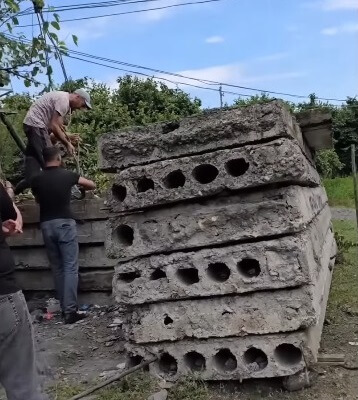
The opening between the slabs was barely wide enough to see through. The water below made the space even more dangerous. Flies circled. The puppy trembled.
Four days underground changes a body quickly.
When animals are exposed to cold, damp environments for extended periods, their internal systems begin to struggle.
The American Red Cross notes, “Signs of hypothermia in dogs include body temperature below 98.5°F, decreased heart rate, pale or blue mucous membranes, dilated pupils, shivering, wobbliness.”
Looking at the puppy’s shaking frame, the risk was clear.
He was not just trapped. He was vulnerable to cold stress, dehydration, and shock.
If you ever encounter a similar situation, time matters. Cold exposure and dehydration can escalate faster than most people realize.
A Decision to Dig
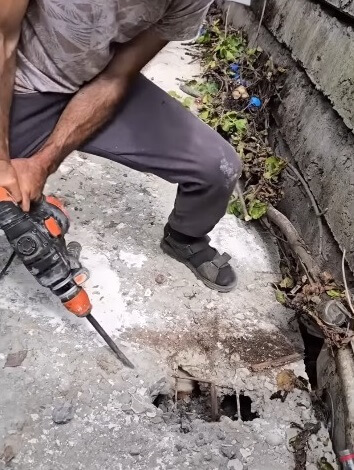
The gap was too tight for human hands. The slabs were too heavy to lift manually.
So the team made a choice.
They rented a crane. They brought in workers. They prepared for a long operation.
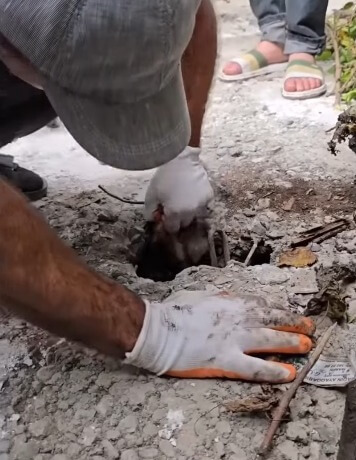
Concrete slabs were lifted one by one. Each movement had to be precise. Once machinery could no longer help, manual digging began.
Later, rescuers admitted “the process wasn’t easy.”
Every inch of debris removed carried risk. One wrong shift could injure the fragile puppy below.
But they kept going.
If you ever hear animal cries coming from beneath debris, contacting trained responders is the safest step. Heavy materials can shift without warning. Rescue requires skill as much as compassion.
Four Days Without Food or Water
By the time they reached him, the puppy was exhausted.
He collapsed the moment he was lifted free. His body trembled. His breathing was shallow. Mud covered his fur. His eyes were wide with fear.
Four days without reliable access to food or water can rapidly weaken a young animal. The ASPCAPro explains, “Dogs who are malnourished are also usually dehydrated.”
That combination is dangerous. Dehydration thickens the blood, strains the kidneys, and reduces circulation. In a small puppy, those effects intensify quickly.
He needed more than comfort. He needed medical stabilization.
The First Critical Hours
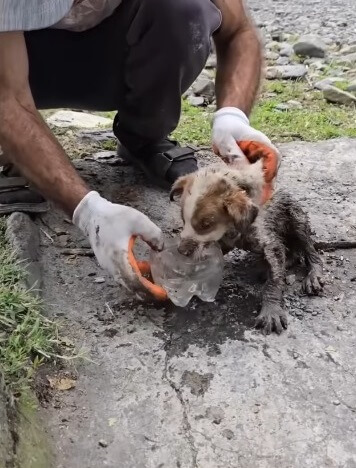
Water was offered carefully. Then he was rushed for veterinary care.
At the clinic, veterinarians examined him thoroughly. Virus tests were conducted. They came back negative. His internal organs were stable, though he was severely fatigued. Intravenous fluids were administered to restore hydration.
Warming measures were essential.
Cold exposure compounds weakness. According to the American Kennel Club, “Mild hypothermia can typically be treated with insulation and blankets.” In more serious cases, additional veterinary intervention may be required.
For this puppy, warmth and fluids worked together. Gradually, his breathing steadied.
The immediate crisis was passing.
Learning to Feel Safe Again

The first night was quiet.
He slept deeply, something he had not been able to do beneath the concrete. No pressure above him. No water pressing against his body. No darkness trapping him in place.
In the days that followed, the shaking lessened. His appetite returned slowly. His eyes softened.
Recovery after confinement is not only physical. It is emotional. Animals who endure entrapment often remain hyperalert even after rescue. Stability and routine become part of healing.
The shelter staff gave him space. Gentle voices. Consistent care.
He began to relax.
A Future That Looks Different
Four days underground could have ended differently.
Instead, it became the beginning of something new.
The tiny puppy who once lay trapped beneath concrete is now resting safely in shelter care. He is receiving proper nutrition. He is monitored. He is warm.
The team has promised him something simple but life-changing.
A safe home. A family. A life where cries are answered.
Stories like this remind us that sometimes survival depends on someone refusing to ignore a sound others might dismiss.
If this rescue moved you, share it. Someone else might hear a cry one day and decide not to walk away.
Because beneath concrete, beneath rubble, beneath silence, a life might still be fighting.
And sometimes, that is enough.
You may also want to read:
Ivy Was Trapped in the Mud and Couldn’t Cry for Help Until One Man Noticed Her
She Was Found Trapped in Wires. Then Her Heartbeat Changed Everything


