
The Dog No One Wanted—Until One Photo Changed Everything
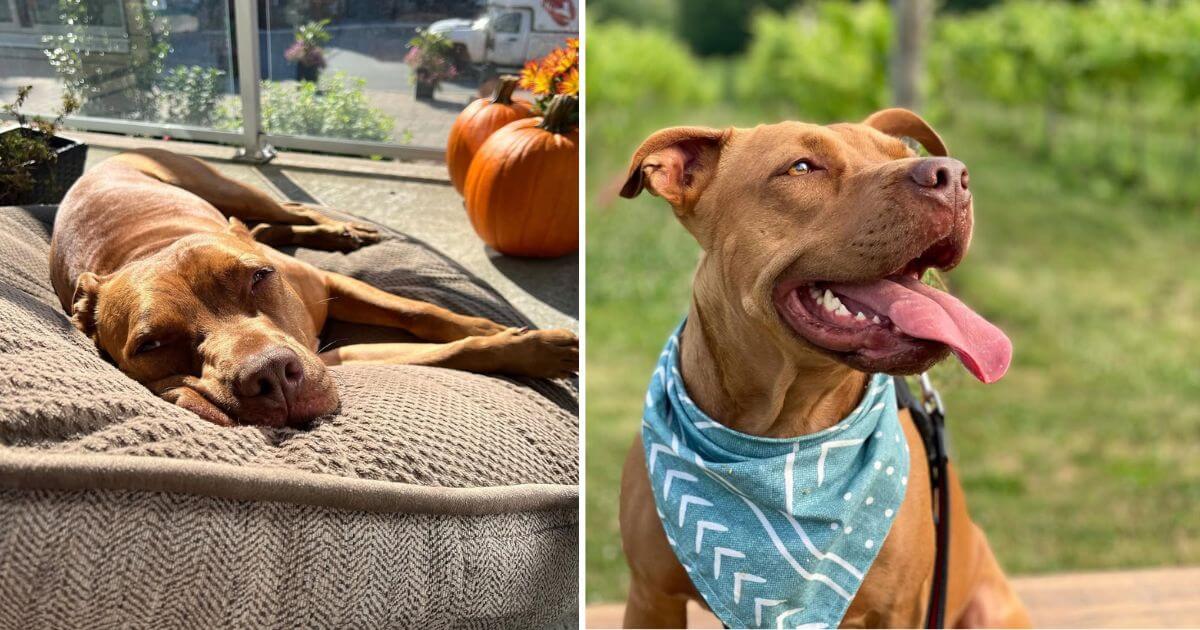
Dexter arrived at a Georgia shelter in 2019 with no name, no history, and no one waiting for him. His intake card described him in the most bare terms a life can be reduced to: “big tanned male.”
He was thin, losing fur from flea damage, and moving with the quiet resignation of a dog who understood he’d been forgotten. Staff placed him in a steel kennel and waited for an adopter who never came.
After weeks of silence, his name was added to the euthanasia list.
Dexter wasn’t loud. He wasn’t reactive.
He was simply overlooked — and nearly out of time.
Why Dogs Like Dexter End Up on Euthanasia Lists
Across the United States, shelters are struggling. The ASPCA’s national shelter data shows that millions of animals enter shelters every year, many already underweight or battling untreated skin issues linked to neglect.
In the South, where intake numbers are highest and shelter budgets lowest, the math becomes brutal.
A 2024 analysis from Shelter Animals Count reports that hundreds of thousands of dogs are still euthanized annually, largely because facilities run out of space.
Large dogs, bully breeds, and “muted-color” dogs like Dexter often wait the longest for adopters. Many never get chosen at all.
Dexter’s story began long before anyone noticed him.
From the Streets to a Steel Cage

Before landing in the shelter, Dexter had been found wandering the streets of Georgia. He knew how to sit, how to walk politely on a leash, and how to respond to gentle cues — all signs he had lived in a home once, maybe a happy one.
But by the time animal control picked him up, he was nearly 10 pounds underweight, sunburned across his back, and missing patches of fur. His sad, stoic expression made him blend into the sea of overlooked faces on adoption pages.
A study in Applied Animal Behaviour Science notes that dogs in kennels often show elevated cortisol levels, pacing, shaking, or shutting down entirely — behaviors that can make them appear withdrawn or “broken,” even when they aren’t.
Dexter’s photo reflected that stress: still, slumped, invisible.
The Photo That Saved His Life

Mark was scrolling through rescue networks when Dexter’s picture appeared.
“He just looked so defeated,” Mark said. “I couldn’t stop thinking about him.”
He contacted Fly With Me, a rescue group that pulls dogs from high-risk shelters. They agreed to get Dexter out — and did so just in time. He had hours left.
When Mark met him, Dexter ran toward him as if greeting someone he had been waiting for all along.
“There was no fear,” Mark said. “He jumped on us like he already found his family.”
Why Dexter Decompressed Instantly

Many rescue dogs hide, tremble, or shut down after adoption. Dexter didn’t.
He walked through the door like he had always lived there.
A C-BARQ behavioral study tracking dogs post-adoption found that some dogs “blossom instantly” once stressors disappear, while others need weeks or months to adjust.
Dexter was the kind who bloomed overnight.
Within days, he bonded with Mark’s cat, Zoe. They slept side by side, groomed each other, and moved through the house like littermates. House rules about “no couch” or “no bed” were quietly erased.
Dexter had come home.
A Gentle Dog Misjudged by the World

Dexter’s breed type made him a target of stereotypes.
A 2024 PMC study on housing-related relinquishment found that pit bull–type dogs are surrendered and euthanized at higher rates than any other group due to housing bans, insurance restrictions, and fear-based stigma.
Yet temperament tests consistently contradict those fears.
A 2025 temperament overview from PitbullHero shows pit bull–type dogs repeatedly scoring in the top range for stable, affectionate behavior.
Dexter embodied that reality.
He was gentle, affectionate, and sensitive to human emotion.
Still, strangers judged him.
One elderly woman passing by once said, “That creature is going to attack you someday.”
Mark never forgot that moment.
Because nothing could have been further from the truth.
How Dexter Became More Than a Pet

Soon after adopting Dexter, Mark learned he had lupus. A blood clot formed in his right leg, and life shifted into a rhythm of doctors, treatments, and uncertainty.
During the hardest days, Dexter understood.
“He’s like my therapist,” Mark said. “He can sense when I’m struggling. He’ll just lay his head on my lap. He doesn’t need words. He just stays.”
A 2021 scientific review on human–dog bonding notes that companionship from dogs can reduce stress, stabilize mood, and support emotional well-being for people with chronic illness.
Dexter became a lifeline — a grounding force when Mark’s days felt heavy.
The Bigger Picture: Why Dexter’s Story Matters
Dexter was one dog saved in time.
Many like him aren’t.
The Shelter Animals Count database shows hundreds of thousands of dogs still euthanized each year — especially in overcrowded regions.
Best Friends Animal Society’s 2025 dashboard reports that no-kill progress varies heavily by state, and lifesaving often hinges on community involvement.
Behind every “sad shelter photo” is a dog waiting for someone like Mark.
What You Can Do to Help Dogs Like Dexter
Experts recommend:
- Don’t overlook quiet dogs.
Shelter shutdown is usually stress, not temperament.
- Follow and support transport rescues.
Groups like Fly With Me pull dogs from high-risk Southern shelters.
- Fostering saves lives.
One foster home opens a kennel for a dog on the euthanasia list.
- Ask about “at-risk lists.”
These dogs need visibility the most.
- Choose personality over appearance.
Breed stereotypes are built on fear, not facts.
- Share adoption posts.
Dexter was saved because one person saw one photo.
Also check out these rescues:
A Cruel Father Ruins His Son’s Pup’s Life – By Beating Her Every Day
From Nearly Euthanized to Fully Loved
Today, Dexter is not “a big tanned male.”
He’s a cherished family member with fans around the world. His Instagram, @dextersworld_, captures beach runs, hallway zoomies, naps with Zoe, and the simple joy of a dog who finally feels safe.
His story is proof that second chances don’t just change a dog’s life.
Sometimes, they change yours too.
A video of Dexter from Heart of a Dog Youtube Channel


