
Why Dogs Sleep on Their Backs With Their Paws in the Air
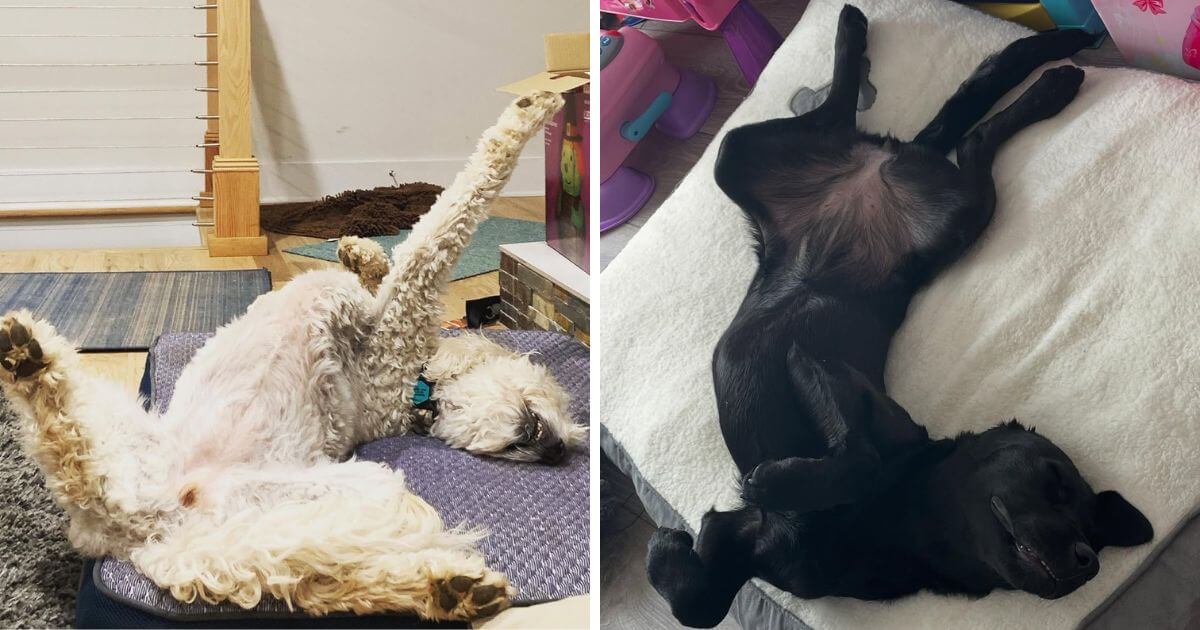
Dogs have a way of turning sleep into a performance. A living room can be perfectly calm, and then a pup suddenly flips onto its back, paws pointed skyward, as if the world finally felt soft enough to let every muscle release.
It draws laughs, but the pose holds layers many owners never realize.
Across homes, this upside-down sprawl shows up at moments when a dog feels protected and free of tension. Behaviorists view it as more than comfort.
It reflects trust, instinct, temperature regulation, and for some dogs with rough beginnings, emotional recovery.
This feature examines what the posture means, what researchers have found about canine sleep, and why experts believe this single position can reveal a surprising amount about a dog’s inner world.
A Posture That Reveals Emotional Safety
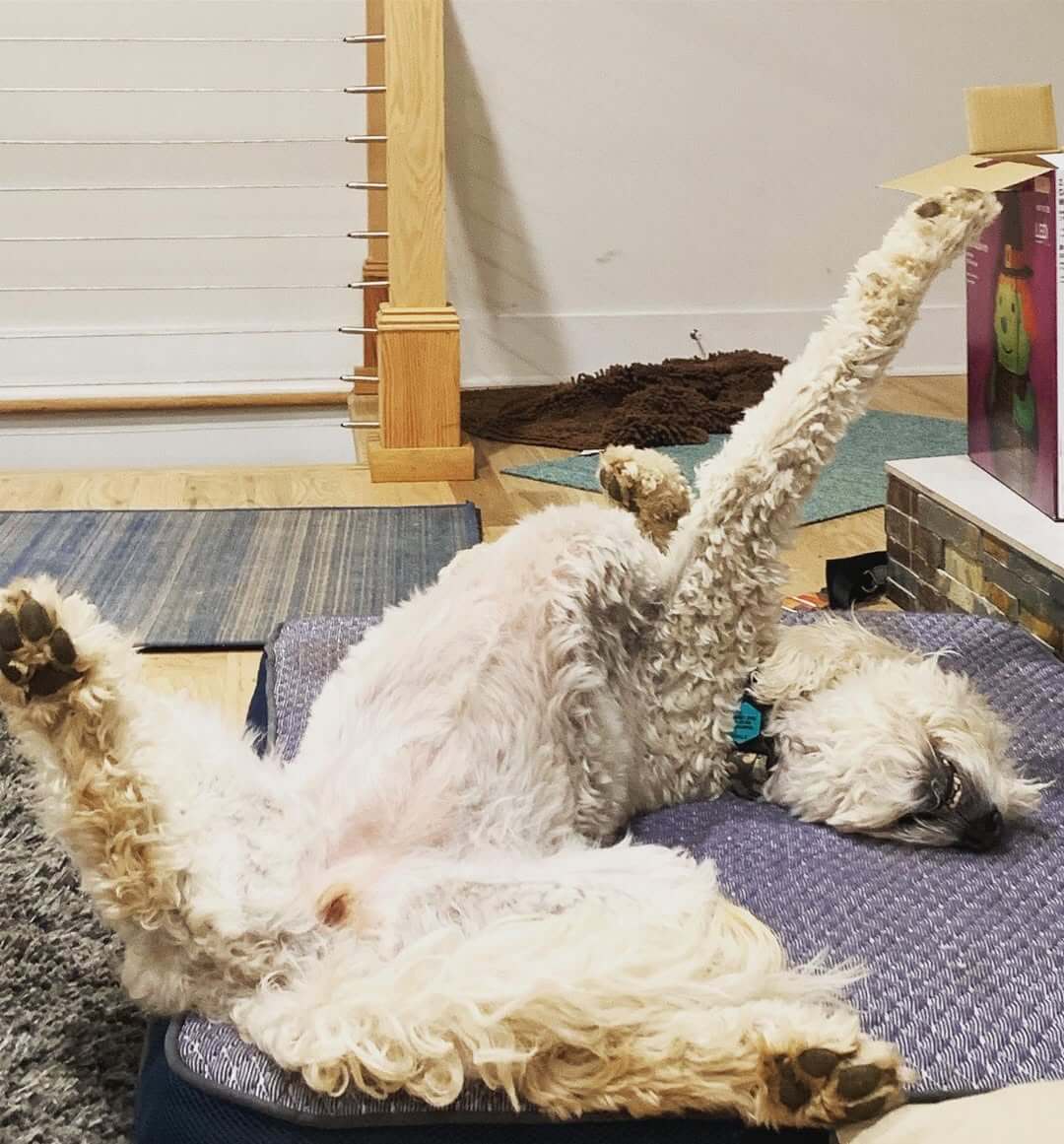
In a stable home, the belly-up sleeper appears again and again. It’s loose. It’s exposed. And it communicates safety long before a dog ever opens its eyes.
A widely referenced breakdown of canine sleep styles from PetMD states that “Belly-up and side sleepers usually feel relaxed and secure.”
That single sentence explains why behavior specialists study this posture closely. A dog only reveals the stomach — the most vulnerable region — when it feels no need to guard itself.
The facial clues tell the same story. When the jaw slackens and the legs fall open, the dog is not evaluating threats. It’s resting without hesitation.
For dogs adopted from stressful backgrounds, this posture carries even more weight. Many arrive at shelters sleeping curled tightly, often against walls, never fully unwinding.
The first time a rescued dog sleeps belly-up in a new home, it often reflects a shift no amount of training can force — the beginning of genuine safety.
If you’re interested in more emotional behaviors, you may also want to read Why Does My Cat Bring Me Dead Animals?
Why This Moment Matters for Dogs With Hard Histories
Shelter workers see the pattern often: dogs who lived through neglect or unstable environments may take months before trusting the world enough to sleep exposed. This isn’t stubborn behavior. It’s instinct built from survival.
When that instinct finally quiets — when a formerly guarded dog chooses to sleep with its belly exposed — it becomes a turning point. Adopters describe the moment as quiet but unforgettable. A sign the dog understands it no longer needs to watch the door before resting.
Sleep tells the truth long before behavior does.
The Cooling Advantage Behind the Pose
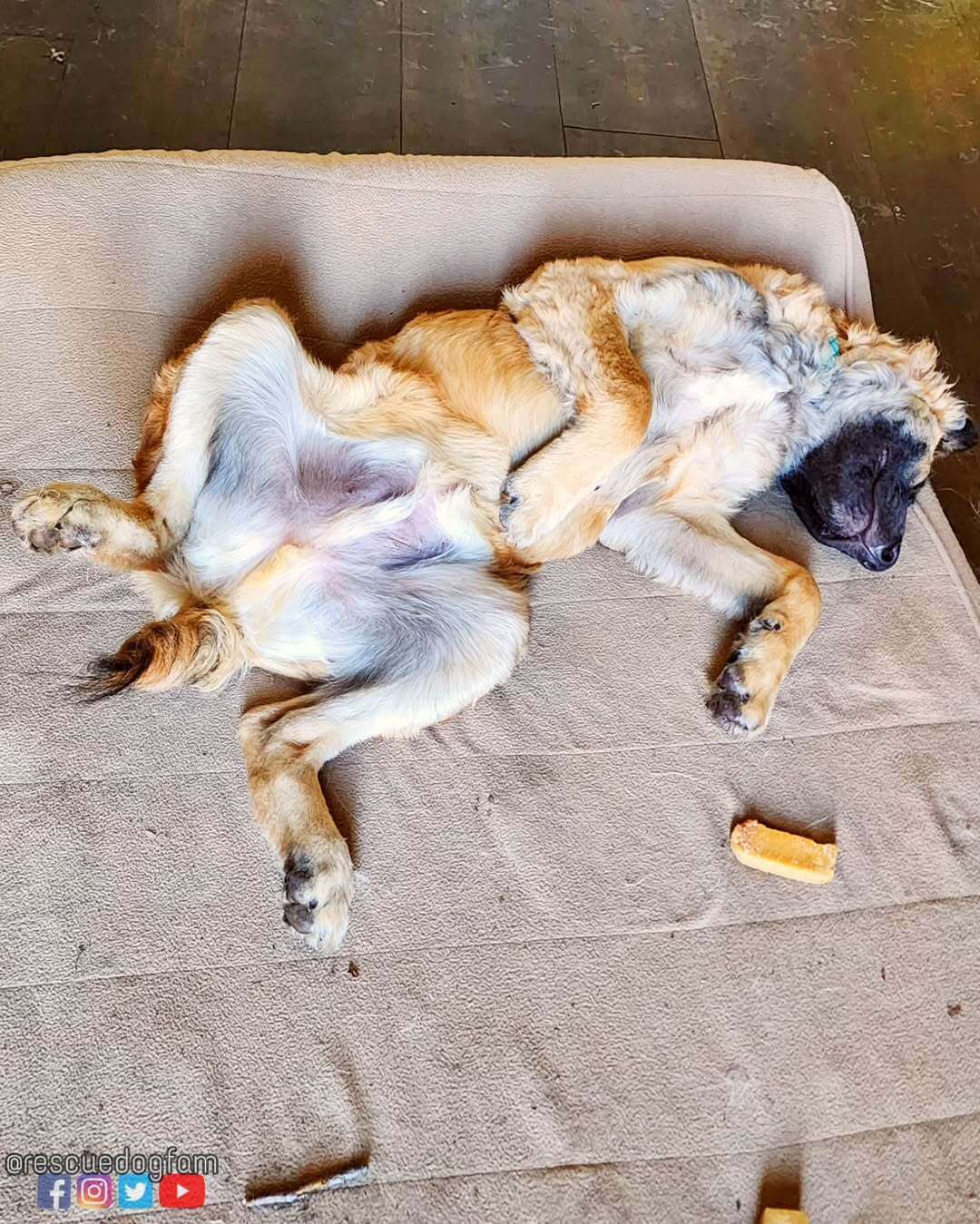
There’s a scientific layer to the upside-down posture as well. Temperature plays a central role, especially in warmer climates or after exercise.
The American Kennel Club notes that “Laying on their back while getting some shut-eye helps dogs cool off as dogs perspire through the pads of their feet.”
This makes the back-sleeping posture a practical choice. The stomach has thinner fur, so heat escapes easily. Air moves freely across the chest. Paw pads release small amounts of moisture. Every part of the position works toward cooling the body.
Owners often notice the pose during summer afternoons or just after energetic play. Dogs naturally switch to this posture to regulate heat without interrupting sleep.
A Dog’s Temperature System: Simple but Effective
Unlike humans, dogs don’t rely on full-body sweating. Their cooling system is more targeted.
A scientific explainer from PetMD states that “Merocrine sweat glands are mostly found in the paws that help release a small amount of body heat.”
Because paw pads and the stomach play such a large role in cooling, any position that exposes them — especially on cool floors — becomes efficient.
That’s why the belly-up posture shows up not only in content, settled dogs, but also in warm conditions where airflow and evaporation keep the body balanced.
A Comfortable Route Into Deep Sleep

When a dog flips over, the body settles into a position that supports deep rest. The hips relax. The spine decompresses. Muscles loosen in a way many curled positions don’t allow.
This is when dreaming often begins.
A detailed explanation from VCA Animal Hospitals reports that “Dreams usually begin for the average dog after about 20 minutes of slumber, while in REM sleep.”
Owners can spot this stage through:
- gentle paw twitching
- soft whimpers or vocal sounds
- rapid eye movement
- rhythmic breathing
What looks dramatic is a healthy signal that the dog has entered restorative sleep — the level that strengthens memory, stabilizes mood, and supports long-term well-being.
Why Some Dogs Never Choose This Position
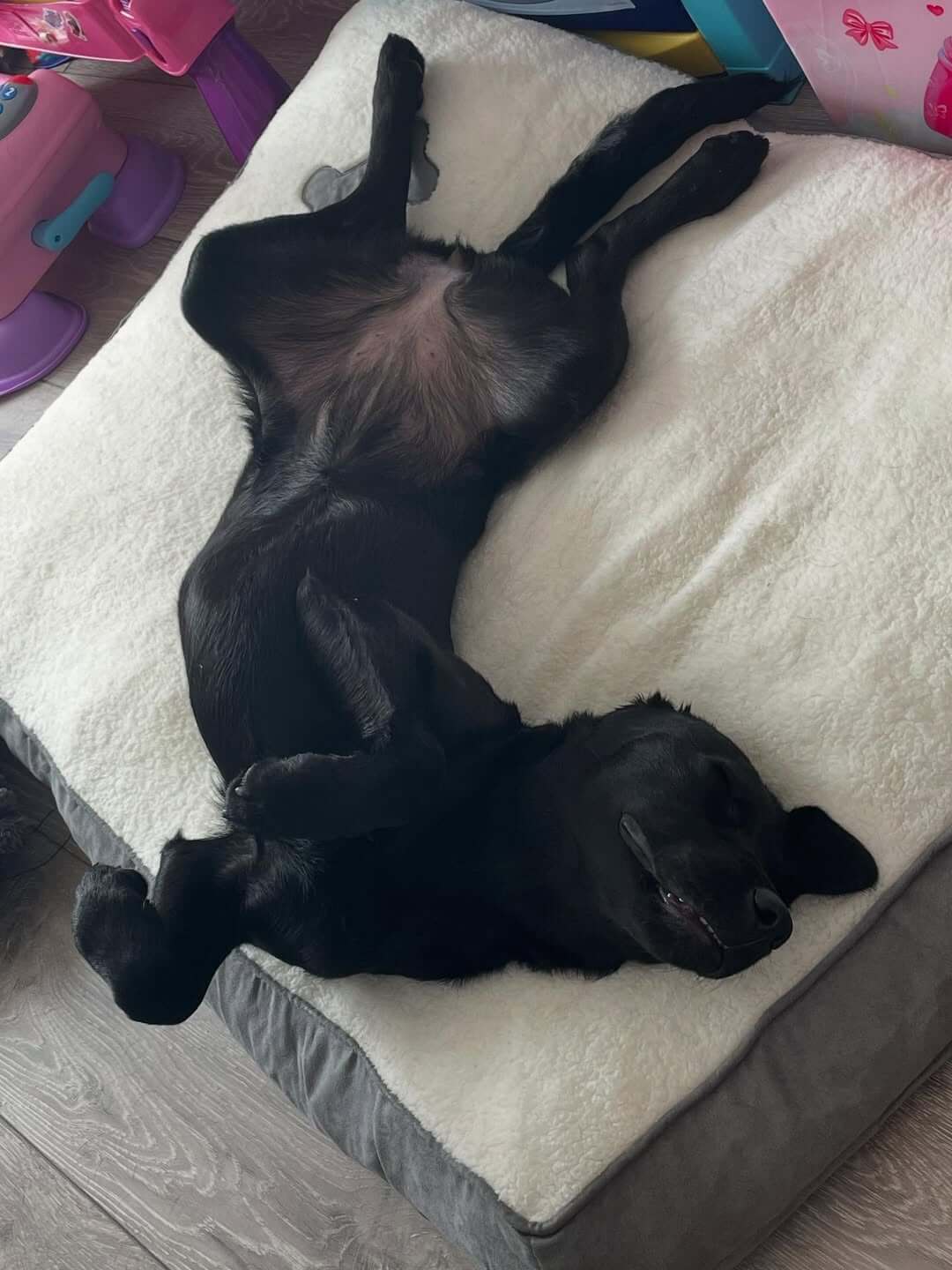
Even in secure homes, not every dog sleeps belly-up. Anatomy shapes preference.
Long-legged breeds often favor the posture because the hips rest comfortably. Stocky or short-legged breeds may feel more supported on their side or curled.
Flat-faced breeds that work harder to breathe sometimes avoid positions that stretch the neck too much.
Age also influences sleep posture. Puppies fall into the belly-up sprawl without hesitation. Senior dogs with stiffness or arthritis may find the posture less comfortable.
And for some dogs, instinct simply prefers positions that limit vulnerability, even in homes they trust.
When Owners Should Take a Closer Look
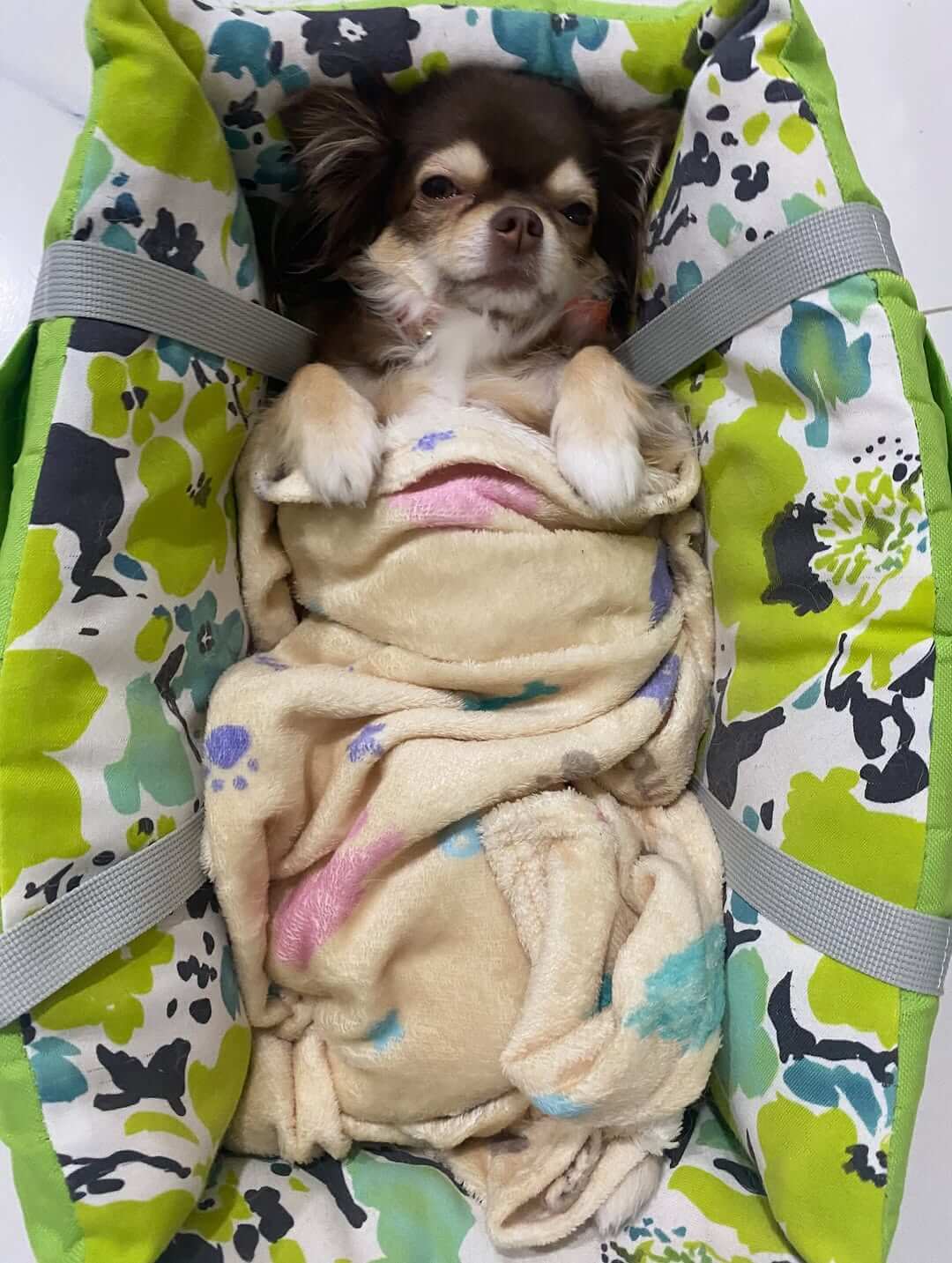
Most dogs who sleep belly-up are simply at ease. Still, a sudden shift in sleep patterns can act as a quiet signal that something isn’t right.
Watch for:
- panting during sleep
- stiffness after waking
- repetitive flipping over to cool down
- irritated skin on the chest or stomach
- whining during position changes
VET ALERT — Seek Guidance If You Notice:
- ongoing discomfort overnight
- sudden change to constant back-sleeping
- heat stress signs (drooling, heavy panting, warm ears)
- sensitivity when touching the stomach or hips
Even small shifts in your dog’s sleep profile can reveal early physical strain or temperature imbalance.
How Sleep Reflects a Dog’s Emotional Health
Canine sleep patterns often mirror internal states. Dogs who feel watched, anxious, or unsettled tend to curl tightly or sleep in low, guarded positions. Dogs who feel connected to their home and family relax visibly — sometimes dramatically.
The upside-down sprawl shows up most often in:
- stable routines
- homes with predictable sound patterns
- environments where dogs feel protected
- spaces with minimal nighttime stressors
The posture blends physical comfort with emotional calm. For many pet owners, it becomes one of the clearest signs that their dog feels safe enough to rest without fear.
FAQ: Common Questions About Dogs Sleeping on Their Backs
Do all dogs sleep on their backs?
No. Breed structure, health, age, and personality shape preference.
Is back-sleeping linked to dominance?
No. Sleep posture isn’t dominance behavior. Experts consistently link belly exposure to comfort and trust.
Do puppies do this more?
Yes. Puppies tend to have fewer inhibitions and often sleep in open, loose positions.
Should I worry if my dog never sleeps this way?
Not at all. Some dogs simply prefer side or curled positions.
Is twitching during back-sleeping normal?
Yes. Twitching often appears during the REM stage described by veterinary hospitals.
The Quiet Message Behind the Pose
Once a dog chooses the belly-up sprawl, the message is unmistakable. It signals that the world feels predictable. The home feels safe. And rest no longer requires vigilance.
Some dogs adopt it daily. Some never do. But for the ones who stretch with their paws in the air, the posture carries a quiet truth:
They trust the people around them. Completely.
Also read:


Awesome read