
Dotty Barely Wagged Her Tail Until Rescuers Learned What She’d Been Hiding
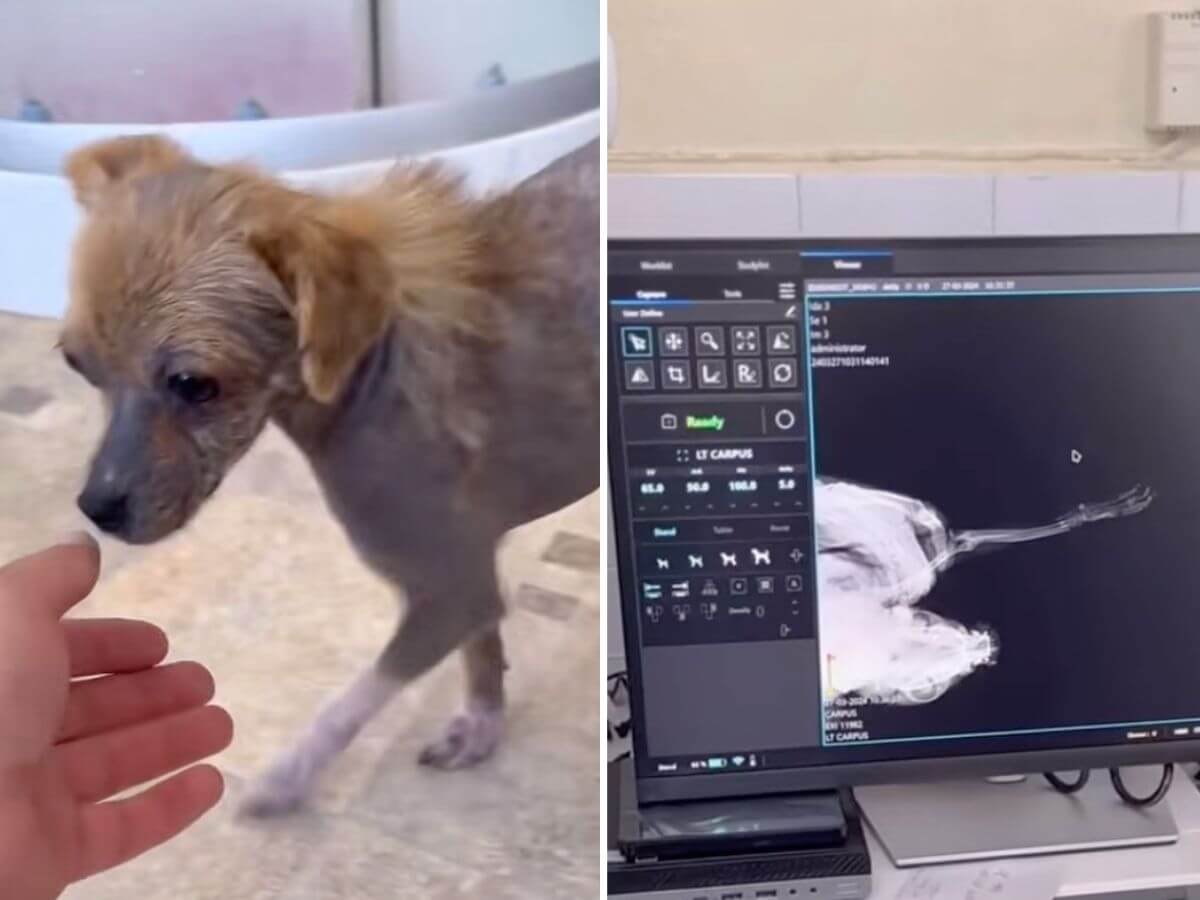
Nobody knew exactly how long the stray dog had been wandering near the quiet roadside neighborhood alone.
Residents only knew they kept seeing the same thin dog moving slowly past the same stretch of road every day. Sometimes she appeared near the edge of a grassy ditch. Other times she wandered silently beside parked cars before disappearing again by nightfall.
Her fur looked dirty and uneven, her ribs visible beneath it.
Even from a distance, something about the way she moved felt wrong.
Every step looked careful.
Heavy.
Almost cautious.
Some neighbors later said the dog rarely lifted her head while walking. She stayed low to the ground and avoided eye contact, as if life had already taught her not to expect kindness from passing strangers.
What unsettled people most was how quiet she seemed.
She never barked for attention.
Never ran toward anyone.
Never begged for food.
She just kept walking slowly through the neighborhood like a dog trying not to be noticed at all.
By the time concerned residents contacted rescuers Lou & Sylw, her condition appeared to be getting worse with each passing day.
Nobody realized then that the exhausted stray was dealing with more than hunger alone.
That dog would later be named Dotty.
Dotty Had Already Learned How to Suffer Quietly
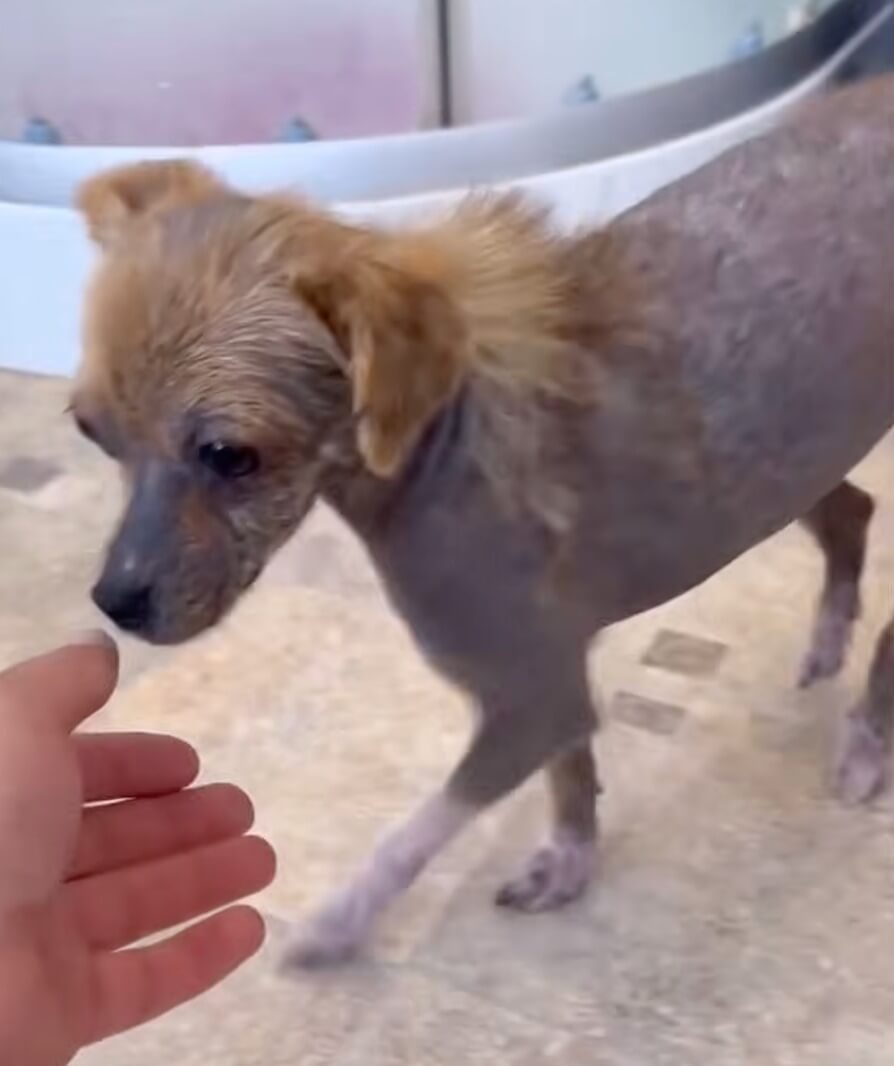
When the rescue team first arrived, Dotty did not bark or run away.
She simply watched them.
Her tired eyes followed every movement carefully while her thin body stayed low to the ground. The rescuers later shared that Dotty looked emotionally drained long before they ever touched her.
Even standing appeared difficult for her.
Still, she quietly allowed them to come closer.
That alone surprised the team.
Many frightened strays panic when unfamiliar people approach, especially after surviving alone for long periods. Dotty did the opposite. She seemed too exhausted to resist anymore.
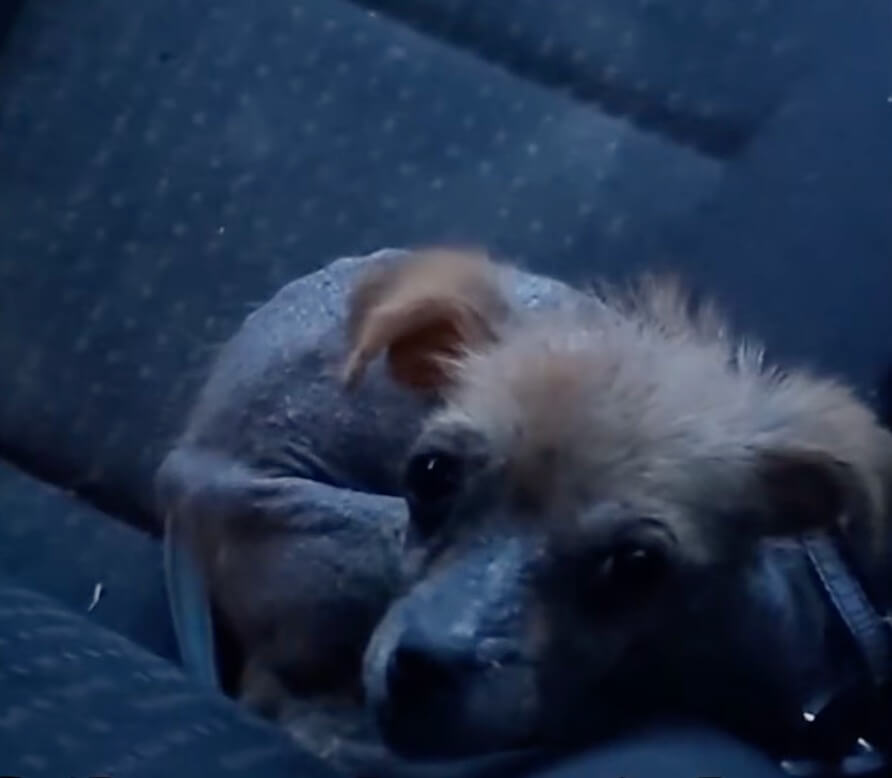
As rescuers gently lifted her into the car, she rested her head against a blanket and remained completely silent during the drive to the veterinary clinic. Outside the window, traffic continued passing normally while Dotty barely moved at all.
Nobody inside the vehicle knew how much pain she was actually hiding yet.
Then something small happened that nobody there would forget.
One rescuer carefully reached over and touched the top of Dotty’s head.
According to the rescue team, “her tail moved once… slowly, almost shyly.”
That tiny movement changed the atmosphere inside the car immediately.
It was not excitement.
It was not happiness.
It felt more like a fragile attempt at trust from a dog who had almost stopped believing people could be kind.
Veterinarians Soon Realized Dotty Was Hiding More Than Hunger
At first glance, Dotty looked severely malnourished.
Veterinarians quickly confirmed she was dangerously underweight, dehydrated, and battling parasites that had weakened her body over time. Even standing for short periods exhausted her completely.
For the first few days, Dotty mostly slept beneath blankets in the recovery area. Caregivers often found her curled tightly into the corner of her bed, waking only when food or medicine was brought beside her.
Despite everything she was going through, one detail kept standing out to everyone caring for her.
She never resisted treatment.
Instead, Dotty quietly watched every hand reaching toward her, almost like she was trying to decide whether she was finally safe.
Long-term strays often survive by hiding weakness until their condition becomes severe. According to VCA Animal Hospitals, “Dogs instinctively hide their pain to prevent potential predators from targeting them when they are injured.”
That survival instinct may explain why Dotty never cried out or openly reacted to the pain she had likely been carrying for weeks.
The parasite infection draining her body also matched many warning signs veterinarians commonly see in neglected dogs.
According to PetMD, “Symptoms may include no visible signs or, in severe cases, dark, tarry diarrhea, weight loss, pale gums, weakness, and anemia due to blood loss.”
By the time Dotty reached the clinic, veterinarians said her condition had become serious.
Dotty’s First Real Signs of Recovery Came Slowly
Recovery did not happen overnight.
For several days, Dotty barely moved unless caregivers brought food or medicine to her bed. Sometimes she slept so deeply that rescuers paused beside her bed for a moment just to watch her chest rise and fall.
Then one morning, something changed.
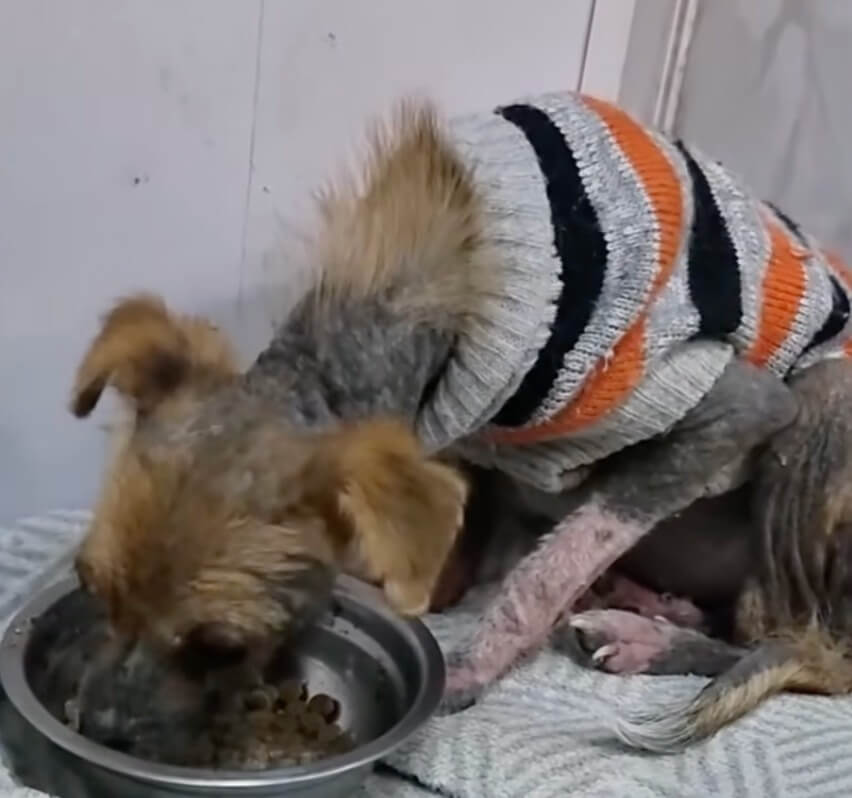
Dotty finished an entire bowl of food completely on her own for the first time since arriving at the clinic.
When a caregiver softly praised her afterward, the exhausted dog slowly lifted her head and gave another small wag of her tail.
Moments like that may seem tiny to outsiders, but rescuers notice them immediately. Emotional responses often return slowly in traumatized animals, especially after long periods of fear or isolation.
According to the American Kennel Club, “A slow wag could mean that a dog is unsure and feeling insecure about a situation.”
That described Dotty perfectly during those early recovery days.
Her tail wags were hesitant.
Careful.
Almost questioning.
But they still showed something important.
She was beginning to trust again.
Over the next two weeks, Dotty slowly gained weight and started moving around the recovery space more confidently. Her eyes looked brighter. Her appetite improved. Caregivers noticed she began recognizing familiar voices and footsteps nearby.
For a short time, it felt like the hardest part of her recovery might finally be ending.
Then veterinarians discovered the real reason behind her painful movements.
Then the Rescue Team Discovered the Injury She’d Been Walking On
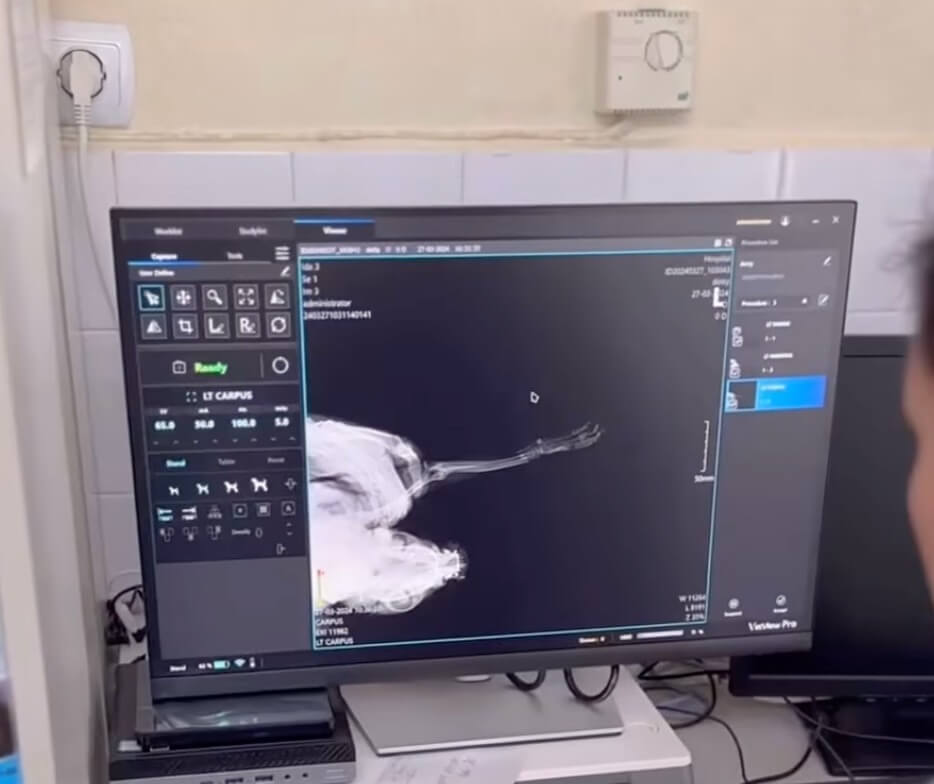
Dotty had been living with a fractured front leg the entire time.
Suddenly, her slow movements made heartbreaking sense.
Even while starving, dehydrated, and weakened by parasites, she had still been trying to survive while placing pressure on an injured limb every single day.
The discovery immediately changed her recovery plan.
Veterinarians carefully bandaged the fractured leg and restricted her movement again to prevent further damage while the injury healed properly. Recovery became slower after that.
But Dotty never stopped trying.
Even on difficult days, rescuers noticed the same quiet determination in her.
According to the rescue team, “each time she struggled to stand, she looked determined rather than defeated.”
That quiet strength became the thing caregivers fell in love with most.
Not because Dotty was dramatic.
Not because she demanded attention.
But because she kept trying despite everything her body had endured.
Tiny Victories Slowly Changed the Frightened Dog She Used to Be
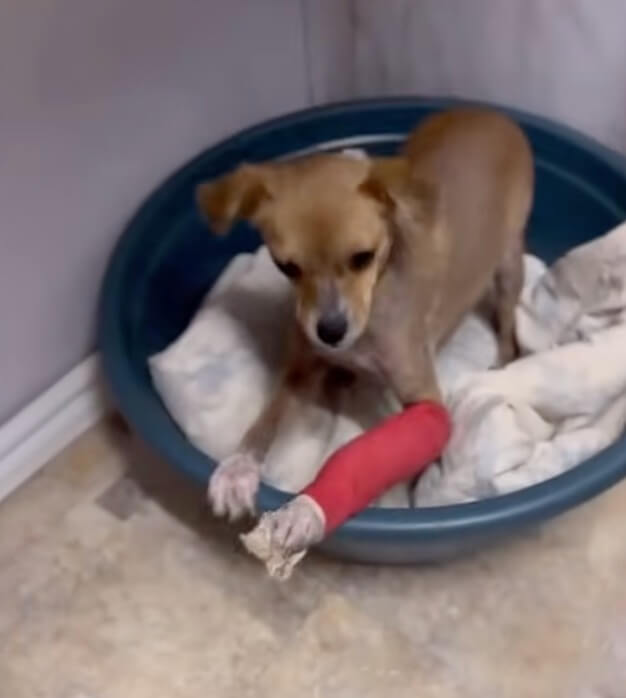
The following weeks became a series of small victories that slowly transformed Dotty emotionally and physically.
She started recognizing the sound of caregivers entering the hallway outside her room. Before they even reached her bed, her tail would already begin wagging softly beneath the blankets.
Soon, she began sleeping peacefully through the night.
The nervous stray who once watched every movement around her slowly relaxed into deeper rest, stretching comfortably beneath warm blankets instead of curling tightly into herself.
As her fractured leg healed, she carefully relearned how to trust her body again too.
At first, she could only stand for a few seconds before sitting back down.
Then came several careful steps across the room.
Later, Dotty started walking outdoors beside her caregivers, quietly exploring sunlight and fresh air with curious eyes that no longer looked filled with fear.
Every improvement felt enormous to the rescue team.
They celebrated the first time she walked without hesitation.
They smiled when she barked softly at another dog nearby.
They laughed the day Dotty gently nudged a toy with her nose before proudly wagging her tail afterward.
By then, her recovery was no longer only physical.
The frightened stray who once wandered silently beside the road was slowly becoming a dog who finally understood she no longer had to survive alone.
Today, the Quiet Stray Dog Who Once Wandered Alone Has Found Peace

After nearly two months of treatment, Dotty’s transformation became impossible to ignore.
She gained nearly three kilograms, recovered from her parasites, and healed beautifully from her fractured leg. Yet according to her rescuers, the biggest change had nothing to do with weight or medical treatment.
It was the way she now looked at people.
The fear in her eyes had faded.
Today, Dotty lives safely at the rescue center surrounded by soft beds, steady meals, and caregivers who genuinely love her. She walks normally again, enjoys spending time outdoors, and greets familiar faces with the gentle tail wag that once seemed almost impossible during those early rescue days.
Some mornings now, rescuers say Dotty waits near the doorway before breakfast, quietly watching for familiar footsteps instead of hiding from them.
That may be the clearest sign of all that she finally feels safe.
If Dotty’s journey touched your heart, consider sharing her story so more abandoned animals still waiting for help have a better chance of being seen too.
Also read:


