
She Spent Years Chained to a Tree. One Rescue Gave Eva the Life She Never Had
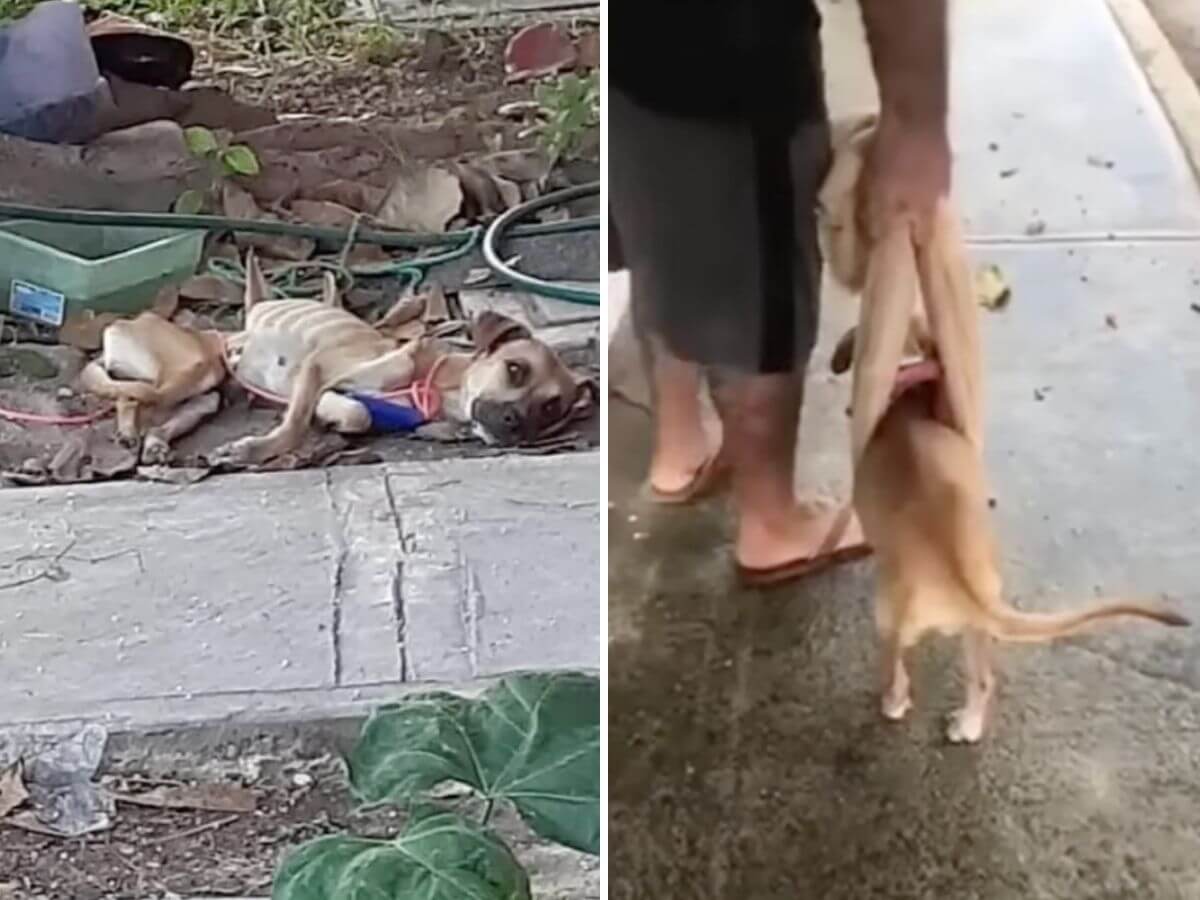
Some rescue stories begin with hope. Eva’s began with a chain.
For most of her life, the small dog lived tied to a tree, left outside day after day as if she were invisible. Food was scarce. Water was often missing. When she became sick, no one stepped in to help.
Over time, the neglect slowly drained her strength. Walking became harder. Standing became harder. Eventually even lifting her head required effort.
By the time rescuers arrived, Eva was lying beneath the same tree that had held her in place for years.
At first glance, it looked as if she might not survive.
But what happened next would become a long and emotional fight that no one there would forget.
Eva’s rescue and recovery were later documented by Riviera Rescue AC, whose team shared her story in a video posted on the Animal Shelter YouTube channel.
And the moment they untied the chain, her life finally began to change.
The Dog at the End of the Chain
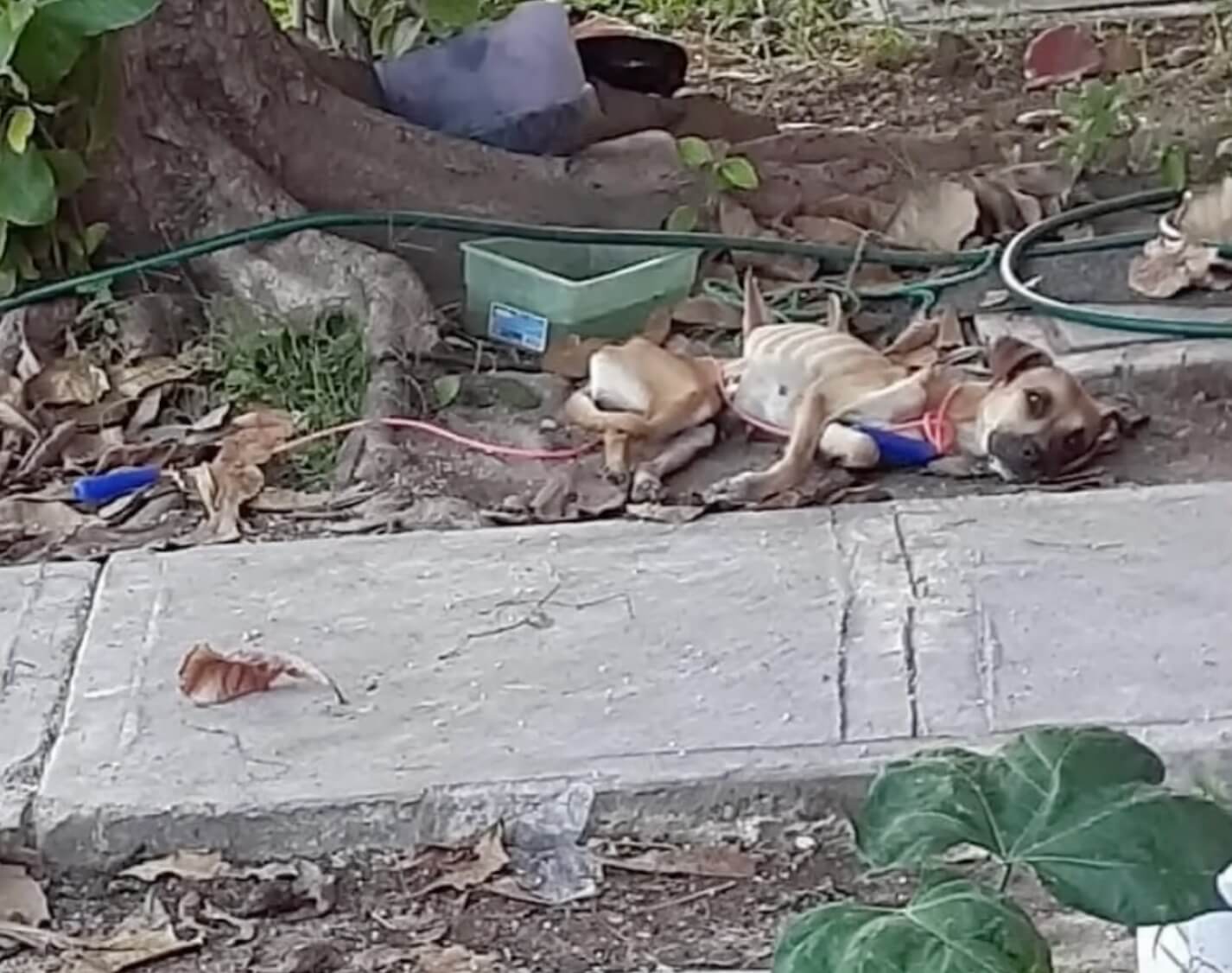
When the rescue team arrived, Eva’s condition spoke before anyone said a word.
Her body was severely dehydrated. Her muscles had weakened from lack of movement. She tried to stand when the rescuers approached, but her legs could not hold her weight.
Something was very wrong.
Dogs are resilient animals, but long periods without food, clean water, shelter, or medical care take a heavy toll. According to the Humane Society of the United States, “Failing to provide an animal’s basic needs—food, water, shelter and veterinary care—is cruelty.”
For Eva, those needs had gone unmet for far too long.
The rescuers gently untied the chain that had held her in place and prepared to move her to safety. But another frightening problem quickly became clear.
Eva could barely walk.
The Mystery Behind Her Weakness
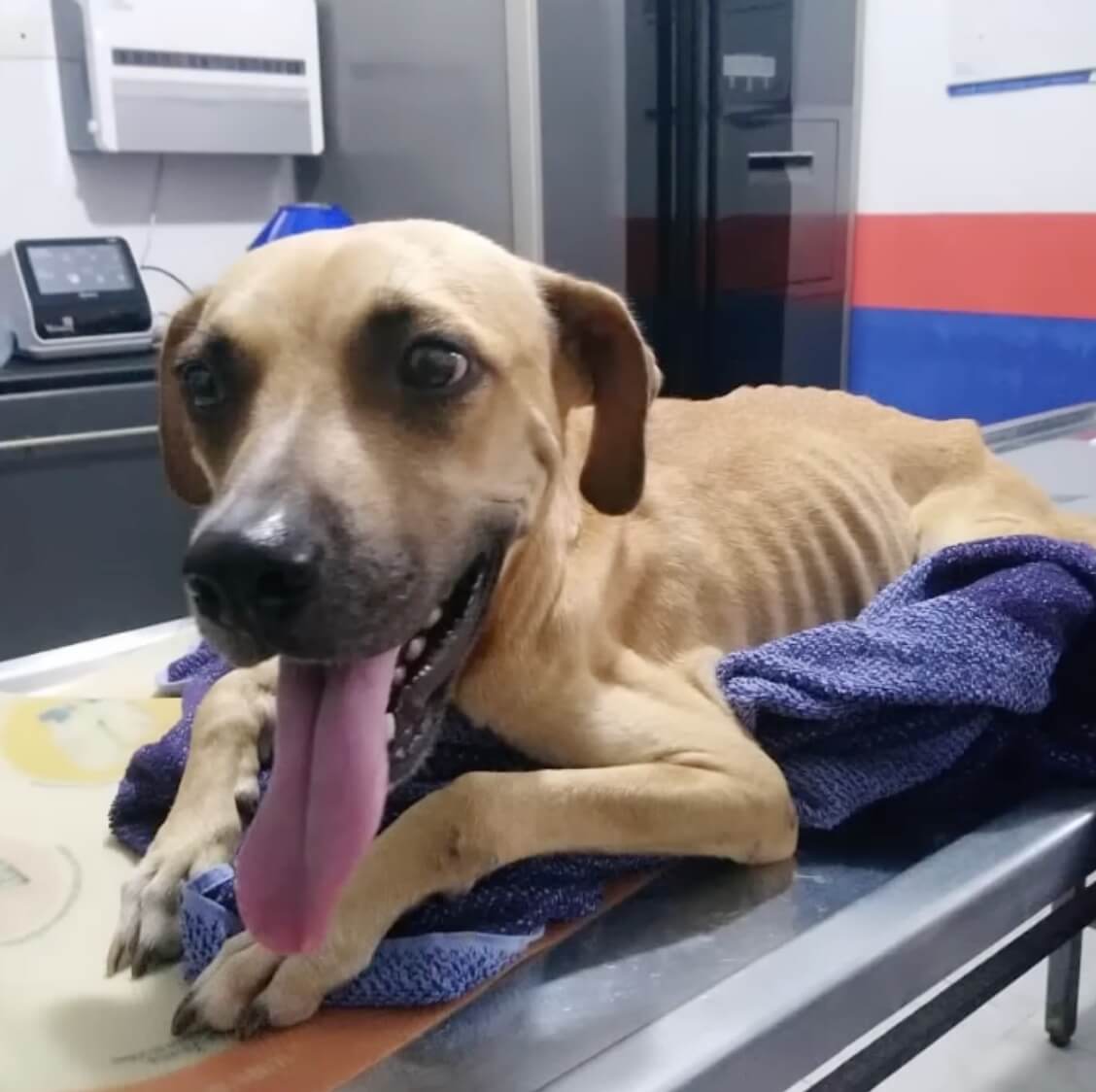
Once she arrived at the veterinary clinic, doctors began trying to understand what had happened to her.
The first concern was dehydration and exhaustion. But there was something else. Eva struggled to move her back legs. When she attempted to stand, they trembled and collapsed beneath her.
At first, veterinarians searched for fractures. None appeared on the scans.
That left a troubling question.
If nothing was broken, why could she not walk?
Advanced imaging eventually provided the answer. An MRI revealed damage along Eva’s spinal cord. Two vertebrae showed clear signs of trauma, and the surrounding nerves were inflamed.
The injury had disrupted signals traveling from her spine to her legs.
Spinal injuries in dogs can cause severe mobility problems. According to WagWalking, “Your dog may become incontinent, lose his ability to walk, and experience great pain.”
For Eva, the most immediate concern was movement.
Surgery was not considered a helpful option for her injury.
That meant her recovery would depend entirely on rehabilitation.
And it would not be easy.
The Long Road to Recovery
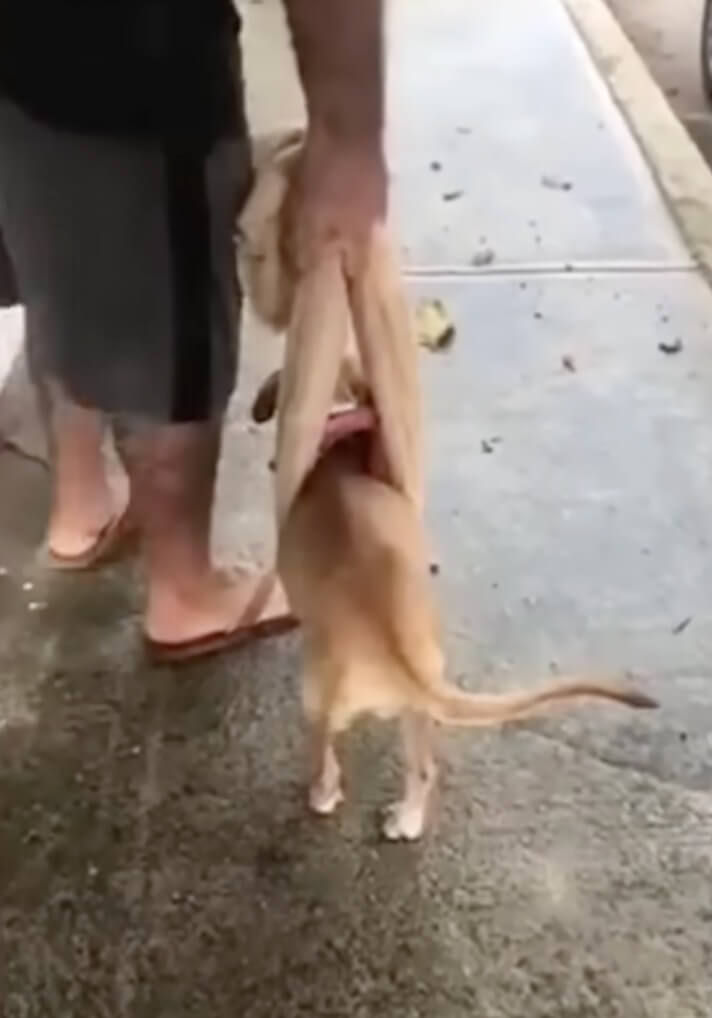
Eva’s treatment plan focused on rebuilding the strength her body had lost.
Every day, rescuers and veterinarians worked with her through gentle physical therapy. Massage sessions helped stimulate blood flow in her legs.
Electrical stimulation therapy encouraged damaged nerves to reactivate. Pain medication helped her remain comfortable during treatment.
At first, progress was almost invisible.
Eva struggled to hold herself upright. Sometimes she managed only a few seconds before her legs gave out again.
Still, the rescue team continued working with her patiently.
Small changes began to appear.
Her muscles responded slightly better during therapy. She stayed standing a little longer each week. The improvement was slow, but it was real.
Dogs recovering from spinal injuries often require weeks or months of rehabilitation before mobility returns. Patience becomes one of the most important parts of the process.
The rescue team understood that.
They refused to give up on Eva.
A Dog Who Kept Trying
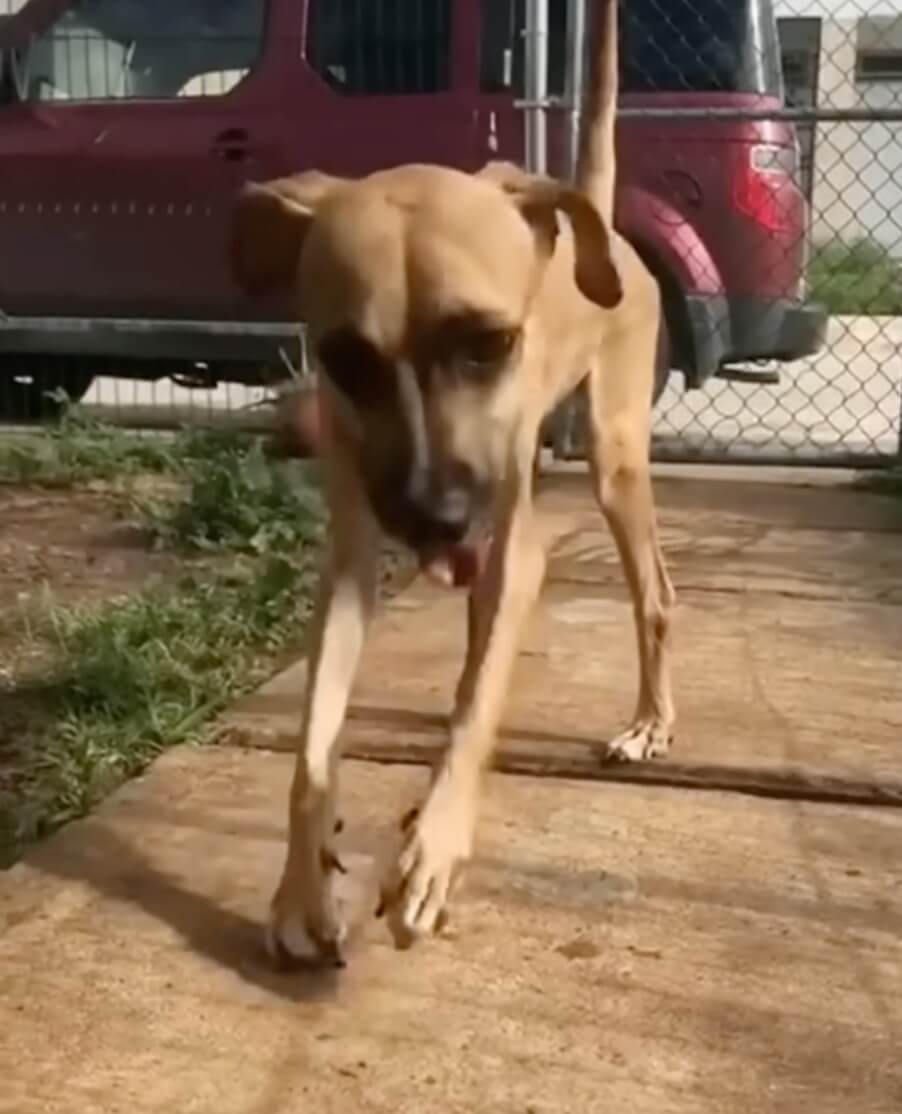
What stood out most during Eva’s recovery was her determination.
Even when she fell, she tried to rise again. Each attempt pushed her muscles to work a little harder. Over time, those efforts began to build strength.
About six weeks into therapy, the first major breakthrough came.
Eva managed to take a few steps.
They were unsteady and slow, but they were steps.
For everyone watching her journey, it felt like a moment of victory. The dog who had once been unable to stand was beginning to move on her own.
The therapy continued, and so did the improvements.
Understanding the Effects of Long-Term Chaining
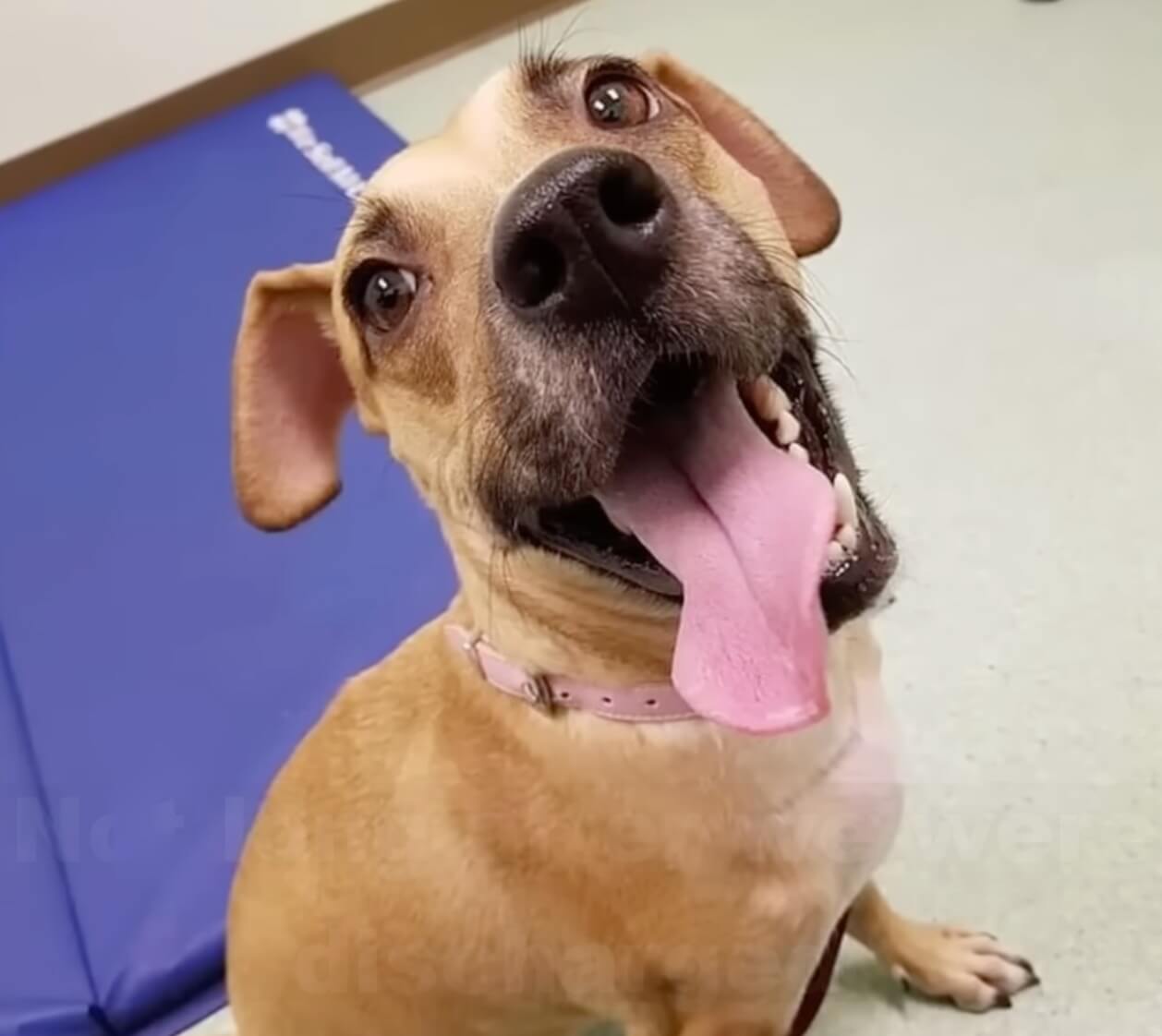
As Eva regained strength, rescuers also tried to piece together the life she had lived before they arrived.
Evidence suggested that she had likely spent much of her life tied outside.
That kind of confinement can have lasting effects on dogs.
When dogs are restricted for long periods, they miss out on basic experiences that help them develop confidence and normal behavior. Movement, exploration, and interaction with people all play a role in a dog’s mental health.
Animal welfare organizations have raised concerns about this for years. According to the Humane Society of the United States, “The continuous chaining or tethering of a dog is a key contributor to poor socialization.”
Eva’s behavior seemed to reflect that history.
Simple things most dogs learn early in life were completely new to her.
Walking freely across grass. Exploring a yard. Meeting people without fear.
For Eva, these were discoveries happening for the first time.
A New Chance Across the World
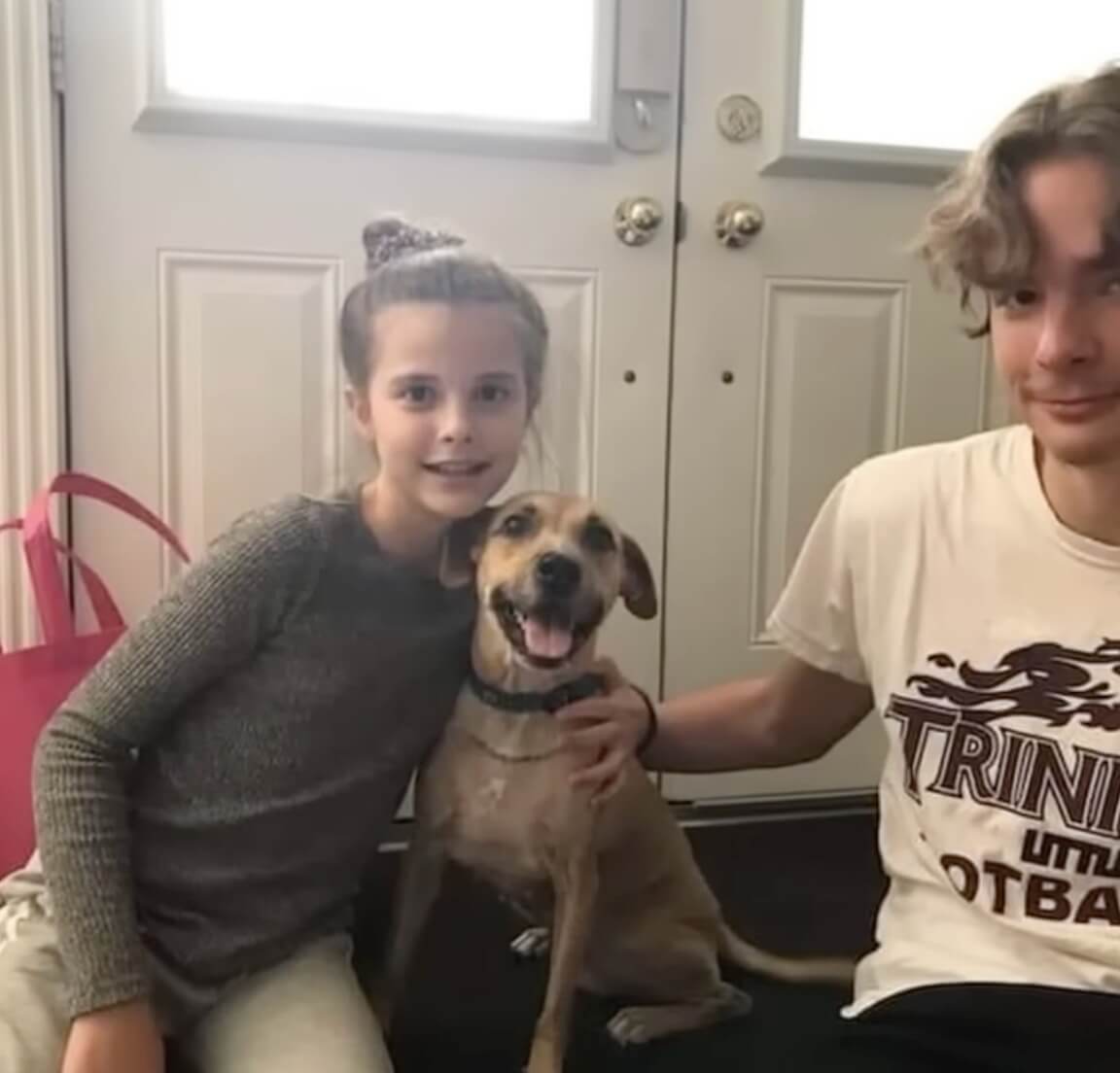
Months after her rescue, Eva’s life changed once again.
She was adopted.
Her new family lived in Canada and had followed her recovery closely before welcoming her into their home. They knew the challenges she had faced and were ready to help her continue healing.
When Eva arrived, the environment around her was completely different from the place she had once been chained.
She had room to move. She had people who cared about her comfort. She even had access to a swimming pool where gentle exercise helped strengthen her muscles further.
Water therapy allowed her to move her legs with less pressure on her spine. Each session helped build coordination and confidence.
For the first time in her life, Eva was free to explore the world around her.
The Life Eva Was Always Meant to Have
Today, Eva’s story stands as a powerful reminder of what rescue efforts can accomplish.
She was once weak, dehydrated, and unable to walk. Her life had been confined to the small circle of ground around a tree.
Now she lives with a family who cares for her safety and well-being.
Her journey required patience, veterinary care, and the dedication of rescuers who refused to walk away when the situation looked bleak.
It also required Eva’s own determination.
Step by step, therapy session by therapy session, she moved away from the life she once knew.
And toward the life she deserved.
Far away from the tree where her story began.
❤️ If Eva’s journey touched your heart, consider sharing her story.
When people share rescue stories, more eyes see the work these teams are doing. And sometimes that attention helps the next animal in need find help sooner.
Related Rescue Stories
Chained Day and Night, This Tiny Pit Bull Puppy Finally Learned What His Name Meant
He Never Saw the Sun: The Dog Locked Away Since Puppyhood Who Fought to Live


