
Left in an Oklahoma Dumpster, She Took One Wobbly Step That Changed Everything
The call came in during a stretch of punishing Oklahoma heat.
A small dog had been found inside a garbage dumpster.
By the time rescuers arrived, the metal container still radiated the sun it had absorbed all day. The lid lifted. The smell hit first. Then the sight of torn trash bags shifting slightly.
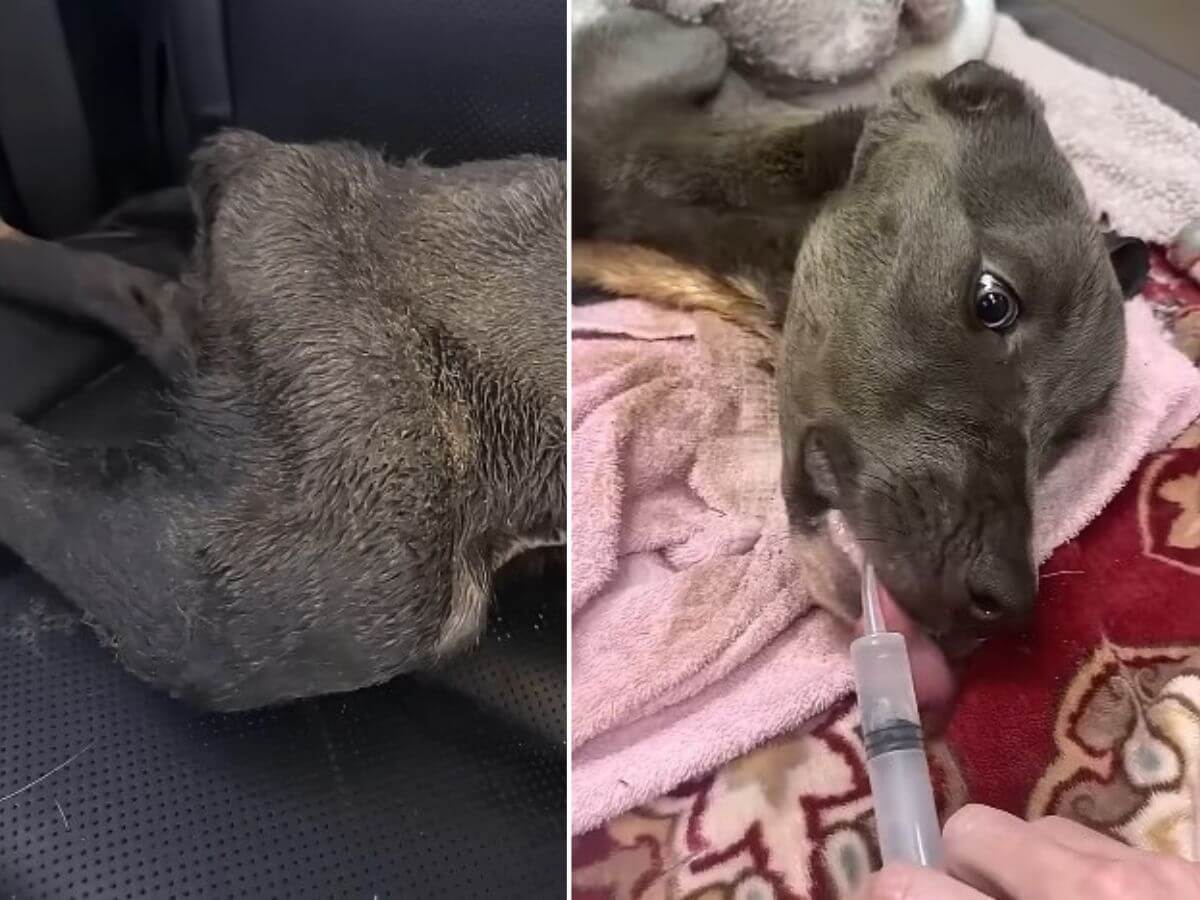
Inside, barely visible against the debris, was a dog later named Fern.
She was alive, but just barely.
According to Oklahoma Alliance for Animals, whose account was later shared through a video published on the Dogs Are Family YouTube channel, Fern had been starved nearly to death. She could not lift her head. Her body was shutting down. She could swallow only drops of water.
The woman who found her believed she was too late.
Fern was rushed to OVS for emergency care. What the veterinary team saw was not just neglect. It was systemic collapse.
Her temperature was dangerously low. Her body was in shock. She lay motionless except for her eyes, which tracked movement in the room.
Rescuers later described what a seasoned veterinarian said in that moment. “I’ve never seen a dog in such bad shape.”
It was not dramatic language. It was clinical honesty.
And when medicine turns honest, the outcome is never guaranteed.
The question inside that ICU was simple.
Would she make it through the night?
What Happens to a Body in Shock
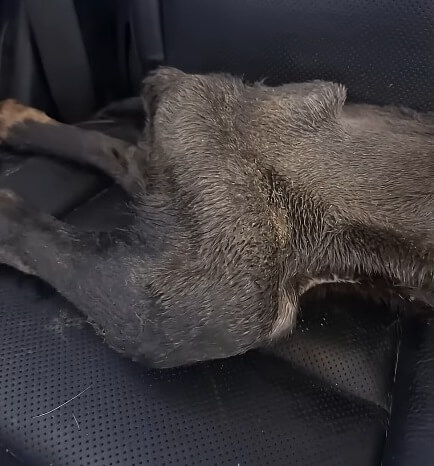
Shock is not weakness. It is circulatory failure.
According to MSD Veterinary Manual, “Shock happens when the body can’t deliver enough blood, oxygen, and nutrients to tissues.” When that delivery system breaks down, organs begin to shut down in sequence. The brain slows. The heart strains. Temperature control fails.
Fern had reached that edge.
At the same time, the environment she had been left in carried its own danger. Metal dumpsters trap and intensify heat. Summer air becomes magnified inside enclosed spaces.
The American Kennel Club states, “Heatstroke in dogs is life-threatening and can also result in very serious complications.” Heat can damage organs, disrupt blood flow, and worsen dehydration.
Fern’s case carried a cruel contradiction. The air around her had been scorching. Yet when she arrived at the hospital, her core temperature had fallen dangerously low. That drop often signals the body has exhausted its reserves.
Stabilization had to be precise.
The Fight Inside the ICU
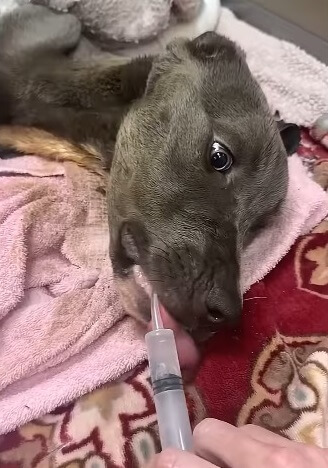
The OVS team began controlled warming. Fluids were introduced slowly. A plasma transfusion was administered to support her failing system.
Every intervention carried risk. Every hour mattered.
Staff members sat beside her. They held her paw. They spoke to her in quiet voices. The transcript describes how they reassured her she was safe.
One staff member later said they could not euthanize her. They could not let her life end knowing she may never have experienced safety before.
Progress came in fragments. A swallow. A blink. A faint bark.
Fern began moving her legs.
Ashley, the woman who pulled her from the dumpster, returned the next day. She had not stopped thinking about her all night. Standing beside the ICU bed, she made a promise. When Fern was strong enough, she would go home with her.
There would be no second abandonment.
The Step No One Expected
Recovery in severe shock cases rarely unfolds cleanly. There are setbacks. There are long stretches of waiting.
Then one afternoon, something shifted.
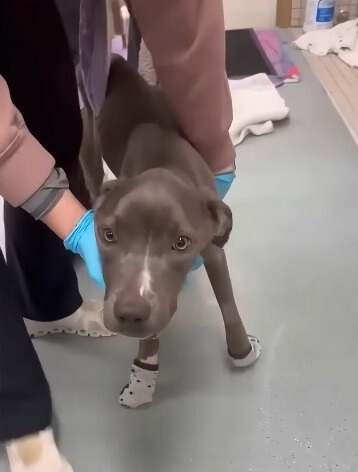
Fern gathered herself.
She pushed against the bedding.
And she stood.
Wobbly. Shaking. Thin beyond belief.
But standing.
She had not stood since being found in that dumpster.
Rescuers later described the moment inside the ICU. “Our girl is so strong.”
Staff watched as she took tentative steps forward. Her body trembled. Her legs quivered.
There was not a dry eye in the room.
In critical care, you learn not to assume survival. Yet here she was, rewriting expectation in real time.
Why Cases Like Fern’s Matter

Fern’s story feels singular. It is not.
The ASPCA reports that “In 2024, 5.8 million dogs and cats entered animal shelters and rescue organizations across the country”. That number reflects intake alone. It does not count the animals abandoned in places where no one looks.
Veterinary teams across the country confront shock, heat injury, and starvation every week. Most cases never become visible.
Fern became visible.
As her story spread, strangers sent donations. Blankets. Toys. Messages of support. Visitors sat beside her bed. An iPad played calming videos. Staff carried her outside so she could feel air on her face and sunlight on her fur.
For perhaps the first time, she was not invisible.
Leaving the ICU
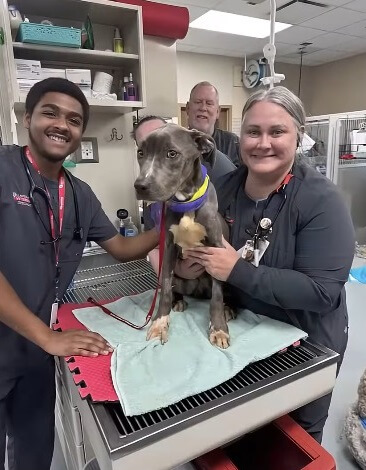
After days of careful monitoring and gradual recovery, Fern was stable enough to leave intensive care.
She was still healing. Her body still carried scars of neglect. But she was upright. Alert. Responsive.
Ashley kept her promise.
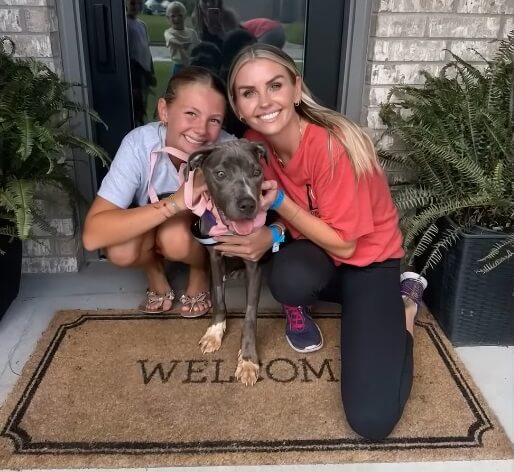
Fern went home with the same woman who had lifted her from a dumpster.
The dog once discarded as trash stepped into a house where doors would open for her, not close.
Her story did not end in a hospital bed.
It continued on a living room floor.
What This Means for You
Heat escalates quickly in enclosed spaces. Circulatory collapse can follow prolonged dehydration and starvation. Early action changes outcomes.
If you ever see an animal in distress, contact local animal control or a rescue organization immediately. Do not assume someone else will act.
Fern survived because someone looked inside a dumpster.
She survived because a veterinary team refused to give up.
She survived because one person made a promise and kept it.
Her first unsteady step inside that ICU was not just movement.
It was defiance.
If Fern’s story moved you, share it. Someone scrolling today may need a reminder that even in the harshest conditions, compassion can still change a life.
You may also want to read:
She Crawled Through a Landfill on a Broken Leg to Protect Her Puppies: Wendy’s Story


