
He Lay Silent in an Icy Ditch, Waiting for Help. Graf’s Rescue Still Stays With Me
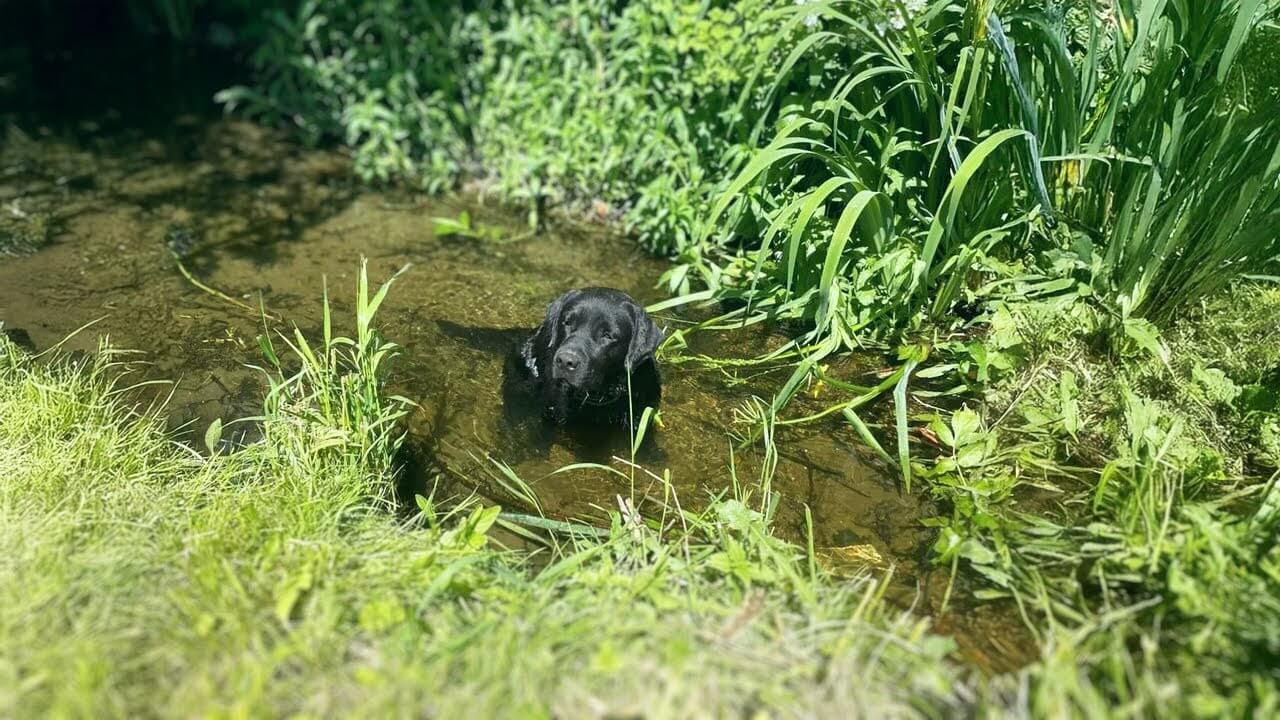
He didn’t cry.
He didn’t move.
He simply waited.
For hours, a young dog lay motionless in a roadside ditch, his lower body submerged in icy water. Cars passed. Tires hissed on wet pavement. Time stretched on. Still, he stayed exactly where he was, saving what little strength remained.
It looked less like surrender and more like instinct. As if he understood that moving might cost him his life.
Here is why that mattered. Cold water strips heat from a dog’s body fast. Once body temperature drops too low, organs begin to struggle.
PetMD explains that “Hypothermia in dogs occurs when body temperature drops below 98–99°F and can quickly become life-threatening without prompt treatment.” When the lower half of the body stays soaked for hours, that risk rises with every passing minute.
The dog in the ditch had likely been there since nightfall.
What no one driving past knew was this. His survival would soon depend on one phone call, one rescuer, and a rescue effort later documented by an animal welfare team that would follow his recovery from start to finish.
The Call That Finally Reached Him
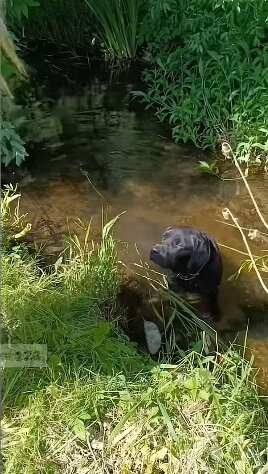
The moment help came did not arrive by chance.
A call reached rescuer Oksana Savchuk, whose work has been documented through the Animal Shelter YouTube channel. She rushed to the location without knowing what she would find. When she reached the ditch, the dog was still there.
Still alive.
Still silent.
Still watching.
As she stepped closer, something heartbreaking happened. The dog tried to crawl toward her. His front legs strained forward, scraping against the mud. His back half did not respond.
His body refused to follow his will.
A collar hung loosely around his neck. Clean fur. Clear eyes. This was not a dog who had lived on the streets. This was someone’s pet.
The water had numbed his lower body. His skin felt ice cold. Every movement had to be slow. Fear and pain can cause animals to bite, even gentle ones. Yet he did not snap. He did not growl.
He trusted.
Getting Him Out Alive
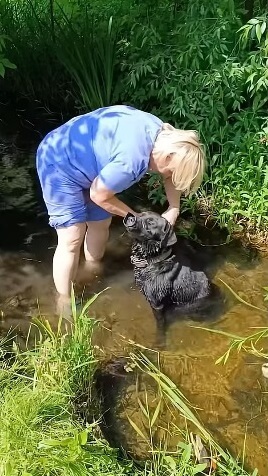
The rescuers wrapped him in towels, not just to lift him, but to keep what warmth he had left. They moved carefully. Rough handling can make spinal injuries worse.
When a dog cannot move their back legs after trauma, the spine becomes the main concern. Any twisting can cause more damage. The safest move is slow, flat support, keeping the body aligned.
The drive to the veterinary clinic felt endless. The dog did not whimper. He did not resist. He stayed silent the entire way.
Silence can be misleading. It does not mean absence of pain. It often means the opposite.
What the Scans Revealed
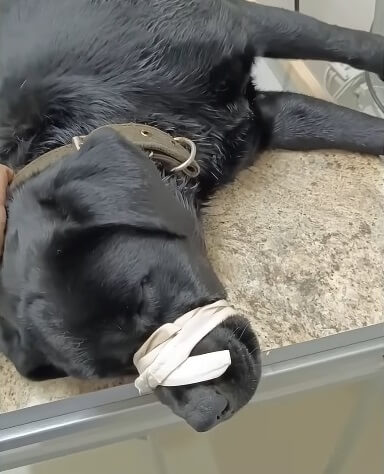
The veterinary team was already waiting when they arrived. His body shook uncontrollably from hypothermia. Warming began immediately. Then came imaging.
The results were devastating.
His spine was broken cleanly in two.
Spinal trauma like this often leads to paralysis, depending on where the break occurs.
The American Kennel Club explains that “Traumatic injury or disease of the spinal column can also cause paralysis in dogs.” In Graf’s case, the injury explained why his back legs would not move at all.
Surgery was the only way to stop the constant pain. Even then, the outlook was grim. Veterinarians explained that dogs with spinal injuries this severe rarely regain full mobility, even with surgery.
Survival was possible. Recovery was uncertain.
A Loved Dog Until the Moment It Got Hard

Everything about him pointed to a cared-for life. Groomed coat. Healthy weight. That collar still in place.
The rescue team searched for his owner and found him. The man had been looking for his dog since the night before. Relief came first.
Then the truth.
When told about the spinal injury and the likelihood of paralysis, the call went quiet. Days passed. On the day of surgery, the owner called back.
He offered to pay the full cost.
With a condition.
He did not want the dog back if he could not walk.
In that moment, Graf was abandoned. Not by the road. Not by weather. By a decision.
Surgery Without a Safety Net
Graf went into a three-hour spinal surgery. Metal implants were used to stabilize his spine and ease the pain that would otherwise never stop.
The operation worked.
His internal organs had not failed. His strength surprised the veterinary team. Five days later, he was stable enough to leave the clinic.
The hardest part still lay ahead.
Learning Life on Wheels
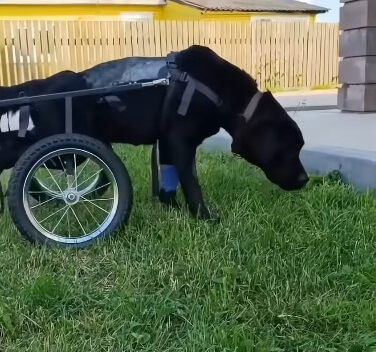
Graf received a wheelchair, sent as a gift. At first, he hesitated. New equipment can feel confusing to dogs, especially after trauma.
Then something shifted.
He tried again.
And again.
And then he moved.
Wheelchairs do not limit dogs. They restore freedom. As Best Friends Animal Society explains, “With dog wheelchairs, these dogs can play, run, and get the exercise they need.”
Graf did exactly that.
He learned fast. After a few attempts, he began to run. Not carefully. Not cautiously. Joyfully.
He did not see himself as broken. He saw space to move through.
Healing Beyond the Body
At first, Graf stayed close. Other dogs made him unsure. New bodies. New smells. New risks.
Then he met dogs like himself.
They waited for each other. Rolled side by side. Played without judgment. Slowly, Graf’s confidence grew.
He began to relax. To explore. To trust again.
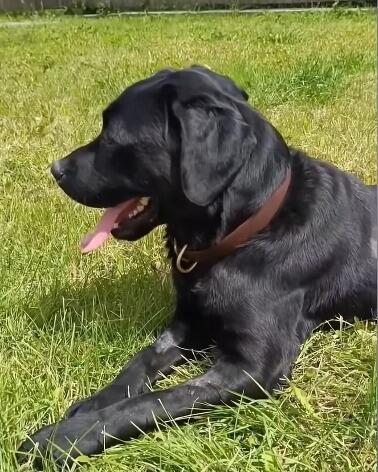
Today, Graf lives with Oksana. He takes his medication calmly. He loves lying on the grass, watching the world move past him. He looks up often, eyes soft, tail steady.
He may never walk on four legs again.
He still runs.
He still loves.
He still lives fully.
Why This Story Stays With You
Graf’s story is not rare. Dogs face accidents, injuries, and disabilities every day. What defines their future is not the diagnosis. It is the response.
Cold exposure. Spinal trauma. Mobility loss. These are not endings. They are crossroads.
If you ever find an injured dog, remember this. Keep them warm. Move them slowly. Support their body evenly. Get veterinary help fast.
And if disability becomes part of the outcome, remember Graf.
Life does not end when walking does.
If this story stayed with you, please consider sharing it. Someone else may be standing at that same crossroads, deciding whether a life is still worth saving.
You may also want to read:
She Never Barked for Help. How Ternura’s Silence Told Rescuers Everything
He Waited Outside a Grocery Store. What He Was Hoping For Wasn’t Food


Thank you for rescuing Graf. Every dog deserves a life with love and comfort.