
Scheduled to Die, She Crawled Toward the Only Hand That Didn’t Turn Away
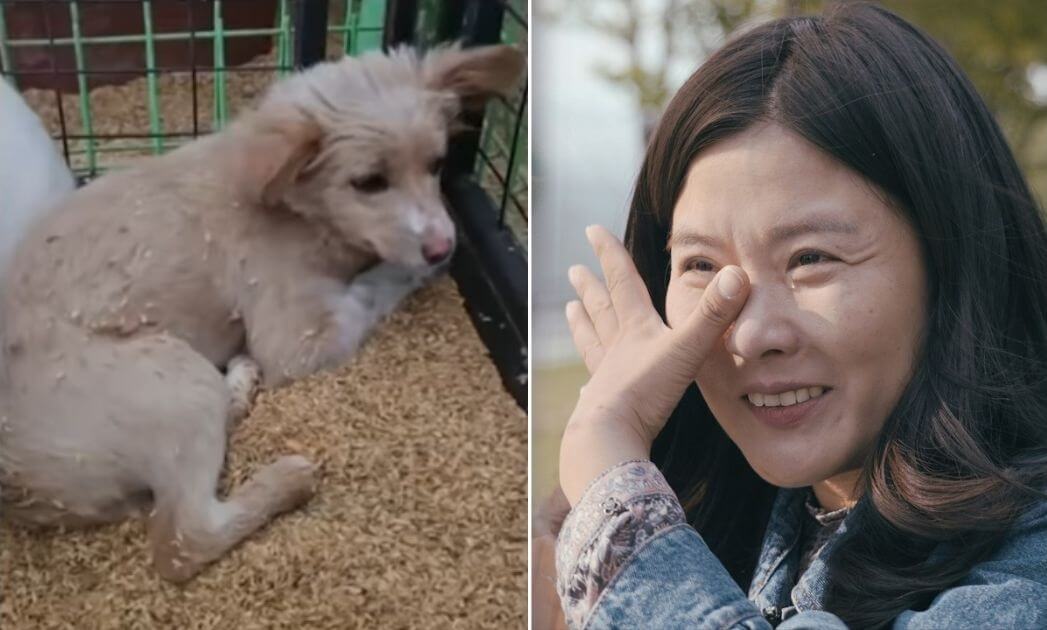
The dog on the concrete floor didn’t stand when people walked past her kennel.
She didn’t bark. Didn’t growl. Didn’t look up.
She crawled.
Her two hind legs were broken, her body tense with fear, and yet she dragged herself forward inch by inch whenever food appeared. A single bite meant facing more pain, but she crawled anyway. Not for hunger alone — for survival.
Shelter staff had already marked her chart: Unadoptable. Euthanasia scheduled for tomorrow.
Someone scrolling through an animal rescue page stopped on her photo. A trembling dog, eyes wide with terror. Something felt wrong. This wasn’t aggression. This was pain wearing a mask.
Her name would soon be Hee-mang — “Hope.”
And she had one last chance.
The Rescue Nobody Planned
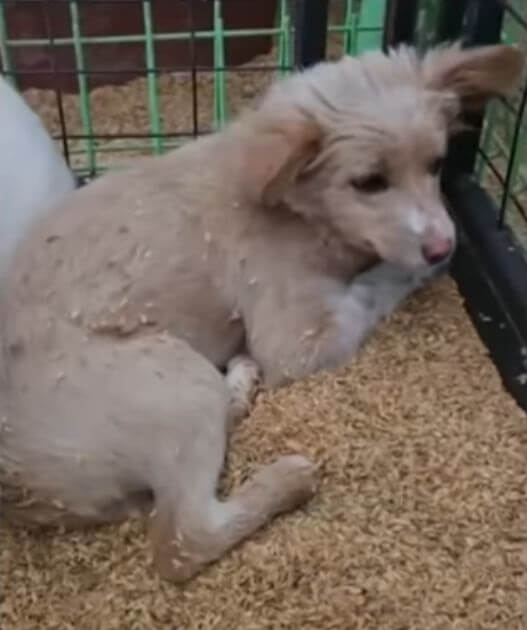
The volunteer who arrived from You Said We Were Family was told the same thing staff believed:
“She bites. No one can touch her.”
But fear can look like anger. Pain can look like a threat.
A canine behavior review in Frontiers in Veterinary Science notes that injured dogs often display defensive aggression because pain changes their perception of touch and movement.
Hee-mang wasn’t trying to harm anyone. She was trying to protect what hurt.
When the rescuer knelt, Hee-mang didn’t lunge. She lowered her head and crawled toward her — trembling, cautious, desperate. A dog who could barely move still chose to come closer.
It was enough to save her life.
Inside Her Body: What the X-Rays Revealed
At the hospital, the truth was clearer and far worse.
Both hind legs were fractured.
The bones had started healing — but in the wrong places.
Muscles had tightened.
Scar tissue had formed.
Every step forward meant a stab of pain.
These weren’t fresh injuries. Weeks had passed.
A small-animal surgery reference from IVIS explains that when fractures heal incorrectly — known as malunion — the bone must often be rebroken and realigned, making surgery more complex and traumatic for the animal.
Surgeons warned that the bones had fused improperly long enough to make repair difficult. But they also found hope: sensation was intact. Her nerves still worked. Her body wasn’t giving up.
Hee-mang still had a chance.
Surgery Against the Odds
For a dog who flinched at the slightest touch, surgery meant facing her greatest fear.
The operation lasted more than four hours.
The team had to separate bone segments that had started bonding incorrectly.
Tightened muscles needed careful release.
Fragments had to be realigned with precision.
Research from MDPI shows that 10–15% of fractures can develop delayed union or nonunion, especially when treatment is postponed — reinforcing how risky Hee-mang’s case truly was.
When she woke up, she didn’t understand the medical miracle around her.
She only knew she was no longer alone.
Learning to Trust Again
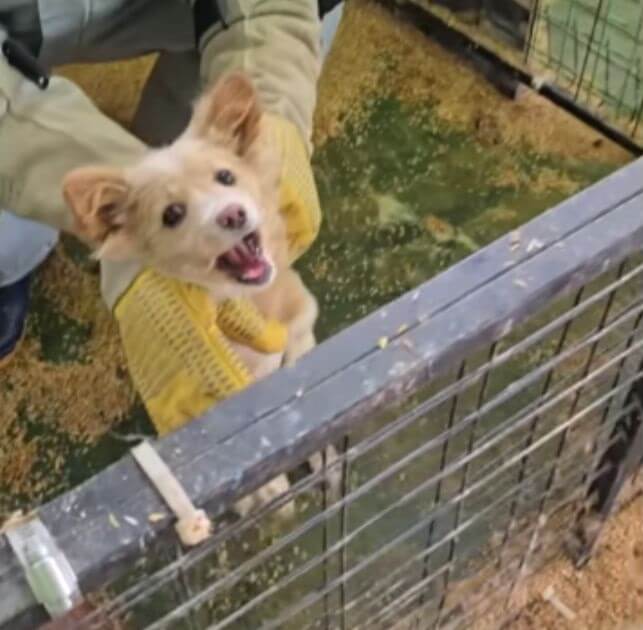
Pain doesn’t disappear with sutures. Trauma doesn’t fade with anesthesia.
She hid in corners.
She avoided hands.
Her body shook when someone opened her kennel.
Dogs Trust veterinary guidance explains that pain often triggers avoidance, fear, or sudden defensive behavior, especially in dogs with a history of injury.
But slowly, Hee-mang changed.
Staff spoke softly to her.
They knelt instead of hovering.
They let her choose how close to come.
Five days after surgery, she stood. Not for food. Not out of fear. She simply stood because her legs finally allowed it.
A small, trembling miracle.
When Hope Got a Name — And a Future
The team named her Hee-mang — “Hope.”
And she lived up to it.
She began walking short distances.
Then longer ones.
She sniffed new spaces.
She discovered squeaky toys.
She made her first dog friend.
Fifteen days after surgery, she ran.
Her stitches came out. Her stride steadied. Her tail swung freely. She began slipping her head under hands to ask for affection — the same hands she once avoided.
A rehabilitation guide in Physio-pedia explains that targeted exercises rebuild muscle, improve joint mobility, and restore natural movement after orthopedic repair.
Her progress mirrored everything rehab science suggests: movement brings confidence, confidence brings trust, trust brings healing.
A clinical review in the Veterinary Clinics of North America adds that structured rehabilitation improves coordination and gait after orthopedic injuries — the exact transformation Hee-mang experienced.
Hope wasn’t just her name. It was her stride.
She Didn’t Want to Leave the Hospital
When discharge day came, she refused to go.
She hid behind equipment.
She slipped into exam rooms.
She pressed her face into her vet’s legs.
She cried when the door opened.
Dogs recovering from trauma often form deep bonds with the caregivers who provide consistent comfort and safety — a pattern documented across behavioral studies. This wasn’t confusion. It was attachment.
She finally understood she was loved.
Home, Friends, and a New Life
Six weeks later, Hee-mang ran across a green field in Cheorwon.
Grass under her paws.
Sun in her eyes.
A foster family cheering from a few feet away.
Other rescue dogs welcomed her.
She chased shadows.
She rested in warm laps.
She became the dog she never got to be.
There was one small procedure left — the removal of a metal pin — but the fear, pain, and trembling were gone.
Her body healed.
Her trust grew.
Her world expanded.
She was finally… just a dog.
Why Dogs Like Hee-mang Are Misjudged — And Why It Matters
Many dogs labeled “aggressive” in shelters are simply in pain or terrified.
The IAABC Foundation notes that euthanasia decisions in shelters often stem from medical issues, fear-driven behaviors, or misinterpretation of a dog’s response to pain.
The ASPCA estimates hundreds of thousands of dogs are euthanized in U.S. shelters yearly — many never given a full chance to recover from trauma or injury.
Hee-mang’s story isn’t lucky. It’s rare.
Most dogs like her never get to crawl toward hope.
What You Can Do If You Meet a Terrified, Injured Dog
- Approach low and slow — sudden movement increases fear.
- Avoid grabbing or leaning over the dog — it feels threatening.
- Let the dog close the distance, even if it takes minutes.
- Use soft food to build trust, placed gently near the dog.
- Look for pain signals: tucked tail, trembling, air-snapping, hiding.
- Contact local rescue teams or animal control — don’t attempt to force handling alone.
- Support shelters that invest in medical cases — blankets, food, rehab gear, or donations go far.
One gentle choice can change a life like hers.
Also check out these rescues:
He Was Forgotten on a Chain for 5 Years. His Rescue Changed Everything
From Trash to Treasure: The Dog Who Went From Dumped to Deeply Loved
Hee-mang’s Ending — And the Message She Leaves Behind
Hee-mang didn’t survive because she was strong.
She survived because someone stopped.
Someone saw fear instead of aggression.
Pain instead of defiance.
Hope instead of hopelessness.
Today she runs, plays, and leans her face into the hands that once made her tremble.
Her life proves a simple truth:
Sometimes, hope doesn’t walk toward you.
Sometimes, hope crawls.


