
Left on the Streets Without His Legs, Here’s What Happened Next
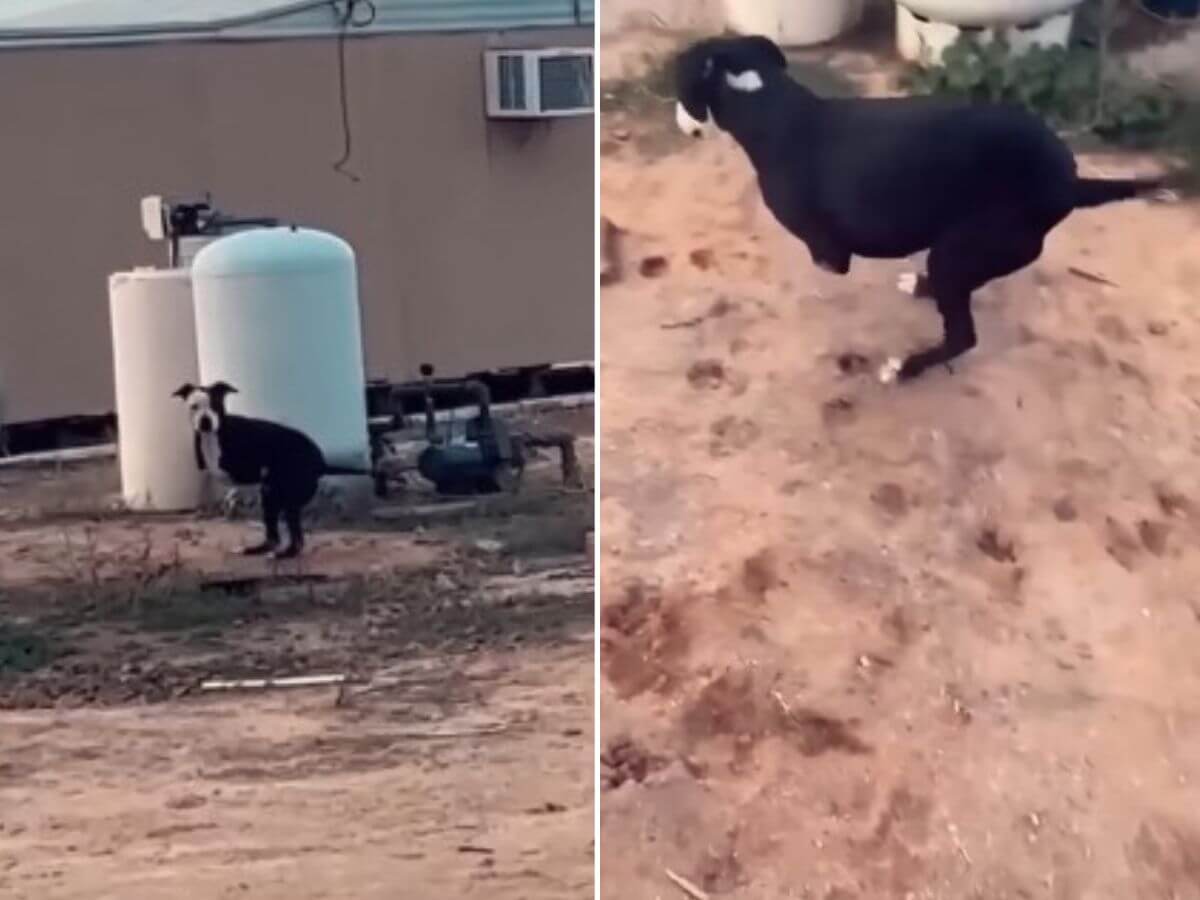
There are stories that begin in silence.
No crowd. No headlines. Just a dog on a street, trying to survive the condition he had been left in.
When his rescuer first approached him, she braced herself for fear. A dog abandoned and injured would be expected to pull away.
Instead, according to the rescuers, he was “wagging his tail with joy.”
That detail shifts everything.
A dog who had every reason to retreat chose connection instead. In that quiet moment on the street, the course of his life changed.
The Moment Everything Shifted
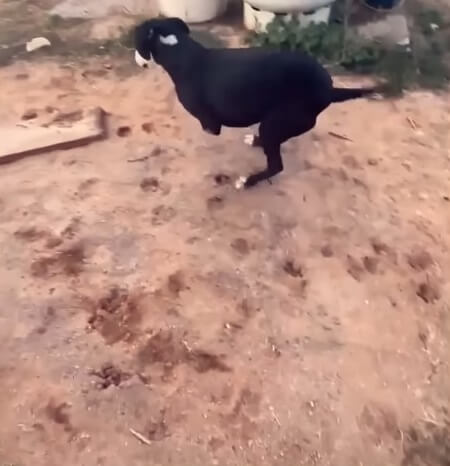
According to the rescue team, Joey’s legs had been intentionally amputated. A veterinary evaluation later confirmed the injuries were not accidental. He had been left outside to survive alone.
When help arrived, he did not growl or crawl away. He moved toward it.
His rescuer later shared that she felt both heartbreak and urgency. She could see how much he had endured. She could also see that he still wanted trust.
That trust shaped her next decision. Instead of sending him to a shelter intake system, she brought him home.
That first night was quiet. A soft bed. Food placed gently near him. A room where no one shouted.
The next morning, he was taken to the hospital for a full medical assessment.
Why Joey’s Story Is Bigger Than One Dog
It would be comforting to believe stories like this are rare.
They are not.
According to the ASPCA, “Every year, approximately 6.3 million companion animals enter U.S. animal shelters nationwide,” a number that reflects how many animals are displaced, abandoned, or surrendered annually.
When shelters operate at capacity, the path for injured animals becomes even harder.
Cruelty also carries deeper implications.
Humane World for Animals states, “Intentional cruelty to animals is strongly correlated with other crimes, including violence against people.” That connection is why reporting abuse matters. Protecting animals can interrupt broader harm.
Joey’s case was not only about physical injury. It was about what happens when neglect and cruelty go unchecked.
The Medical Reality
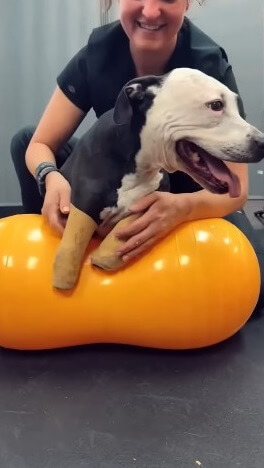
At the hospital, conversations turned to mobility and pain control.
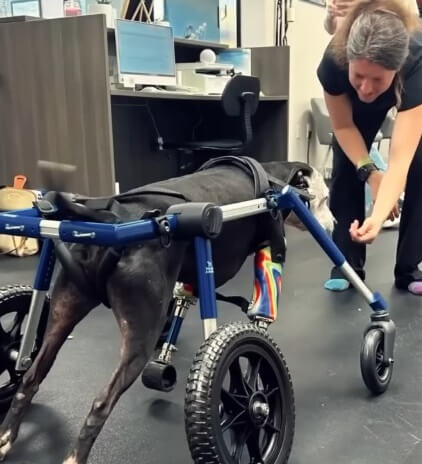
Prosthetic feet were considered first. The idea offered hope. Yet Joey’s body reacted with inflammation and discomfort during rehabilitation. The goal shifted from restoring what was lost to protecting what remained.
His care team kept adjusting. As rescuers later explained in their video, “We tried several wheelchairs” before finding one that supported him properly.
That process matters.
Wheelchairs must fit a dog’s frame and weight distribution. When alignment is wrong, strain follows. When fit is right, confidence returns.
The first time Joey moved comfortably in the correct chair, observers noted the change. He covered more ground. He lifted his head higher. Movement gave him access to his world again.
Living With a Disability Does Not Mean Living Without Joy
Many readers may quietly wonder what life truly looks like for a dog without legs.
The assumption is often that disability equals suffering. That assumption keeps many special-needs animals in shelters longer than necessary.
Petfinder addresses one of the most common misconceptions directly, stating, “they are great for those who only want one pet or for those with other animals in the home – it’s a myth that a deaf pet “needs” a hearing companion to function successfully.”
While that example refers to hearing loss, the broader principle applies to physical disabilities as well. The presence of a limitation does not erase the ability to bond, adapt, and thrive within a committed home.
Joey’s progress in his wheelchair reflects that reality. Once properly fitted, he regained mobility, independence, and engagement. His quality of life improved not because his past disappeared, but because his present changed.
For many special-needs pets, the difference is not medical complexity. It is consistent care, safe housing, and patience.
From Rescue to Family
Recovery changed more than his mobility. It changed his identity.
What began as emergency care became permanence. After walking through surgeries, fittings, setbacks, and progress, his rescuer chose adoption.
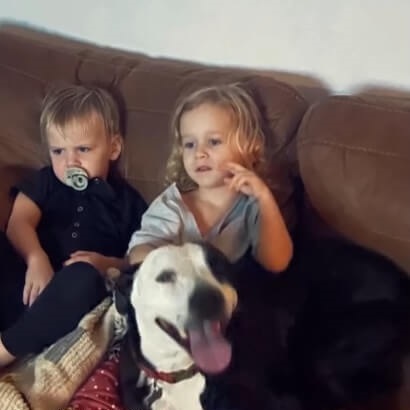
He now lives with siblings. He has daily routines. He has a home arranged so he can move freely. The same dog who once lay on pavement now rests on cushions. The same dog who depended on strangers now depends on family.
Those closest to him describe him as the spoiled one of the house.
That change did not happen overnight. It happened because someone refused to walk away.
What You Can Do Next
If Joey’s story moved you, there are practical ways to respond.
Report suspected cruelty to your local authorities or humane law enforcement. Early reporting can stop suffering.
Consider fostering or adopting special-needs animals. Many rescue groups provide equipment and medical support.
And share verified rescue stories. Awareness fuels funding. Funding supports rehabilitation. Rehabilitation gives dogs like Joey a future.
Joey lost his legs.
He did not lose his capacity for trust.
If this story stayed with you, share it. Someone else may be waiting for a reminder that compassion still changes lives.
You may also want to read:
She Lay Frozen in Trash: What Santa Did Next Left Rescuers in Tears
She Was Found Barely Breathing on Frozen Ground: What Happened Next Gave Everyone Hope Again


