
She Spent Her Life Chained. Then She Took Her First Steps Toward Freedom
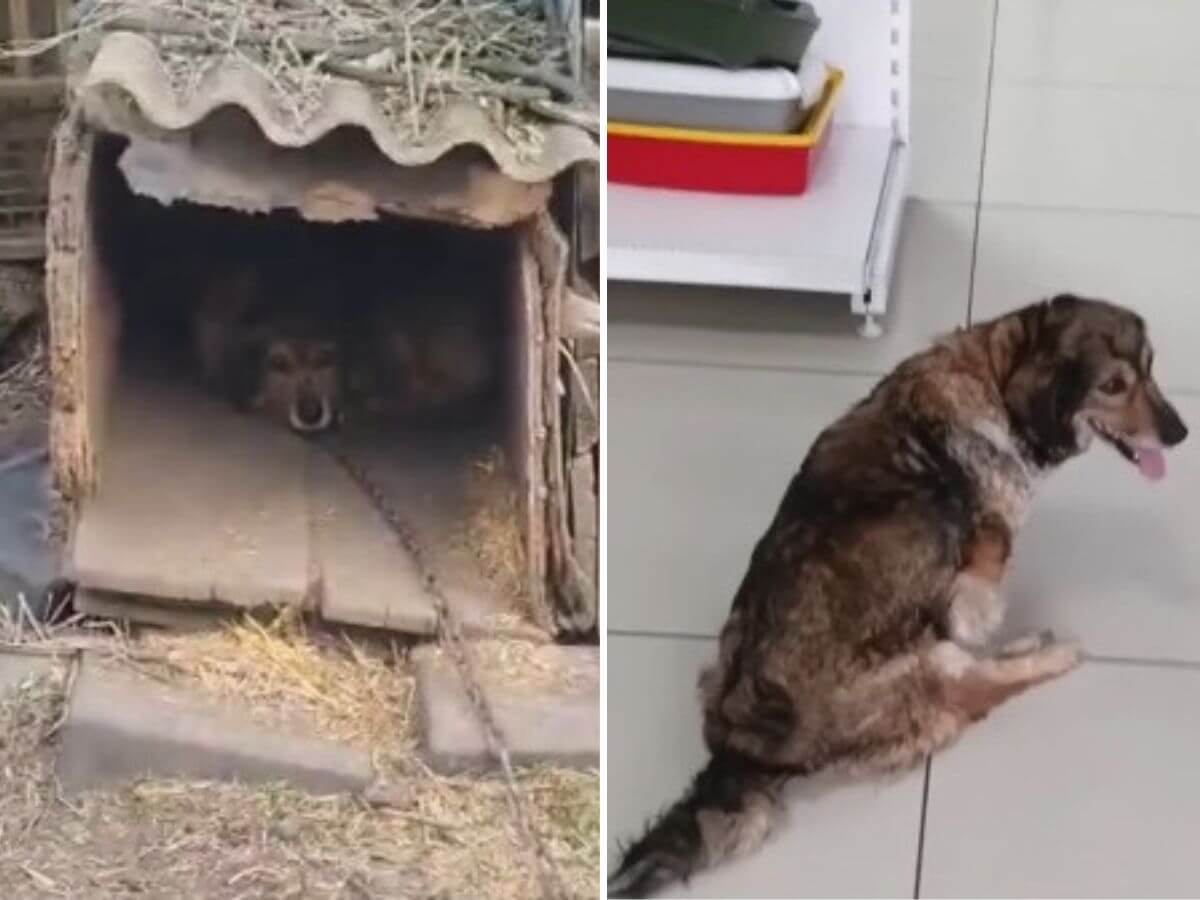
Julia’s world was small.
A few steps forward.
A hard stop at the end of a chain.
The same patch of ground, day after day.
Freedom was something she could see but never reach.
The chain cut short every movement. Her body grew weaker while time passed without notice. No long walks. No play. No shade to follow as the sun shifted. Just restraint and waiting.
Each day narrowed her world a little more.
That was how rescuers found her.
And by then, standing on her own was no longer something her body knew how to do.
That is where this story begins.
How Her World Became So Small
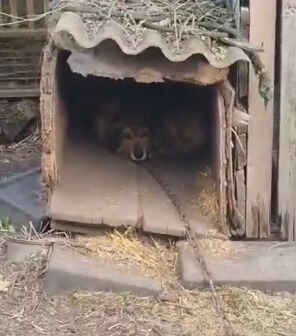
Julia was not born fearful. She was shaped by what she endured.
For days, she remained chained in place. When food finally appeared, she rushed toward it with urgency, her body tight with need. Hunger had taught her that nothing could be taken for granted.
What stood out most was her silence.
She did not growl or retreat. She moved carefully, conserving energy, as if her body already knew it had to choose which moments mattered.
Here is why that matters.
Long-term chaining is not just restrictive. It causes harm that builds quietly over time.
According to the RSPCA Knowledgebase, “Due to the risks of tethering, it should be avoided as a means of long-term confinement, and only used in the short term and in an appropriate way that minimises the risks.” Those risks do not always show immediately. They accumulate.
Julia carried them in her body.
When Someone Finally Reached Her
The rescue was led by Oksana Sviridova and her team. They expected starvation. They expected fear.
What they did not expect was how much Julia’s body had already shut down.
After eating, she relaxed slightly. Her breathing slowed. But when she tried to move, something was wrong. Her back legs would not follow.
She could not stand without help.
What looked like simple weakness was something far more serious.
What the Clinic Discovered
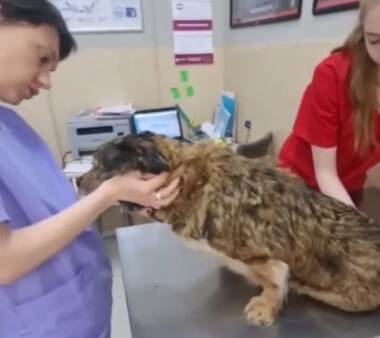
At the veterinary clinic, Julia was handled with care. New smells. New voices. A patience she was not used to.
Examinations confirmed the concern.
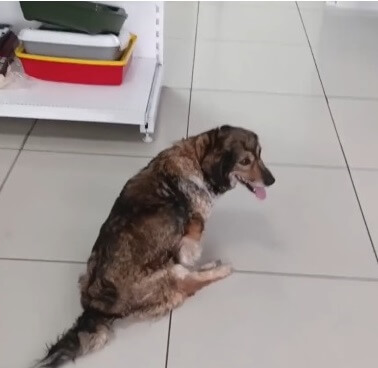
Julia was paralyzed from the waist down.
She relied entirely on her front legs to move. She could not support her own weight. Even basic functions were affected.
Paralysis in dogs can have many causes. Injury. Compression. Trauma that is not always visible from the outside. The only path forward was advanced imaging and specialist care.
Next steps came quickly.
The Surgery That Changed Her Path
Julia was referred to a neurologist. Imaging showed pressure on her spinal cord. The source was unclear, but the damage was real.
Emergency surgery was the only option.
The procedure aimed to relieve the compression and give her nervous system a chance to recover. Hours passed as the team worked carefully, knowing the outcome could go either way.
When Julia woke up, she was alive. Stable. Watched closely.
Then the cause became clear.
A bullet had lodged in her body.
She had been shot and left to endure it alone.
The discovery explained the paralysis. It also explained why time mattered so much.
According to the American College of Veterinary Surgeons, “Good for dogs with mild clinical signs and guarded for dogs with paralysis, but significant recovery is possible, if decompressed and stabilized.” Surgery gave Julia that chance.
What followed required patience.
Healing Was Repetition, Not Drama
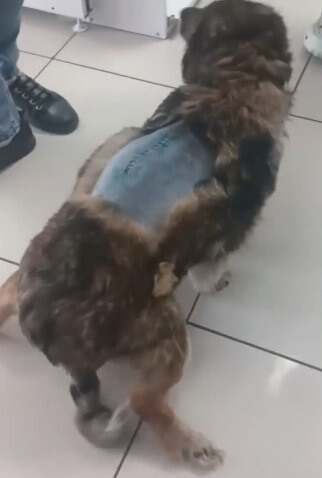
Recovery did not arrive all at once.
Julia needed daily care and rehabilitation. She showed early signs of progress. Tail movements. Attempts to shift weight. Small responses that required close attention to notice.
There were setbacks.
She could not urinate on her own at first. Her muscles tired quickly. Each rehab session asked her body to relearn something it had lost.
This kind of recovery is quiet. Repetitive. Built on showing up again and again.
And slowly, it worked.
Why Restraint Leaves More Than Physical Scars
Julia’s paralysis had a clear cause, but the harm she carried went beyond the bullet.
Long-term tethering affects both body and mind. It limits movement, choice, and recovery.
The BC SPCA explains that “Tethering limits choice, control and the ability to display species-specific behaviours.” When a dog cannot move freely, even healing becomes harder.
Julia’s progress happened because her environment finally changed. Safety gave her body the space to focus on repair instead of survival.
Two Months That Changed Everything
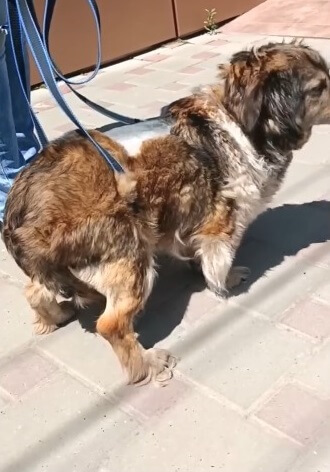
After two months of rehabilitation, something shifted.
Julia stood.
Then she walked.
Then she ran.
Seeing her move freely again felt unreal. Her legs carried her across the garden with growing confidence. Her tail moved without hesitation. Her body, once confined, finally had room to exist fully.
The fight that defined her days was over.
Her future had space to begin.
From Rescue to Belonging

The final step was a home.
Julia’s past included betrayal and harm, but her present moved in a different direction. A woman stepped forward, ready to offer consistency and care.
Julia adjusted quickly.
She explored her new space with curiosity. She played with her new canine companion. Her movements were relaxed. Her eyes carried ease instead of vigilance.
Belonging did not need to be taught. It followed safety naturally.
Where This Story Came From
Julia’s rescue and recovery were shared through the Dogs Are Family YouTube channel. The footage documented her condition, her treatment, and the steady return of her strength.
Stories like this matter most when they come directly from the people who lived them. Seeing the process as it unfolded shows what patience and care can achieve.
One Last Thought
Freedom is not loud when it arrives.
Sometimes it looks like a dog standing on her own for the first time.
Sometimes it looks like running across grass with nothing holding her back.
Julia survived because someone refused to look away.
If this story stayed with you, please share it. Stories like this travel farther when people pass them on, and the next dog waiting on a chain may need that moment of notice.
You may also want to read:
Tiktok Was Found Crying and Badly Hurt — With an Uncertain Future Ahead
She Was Chained and Couldn’t See, Yet Still Wagged Her Tail at Everyone


