
She Spent Her Entire Life in a Cage. One Day Changed Everything for Koko
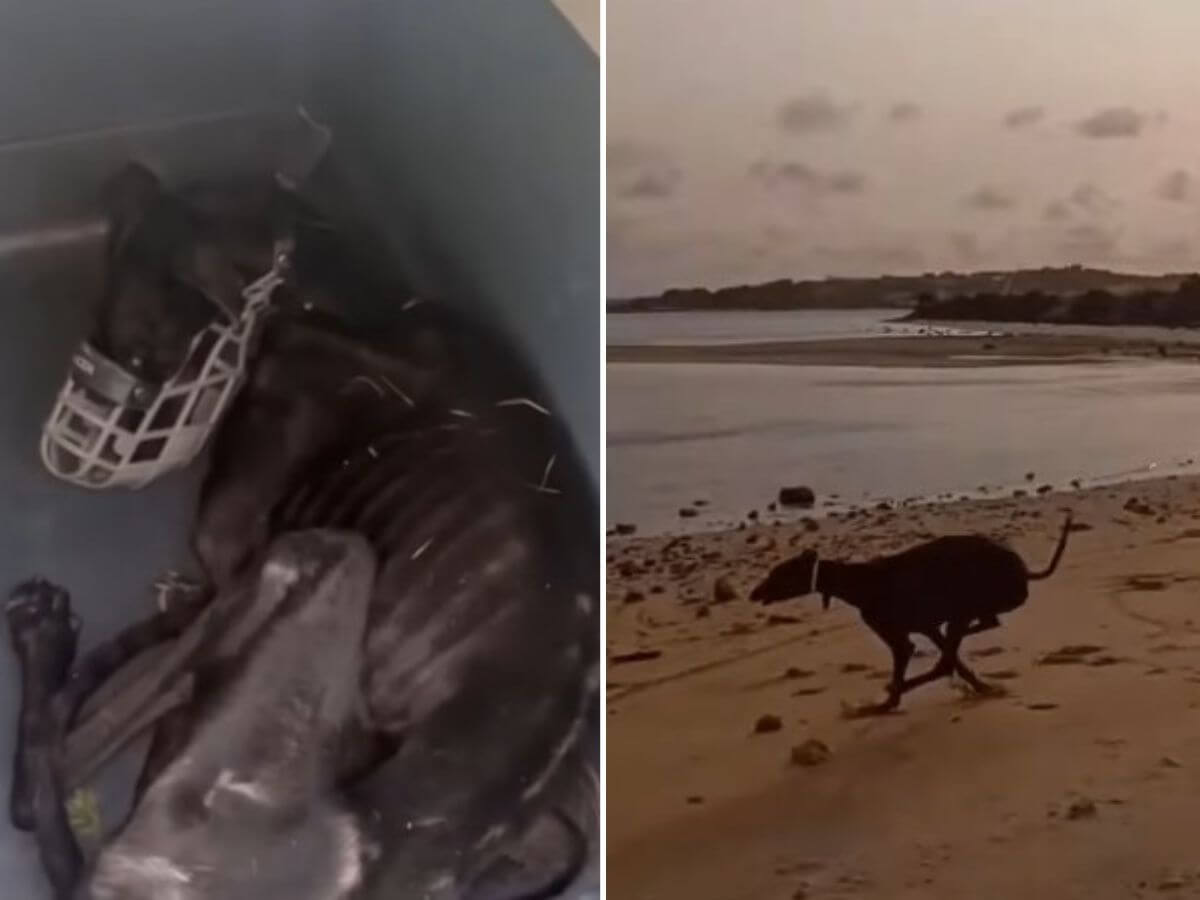
For years, Koko’s world never grew larger than the cage that held her.
Metal bars framed every moment of her life. Hunger came and went. Silence stayed. What should have been a life of movement and curiosity slowly narrowed into something smaller and lonelier, day after day, until her body could no longer keep up.
When rescuers from SA Greys finally reached her, it was clear she had been surviving on almost nothing. Her rescue, later shared through the Animal Shelter YouTube channel as part of a documented intervention, showed what prolonged neglect can do when it goes unnoticed, and what can happen when care finally arrives.
A Life That Kept Shrinking
Koko had been adopted as a puppy. At first, she was meant to be part of a family. As time passed and attention faded, her role changed. She was confined to guard a house, locked inside a cage that never adjusted to her growing body.
Years went by like this.
She cried from hunger. No one came. The cage grew colder. Her world grew quieter.
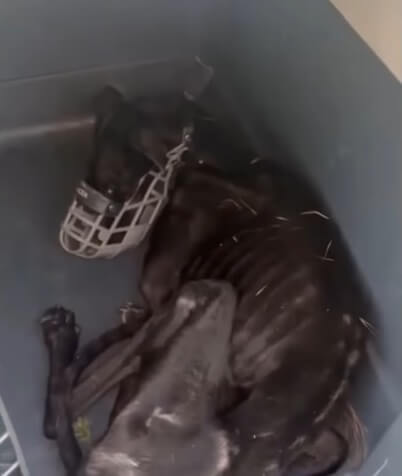
By the time help arrived, Koko was unimaginably thin. Ticks covered her fragile body. Her ribs pressed sharply against her skin. When the cage door finally opened, she did not step out. She collapsed.
She had been starving. She had been dehydrated. And her strength was nearly gone.
What Her Body Had Been Enduring
Long-term starvation does not just reduce weight. It changes how the body functions.
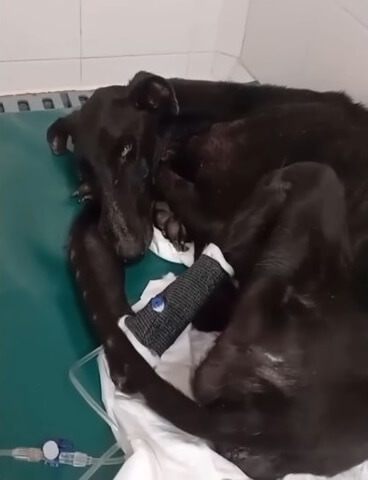
Koko’s dehydration and weakness were visible signs of a system under extreme strain. The American Kennel Club explains that “symptoms of canine dehydration include” changes like “loss of skin elasticity” and “dry, sticky gums.” Those warning signs matched what rescuers saw when they first examined her.
Her internal organs had been weakened. Standing was impossible. Even lifting her head took effort.
Why Feeding Had to Be Slow
In the first days after rescue, food alone could not fix what had been done.
When an animal has been starved for a long time, feeding too quickly can cause serious complications. According to the National Library of Medicine, “Refeeding syndrome is defined as medical complications that result from fluid and electrolyte shifts as a result of aggressive nutritional rehabilitation.”
That risk meant every meal had to be measured and monitored. Helping Koko recover was not about giving more food. It was about giving the right amount, at the right pace, so her body could relearn how to heal.
The Most Fragile Days
The early days were uncertain.
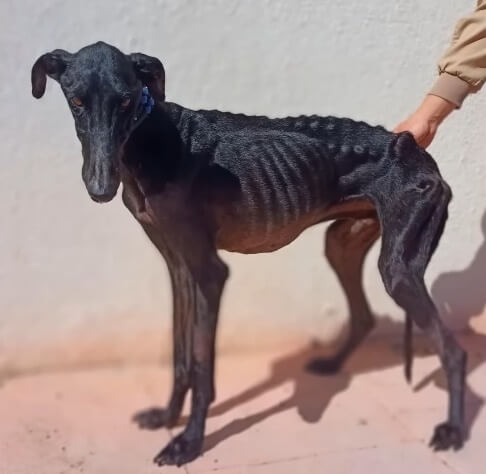
Koko was too weak to stand. Her spine protruded sharply. Weight gain came slowly, and even that progress had to be watched carefully. Each day was about stability, not speed.
The MSPCA-Angell notes that “The time frame in which refeeding syndrome is noted is typically within 5 days of the reintroduction of nutrition.” That window made the first week critical.
Care stayed consistent. Monitoring stayed constant. And slowly, her body began to respond.
The First Sign of Hope
On the seventh day, something changed.
Koko stood.
Her steps were unsteady. The distance was short. Still, it was the first time she had supported her own weight in what felt like forever. That moment marked the shift from survival toward recovery.
From there, progress continued in small but meaningful ways.
Her weight increased. Her hydration improved. Her eyes grew more alert. Each week brought signs that her body had not given up.
Healing Beyond the Body
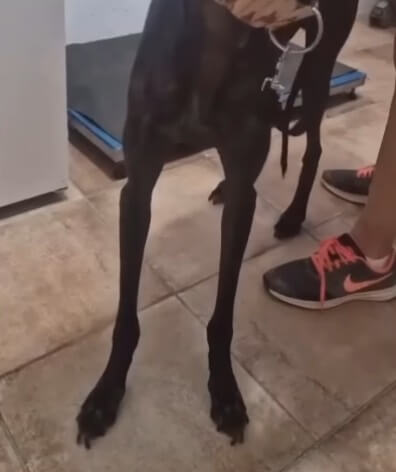
Physical recovery came before emotional safety.
Koko did not understand affection at first. Gentle touch confused her. Kindness was unfamiliar. Fear had shaped her instincts for years.
Once calm routines replaced confinement, something softened. Trust began to form.
That response aligns with what behavior experts see in neglected dogs. The ASPCA explains that “a soothing voice and presence can calm agitated or fearful dogs.” For Koko, steady care became the foundation for emotional healing.
A Greyhound Who Had Never Run
Koko is a greyhound, a breed built for speed and open space.
Yet she had never run.
The cage had taken that from her. So had the years spent standing still.
As her strength returned, so did her confidence. Walks became longer. Her posture changed. Her eyes brightened. Slowly, she began to move like the dog she was always meant to be.
A New Life Across the Sea
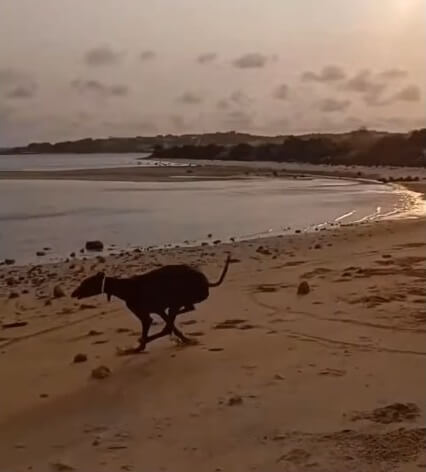
When Koko was strong enough, her life changed again.
She was adopted by a couple in the United Kingdom and traveled across the sea toward a new home. There, she experienced grass beneath her feet. Wind across her face. Space without bars.
She ran freely for the first time.
She made friends. She saw the ocean. And with each step, the years she spent confined became less visible.
From a Cage to Freedom
Koko’s story is not about how much she endured. It is about what consistent care can restore.
She is no longer a forgotten shape behind iron bars. She is protected. She is nourished. She is free.
The cage that once defined her life no longer exists. What remains is a greyhound who finally knows open space.
If Koko’s story stayed with you, sharing it can help another dog be seen in time.
Related rescue stories:
The Dog Left to Starve in a Locked Cage, and the Rescue That Saved His Life
She Spent 10 Years Locked in a Cage. One Open Door Changed Everything


It makes me so happy to know that there are humans in this world such as you. Poor animals..The way that some folk treat them is too much for my heart. If there ever was pure innocence in this world it has to be in animal form and they deserve nothing but love. I wouldn’t want to see humans trying to survive on the few resources that a poor animal has…I hope that man pays for what he’s done to that beautiful creature. If I had my way, he’d be locked up for life!
what happened to the pos that did this????
The people that did that to her should be locked up for life and see how they enjoy it. Absolute monsters. This has to be taken seriously and stopped once and for all.
Ich bin erschüttern zu sehen dass es Menschen gibt die sowas einem unschuldigen Wesen antun! Zu sehen dass es Koko jetzt wirklich gut geht und sie auch endlich glücklich und gesund ist das macht mich sehr glücklich! Danke an die Menschen die das vollbracht haben, ich bin glücklich und dankbar und Stolz auf Euch und ich wünsche Euch Gottes Segen und Kraft und Zuversicht für alles was ihr noch Vollbringen werdet! Liebe Grüße und tausend Küsse von eurer Tatjana für Koko!