
Cast Out as “Bad Luck,” He Was Given a Week to Live. Krouch’s Fight for a Home and a Second Chance
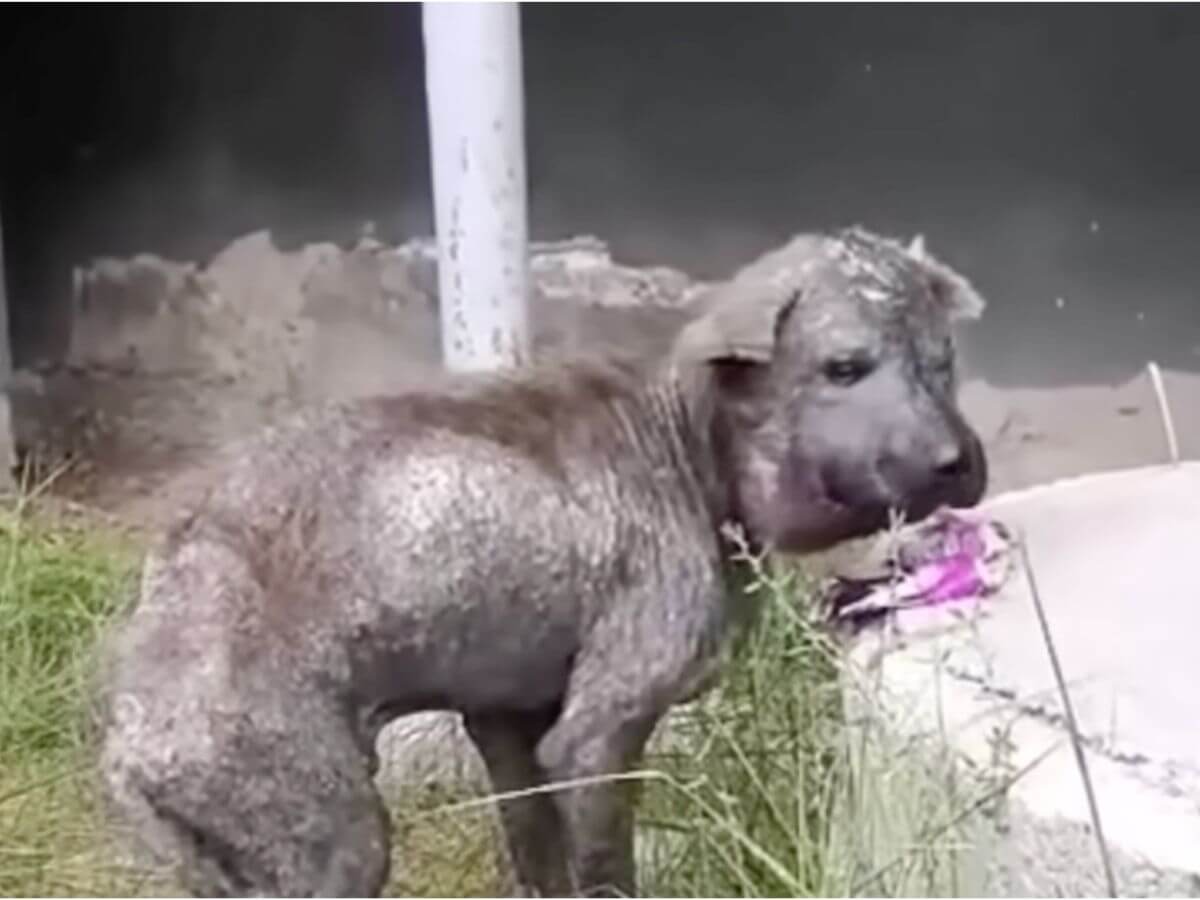
They said he brought misfortune.
In one village, fear hardened into belief. People whispered that Krouch was a bad omen. They chased him away. They refused to feed him. Some crossed the road rather than walk past him. Superstition became stronger than kindness.
He did not understand any of it.
By the time rescuers found him, he was exhausted, injured, and running on the last of his strength. His body had grown thin. Movements that once would have been effortless now required determination.
Stories like his are often reduced to a label. Cursed. Unlucky. Omen.
What began as rejection became a test of endurance. What looked like the end would turn into a decision that changed his life.
It did not begin with hope.
It began with someone choosing to look closer.
Banished and Running on Empty
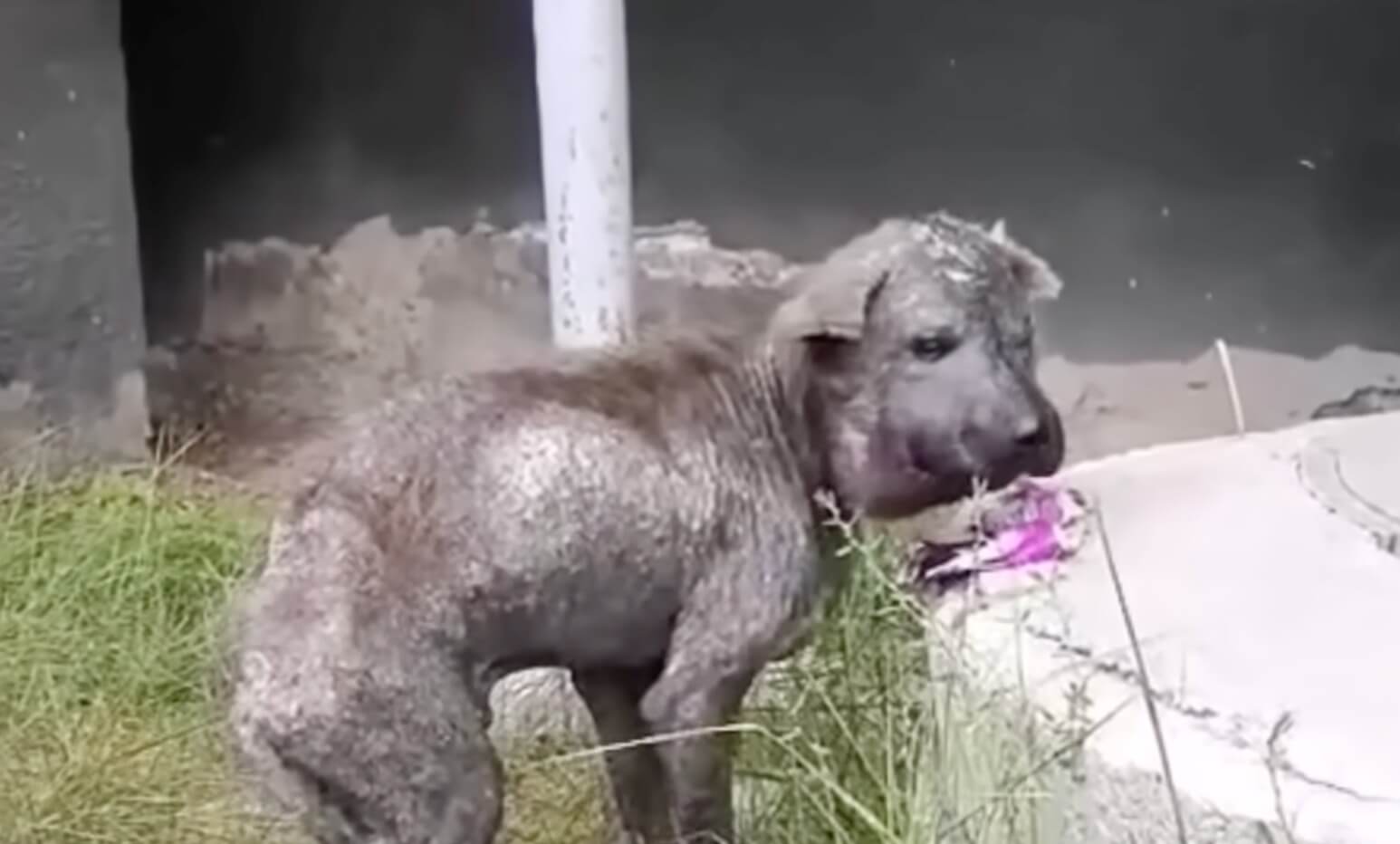
When the rescuer first saw him, Krouch kept his distance.
He trembled and tried to run despite clear weakness. His breathing was uneven. His steps lacked coordination.
He had learned that people meant danger.
For days, perhaps longer, he had survived on scraps and instinct. No shelter. No steady food. No safety.
The rescuer approached without urgency. No raised voice. No sudden gestures.
For a moment, it seemed he would disappear again.
Then he slowed.
He turned back.
Instead of running, he stood still.
That fragile pause marked the beginning of trust.
The Diagnosis That Almost Ended His Story
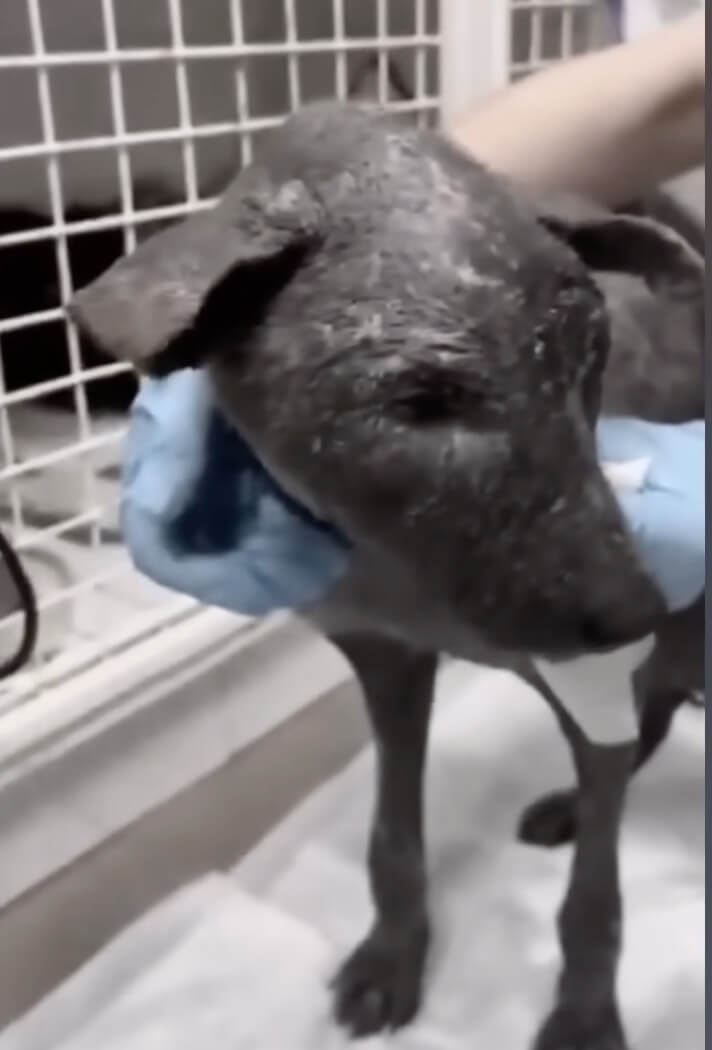
Krouch was taken to a veterinary clinic immediately. His temperature was dangerously high. His wounds were infected. His body showed signs of prolonged stress.
The doctors assessed him carefully.
According to the rescuer, they warned that “He probably wouldn’t survive more than a week.”
The suggestion of euthanasia was raised. The costs were high. The prognosis was uncertain.
From a medical standpoint, his condition was critical.
Understanding why fever can become life-threatening helps explain the urgency.
PetMD notes, “It’s considered an emergency if your dog is extremely lethargic, has blood in their stool or vomit, stops eating, or has a fever above 104.5 F.”
Krouch had stopped eating. He was lethargic. His temperature had climbed into dangerous territory.
When fever persists, the risk increases.
VCA Animal Hospitals explains, “However, if the body temperature remains above 105°F (40.5°C) for more than a day or two, the patient becomes lethargic and anorexic, and can rapidly become dehydrated.”
That combination can strain organs and accelerate decline.
Krouch was already close to that threshold.
Choosing Treatment When the Odds Were Low
Walking away was not an option for his rescuer.
She gathered what money she had and asked the doctors to begin treatment immediately.
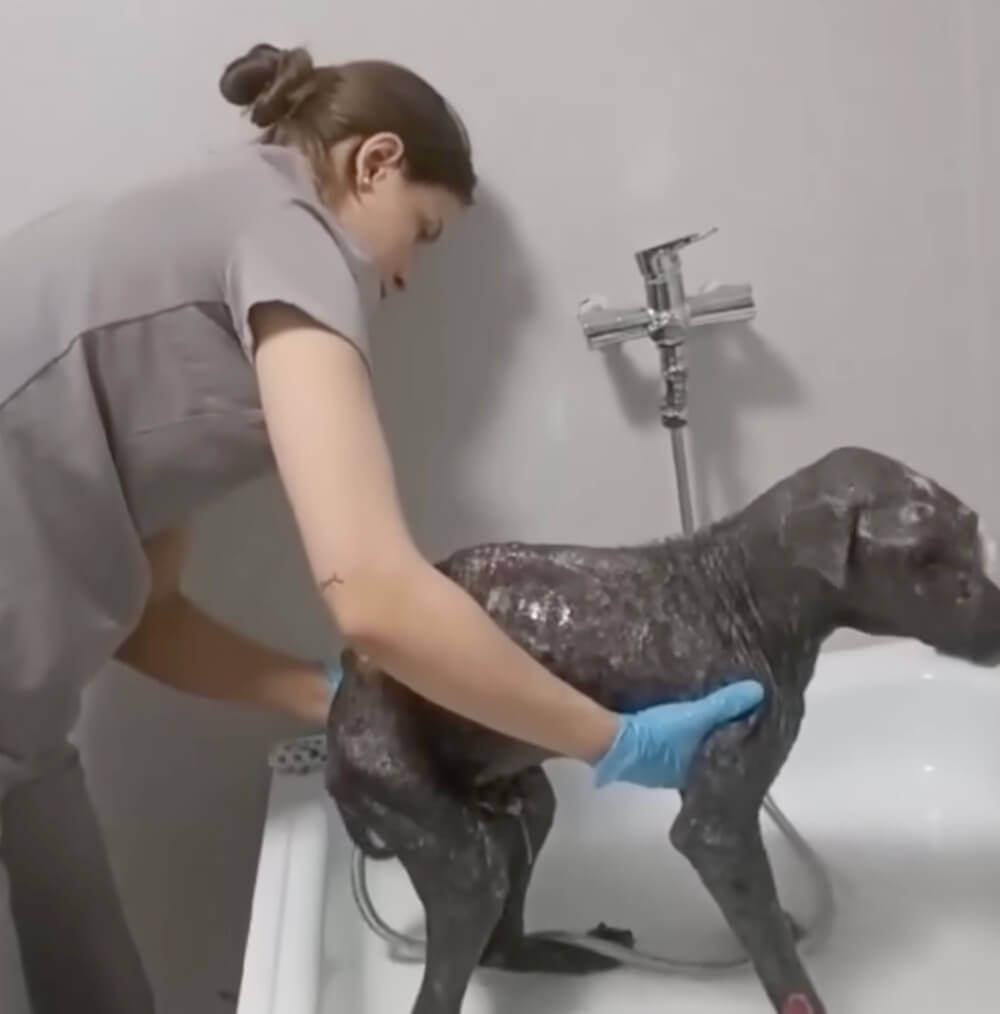
IV fluids were started. Antibiotics addressed infection. His temperature was monitored constantly. Wounds were cleaned to prevent further complications.
The first days were unstable. There were moments when improvement felt distant.
Recovery from severe infection is rarely immediate. Fever must lower gradually. Hydration must be restored carefully. Nutritional intake must resume without overwhelming weakened systems.
The team remained patient.
And slowly, something shifted.
Weeks of Uncertainty
His temperature began to fall.
His appetite returned in cautious stages.
His eyes, once distant, started following movement again.
Each small improvement mattered.
The medical staff continued monitoring for dehydration and recurring fever, aware of how quickly complications can return when the body has been pushed too far.
The wounds began to close. Infection receded. Strength returned in increments.
When the doctors called to say he was stable, his rescuer rushed to the clinic.
Relief replaced fear.
Krouch had survived the most dangerous phase.
Strength Returning, Day by Day
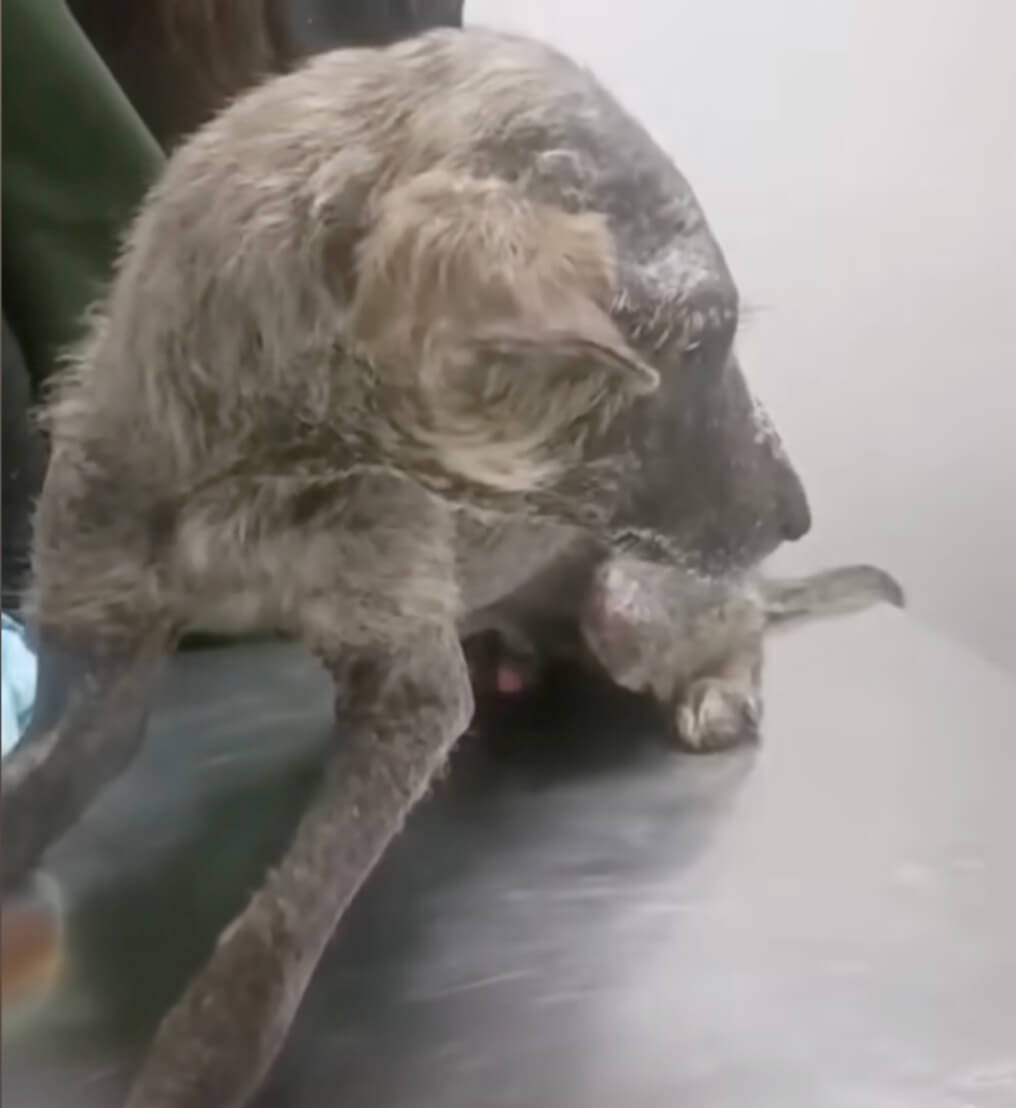
Once stabilized, rebuilding began.
Proper nutrition restored muscle. Gentle walks improved coordination. Calm interaction rebuilt trust.
He was described as polite and friendly at the clinic. Calm with staff. Receptive to affection.
The same dog once feared as a symbol of misfortune revealed a quiet gentleness.
That gentleness had always been there.
He had simply never been safe enough to show it.
Daily visits strengthened the bond between him and his rescuer.
Two Months Later
After two months, the transformation was clear.
His wounds had healed. His fever was gone. His body carried strength instead of fragility.
He walked confidently and responded to his name. He approached people with curiosity rather than caution.
Fear no longer dictated his movements.
A Forever Decision

At first, adoption seemed impractical. Life was busy. Responsibilities were many.
But letting him go felt impossible.
He had fought too hard.
She chose him.
Krouch left the clinic not as a patient, but as family.
The dog once labeled “bad luck” became a daily reminder of resilience.
He was never a symbol of misfortune.
He was a frightened dog who needed someone to stand beside him.
And when someone did, everything changed.
If his journey stayed with you, consider sharing it. Sometimes the stories we pass along become the reason someone else chooses compassion over fear.
You may also want to read:
They Thought It Was a Child Crying. It Was a Puppy Trapped Beneath Concrete for Four Days
After 11 Years of Loyalty, He Was Left Behind. Until a Little Girl Saw the Dog No One Else Did


