
She Dragged Herself Across a Landfill for Days. What Happened Next Is Unforgettable

A call came in about a dog dragging herself across a landfill. Not walking. Not running. Dragging.
Plastic bags shifted in the wind while trucks rumbled past. The ground was uneven and sharp in places. In the middle of it all, a thin dog pulled herself forward with her front legs, inch by inch.
She had no safe corner. No shade. No steady water. Just scraps and survival. For days, this was her entire world.
Within weeks, she would sleep somewhere clean and safe. But when rescuers first saw her, survival was still uncertain.
Surviving the Unthinkable

Local residents said she had been abandoned recently. No one stepped forward to claim her.
She survived on trash. When she was thirsty, she drank stagnant water pooled between debris. When people saw her, some drove her away instead of helping.
That detail matters.
According to the American Kennel Club, “These bowls could contain stagnant water that isn’t safe to drink, as stagnant water can hold bacteria and parasites.”
In a landfill environment, those risks multiply. Contaminated water can lead to infection and dehydration, compounding an already fragile condition.
She kept moving not because she wanted to, but because stopping meant vulnerability.
Then Esdras arrived.
He said, “When I arrived and saw her, my heart sank.”
She was thin and exhausted. Her back showed strain from dragging along rough ground. Her paws were raw. Her body reflected prolonged exposure.
And yet, she was still fighting.
A Body That Couldn’t Keep Going

It quickly became clear she had no control over her legs. She could not stand or reposition herself without pulling forward with her front limbs.
The American College of Veterinary Surgeons explains, “Paralysis—the inability to move one or more limbs—occurs in dogs when the brain, spinal cord, nerves, and muscles don’t communicate properly with one another to produce normal body movements.”
That description matched what rescuers were seeing.
Dragging across asphalt and debris for days compounds injury. Muscles deteriorate quickly when nerve signals are disrupted.
According to the Merck Veterinary Manual, “Within a few days, muscles wither and lose mass because of the lost nerve connection.”
This was not simple fatigue. It was physical breakdown.
She cried when touched but did not bite. She endured handling with quiet tolerance, as if too tired to resist.
Esdras promised she would not remain there another night. He lifted her carefully, mindful of her spine, and placed her into the vehicle. Soon after, they were on their way to the veterinarian.
The Fight to Heal
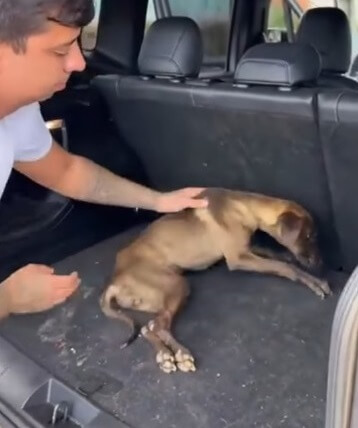
The first days after her rescue were fragile.
She was cold and severely underweight. Her ribs were visible beneath thin skin, and her hips stood out sharply. Weeks of inadequate food had stripped her body of muscle and strength.
Stabilization came first. She was warmed gradually and placed on fluids to support circulation. Pain was managed carefully, and her spine was assessed to understand the extent of her mobility loss. Every step was measured.
She slept often in those early days. When a body has been surviving on almost nothing, rest becomes part of treatment. Recovery is not dramatic at first. It is quiet.
Then, near the end of the first week, something changed.
She began eating more consistently. Not in bursts. Not out of panic. Just steady, reliable meals. That small shift signaled that her body was beginning to trust its environment.
The team understood her path would not be simple. Dogs with mobility challenges often require longer rehabilitation and specialized care. Improvement can be slow, and outcomes are not always predictable.
But their resolve never wavered.
As the rescue team said, “We will never give up on her.”
That promise became the foundation of everything that followed.
The First Signs of Hope
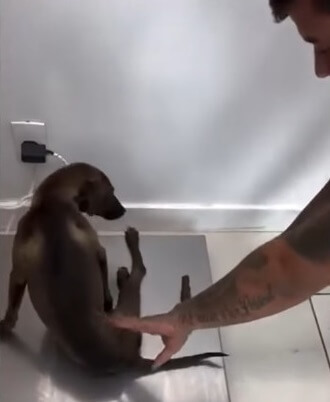
With continued care, her eyes grew brighter. She responded more to touch. Her body stabilized.
Mobility remained limited, but safety changes the trajectory of healing. For dogs who have lost nerve function, improvement may be gradual. Stability and comfort come first.
Here is why that matters to you.
If you ever encounter a dog dragging or unable to stand, immediate veterinary care is critical. Paralysis can result from trauma, spinal injury, infection, or neurological damage. Delays reduce recovery chances and increase suffering.
Clean water, structured nutrition, and protection from further harm can shift survival odds dramatically.
She now had all three.
A New Chapter

The landfill is behind her.
Today, she lives in a stable environment. She receives consistent care and monitoring. She no longer drags herself across debris in search of scraps.
Special-needs dogs require patience and commitment. They may need mobility support and extended rehabilitation. But safety provides the foundation for everything else.
Her story did not end where it began.
She survived conditions that could have ended her life. Not loudly. Not dramatically. But persistently.
Now she rests without fear.
If this story moved you, share it. Someone in your circle might be the reason another overlooked dog gets a second chance instead of being left behind.
You may also want to read:
She Lay Frozen in Trash: What Santa Did Next Left Rescuers in Tears
They Thought She Was Trash Beside a House. Inside the Crate Was a Puppy Named Prayer


