
She Was Too Weak to Stand. Two Months Later, She Took Her First Walk Into a New Life
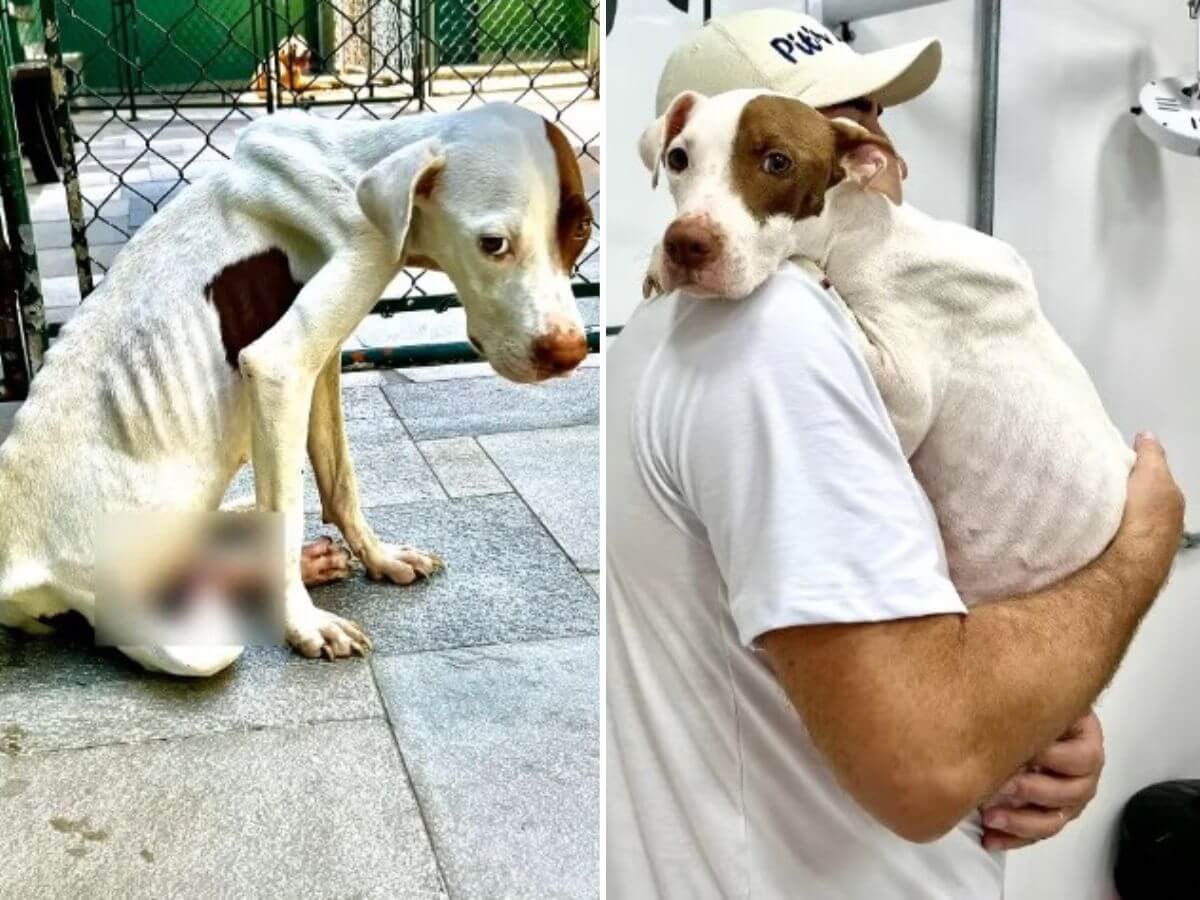
When rescuers first approached her, she didn’t try to run. She couldn’t.
A rope was still tied loosely around her neck. Her body lay flat against the ground, ribs rising and falling in shallow breaths. Every bone was visible beneath thinning skin.
This is Lolo’s story.
Her rescue was documented by Pits Ales, with video footage later shared online. What the camera captured was not dramatic music or staged heroics. It was something quieter. A starving dog rescue unfolding in real time.
She was too weak to stand. Severely dehydrated. Fighting infection. And yet, when food was placed near her, she lifted her head.
That small movement changed everything.
Because cases like this are not just emotional. They are medical emergencies. When a dog reaches this stage of malnutrition, survival can depend on rapid intervention.
And Lolo was running out of time.
A Body on the Brink
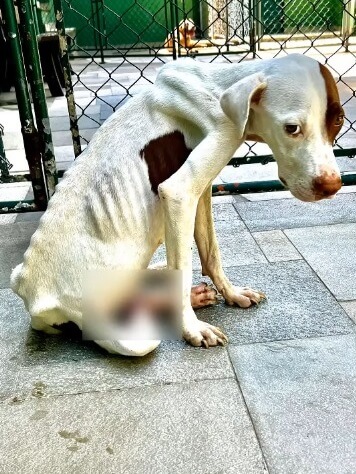
One of the rescuers knelt beside her and said what everyone was already thinking. “She is starving.”
The words were simple. The situation was not.
Her frame was skeletal. Her hips protruded sharply. A deep wound on her leg had become badly infected. Another rescuer later admitted, “I have never seen anything like this.”
It was not just thinness. It was collapse.
Starvation rarely comes alone. According to ASPCApro, “Dogs who are malnourished are also usually dehydrated.” That detail matters. When dehydration sets in, circulation weakens. Organs begin to strain. The body starts conserving energy in ways that are difficult to reverse without medical care.
Lolo’s body had already shifted into survival mode.
Why Dehydration Changes the Outcome
Here is why her condition was so dangerous.
When a dog loses more fluids than they can replace, internal systems begin to fail. The American Kennel Club explains, “In the most serious cases of canine dehydration, severe fluid shortage even lead to the failure of the kidneys and other organs.”
That risk was not theoretical. It was present.
Her infection had progressed. Her wound was inflamed. The veterinary team knew that if bacteria entered her bloodstream, the consequences could escalate quickly.
And yet she kept lifting her head toward food.
That instinct to eat became a lifeline.
The Emergency Rush
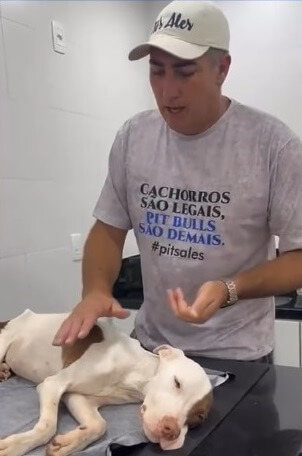
She was transported to a veterinary clinic without delay.
Pain management came first. Parasites were treated. Her infected leg was cleaned and carefully bandaged. Intravenous fluids were administered to stabilize her system. Blood tests helped guide the next steps.
But there was another layer of danger.
When severely malnourished dogs begin eating again, the body can react unpredictably. MSPCA-Angell warns, “Refeeding syndrome is infrequently recognized in veterinary patients, but is a serious condition when it occurs.”
So the team moved carefully.
Small meals. Controlled portions. Close monitoring. Electrolytes checked. No sudden changes.
If you have ever seen an extremely underweight dog, it can be tempting to feed as much as possible right away. Lolo’s case shows why restraint matters. Recovery is not about speed. It is about stability.
For the first few days, progress was uncertain. Her body was fragile. Infection remained a concern. Dehydration had to be corrected without overwhelming her system.
Still, she kept eating.
And that kept everyone hopeful.
The First Signs of Change
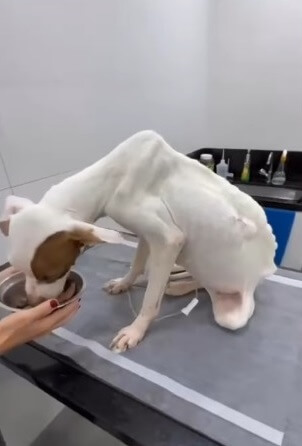
Recovery unfolded slowly.
Week one focused on stabilization. Fluids. Antibiotics. Monitoring. She rested often. Her body needed it.
By week two, something shifted. She responded to gentle voices. Her eyes followed movement. She finished her meals more consistently.
Weight gain was gradual. Muscle takes time to rebuild after prolonged starvation. Fat stores return in stages. Hydration levels stabilize before strength returns.
The veterinary team followed structured feeding. Controlled intake. Rehydration. Observation. Nothing rushed.
By the end of the first month, the difference was measurable.
Five kilograms gained over two months.
Her coat improved. Her posture lifted. The sharp outline of her ribs softened.
Then came a moment that no camera could fully capture.
She wagged her tail.
The Walk That Meant Everything
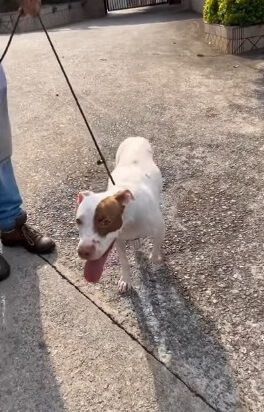
Two months after being found unable to stand, Lolo stepped outside with her adoptive father.
The dog who once lay motionless now placed one paw forward.
Then another.
Slow at first. Careful. Testing her strength.
But she kept moving.
She is no longer surviving. She is living.
Her eyes are alert. Her body carries strength that did not exist weeks earlier. The rope that once marked abandonment is gone. In its place is trust.
What Lolo’s Story Teaches Us
Stories like this are reminders.
Severe neglect often combines starvation, dehydration, and untreated wounds. When you see an extremely underweight dog, the risk extends far beyond hunger. Organs may already be under strain. Infection may be spreading quietly.
If you encounter a dog who appears unable to stand, lethargic, or severely underweight, immediate veterinary care is not optional. It can determine whether recovery is possible.
Lolo’s outcome did not happen because someone felt sympathy.
It happened because trained rescuers intervened quickly. Because veterinarians followed careful medical protocols. Because feeding was structured. Because hydration was corrected properly.
Compassion opened the door. Medical care carried her through it.
A New Chapter
Today, Lolo walks confidently beside someone who chose to give her a second chance.
Her body is stronger. Her wound is healed. Her eyes are bright.
This footage shows the full arc. Not just suffering. Not just rescue. But recovery.
And recovery is what stays with you.
Because while starvation nearly ended her life, steady, consistent care rewrote it.
If Lolo’s story moved you, share it. Someone else might need the reminder that even the weakest life can come back with the right help.
You may also want to read:
She Spent Her Entire Life in a Cage. One Day Changed Everything for Koko
For Years She Lived in a Backyard Eating Rocks. Then Everything Changed


