
She Came to a Stranger’s Door for Help. Six Weeks Later, No One Could Believe the Change
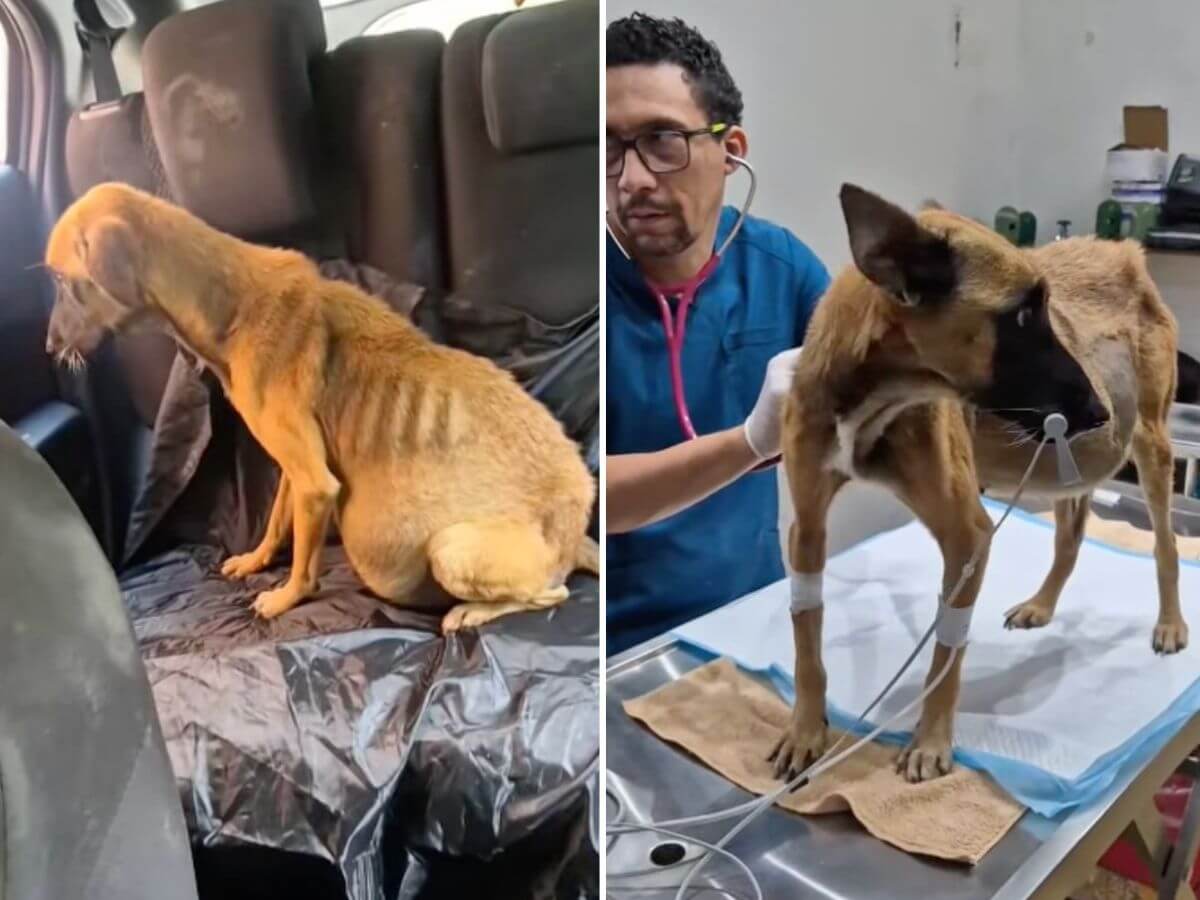
Some dogs are found because rescuers happen to be in the right place at the right time.
Lulu seemed to find help herself.
Weak, extremely thin, and carrying a severely swollen abdomen, she somehow made her way to a resident’s home and stopped outside the door.
For a brief moment, she stayed there.
She needed help, yet trusting the person on the other side was something else entirely.
Fear eventually won.
Lulu walked away from the house and disappeared back into the streets before anyone could bring her to safety.
No one knew where she would go next.
No one knew how long she had already been struggling.
And judging by the condition of her body, there was reason to fear that rescuers might not have much time to find her.
This rescue was originally shared by La Manada de Pick, whose team learned about Lulu and immediately went searching for the frightened dog.
What followed would become far more than a search for a stray.
It would lead to veterinary tests, a serious diagnosis, six weeks of continuous care, and a transformation that left the rescue team looking at a dog almost impossible to reconcile with the one who had first appeared at that stranger’s door.
But before any of that could happen, they had to find her.
She Needed Help but Was Too Afraid to Stay
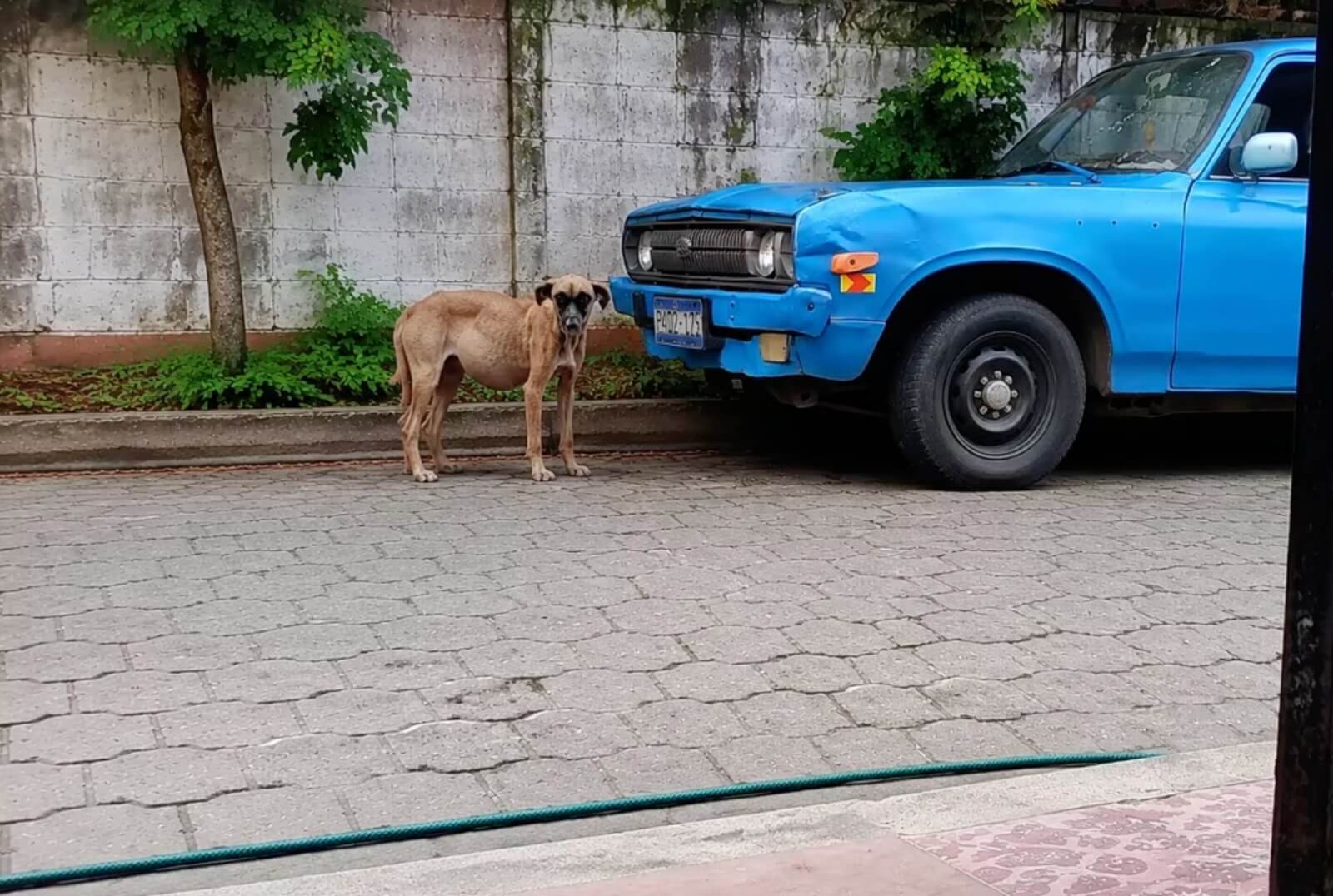
When Lulu first appeared outside the resident’s home, her condition made it clear that something was terribly wrong.
She was extremely thin.
Her abdomen, by contrast, was unusually enlarged.
She was weak, frightened, and hesitant around people.
Yet somehow, this timid dog had found enough courage to approach someone’s home.
It was as though two instincts were pulling her in opposite directions.
One told her she needed help.
The other told her not to trust the humans who might provide it.
After standing at the door for a short time, Lulu chose the familiarity of the streets and walked away.
For anyone who has ever tried to help a frightened stray, that reaction can be difficult to watch.
A dog can desperately need assistance while still being too afraid to understand that the person approaching is there to help.
Lulu disappeared before she could be brought to safety.
When La Manada de Pick heard what had happened, its team knew waiting for her to return wasn’t an option.
They went looking.
Rescuers Feared They Might Already Be Too Late
Finding Lulu was not as simple as following her down the street.
The search led rescuers along unfamiliar roads with uncertain directions.
Every wrong turn cost time.
And somewhere ahead of them was a dog whose body already appeared to be running out of strength.
The possibility that Lulu might keep moving made the search even more frightening.
If she disappeared farther into the area, finding her again could become much harder.
The rescuers kept going.
Eventually, they spotted her.
This time, Lulu didn’t disappear.
Not because she had suddenly overcome her fear.
She simply didn’t have the strength.
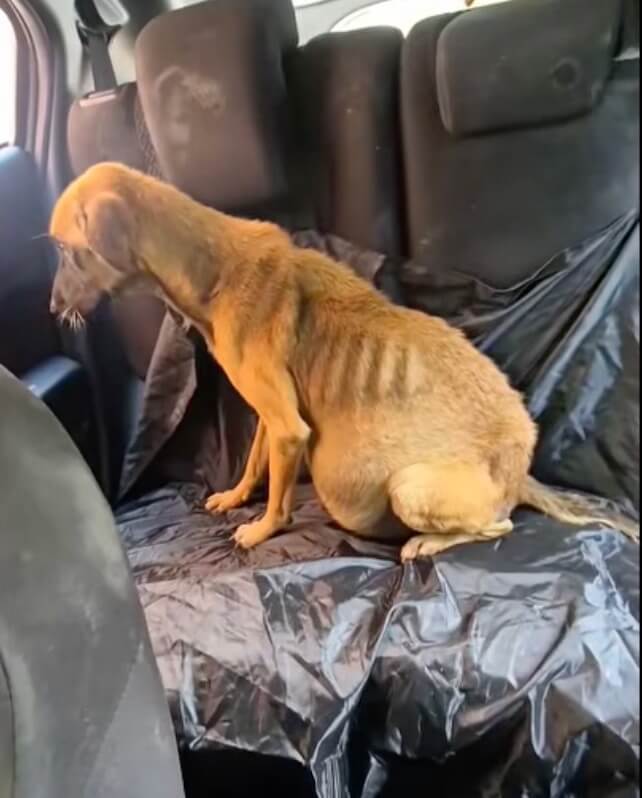
According to the rescuers, “Lulu could no longer run.”
The dog who had managed to walk away from the resident’s home was now barely able to stand.
Her body was extremely thin.
Her abdomen remained severely swollen.
Even her eyes seemed exhausted.
For the people who had been racing to find her, there was no longer any question about what needed to happen.
They gently lifted Lulu and carried her to safety.
Then they headed directly for veterinary care.
The frightened dog who had appeared at a stranger’s door finally had people beside her.
Now they needed to understand why she was so sick.
Her Swollen Abdomen Was Hiding a Serious Problem
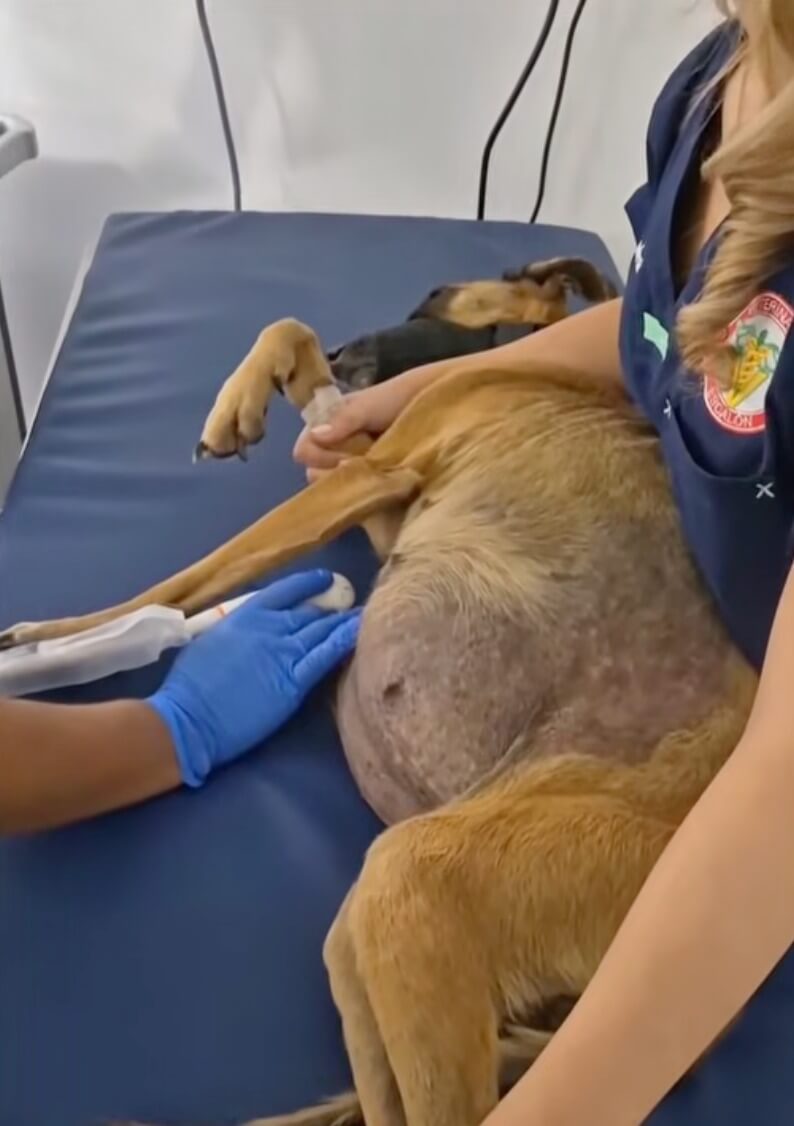
At the veterinary center, Lulu received her name.
She also began the medical examination that would reveal just how serious her condition had become.
Her thin frame already pointed to severe malnutrition.
But the striking difference between her frail body and enlarged abdomen raised another concern.
Tests revealed that fluid had accumulated inside her abdomen.
The Merck Veterinary Manual explains that “Ascites is the abdominal accumulation of fluid.”
Ascites itself did not tell Lulu’s veterinary team everything they needed to know. The underlying reason for that fluid still had to be investigated.
That meant more testing.
Bloodwork was performed while veterinarians checked her liver and kidney function.
Each result offered another piece of information about a dog whose medical history was largely unknown.
For Lulu, there was no simple medical history for veterinarians to review.
They had the frightened, exhausted dog in front of them and the signs her body was showing.
Now they had to determine what was happening inside her.
Draining the Fluid Gave Lulu Some Relief
While the veterinary team searched for answers, Lulu still needed relief from the pressure inside her abdomen.
The accumulated fluid was drained.
Afterward, she was able to breathe more comfortably.
For a dog already struggling with severe malnutrition and serious illness, even that measure of comfort mattered.
But removing the fluid could not answer the larger question.
Why had it accumulated in the first place?
PetMD notes that “This is not often a cure, as the fluid will likely build back up again, but it can help establish the cause of the ascites.”
That distinction mattered in Lulu’s case.
Draining the fluid could help make her more comfortable while the veterinary team continued investigating the illness behind it.
Further scans and ultrasounds followed.
Lulu remained under close observation.
The dog who had once been too frightened to remain at a stranger’s door was now spending her days surrounded by veterinarians and rescuers.
She didn’t know what the tests meant.
She couldn’t understand what everyone around her was trying to discover.
But day after day, she remained there.
And the people caring for her kept searching for an answer.
Then Came the Diagnosis Nobody Wanted to Hear
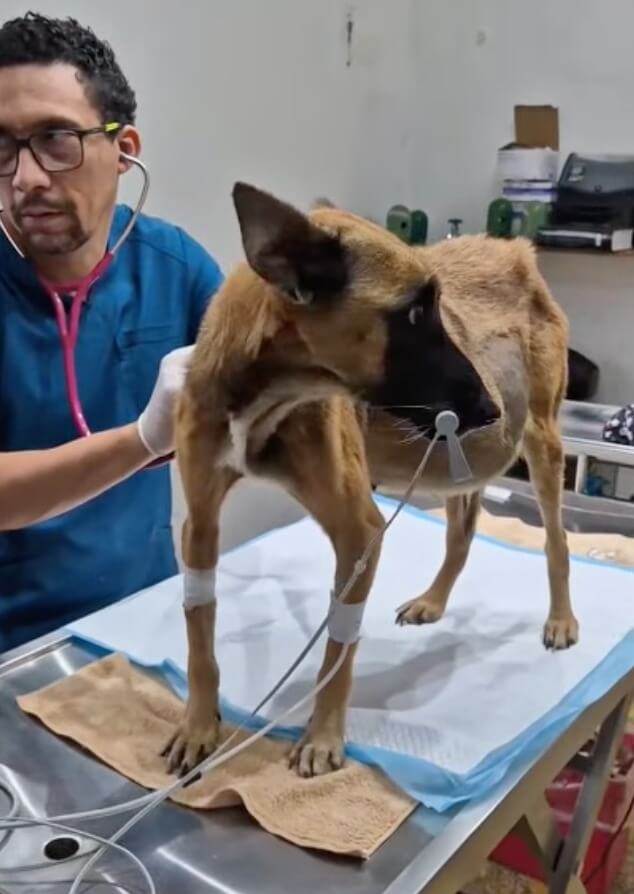
As the testing continued, the picture slowly became clearer.
The answer was not the one anyone had hoped to receive.
According to the rescue’s account, Lulu was suffering from severe liver failure.
The damage was described as extremely advanced and irreversible. The veterinary team could continue caring for Lulu and managing her symptoms, but the rescue was told that the underlying damage could not be cured with the treatment options available to her.
Her prognosis changed the direction of everything that followed.
Until that point, the team had been searching for the problem in hopes of finding a way to reverse it.
Now they were facing a different question.
If they could not cure Lulu, what could they still give her?
The answer became comfort.
Care.
And the reassurance that whatever happened next, she would not face it by herself.
The American Animal Hospital Association states that “The overarching goal in providing palliative and hospice care is to maximize comfort and minimize suffering for our patients.”
That principle closely reflected what mattered to the people caring for Lulu once they understood the seriousness of her condition.
The goal was no longer measured only by whether her disease could be reversed.
It was also measured by whether Lulu could rest comfortably, receive the care she needed, and experience gentleness after spending so long struggling on her own.
The rescuers expressed their priorities for Lulu in three simple phrases: “Her comfort. Her dignity. Her peace.”
Those words would shape the weeks that followed.
They Wanted Lulu to Know What a Home Felt Like
Even after receiving such difficult news, the rescue team still hoped Lulu might experience something she appeared to have gone without for far too long.
A home.
They hoped someone might open a door to her again.
This time, Lulu wouldn’t have to stand outside wondering whether she was safe.
She could have a warm place to sleep and people close enough to reassure her that she wasn’t alone.
The rescue searched for a foster home where Lulu could spend the time ahead surrounded by the comforts of family life.
But no offer came.
For a dog with serious medical needs and an uncertain prognosis, finding the right placement was not easy.
So Lulu stayed at the veterinary clinic.
It wasn’t the home everyone had imagined for her.
But it became the place where people showed up for her every day.
For Six Weeks, the Clinic Became Her Safe Place
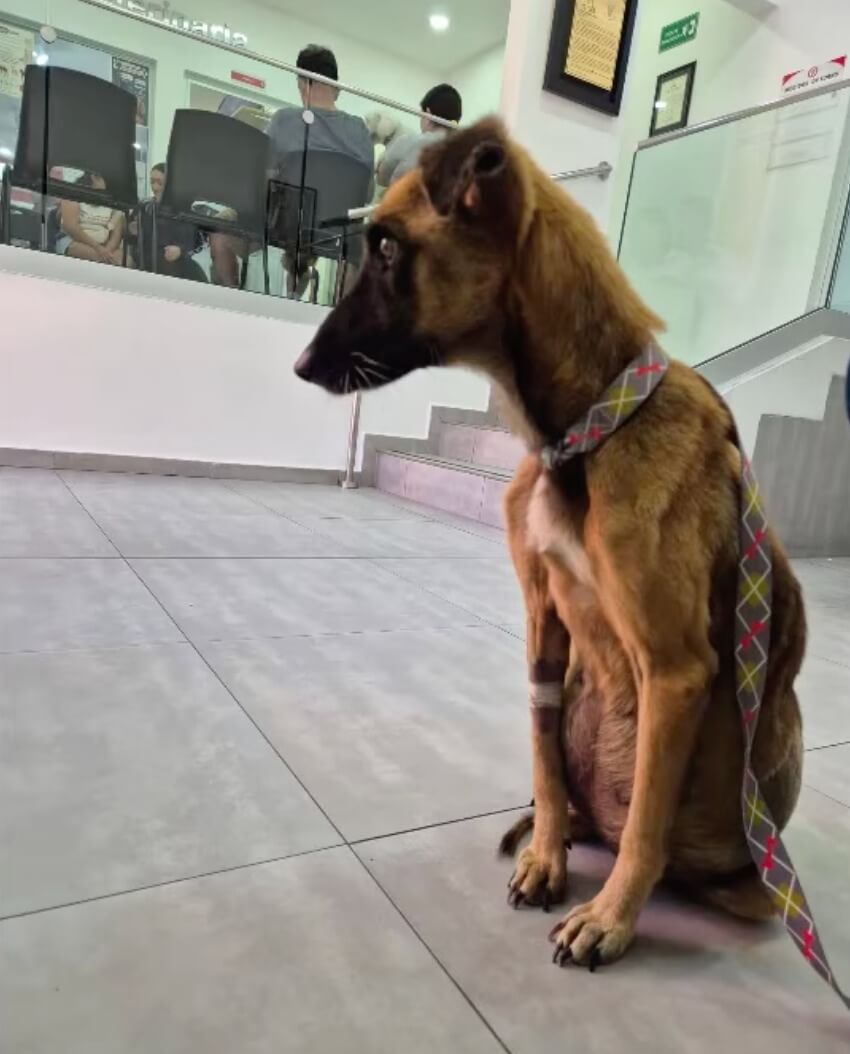
Six weeks is a long time in the life of a dog whose future feels uncertain.
For Lulu, those weeks brought something she may not have experienced consistently before.
People stayed.
Veterinarians and rescuers remained involved in her care day after day.
She was fed.
She was monitored.
Her symptoms were managed.
When she needed comfort, someone was there.
There were no promises about how much time Lulu had.
There was only the commitment to make the time in front of her as gentle as possible.
That made the smallest moments matter.
Sometimes there was no dramatic breakthrough to celebrate.
A quiet look could be enough.
Resting comfortably could be enough.
Simply seeing Lulu respond to the people around her could be enough.
The dog who had once walked away from a stranger because she was too frightened to stay was beginning to experience a very different relationship with people.
They didn’t disappear when things became difficult.
They came back the next day.
And the day after that.
For Lulu, consistency became its own kind of reassurance.
She Was Learning That Human Hands Could Bring Comfort
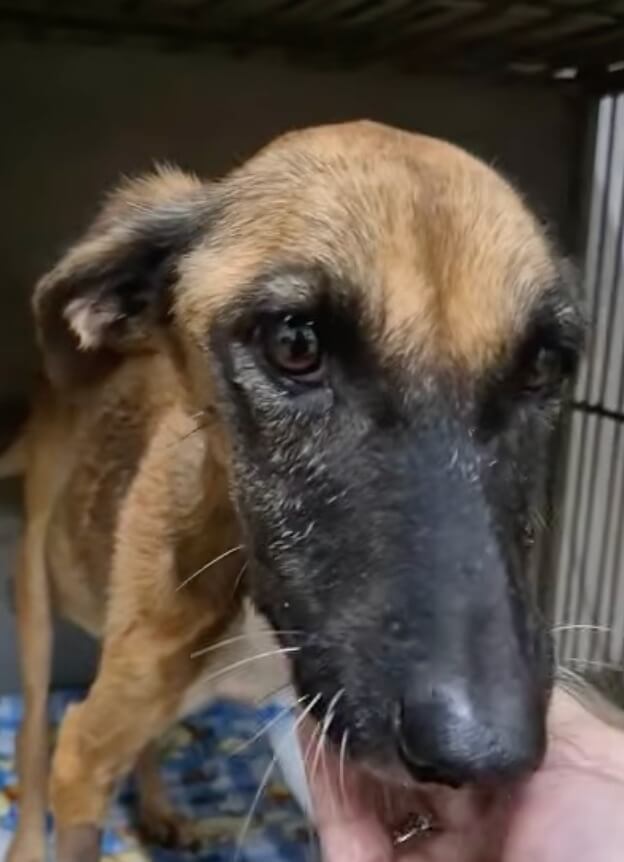
Trust doesn’t always arrive through one dramatic moment.
Sometimes it is built quietly.
A meal appears at the same time each day.
Someone approaches gently.
A familiar person returns.
Nothing frightening happens.
Then it happens again.
For Lulu, those repeated experiences mattered.
When she first appeared at the resident’s home, she had needed help badly enough to approach a stranger’s door.
Yet fear had still been powerful enough to send her back into the streets.
Now she was surrounded by people every day.
They were the ones bringing food.
They were the ones checking on her.
They were the ones trying to make her comfortable when her body was struggling.
Little by little, Lulu no longer had to choose between needing help and being afraid of the people offering it.
She could simply receive care.
Then Six Weeks of Care Revealed a Different Lulu
The dog at the end of those six weeks looked strikingly different from the one rescuers had found.
At the beginning, Lulu had been extremely thin, exhausted, and barely able to stand.
Her swollen abdomen had made the contrast with the rest of her body even more alarming.
Weeks later, the rescue shared Lulu again and drew attention to just how much her appearance had changed.
It was the kind of difference that could make someone look twice.
But Lulu’s transformation needs to be understood carefully.
The rescue’s account does not provide medical evidence that her severe liver failure had been cured or reversed.
In fact, the earlier prognosis described the liver damage as irreversible.
What those six weeks clearly did give Lulu was continuous veterinary attention, nourishment, symptom management, monitoring, and care.
Her changed appearance was extraordinary to see.
Yet perhaps the more meaningful change was something a photograph could never fully capture.
Six weeks earlier, Lulu had been wandering the streets on her own.
Now she had people who knew her name.
Her Transformation Meant More Than a Before-and-After Photo
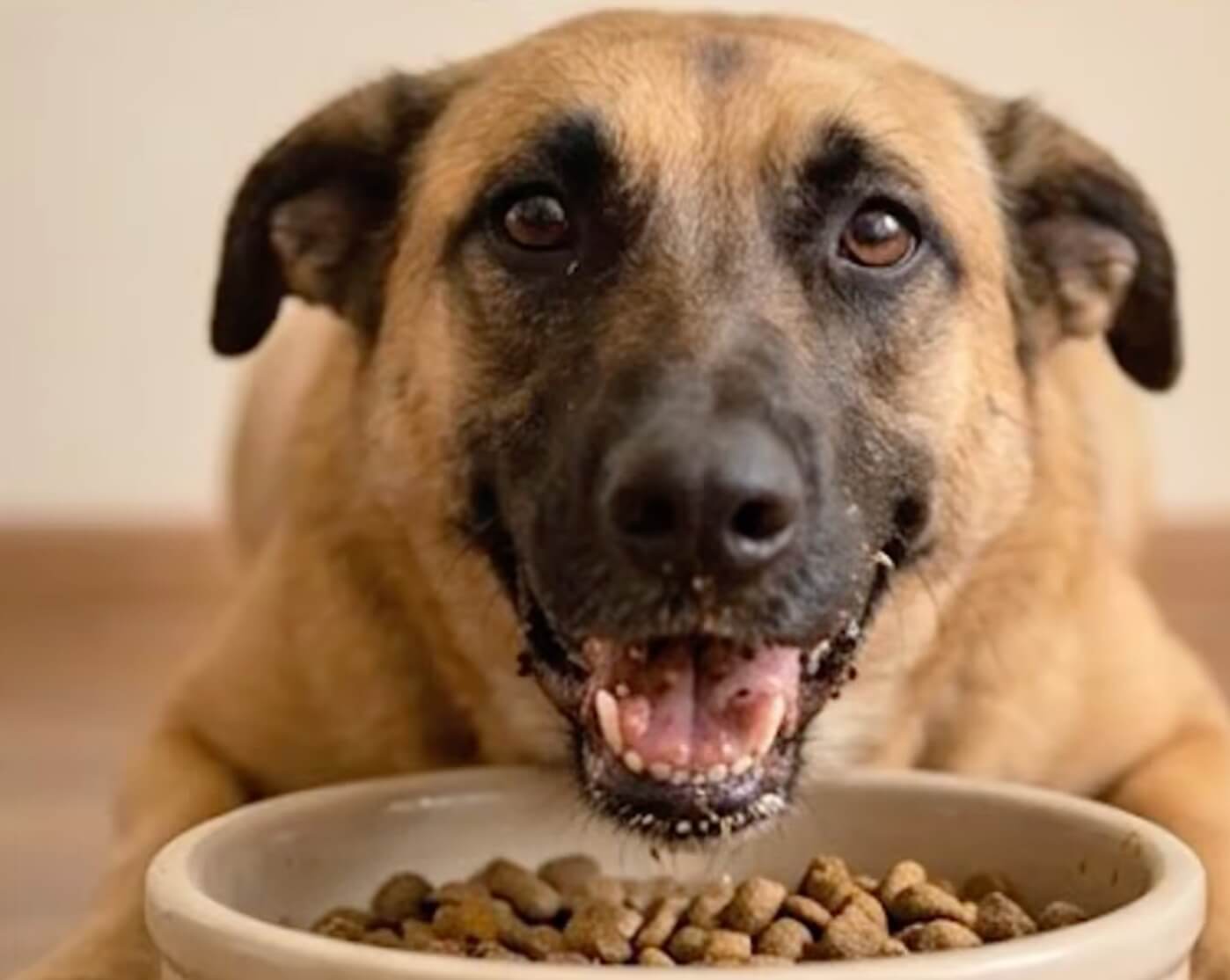
Lulu’s visible change did not erase the serious diagnosis she had received.
A healthier appearance also doesn’t necessarily reveal everything happening inside an animal’s body.
Her caregivers had been able to relieve some of the pressure caused by the fluid in her abdomen, but bloodwork, imaging, and continued observation were still needed to understand the larger medical problem.
That is an important distinction in Lulu’s story.
Her later appearance should not be mistaken for evidence that the irreversible liver damage described by the rescue had somehow disappeared.
What had changed was the life surrounding her.
There were regular meals.
There was comfortable rest.
There was veterinary attention.
There were familiar people nearby.
And there were people paying attention when her body needed something.
For Lulu, those things had become part of every day.
Six weeks earlier, she had walked up to a stranger’s door because she needed help.
Now she no longer had to go looking for someone who might notice.
The Ending Wasn’t the One Everyone Had Hoped For
There is something important about telling Lulu’s story honestly.
This wasn’t a story in which veterinarians discovered a simple problem, treated it, and sent a completely healthy dog home.
The rescue reported that Lulu had severe, irreversible liver failure.
They had hoped to find a foster family who could give her the warmth of a home during an uncertain period of her life.
That home never came.
It would be easy to see that as the part of the story where hope disappeared.
But Lulu wasn’t abandoned because the ideal ending couldn’t be found.
The clinic became her safe place instead.
For six weeks, veterinary professionals and rescuers continued caring for her.
They couldn’t rewrite everything that had happened before Lulu appeared at that door.
They couldn’t promise what her future would hold.
What they could do was make sure the frightened dog they had searched for would never again have to face uncertainty by herself.
Six Weeks Earlier, She Had Been Alone in the Streets
It is difficult to think about Lulu’s later appearance without remembering where those six weeks began.
At a stranger’s door.
She had somehow made her way there despite being weak, malnourished, and seriously ill.
For a moment, she stayed.
Then fear sent her away again.
If the story had stopped there, Lulu might have disappeared into the streets without anyone knowing what happened to her.
But someone noticed.
Then rescuers went looking.
They followed uncertain directions and kept searching while fearing they might already be too late.
When they finally reached Lulu, her body no longer had enough strength to carry her away.
From that moment forward, she didn’t have to keep running.
Someone else was there to carry her to safety.
Someone Finally Stayed
Perhaps that is what makes Lulu’s story so difficult to forget.
She came looking for help but was afraid to accept it.
She disappeared.
People searched for her.
And when the medical news became more difficult than anyone wanted to hear, the people around her did not walk away.
They stayed.
Day after day.
Week after week.
Lulu’s six-week transformation may be what first catches someone’s attention.
But the greater change cannot be measured by comparing two photographs.
At the beginning, Lulu was a frightened dog wandering the streets with no one beside her.
By the end of the rescue’s account, she was known by name and surrounded by people who cared about how she felt.
They couldn’t give Lulu the past she should have had.
They couldn’t erase the serious illness affecting her body.
But they could give her something she had been searching for when she first approached that stranger’s door.
Someone who noticed.
Someone who came looking.
And, finally, someone who stayed.
❤️ If Lulu’s story touched your heart, consider sharing her journey so more people can see what can happen when a frightened animal asks for help and someone decides not to look away.
Also read:
They Opened the Door to an Old House and Found a Dog No One Knew Was Waiting Inside
She Begged at Her Owner’s Gate While 9 Weeks Pregnant. What Happened Next Changed Everything


