
They Left Her Broken at the Hospital. What Happened Next Changed Noel’s Life Forever
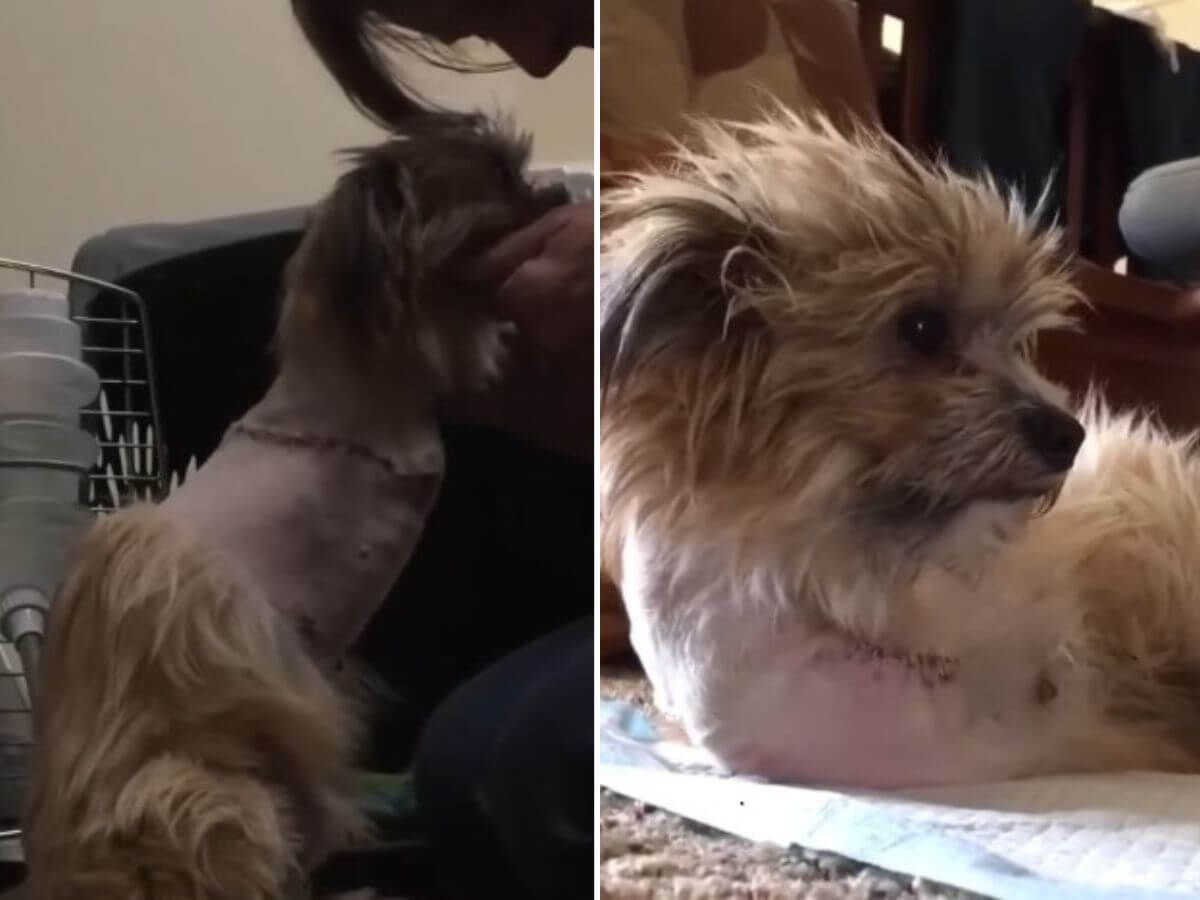
Everything changed for Noel in a single, violent moment.
One second she was moving through an ordinary day. The next, a speeding car struck her with crushing force. The impact shattered both of her front legs and left her unable to stand in the road where she fell.
She was rushed to a veterinary hospital, her front limbs twisted and unstable, her breathing shallow from shock.
What happened next hurt almost as much as the collision itself.
According to the rescuer documenting the case, “I watched them leave without even a glance.”
Her family walked out of the hospital.
No promises to return. No visible hesitation. No questions about whether she would walk again.
Noel was left behind in severe pain, confused, and alone beneath harsh hospital lights.
Her legs were broken. But something else fractured too.
Trust.
And in that quiet hospital room, her future depended on whether someone else would choose to stay.
The Medical Reality of a Collision
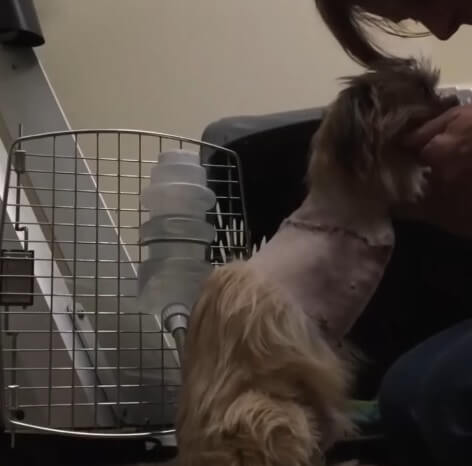
Car accidents are one of the most common causes of traumatic injury in dogs.
The Merck Veterinary Manual explains it plainly: “Bone fractures are frequently caused by vehicular accidents, firearms, fights, or falls.”
In Noel’s case, both front legs absorbed the force of impact.
A dog’s front limbs carry most of their body weight. When both are fractured, even shifting position becomes excruciating. Stabilization is urgent. Surgery is unavoidable.
But surgery is only the beginning.
Trauma activates stress responses across the body. Inflammation rises. Infection risk increases. Pain must be managed with precision.
The American Animal Hospital Association reinforces that standard clearly: “Pain management is an essential component of compassionate care in canine and feline medicine.”
For Noel, survival depended not only on orthopedic repair, but on steady, disciplined monitoring in the days that followed.
A Second Chance Steps Forward
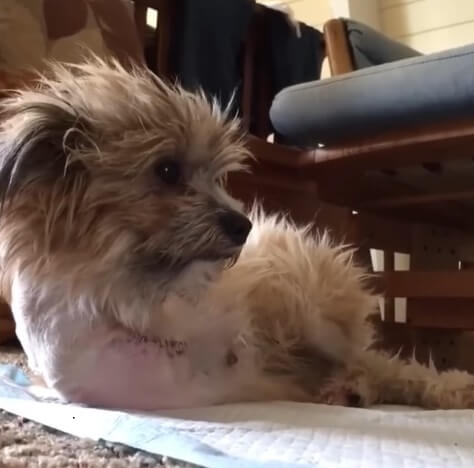
While one family walked away, another stepped forward.
They committed to funding the procedures. They committed to the nights ahead. They committed to staying.
After surgery, Noel’s condition remained fragile. Her appetite faded. She cried softly through the dark hours. Progress was difficult to measure.
Still, this new family remained.
They rotated shifts. They adjusted her bedding to prevent pressure sores. They spoke to her even when she turned her head away.
Pain after bilateral fractures is not linear. Medication helps, but healing takes time. Without careful oversight, recovery can stall. With it, stability begins to return.
Weeks passed.
The improvement was slow.
But it was real.
Nights of Uncertainty
Physical injury was only part of the battle.
Dogs form attachments quickly. Being abandoned during trauma compounds stress. Veterinary professionals often observe that behavior changes after sudden separation.
Noel flinched at touch. She avoided eye contact. She startled easily.
Her body was repairing bone. Her heart was repairing something less visible.
The family continued to show up.
They hand-fed her when she refused to eat alone. They stayed close when she struggled to sleep. They created routine in a time that felt unpredictable.
There were no guarantees. Only persistence.
The First Signs of Change
Recovery rarely announces itself with fanfare.
It appears quietly.
A longer stretch of sleep. A steady breath. A small shift of weight without trembling.
Follow-up exams confirmed her surgical repairs were holding. The fractures that aligned with the kind described by the Merck Veterinary Manual were stabilizing under controlled movement and restricted activity.
Swelling decreased. Appetite returned in cautious waves.
Hope became measurable.
Learning to Move Again
Because both front legs had been severely damaged, long-term mobility required creativity.
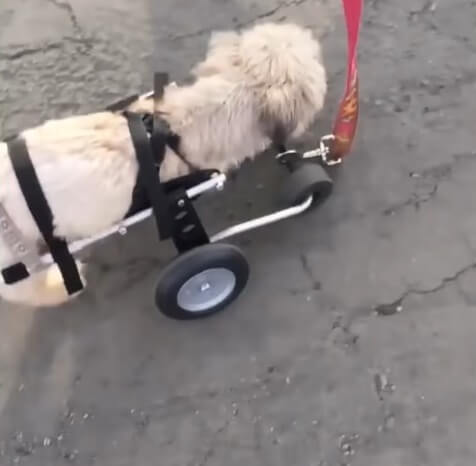
Her new family introduced a wheelchair designed to support front limb injuries. At first, the cart lookewalkd foreign to her.
But adaptation came quickly.
Animal Wellness Magazine observes, “Most dogs adapt very quickly to a cart.”
That proved true.
Within days, Noel began pushing forward with determination. The cart stopped being equipment and started becoming freedom.
She explored the yard. She adjusted her balance. She rediscovered motion.
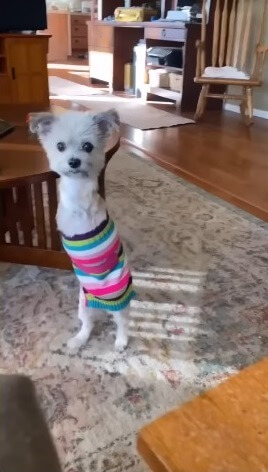
Over time, she strengthened her rear legs enough to experiment with standing upright in short bursts. Her unique posture drew smiles from neighbors.
Mobility was not perfect.
But it was hers.
Becoming Family
Healing extended beyond bone alignment.
It reached into daily life.
Morning walks became ritual. Play sessions stretched longer. Predictability replaced fear.
There was a moment in the footage that marked the emotional shift.
As the story unfolds, “You are now part of the family.”
It was not symbolic. It was lived reality.
Noel was no longer a patient under observation. She was not a financial burden. She was home.
Why Noel’s Story Matters
Vehicle-related fractures are common, as veterinary literature confirms. Pain management must be prioritized. Rehabilitation requires structure.
Mobility devices often restore independence more effectively than many assume.
If you ever encounter a dog struck by a vehicle, immediate veterinary stabilization is critical. Controlled pain management and proper surgical intervention dramatically improve survival outcomes.
Abandonment during medical crisis compounds trauma. Reporting suspected neglect ensures accountability.
Noel’s recovery was not accidental.
It was built.
Built through surgery. Built through sleepless nights. Built through restraint when rushing felt easier.
Today
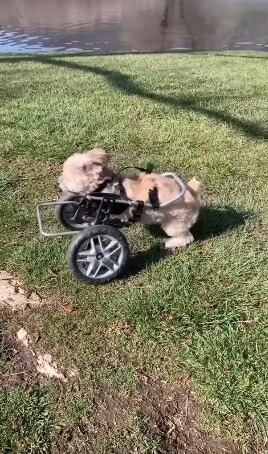
Noel moves through her days with confidence that once seemed impossible.
She wakes up in a home where no one leaves. She explores with her cart. She balances proudly on her back legs. She greets visitors without hesitation.
The accident that once defined her life now feels like a chapter, not the whole story.
Her journey began with impact and abandonment.
It continues with loyalty and stability.
If Noel’s resilience moved you, share her story. Someone scrolling today may be facing a difficult decision about an injured animal. Someone may need to see what staying can accomplish.
And sometimes, the simple decision to stay is what turns tragedy into a life rebuilt.
More Rescue Stories
Her Parents Died Suddenly. What Happened to Nia Next Will Stay With You
He Collapsed in Traffic and Couldn’t Stand. Then One Person Stopped


