
He Never Saw the Sun: The Dog Locked Away Since Puppyhood Who Fought to Live
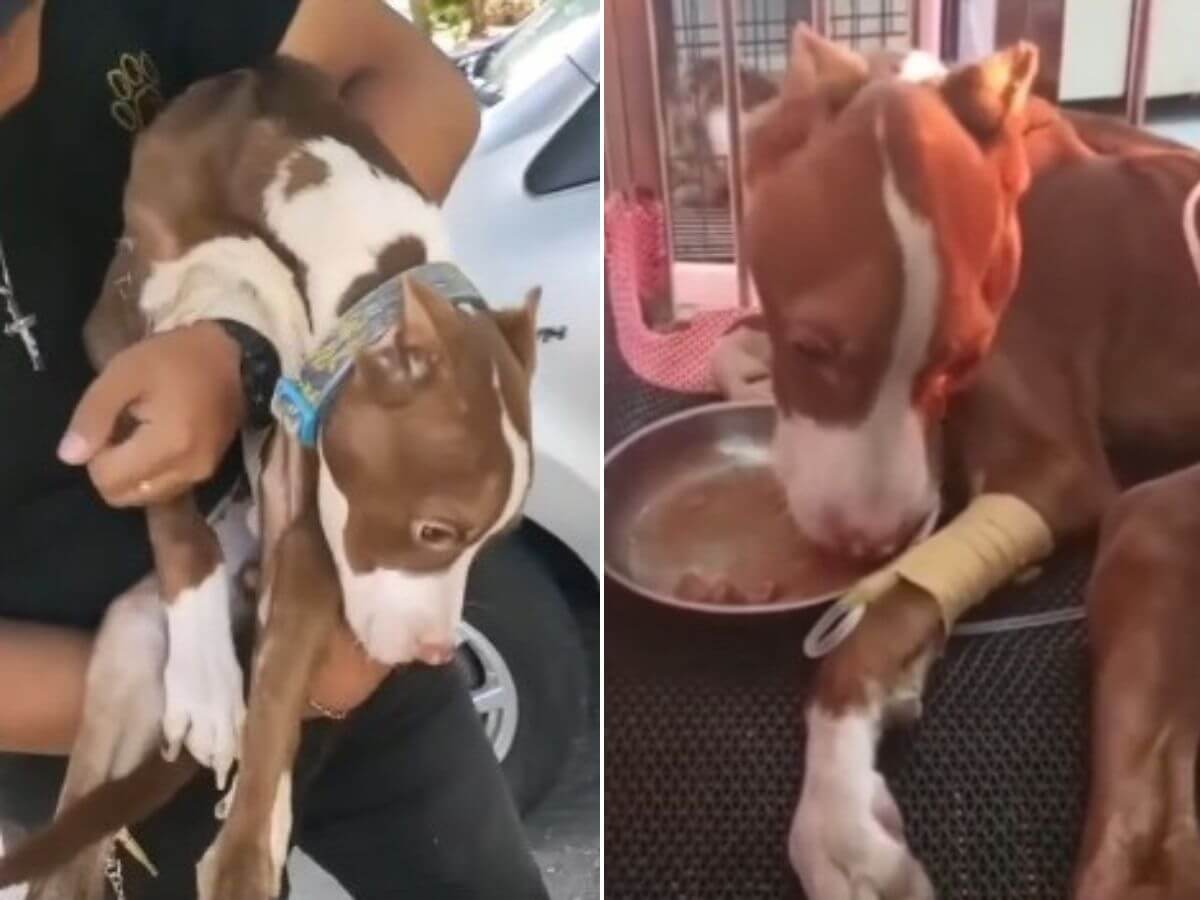
There are rescue stories that stay with you long after the video ends.
This is one of them.
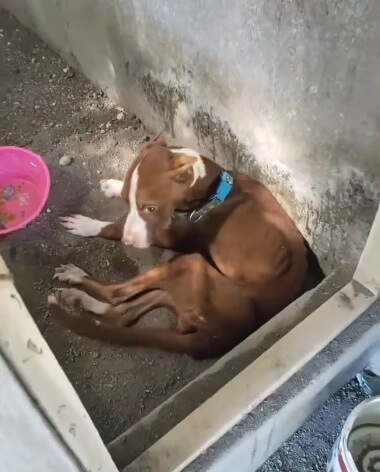
When rescuers pushed open the warped wooden door of a collapsing shack, the smell hit first. Damp wood. Stagnant air. No light slipped through the cracks. No breeze moved the dust. Inside, on a dirt floor, a dog lay curled into himself, too weak to lift his head.
His name was Pablo.
According to the rescue team, Rumah Penuh Cinta Bethkiel Familie, Pablo had been locked inside that structure since he was a puppy. He had never stepped into sunlight. He had never felt grass under his paws. He had grown up in isolation, without steady food, clean water, or human touch.
By the time rescuers reached him, his muscles had deteriorated to the point that he could not stand.
One of the rescuers later admitted what they were all thinking: “Pablo might not live another week.”
That was not dramatic language. It was a clinical assessment.
Severe malnutrition and dehydration do not just weaken a dog. They shut down systems one by one. What happened next would test every limit of veterinary care, patience, and human commitment.
Here is the part that matters.
Pablo’s story is not only about survival. It shows what prolonged neglect does to a growing body, how careful medical intervention can reverse damage that seems permanent, and why emotional recovery can be just as fragile as physical healing.
What Prolonged Neglect Does to a Dog
Let’s pause for a moment.
When a puppy grows without food, clean water, or movement, damage builds slowly and then all at once. Muscle loss reduces strength. The immune system weakens. Parasites multiply unchecked. Dehydration becomes dangerous.
And dehydration alone can turn fatal.
According to RSPCA Pet Insurance, “Dehydration in dogs and cats is a potentially fatal issue.”
That statement framed Pablo’s first hours in care. He had no reliable water source. No supervision. No one tracking his condition. His body was likely operating in survival mode for weeks.
Malnutrition compounds the risk. A growing dog needs steady nutrients to support bone density, organ function, and neurological development. Without them, physical decline accelerates.
That was the state Pablo was in when rescuers found him.
The First Hours: Racing the Clock
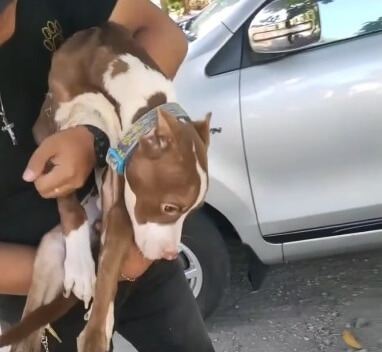
Rescuers moved carefully.
They lifted him into a vehicle. His body felt alarmingly light. According to the team, he did not resist. He barely reacted to touch.
At the hospital, veterinarians confirmed severe malnutrition, dehydration, and parasitic infection. His body temperature was unstable. His muscle mass was depleted. He could not stand without support.
Treatment had to be controlled.
Here is why.
When a severely starved animal begins eating again, feeding too aggressively can cause life-threatening complications.
According to the Merck Veterinary Manual, “Hypophosphatemia induced by refeeding syndrome causes weakness, hemolysis, metabolic encephalopathy, and numerous other adverse effects.”
In practical terms, too much food too quickly can cause collapse.
So Pablo’s recovery began with measured meals, fluid therapy, and constant monitoring. His electrolytes were watched closely. His intake was gradual. Every decision was deliberate.
The first 48 hours were unstable.
A Promise Made in a Hospital Room
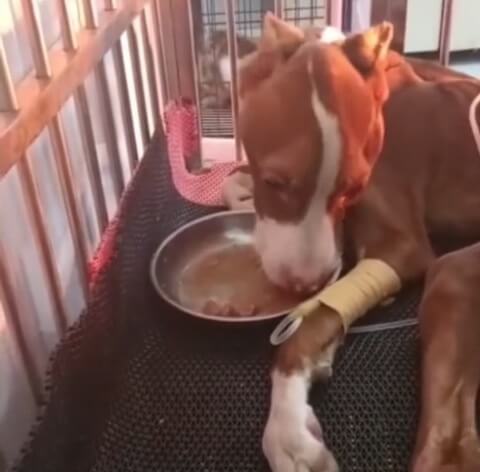
The rescue team stayed beside him.
They monitored his breathing. They adjusted his position. They waited for small signs of response.
At one point, one of the rescuers leaned close and made a promise, “I will fight for him.”
That statement was not symbolic. It meant committing to whatever care he needed.
Emergency veterinary care can run into thousands of dollars. Hospitalization requires medication, diagnostics, and round-the-clock oversight. The rescuer later shared that personal savings were spent to keep Pablo alive.
Money can be earned again. A life cannot.
The Critical Window
The first week remained uncertain.
He could not stand. His appetite was inconsistent. His hydration levels required continued monitoring.
The earlier warning echoed in the background. “Dehydration in dogs and cats is a potentially fatal issue.” That fact shaped every decision.
Then gradual improvement began.
He started finishing small meals. His eyes tracked movement. He responded to voices. His head lifted when someone entered the room.
These were not dramatic milestones. They were biological and emotional ones.
Learning Safety for the First Time
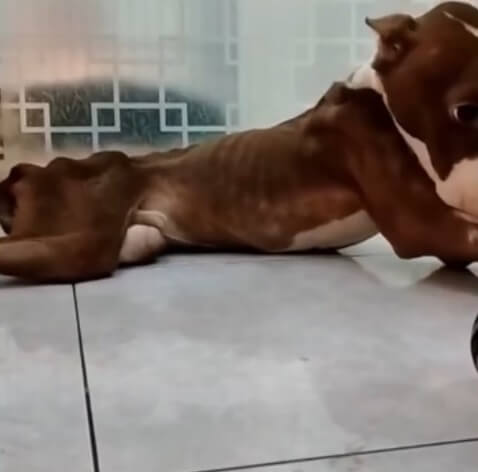
Physical stabilization was only the beginning.
Dogs raised in isolation often struggle with trust. Touch can feel unfamiliar. Sudden sound can trigger fear. Even sunlight can overwhelm a nervous system that has lived in darkness.
Recovery requires patience.
According to the ASPCA, in a case involving another severely abused dog, “One thing that was key to his recovery was the lure of social interaction with people.”
That principle shaped Pablo’s rehabilitation.
The rescuer sat near him without forcing contact. Movements were slow. Voices were calm. Predictability replaced chaos.
Over time, Pablo leaned toward the touch instead of away from it.
That shift matters.
Food rebuilds tissue. Consistent human presence rebuilds confidence.
From Standing to Walking
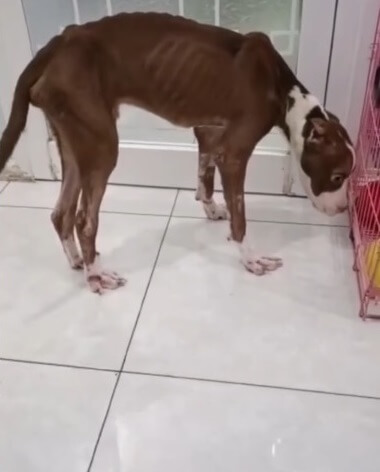
Weeks passed.
With assistance, Pablo attempted to stand. His legs trembled. His balance faltered. But repetition built strength.
Gradual nutrition restored muscle mass. Controlled feeding protected him from the complications described in the Merck Veterinary Manual regarding refeeding syndrome.
He began standing longer each day. Then he took a step. Then two.
One afternoon, he stood on his own.
Not for long. But long enough to change the trajectory of his recovery.
The First Time He Saw the Sun
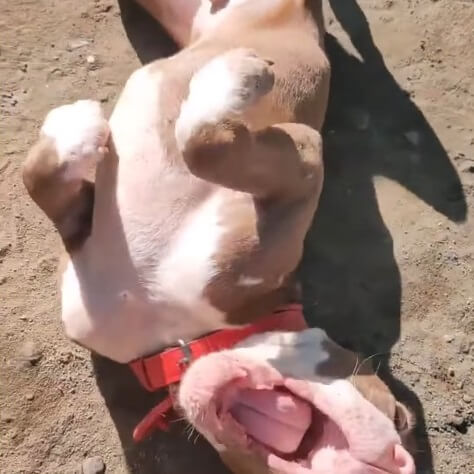
The first time Pablo stepped outside, he hesitated.
Light filled the yard. Air moved across his face. The world was wider than the dark space he had known.
No one rushed him.
They allowed him to process.
Sunlight touched a dog who had never seen it.
That moment was quiet. No applause. Just relief.
What This Story Teaches
Severe neglect leaves physical and emotional markers.
Extreme thinness. Weakness. Dehydration signs such as dry gums. Untreated infections. Fear-based shutdown behavior.
If you ever suspect prolonged neglect, contact local animal control or a humane organization immediately. Early intervention increases survival odds.
And remember the behavioral component.
As previously noted by ASPCA, “One thing that was key to his recovery was the lure of social interaction with people.” Consistent, calm presence changes outcomes in ways medication alone cannot.
Pablo’s life reflects that reality.
Today
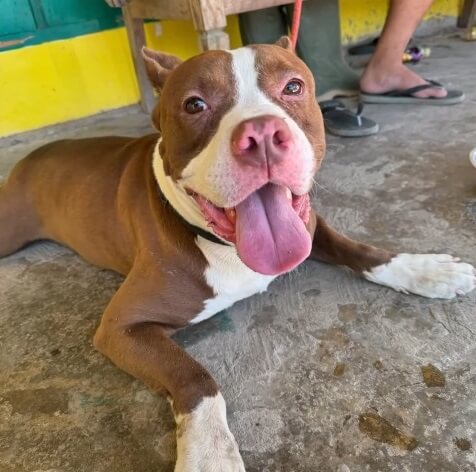
Today, Pablo runs.
He eats normally. His coat is fuller. His eyes are alert.
He lives inside a home, not a shack. He rests near the same rescuer who once feared losing him.
The dog who never saw sunlight now seeks it.
And the people who opened that door did more than rescue him. They stayed long enough for him to believe he was safe.
If this story moved you, share it.
Stories like Pablo’s remind people to notice. To act. To report neglect. To support rescue work. One share can lead to awareness. Awareness can lead to intervention. And intervention can save a life.
Related rescue stories you may want to read:
Locked in Darkness Since Puppyhood, Koda Finally Saw the World
She Spent Her Life Chained. Then She Took Her First Steps Toward Freedom


