
She Was Dumped Like Garbage. Then One Woman Noticed a Tiny Movement
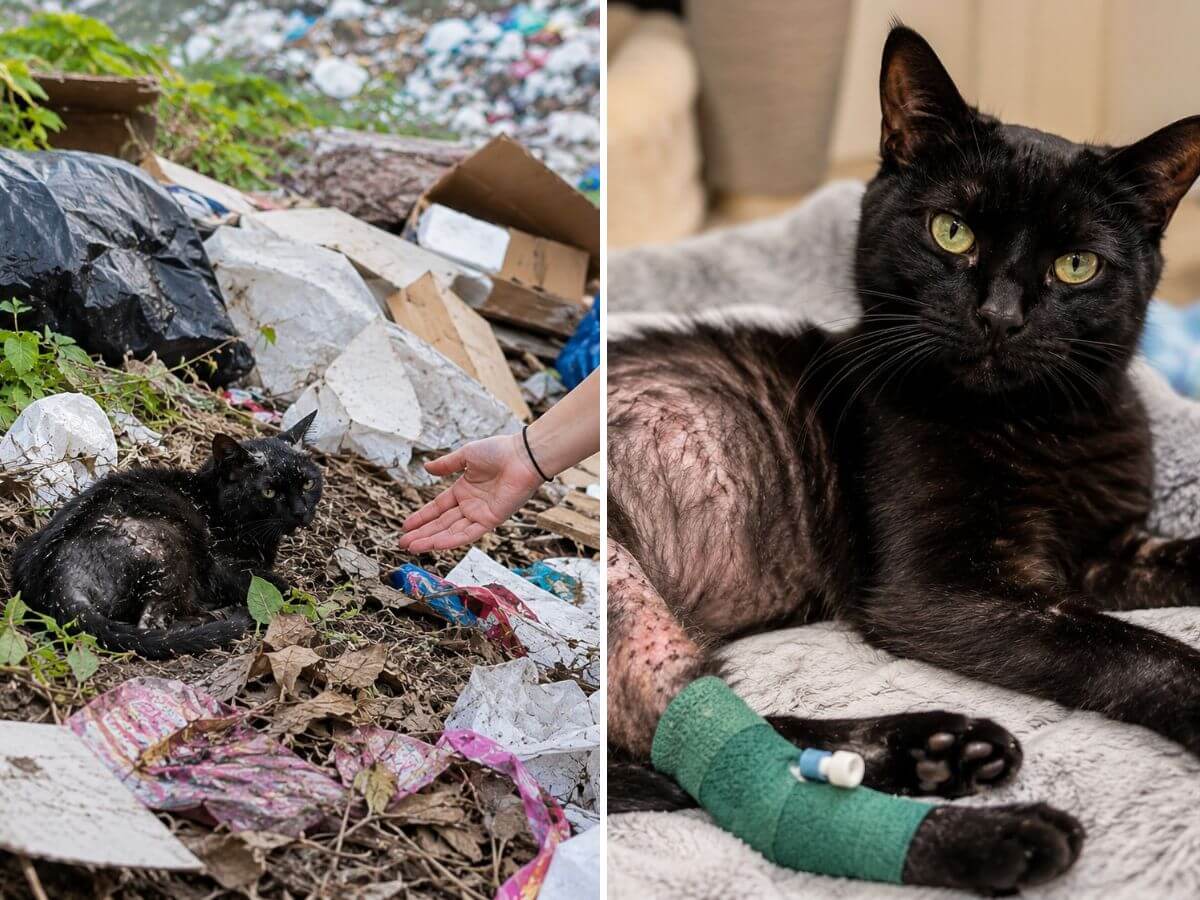
Nobody came looking for her.
Nobody posted her photo online.
Nobody hung flyers.
Nobody asked where she had gone.
One morning, she simply appeared beside a mountain of garbage.
Torn trash bags surrounded her.
Broken furniture leaned against piles of debris.
Rotting food baked beneath the sun.
And in the middle of it all lay a tiny cat curled into herself.
Waiting.
The rescuers would later call her Poppy.
At the time, she looked like a cat the world had already forgotten.
Her body told a heartbreaking story.
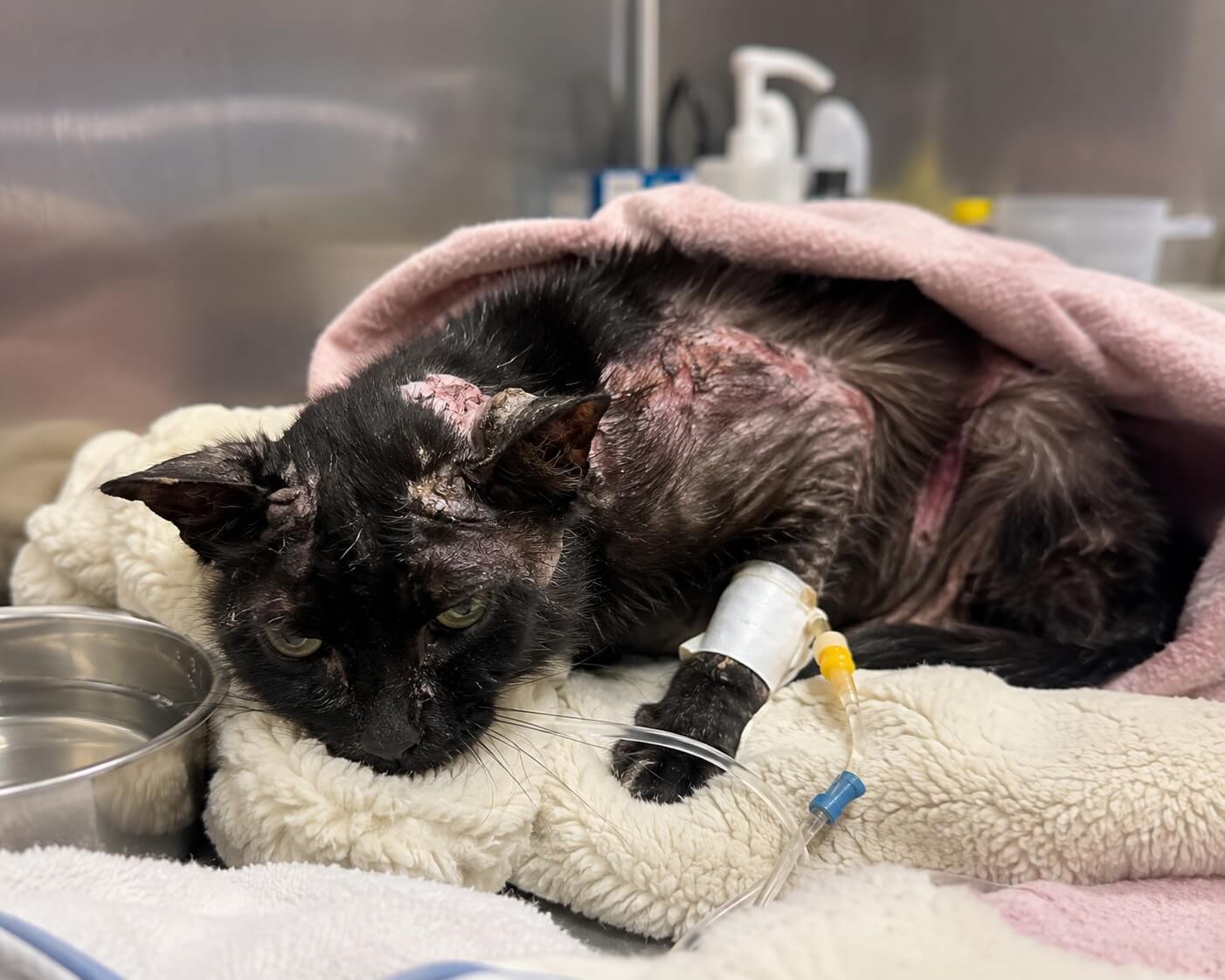
Most of her fur was gone.
Large patches of raw skin stretched across her back and sides.
Open wounds covered her tiny frame.
Her ears were crusted with infection.
Her eyes struggled to open fully.
Even her whiskers appeared damaged and brittle.
Then there were her claws.
They had grown so long they curled sideways.
Every step must have hurt.
Every movement must have taken effort.
This wasn’t the result of a bad week.
This wasn’t something that happened overnight.
Poppy had been suffering for a very long time.
Someone had watched her condition worsen.
Someone had seen the wounds.
Seen the weight loss.
Seen the infections.
And instead of helping her, they left her behind.
The Discovery No One Was Supposed to Make
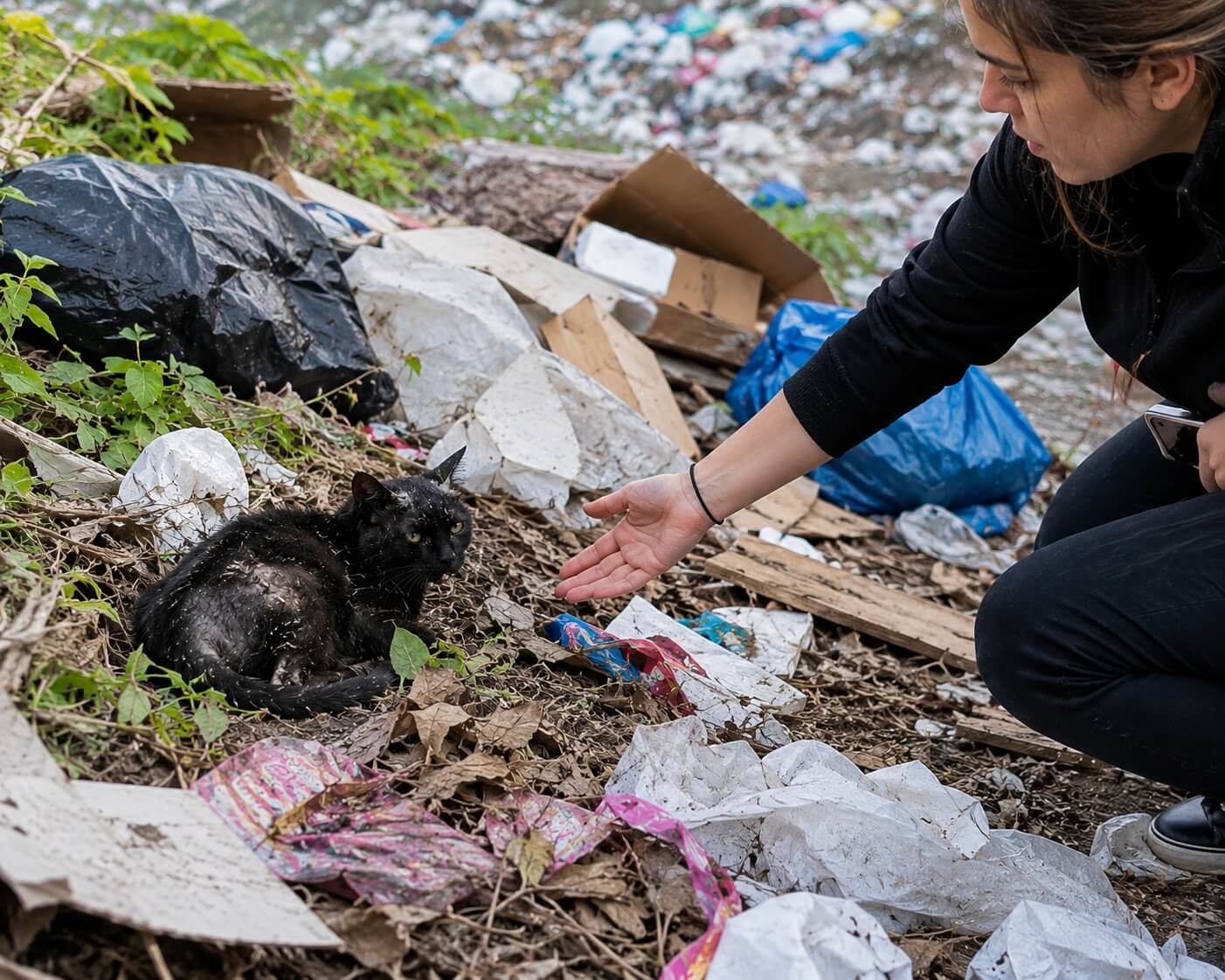
Poppy’s rescue was documented by Pawssion Project Foundation, which shared updates throughout her treatment and recovery. What began beside a garbage pile would eventually become a story about healing, resilience, and a second chance nobody expected.
The woman who found her wasn’t looking for a rescue that day.
A local feeder named Elena had stopped near the dumping site to leave food for several stray cats she regularly cared for.
It was a routine she followed almost every day.
Nothing felt unusual at first.
Then something caught her attention between two collapsed cardboard boxes.
At first, she thought it was an old blanket.
A dirty piece of fabric tangled among the trash.
Then she noticed movement.
Tiny.
Barely noticeable.
She stepped closer.
And her heart sank.
The cat didn’t run.
Didn’t hide.
Didn’t even try to stand.
She simply looked up.
Her eyes appeared exhausted.
Not frightened.
Not angry.
Just tired.
As though she had already accepted that nobody was coming.
Elena immediately reached for her phone.
Help was needed now.
Not later.
Not tomorrow.
Now.
Within the hour, volunteers arrived carrying blankets and a pet carrier.
When they gently lifted Poppy from the garbage pile, they were shocked by how little she weighed.
Her bones pressed sharply against her skin.
Every rib was visible.
Every vertebra stood out beneath her fragile body.
One rescuer would later admit they feared she might not survive the trip to the clinic.
She was that weak.
Yet throughout the rescue, Poppy remained calm.
She didn’t fight.
She didn’t struggle.
She simply allowed strangers to carry her somewhere safe.
For the first time in what may have been years.
What Years of Neglect Had Done to Her Body
The rescue team rushed Poppy to the nearest veterinary clinic.
The moment staff saw her condition, they moved quickly.
Pain medication was administered.
Blood samples were taken.
Fluids were started.
Her wounds were examined.
And the deeper veterinarians looked, the worse the situation became.
Multiple infections had spread beneath her skin.
Large areas of tissue had been damaged.
Some wounds had been left untreated for so long that they contained maggots.
Even experienced veterinary professionals struggled to hide their reaction.
It was one of the most severe neglect cases many had encountered in years.
Yet throughout the examination, Poppy never hissed.
Never scratched.
Never bit anyone.
She simply lay there quietly while strangers fought to save her life.
For hours, veterinarians carefully cleaned wound after wound.
The work was slow.
Emotionally exhausting.
For everyone involved.
Removing maggots from wounds requires far more than simply washing the area.
Damaged tissue must often be removed before healing can begin.
According to VCA Animal Hospitals, “Maggots will be removed by thoroughly cleaning and flushing any wounds and removing any dead tissue (debridement).”
That process became a major part of Poppy’s early treatment.
Her claws told another part of the story.
They had grown so long that walking must have been painful.
Neglect leaves signs.
And Poppy carried many of them.
The veterinary team soon realized they were facing something much larger than a routine rescue.
This would be a fight for survival.
And it was only beginning.
A Hospital Transfer That May Have Saved Her Life
As the first day progressed, another problem became obvious.
The clinic wasn’t equipped to provide the level of care Poppy desperately needed.
Her condition was simply too serious.
She required intensive monitoring.
Advanced wound management.
Around-the-clock care.
A dedicated medical team.
Arrangements were immediately made to transfer her to a larger animal hospital.
The drive there felt endless.
Volunteers sat beside her carrier watching every breath.
Watching every movement.
Unsure whether she understood what was happening.
Unsure whether she knew she was finally safe.
Yet every so often, Poppy would slowly blink toward them.
And somehow that tiny gesture felt like trust.
At the hospital, her fight truly began.
Veterinarians cleaned her wounds again.
New medications were introduced.
Treatment plans were developed.
Nutritional support became a priority.
Because another danger had become impossible to ignore.
Poppy was starving.
And even feeding a starving animal requires caution.
Her body had gone too long without proper nutrition.
Large meals could create serious complications.
The team had to move slowly.
Carefully.
Patiently.
PetMD warns, “Giving too much food too quickly can lead to refeeding syndrome—a potentially fatal shift of fluids and electrolytes within the body.”
So Poppy’s meals were small.
Frequent.
Closely monitored.
Every bite mattered.
Every meal represented another step toward survival.
And what surprised everyone was her determination.
The moment food appeared, she tried to eat.
Again and again.
Despite the pain.
Despite the weakness.
Despite everything she had endured.
Poppy wanted to live.
And that changed everything.
The medical team could provide treatment.
Poppy still had to do the hard part herself.
Day after day, she chose to keep fighting.
A Promise Nobody Intended to Break
As doctors continued examining Poppy, they began piecing together clues from her condition.
Old scars.
Years of physical exhaustion.
Signs that suggested she had endured far more than anyone should.
Nobody could know her entire history with certainty.
But one thing was obvious.
Poppy hadn’t arrived at this point overnight.
Her suffering had been unfolding for a long time.
And somewhere along the way, someone stopped helping her.
The rescue team refused to do the same.
That week, a promise was quietly made.
Poppy would never be treated as disposable again.
No matter how difficult recovery became.
No matter how long it took.
She would receive every chance they could give her.
Healing One Day at a Time
The days that followed settled into a routine.
Medication.
Bandage changes.
Wound care.
Monitoring.
Feeding.
Rest.
Then the process would begin again.
Recovery wasn’t dramatic.
There were no overnight miracles.
No moment when everything suddenly became easier.
Instead, healing arrived through hundreds of small acts of care repeated day after day.
Many people only see the beginning and end of rescue stories.
The discovery.
Then the adoption photo.
What often goes unseen are the weeks in between.
The appointments.
The treatments.
The setbacks.
The long hours spent helping an animal heal one small step at a time.
For Poppy, those weeks mattered.
Her wounds needed constant attention.
Damaged tissue had to be removed carefully so healthy tissue could begin repairing itself.
The process wasn’t comfortable.
But it was necessary.
The MSD Veterinary Manual explains, “After wound preparation and hair removal, surgical debridement (removal of nonviable tissue and foreign debris) can be performed.”
That kind of treatment became a regular part of Poppy’s recovery.
Again and again.
Day after day.
The people caring for her understood something many people already know from their own lives.
Healing rarely moves in a straight line.
Some days feel encouraging.
Others feel frustrating.
Progress can seem invisible until one day you look back and realize how far you’ve come.
That was true for Poppy.
Slowly, the emergencies became less frequent.
Her appetite improved.
Her eyes became brighter.
Her posture changed.
Tiny victories started replacing daily worries.
And with every passing week, the cat rescued from the garbage pile looked a little less fragile.
The First Sign She Felt Safe
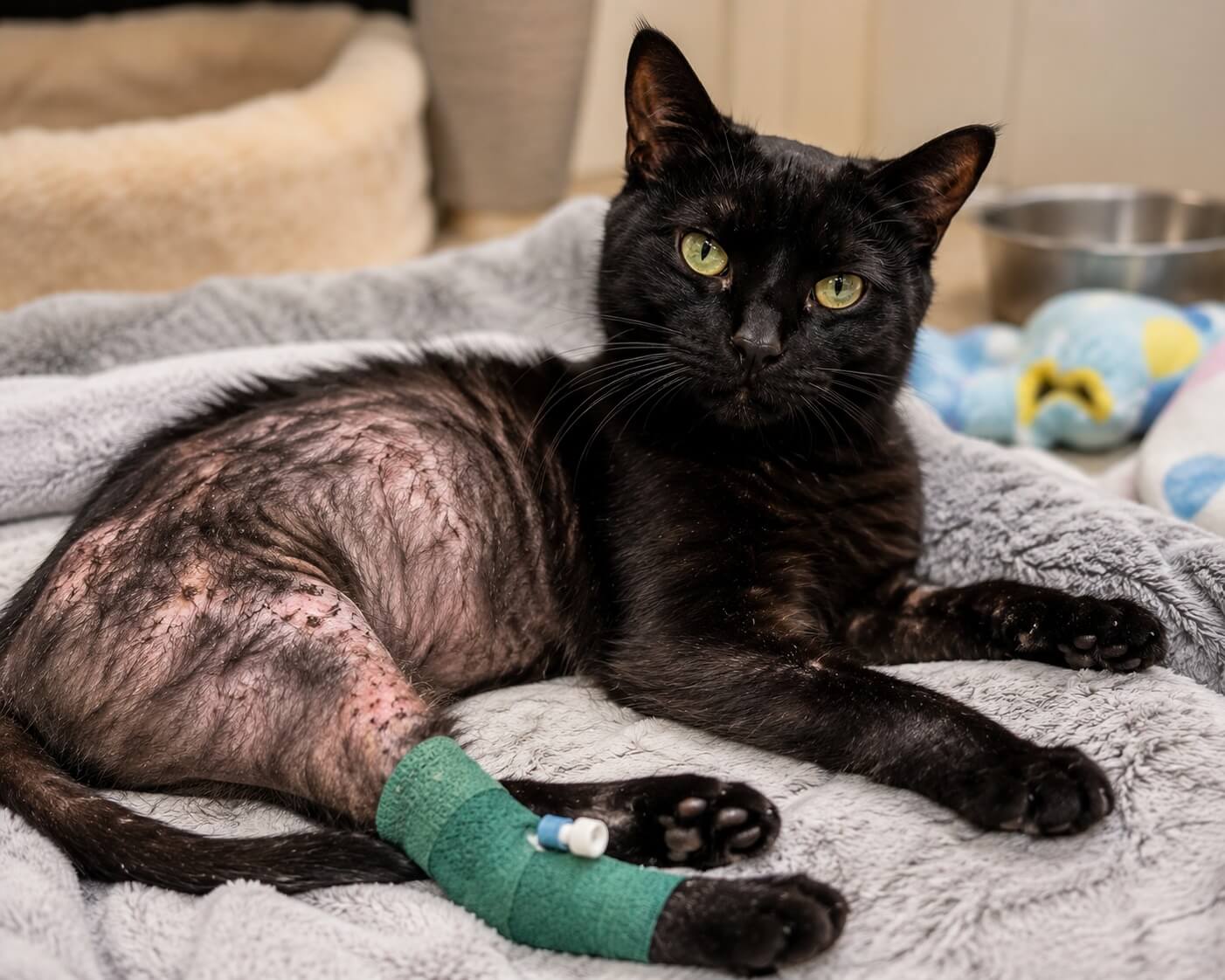
Then came a moment nobody expected.
Nearly three weeks after her rescue, a veterinary technician entered Poppy’s recovery area for what seemed like another ordinary checkup.
She refreshed water.
Checked medications.
Straightened blankets.
The same routine she had performed dozens of times before.
Then she heard something.
Soft.
Faint.
Almost impossible to notice.
She paused.
Listened.
And heard it again.
A purr.
For a second, she thought she imagined it.
After all, Poppy had spent weeks focused on survival.
She had been too weak.
Too uncomfortable.
Too exhausted.
But there it was.
A tiny purr vibrating through her chest.
The technician smiled immediately.
Then called others over.
Soon several staff members gathered nearby.
Listening.
Waiting.
Then Poppy purred again.
A little louder this time.
The room erupted with smiles.
Because everyone understood what that sound meant.
Poppy wasn’t simply surviving anymore.
She was beginning to feel safe.
For the people who had watched her arrive barely clinging to life, that tiny purr felt almost as meaningful as any medical milestone.
Perhaps even more.
Bones heal.
Wounds close.
Trust takes longer.
That purr was the first sign that trust was returning.
The Cat Hidden Beneath the Wounds
As Poppy’s body healed, her personality slowly emerged.
And it didn’t take long for hospital staff to discover her favorite thing.
Warmth.
She loved warmth.
Warm blankets.
Warm beds.
Warm laps.
Warm patches of sunlight.
Whenever someone couldn’t find Poppy, they already knew where to look.
She would be curled into the warmest place available.
Fast asleep.
Completely content.
As if she were trying to make up for every cold night she had spent alone.
The transformation became easier to see with each passing week.
Her eyes looked brighter.
Her curiosity returned.
She began paying attention to activity around her.
Watching people walk by.
Observing sounds in the hallway.
Following caregivers with her eyes.
Then came something even better.
Affection.
The same cat who had once looked too exhausted to move now started seeking attention.
She rubbed against hands.
Leaned into petting.
Purred more frequently.
Visitors quickly fell in love with her.
Staff members found excuses to stop by.
Some came to check her progress.
Others simply wanted a few minutes with Poppy.
She had become a favorite.
Not because of what she survived.
Because of who she was.
Gentle.
Sweet.
Quietly affectionate.
The cat hidden beneath the wounds was finally beginning to shine through.
The Transformation Everyone Had Been Hoping For
By the second month, the changes were impossible to ignore.
Healthy skin had begun replacing infection.
New fur slowly spread across areas that had once been bare.
The wounds that looked so overwhelming during those first days had dramatically improved.
Even people who saw her regularly sometimes stopped and stared.
The difference was that striking.
The cat rescued from a garbage dump was disappearing.
In her place stood a survivor.
One who greeted caregivers every morning.
One who looked forward to meals.
One who expected affection.
One who had started believing life could be good again.
And the best part of her story was still waiting ahead.
From Hospital Patient to House Cat
As Poppy’s medical condition improved, conversations began shifting toward the future.
For the first time since her rescue, people were no longer asking whether she would survive.
They were asking what kind of life she deserved.
The answer felt obvious.
A real home.
Not a hospital.
Not a recovery kennel.
Not a treatment room.
A place where she could finally be a cat.
When a foster home became available, everyone agreed it was the next step.
Poppy had worked hard to get there.
The day she left the hospital felt emotional for the people who had spent weeks caring for her.
Many had met her when she was at her weakest.
Now they watched her leave stronger, healthier, and carrying possibilities that didn’t exist before.
The First Evening in a Home
The first evening was quiet.
Poppy stepped out of her carrier slowly.
No rushing.
No dramatic moment.
Just careful curiosity.
She explored one room.
Then another.
Stopping often to take everything in.
The sounds.
The smells.
The furniture.
The freedom.
Everything was new.
Everything was unfamiliar.
For a while, she simply observed.
Then she found the couch.
She climbed onto it carefully.
Turned three slow circles.
And settled down.
Within minutes, she was asleep.
Completely relaxed.
Completely comfortable.
The people watching couldn’t help smiling.
Because it looked like a cat who finally felt safe enough to rest.
Not for a few minutes.
Not for a single night.
But truly rest.
Perhaps for the first time in years.
The Applications Started Arriving
As updates about Poppy’s recovery were shared, people began falling in love with her story.
Messages arrived.
Comments appeared.
Then adoption applications started coming in.
Soon there were several families interested in giving Poppy a permanent home.
The rescue team reviewed each one carefully.
Finding a home isn’t simply about finding someone willing to adopt.
It’s about finding the right match.
Especially for an animal that has already experienced so much uncertainty.
Poppy needed patience.
Stability.
Understanding.
Most of all, she needed people who saw her as family from the very beginning.
Eventually, one application stood above the rest.
The connection felt right.
The commitment felt genuine.
The family understood her past but focused on her future.
And before long, adoption day arrived.
The Family Who Saw Poppy
The people waiting to meet her weren’t looking for a perfect cat.
They weren’t focused on her medical history.
They weren’t worried about old scars.
They simply saw Poppy.
The gentle soul beneath everything she had survived.
Volunteers struggled to hold back tears.
The veterinary staff who had helped save her life couldn’t stop smiling.
And Poppy seemed completely at ease.
As though she somehow understood this moment mattered.
The paperwork was signed.
Photos were taken.
Goodbyes were exchanged.
Then Poppy calmly walked into the arms of her new family.
Not with fear.
Not with hesitation.
With trust.
The same trust she had slowly rebuilt one day at a time.
For everyone who had followed her journey, it felt like the ending they had hoped for from the very beginning.
Where Poppy Is Today
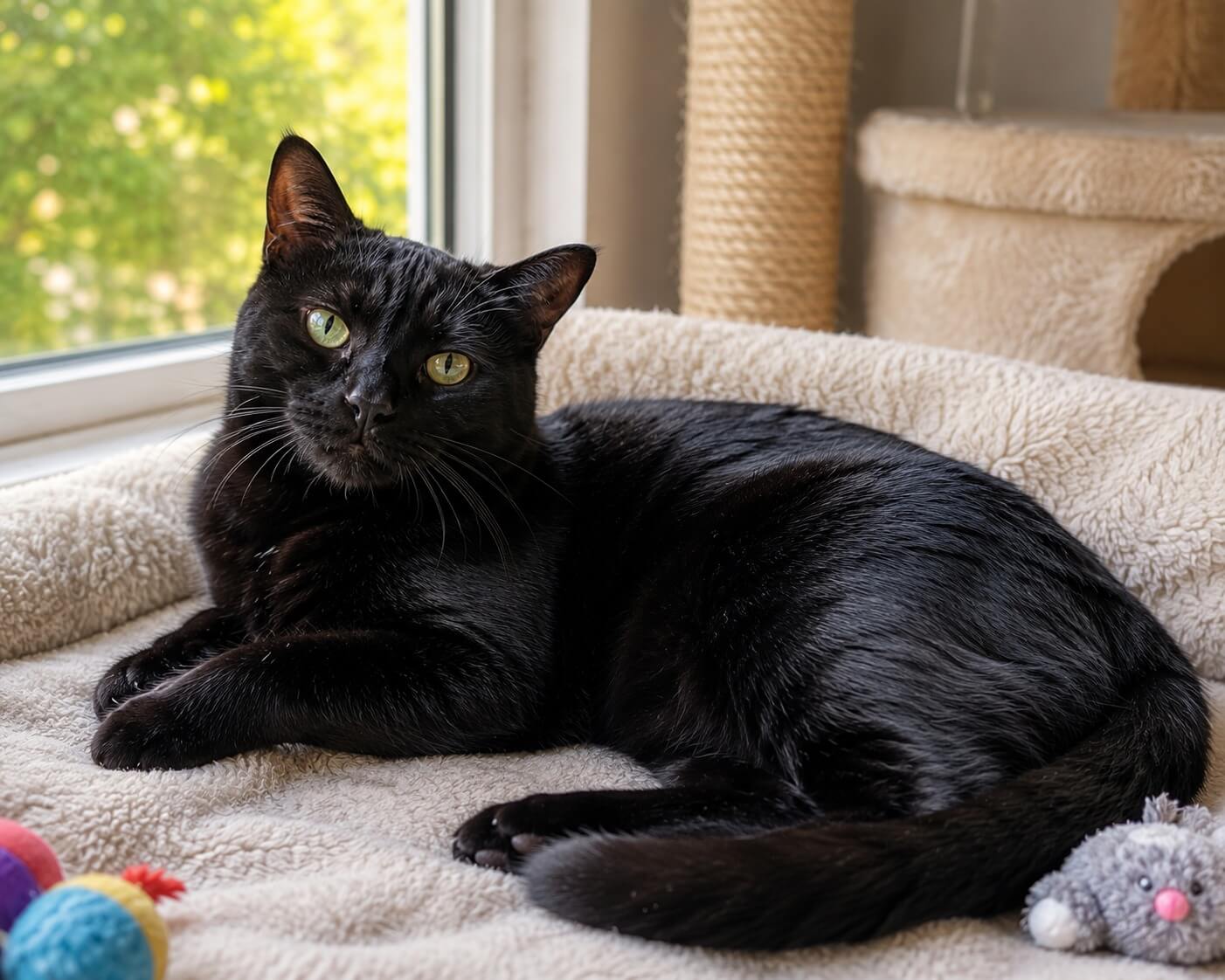
Today, Poppy’s life looks nothing like it did on the day she was rescued.
She spends her mornings stretched across sunny windowsills.
Her afternoons are filled with naps, toys, and frequent requests for treats she absolutely does not need.
She has favorite sleeping spots.
Favorite blankets.
Favorite people.
The things every cat should have.
Visitors who meet her today would never guess where her story began.
They see a healthy cat.
A fluffy cat.
A happy cat.
They see bright eyes.
Soft fur.
A relaxed posture.
They don’t see the frightened animal lying beside a garbage pile.
And that’s exactly the point.
Because that version of Poppy no longer defines her life.
Love does.
Safety does.
Family does.
She now falls asleep each night knowing exactly where she belongs.
And after everything she endured, that simple truth feels extraordinary.
The Lesson Poppy Leaves Behind
It is easy to look at an abandoned animal and see only what has been lost.
The missing fur.
The wounds.
The neglect.
The suffering.
Poppy’s story reminds us to look a little deeper.
Beneath the infections was a cat who still wanted to trust.
Beneath the fear was a cat who still wanted affection.
Beneath the exhaustion was a cat who still wanted to live.
The world may have treated her as disposable.
She never treated herself that way.
Every meal she ate.
Every treatment she endured.
Every step she took toward recovery became proof of that determination.
Not long ago, Poppy lay beside a mountain of garbage, unnoticed by nearly everyone who passed.
Today, she spends her evenings curled up in a warm home, surrounded by comfort, safety, and people who love her exactly as she is.
Her wounds have healed.
Her fur has returned.
Her eyes sparkle with life again.
And her story has become proof that being abandoned does not diminish your worth.
Sometimes the animals the world throws away become the very ones who show us what resilience truly looks like.
They remind us that healing is possible.
That trust can return.
And that one act of compassion can change the course of a life forever.
If Poppy’s story touched your heart, please consider sharing it. Every share helps more people see that abandoned animals are never beyond saving, and that second chances can change a life forever.
Also read:
Labeled “Aggressive” and Hours From Death — How Potato the Cat Proved Everyone Wrong
Two Tiny Kittens Were Left in a Box by the Roadside — Now Their Lives Look Completely Different


