
Labeled “Aggressive” and Hours From Death — How Potato the Cat Proved Everyone Wrong
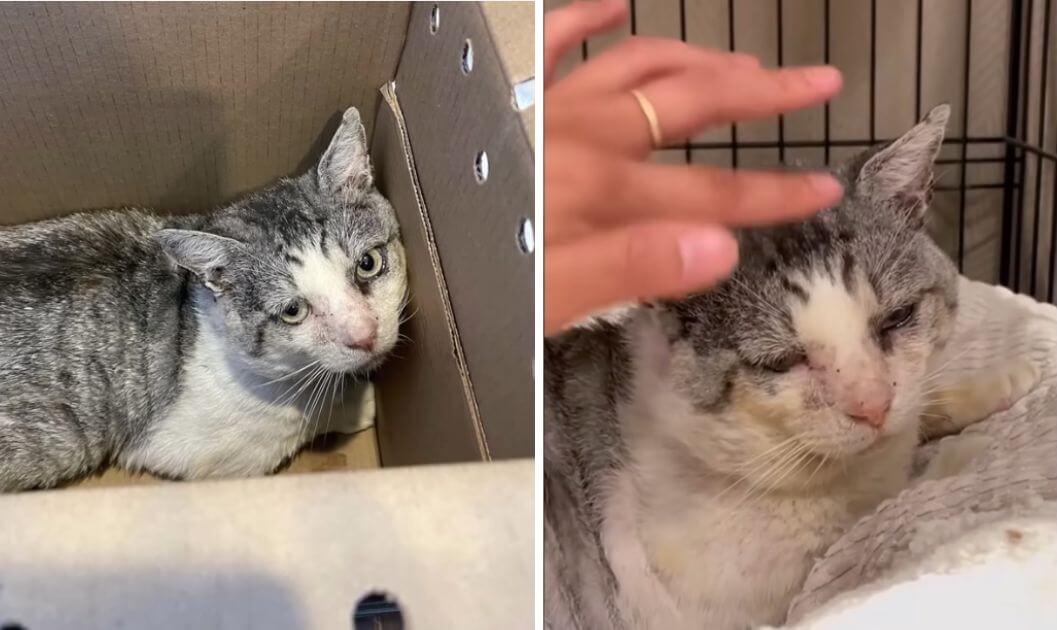
Potato was only five years old when every label placed on him became a countdown to death. His chart read “unadoptable.” Staff warned people that he was “aggressive.” The shelter had given him days. Then hours. Then minutes.
Few questioned why he behaved that way. No one asked what fear looked like inside a cage where hands reached in without warning, where loud noises echoed down concrete walls, where stress sat heavy in the air.
In environments like this, cats often appear tense, defensive, and unpredictable — and their behavior is misread as intent rather than fear.
Exactly at 4 p.m., Potato’s time was supposed to run out.
But a woman named Grace scrolling through adoptable cats saw his photo and felt something shift. His eyes looked terrified, not dangerous. She sensed the pain behind the posture, the loneliness behind the hiss.
She drove to the shelter, determined to meet him before that clock reached zero.
The Last Hour Rescue
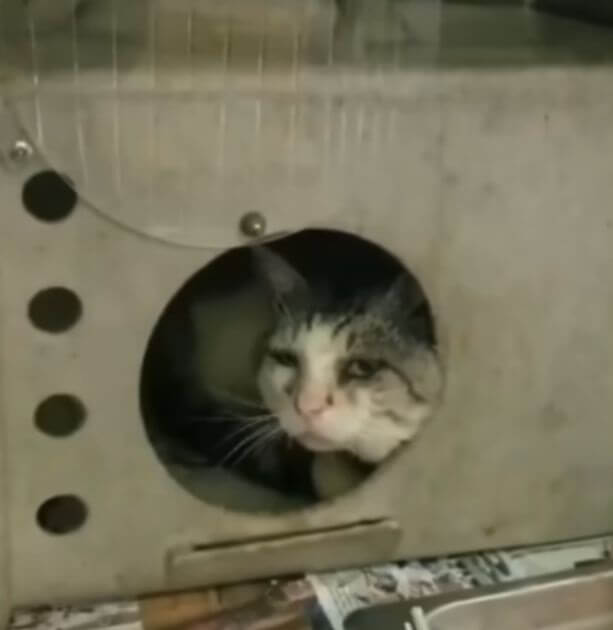
When she arrived, Potato was pressed into the back corner of his cage. His pupils were wide; his entire body trembled with every footstep.
A hand approaching the bars made him flatten his ears and rise in panic. He swatted. He hissed. He warned. For months, that warning had pushed adopters away.
But this woman didn’t flinch. She signed the paperwork and carried him home that night, knowing the road ahead would test her patience and her resolve.
She wasn’t wrong.
Why Shelters Mislabel Cats as “Aggressive”
Cats are masters of self-preservation. When cornered, overstimulated, or unable to escape, they rely on defensive behaviors.
The ASPCA notes that “Fear aggression can occur when a cat perceives a threat, and it escalates if he can’t escape.” In a shelter setting, escape is impossible.
Potato’s aggression was fear in disguise.
Shelters can be stressful for any cat — the clang of metal doors, the scent of unfamiliar animals, strangers entering spaces without warning.
The Wisconsin Humane Society explains that “The most common reason for fearful behavior in cats who come from a shelter is lack of early socialization with humans.”
Potato had not been socialized. He had been overwhelmed. And he had been judged for it.
Six Months of Agony and Tiny Successes

The first weeks were hard. Potato hissed whenever she approached. He scratched her arms often enough that she kept bandages nearby.
He ducked behind furniture and lashed out if cornered. He hid, growled, and reacted before thinking.
She didn’t blame him. She watched his body language. She learned the signs of overstimulation — the rapid tail flick, the stiff spine, the ears turning back.
She stopped when he asked, stepped away when he signaled discomfort, and spoke softly even when scared.
By the second week, he accepted treats from her hand. By the fourth, he let her pet him briefly. Then one day, without warning, he purred — a rusty, uncertain sound that carried more relief than joy.
It was the first sign that he believed her.
Fear, Trauma, and the Mind of a Cat Who Has Been Hurt
Potato’s reactions weren’t personality flaws — they were trauma responses.
The behavioral team at Texas A&M explains that “because dogs can suffer from psychological conditions like their human counterparts, owners can benefit from having an awareness of possible causes.”
This applies to cats as well. Traumatized animals:
- flinch at sudden movements
- swat when cornered
- avoid touch
- lash out when overstimulated
- shut down when overwhelmed
Potato wasn’t “an aggressive cat.” He was a frightened cat. With time and stability, his fear loosened its grip.
Understanding Potato’s FIV Diagnosis
Potato also lives with FIV, a condition that often leads shelters to label cats as harder to adopt. Many people still assume FIV means a short, unhealthy life — but that’s not true.
The CASPCA states clearly that “FIV positive cats can and often do live full, normal lives.”
FIV cats are often gentle, affectionate, and stable when placed in low-stress homes. Potato’s new life proved exactly that.
The Turning Point
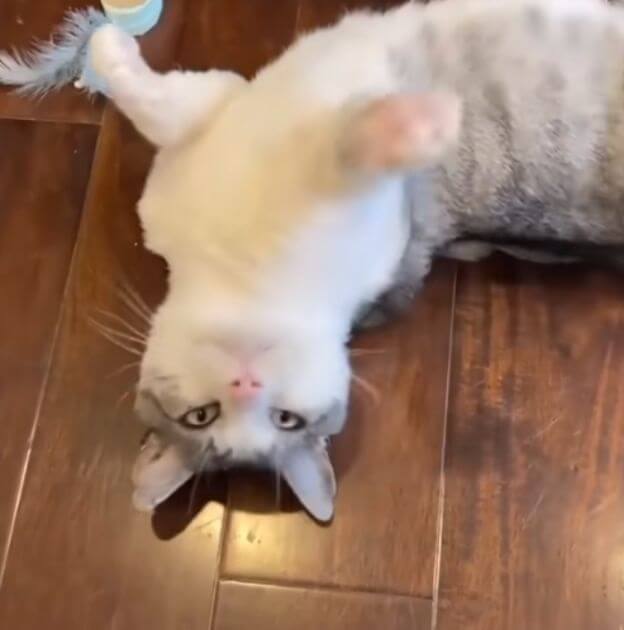
By week six, the transformation was unmistakable. Potato climbed into her lap voluntarily, curled his front paws against her legs, and exhaled in a way that seemed to release years of fear.
When she stepped into another room, he meowed at the door, asking her to return.
His biggest test came at the vet. No sedation. No towel wrapping. No fight. Potato stepped out of his carrier calmly, allowed a full exam, and even tolerated a claw trim without protest.
The staff stared in disbelief. The “unadoptable” cat behaved better than many perfectly socialized pets.
A Crisis Bigger Than One Cat
Potato’s near-death timeline highlights a wider issue. Behavior-labeled pets — especially adult cats — are euthanized far more often than kittens or friendly shelter animals. Overcrowding pushes staff into impossible decisions.
According to Shelter Animals Count, “An estimated 10 million animals die from abuse or cruelty every year in the United States.”
Many of these deaths involve animals misjudged or misunderstood.
Potato survived because one person paused long enough to question the label.
Why People Give Up on Cats Like Potato
Shelters report common trends:
- cats surrendered for scratching
- fear misinterpreted as meanness
- FIV diagnoses misunderstood
- owners unable to manage stress behaviors
- poor early socialization
- trauma from previous homes
These cats aren’t lost causes. They are victims of environments that never taught them safety.
How to Help Cats Who Show Fear-Based Behavior
Anyone who encounters a cat like Potato — fearful, reactive, misunderstood — can make a difference.
According to The Humane Society, “Call your local animal control agency or dial 9-1-1 if you’re unsure who to contact.”
This applies when witnessing cruelty. But for fearful pets inside shelters or homes, people can:
- ask about decompression periods
- learn feline body language
- avoid punishments
- allow hiding spaces
- move slowly, speak softly
- consider adopting adult or FIV cats
- respect boundaries instead of pushing contact
Many “aggressive” cats relax when given predictability and space.
Potato’s New Life
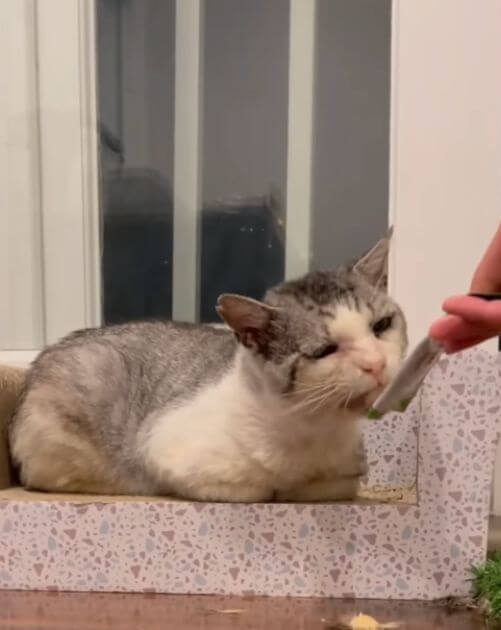
Today, Potato is a deeply affectionate companion. He curls against her chest, follows her around the home, and greets her with soft meows. His FIV status doesn’t stop him from living a healthy, joyful life.
His tattered ear is a reminder of the world that failed him — but his purrs tell the story of the one person who didn’t.
He still has moments of overstimulation and may nip if startled, but he stops quickly, as if remembering he no longer needs to fight for safety. His progress is undeniable.
Potato was never aggressive. He was scared, hurting, and unheard.
Now he is loved, understood, and finally free.
Also check out these rescues:
Helpless Puppy Vicente Escapes on Three Legs as Starving Vultures Close In
Chained for 5 Years, He Offered a Cucumber for Love And His Rescue Changed Everything
Watch Potato’s Rescue
The Animals Need Love YouTube Channel captured his entire transformation — the fear, the progress, the trust, the quiet moments when he realized he wasn’t alone.
His journey is worth seeing.
Share Potato’s Story
Somewhere right now, another cat is sitting in a cage with an “aggressive” sticker on the door, waiting for someone to look past the label and see the fear behind it.
Sharing Potato’s story could be the reason that cat lives.


