
He Weighed 18 Pounds When He Should’ve Been 80. Raider’s Fight to Stay Alive
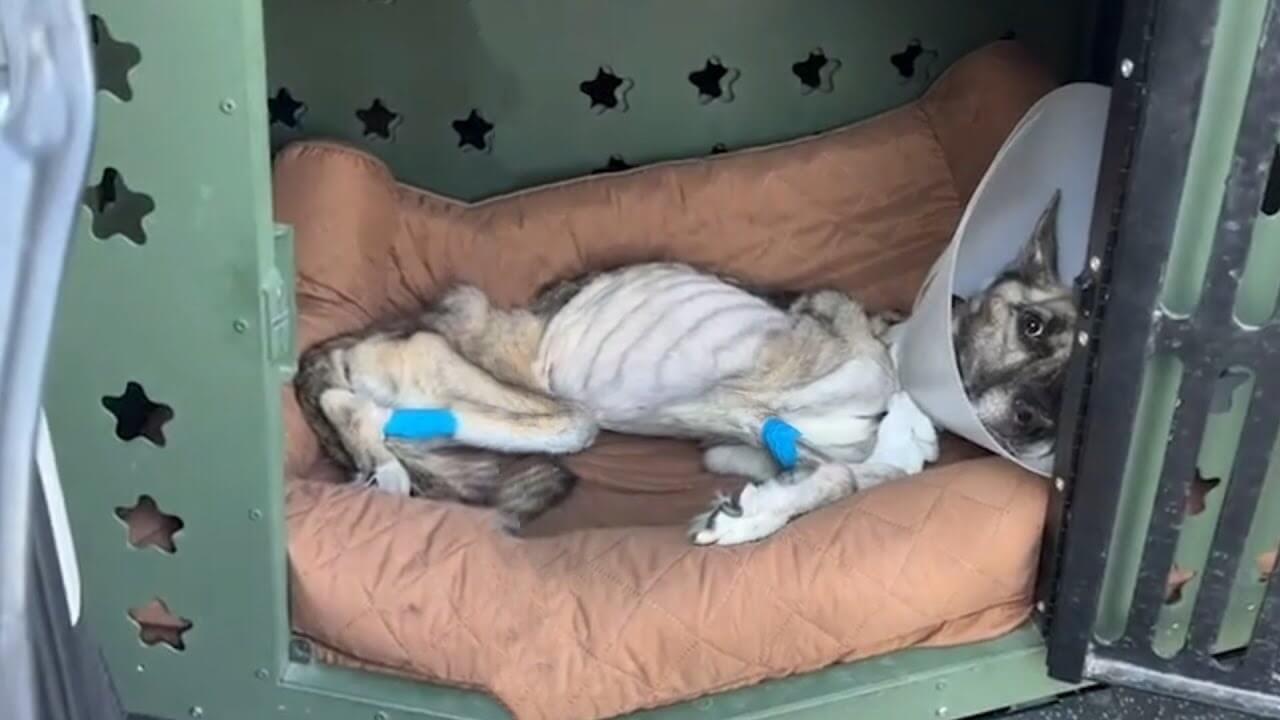
By the time rescuers looked at Raider, words felt unnecessary.
His body said everything.
Raider was a large-breed dog. One who should have weighed close to 80 pounds. Instead, the scale stopped at 18. Every rib showed. Every spinal bone pressed sharply against his skin. His frame looked less like a dog and more like a body that had been running out of time.
The team at Vegas Pet Rescue Project has handled severe neglect before. Even so, they say Raider’s condition is one they still struggle to forget.
One rescuer later said watching his story again “melts” their heart.
The case was documented by Vegas Pet Rescue Project and later shared publicly to show what extreme neglect looks like, and what recovery actually requires.
What followed was not just an emergency rescue. It became a medical fight, a careful recovery, and a reminder of what happens when suffering goes unseen for too long.
What 18 Pounds Really Means for a Dog Like Raider

Here is why that number mattered so much.
According to the World Small Animal Veterinary Association, dogs in extreme starvation show visible ribs, lumbar vertebrae, and pelvic bones, with no palpable fat remaining. This description matches animals whose bodies have already exhausted their energy reserves.
At that stage, muscle loss affects balance, circulation, and organ support. There is no buffer left.
In Raider’s case, his appearance matched that definition exactly. Every movement came at a cost his body could barely afford.
A Medical Emergency With No Easy Choice
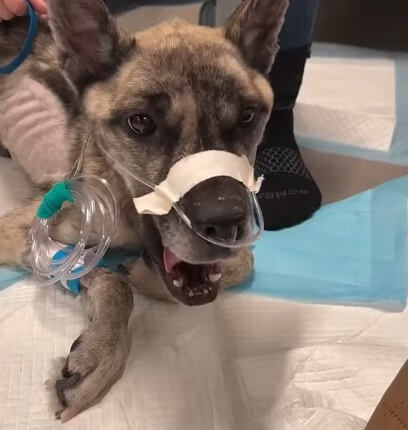
Veterinarians began evaluating Raider right away.
He was dangerously malnourished, dehydrated, and weak. Then another concern appeared. Imaging suggested a possible linear obstruction near his pylorus, the part of the stomach that controls food moving into the intestines.
The vet explained that it was hard to be certain because of how thin Raider was. Still, the likelihood was high.
If that obstruction was real, waiting was not an option.
The problem was anesthesia. Raider was not a good candidate. His body might not tolerate it.
The rescue team was warned about the risks. He could pass during surgery. His blood pressure could drop. His intestines could perforate. There were many ways this could end badly.
Then came a moment of guarded relief. His vitals and bloodwork were holding steady enough to try.
An ultrasound specialist was brought in. Surgery was scheduled.
What the Surgery Revealed
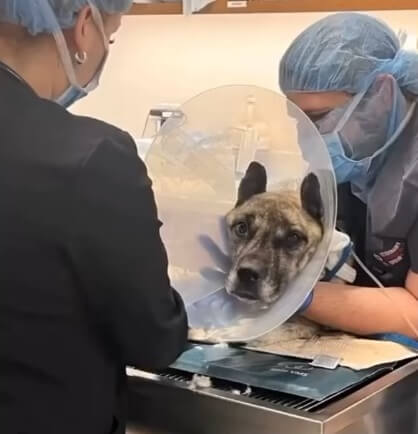
Inside Raider’s stomach, veterinarians found rubber bands, plastic, and hair.
It was not hard to understand what that meant.
The obstruction explained some of his pain. It did not explain his size.
The vet determined that the blockage was not the reason for his emaciation. Raider had been eating whatever he could find because he was not being fed.
The surgery addressed the immediate danger. The harder part was just beginning.
The Most Fragile Days
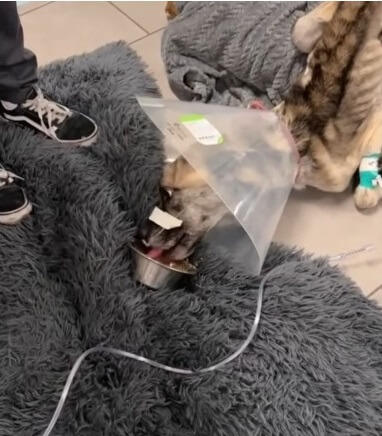
The next three to seven days were critical.
Raider remained weak and frightened. At one point, his blood pressure dropped. The team watched him closely, hour by hour.
Feeding him was not as simple as offering food.
According to the National Center for Biotechnology Information, refeeding syndrome is defined as medical complications that result from fluid and electrolyte shifts as a result of aggressive nutritional rehabilitation.
In severely malnourished patients, these shifts can become dangerous if nutrition is introduced too quickly.
To protect Raider, meals were kept small and carefully timed. An NG tube was placed so his intake could be monitored closely.
Despite everything, the team kept noticing his eyes.
One rescuer said that when you looked at him, it was clear he just wanted “to live.”
Small Progress, One Step at a Time
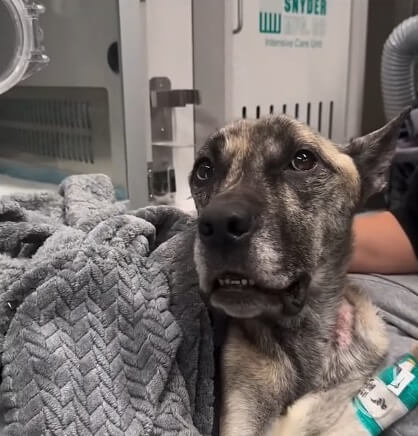
Then came the first signs of change.
Raider began standing.
Then walking short distances.
He tired quickly, but he kept trying. Physical therapy became part of his daily routine. Over time, his medications were switched to oral form. He was eating on his own.
Something else returned too.
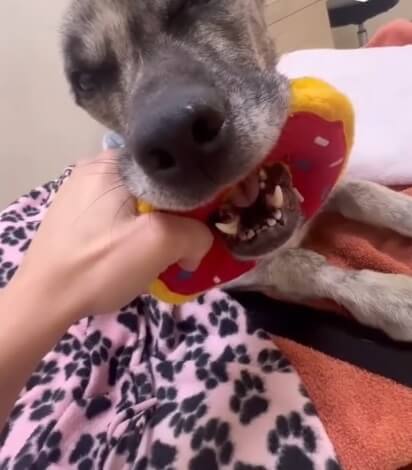
He started to talk. He smiled. His personality began showing through the weakness.
The dog who once barely lifted his head was now engaging with the people helping him heal.
Home, Finally
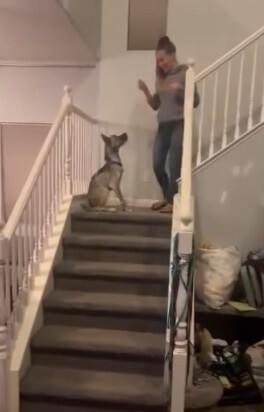
Weeks later, the update everyone had been waiting for arrived.
Raider went home.
His first walk was slow. His steps were careful. Still, every movement carried purpose.
The rescue team shared that Raider was getting stronger day after day. They described him as smart and determined.
Why Raider’s Story Still Matters
Raider survived starvation, surgery, and fear.
He survived neglect.
Stories like his continue to surface because many animals suffer quietly, long before anyone steps in. Raider lived because someone finally did.
Please Do Not Scroll Past This
Raider’s story is not rare enough.
Many animals endure the same kind of neglect long before anyone steps in. Awareness is often the first thing that changes that.
If this story stayed with you, consider sharing it. Sometimes visibility is what saves the next life.
Also check out these rescues:
The Dog Left to Starve in a Locked Cage — and the Rescue That Saved His Life
Old Racing Dog Abandoned and Left to Starve Until One Person Refused to Walk Away


Why no clear pics of his rehabilitation and what he looks like now ??????????????
Would like to see him now???, he went threw so much and stayed strong, i have a jack Russell who is 16 he doing good still likes his walks ,he is the reason I get up, lots of kisses 💋 and cuddles, keep going Raider your one beautiful and strong woof, woof 💙