
Old Racing Dog Abandoned and Left to Starve Until One Person Refused to Walk Away
Ramoncito wasn’t just fast. He flew. In his early years, the track felt like the only place his legs could keep up with his heart, and every win made the crowds shout his name like he was something larger than life.
His owner treated him like a golden ticket, a dog whose worth came from the scoreboard, not from the softness in his eyes or the way he leaned in for affection when no one was looking.
But speed fades, even in champions.
As the seasons changed and his times slowed, the cheers drifted away. The hands that once fed him treats now brushed past him as if he were part of the furniture. He went from prized athlete to aging burden in what felt like a single breath.
The day he stopped winning was the day he stopped mattering.
And when the money dried up, so did the care.
One morning, without warning or a backward glance, he was left behind. No food. No shelter. No idea why the world he gave everything to had suddenly gone quiet.
The Discovery No One Expected
A rescuer known online as @adeprasantabarbara spotted him first. The sight stopped her in her tracks.
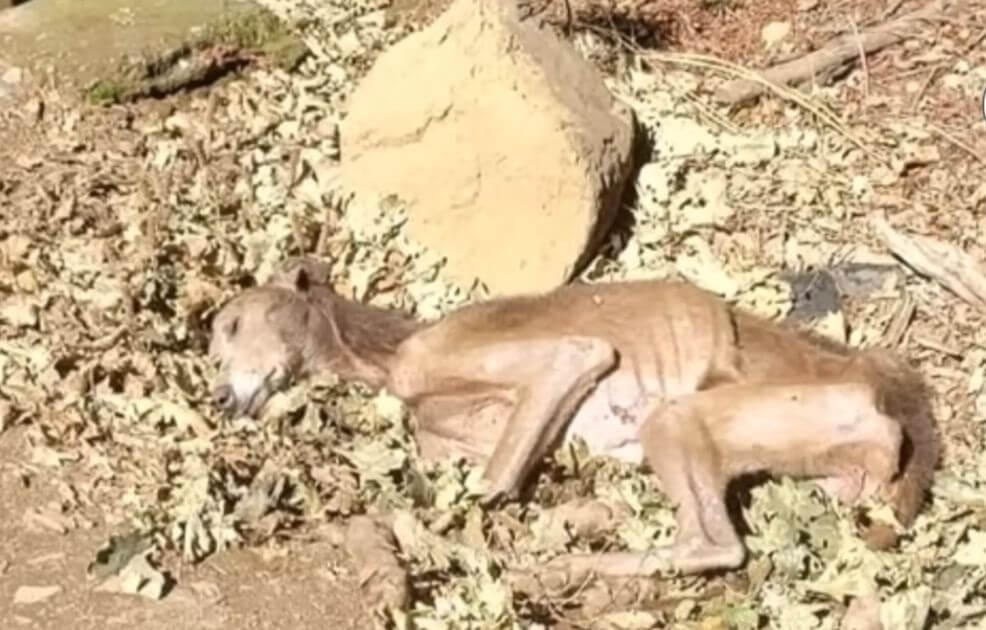
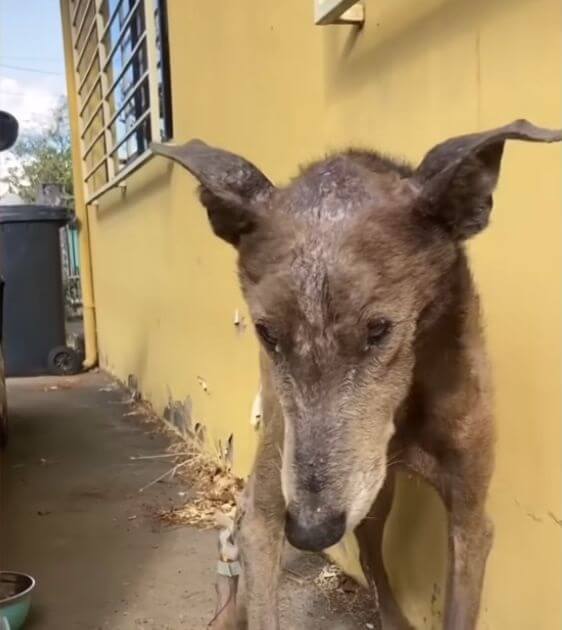
Ramoncito was barely standing, reduced to bones under fragile skin. Every rib pressed outward. Every step looked like it could be the last one he ever took.
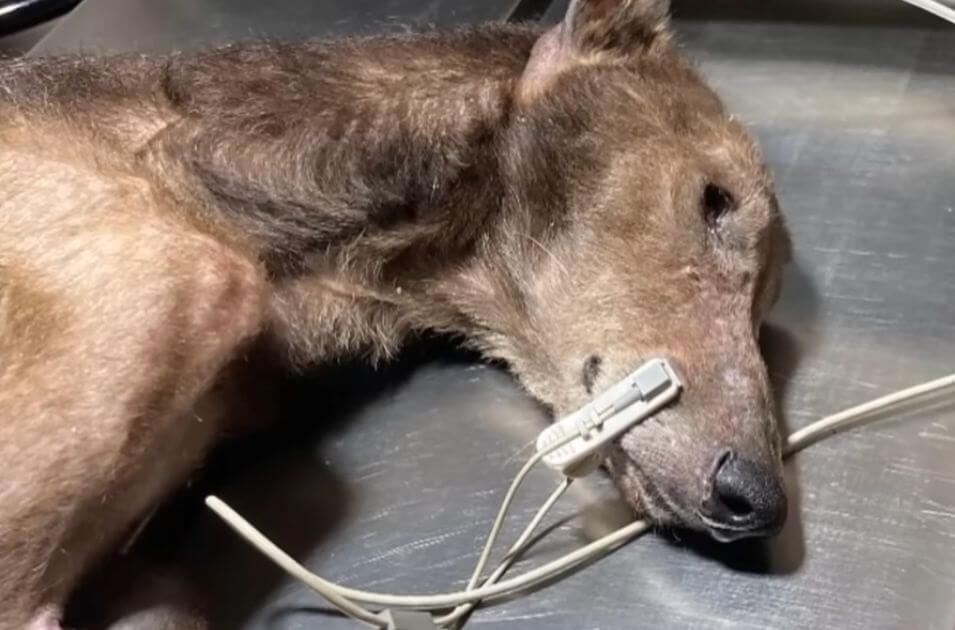
She lifted him into her arms and rushed him to a vet clinic. Staff members exchanged looks that said more than their words. Survival seemed distant.
The vet listed his condition: extreme malnutrition, muscle loss, and organ stress. His body was no longer just thin—it was failing.
Forensic veterinary guidelines describe a dog in this state as “abnormally, severely, and dangerously thin,” marked by widespread loss of fat and muscle.
A review summarized in Animal Health Australia’s veterinary training notes that in 40 dogs seized for suspected starvation, the median body-condition score was 1 out of 9, with organ atrophy showing how the body begins consuming itself when food disappears.
The vet told her he might not make it through the night.
She refused to accept that.
Why Neglected Dogs Go Silent
Dogs in extreme distress don’t always cry loudly. Some barely make a sound, not because the pain is light, but because they no longer believe anyone will help.
Research by psychologists Steven Maier and Martin Seligman on learned helplessness found that dogs exposed to inescapable trauma eventually stop trying to escape, even when escape becomes possible.
Their review explains that uncontrollable suffering disrupts motivation, emotion, and basic survival behaviors.
Ramoncito’s quiet whimpers fit that pattern. His silence wasn’t peaceful. It was the kind that forms when hope drains away.
The First Night of His Fight
At home, the rescuer cleared a quiet corner and laid down blankets.
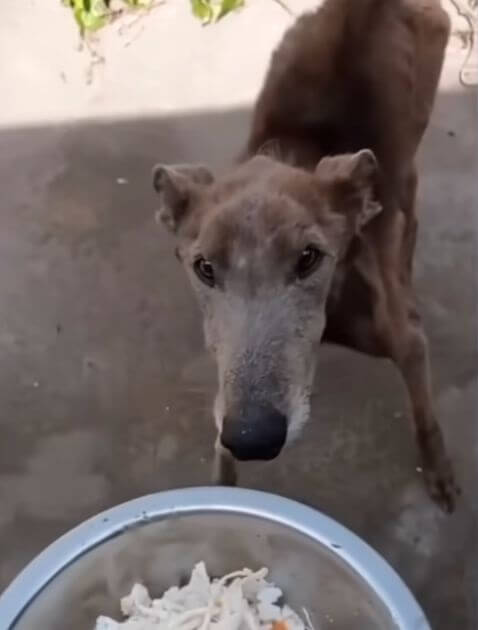
Ramoncito collapsed onto them, too weak to lift his head for long. She fed him tiny, careful meals throughout the day—just enough calories to support his system without overwhelming it.
Vets warn that starved dogs face a risk known as refeeding syndrome, where the sudden return of nutrients can shock a fragile body. So each meal had to be slow. Gentle. Timed.
Every attempt to stand left him shaking. She lifted him. Steadied him. Whispered reassurance even when he couldn’t open his eyes.
Night passed. Then another. Then a week.
And he was still here.
A Recovery No One Predicted
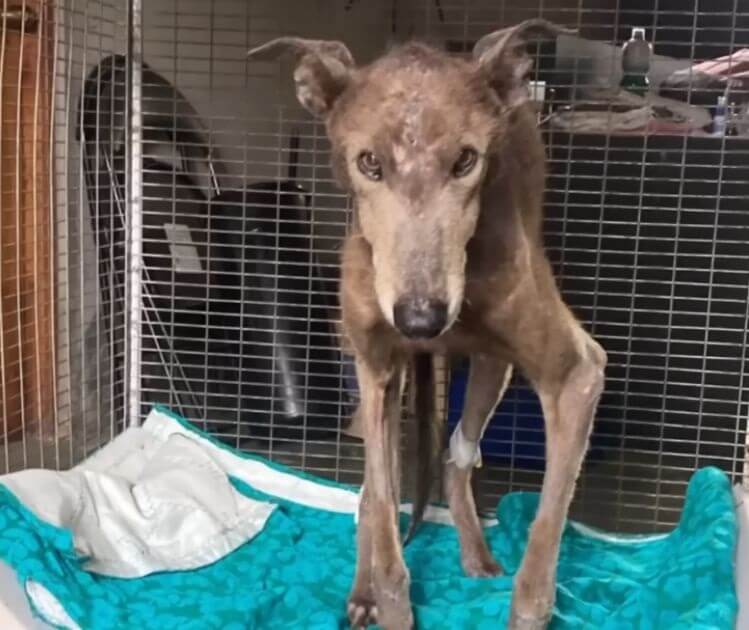
His bones softened as weight returned. His steps grew steadier. A spark appeared behind his eyes—the spark of a dog realizing he wasn’t alone.
The turning point came during a walk in the park. His rescuer wasn’t expecting anything more than a few shaky steps. Instead, he pushed forward—slow, uneven, but determined. The dog who once collapsed after standing was now moving with intention.
Then came the moment that surprised everyone. He ran—not like the athlete he had been, but like a dog who had felt death’s breath and decided he still had more living to do.
From One Dog to Millions
Ramoncito’s survival sits against the backdrop of a wider crisis. Shelter Animals Count and the ASPCA estimate that 5.8 million dogs and cats entered U.S. shelters and rescues in 2024, with about 607,000 euthanized that same year.
Strays made up about 60 percent of those intakes. Owner surrenders—many involving aging or medically fragile animals—made up another 29 percent.
Behind every statistic is a story like Ramoncito’s, but not every story ends with rescue.
Why Abandonment Happens
Veterinarians and welfare groups cite several patterns that surface repeatedly:
- medical costs for aging pets
- lack of awareness about senior-dog care
- owners unable or unwilling to treat chronic conditions
- performance animals, such as racing dogs, discarded once they no longer bring income
Neglect continues to be the most common form of animal cruelty tracked by national groups. Many cases involve withholding food, water, shelter, or medical care—exactly the conditions Ramoncito faced.
Reporting Neglect: What Readers Can Do
Community awareness often decides whether an animal like Ramoncito survives.
The ASPCA’s guidelines for reporting cruelty recommend alerting local law enforcement, animal control, or a humane society if you suspect abuse. Witnesses should record details carefully and call 911 if a crime is happening in real time.
If you find a stray or abandoned pet:
- Notify your local shelter or animal control
- Request a microchip scan from a nearby veterinarian
- Keep the animal safe until guidance arrives
These steps often bridge the gap between life and death.
A Second Chance and a Final Home
Ramoncito stayed with his rescuer throughout his recovery. Their bond only deepened as the weeks went on. What began as an emergency intervention became a lifelong commitment.
He now sleeps in the sun, eats without fear, and takes the kind of long, slow walks senior dogs cherish.
He is more than a racing dog. More than a survivor. He is living proof that one person’s decision to stop and look twice can alter the course of a life.
His story was first shared through the Dog Haven YouTube channel. His future was shaped by the woman who refused to let his final day be his last.
Want to See Ramoncito’s Full Transformation?
The entire rescue was documented on video, and watching it adds a depth that words alone can’t capture. His first night, his first careful meals, the moment he takes those unsteady steps—every chapter is there.
The Dog Haven YouTube channel shared his journey with the hope that more abandoned animals will find safety before it’s too late.
You can watch Ramoncito’s story here:
If this story moved you, share it.
Stories like his travel far when people pass them forward, and each share brings more attention to the animals who are still waiting for someone to notice them.
Also check out these rescues:
Locked Away for a Decade – Rusty’s Incredible Journey from Neglect to Freedom
They Pushed Her Out of the Car and Drove Away – But Hanna’s Story Didn’t End There


What a great job you did for Ramoncito. Hope he will have a lot of good years with you. You’re blessed 🙏🙏❤🍀