
Woman Rescues Shivering Puppy Left Outside Overnight In The Cold
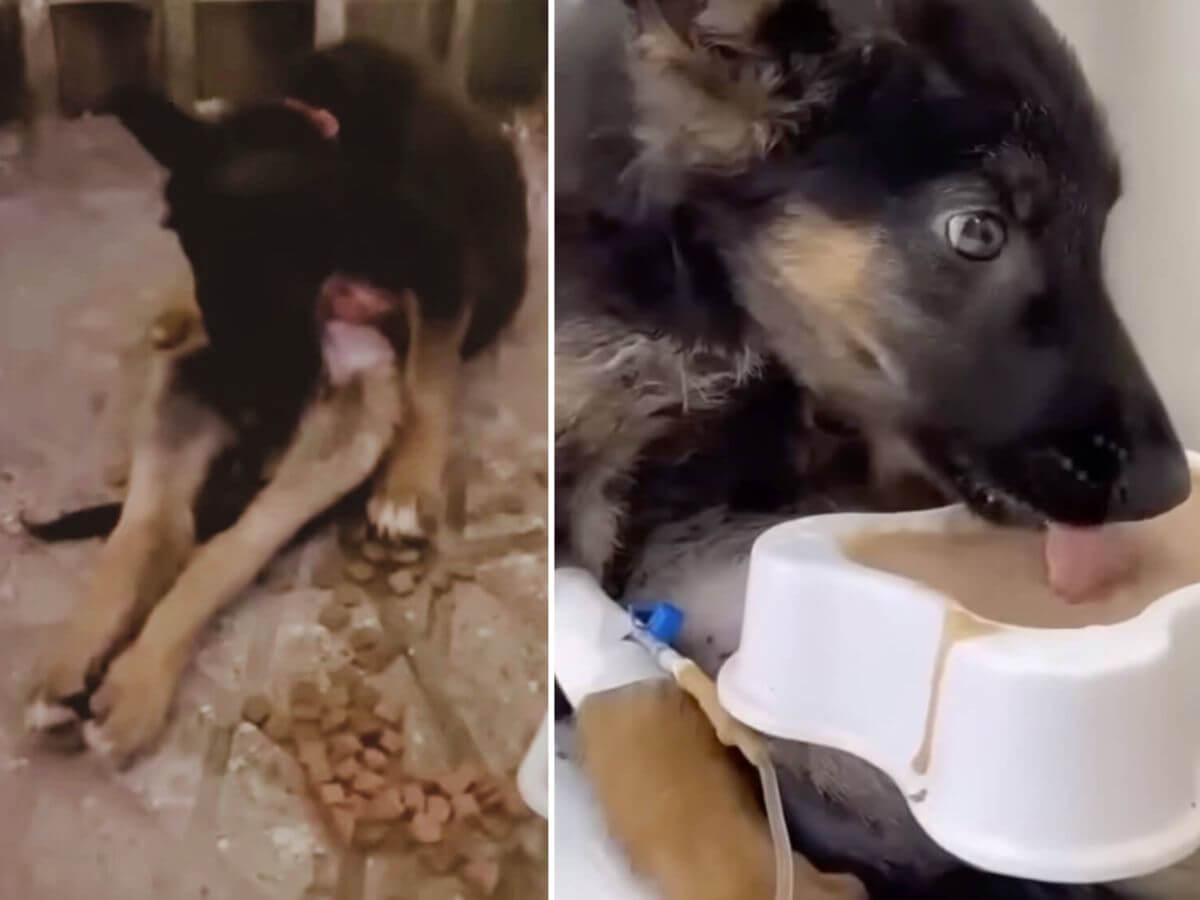
Some rescue stories begin with noise or urgency. Sean’s story began in silence.
It was a freezing night when a woman passed by a trash bin and noticed something small sitting beside it. At first glance, the shape barely moved. It could have been a bundle of discarded cloth or a broken toy someone had thrown away.
Then she looked closer.
The tiny figure was a puppy.
According to a video shared by Gwarp Official and uploaded on the Animal Shelter YouTube channel, the woman immediately sensed that something about the scene was wrong. She was certain the puppy had not been there the day before.
The discovery raised a painful possibility. Someone had likely left the tiny dog there during the night when the streets were quiet and the cold had already begun to settle in.
The puppy’s body looked weak and fragile. His fur was thin, and the chill in the air had already started to steal his warmth.
But the most troubling detail was not the freezing temperature.
It was the way the puppy was sitting.
Sean did not try to stand. He did not try to walk.
He simply stayed there beside the trash bin, frozen in a strange posture that made it clear something was terribly wrong.
In that moment, the woman realized this was not just an abandoned puppy.
It was a puppy who might not even be able to move.
The Strange Posture That Raised Alarm
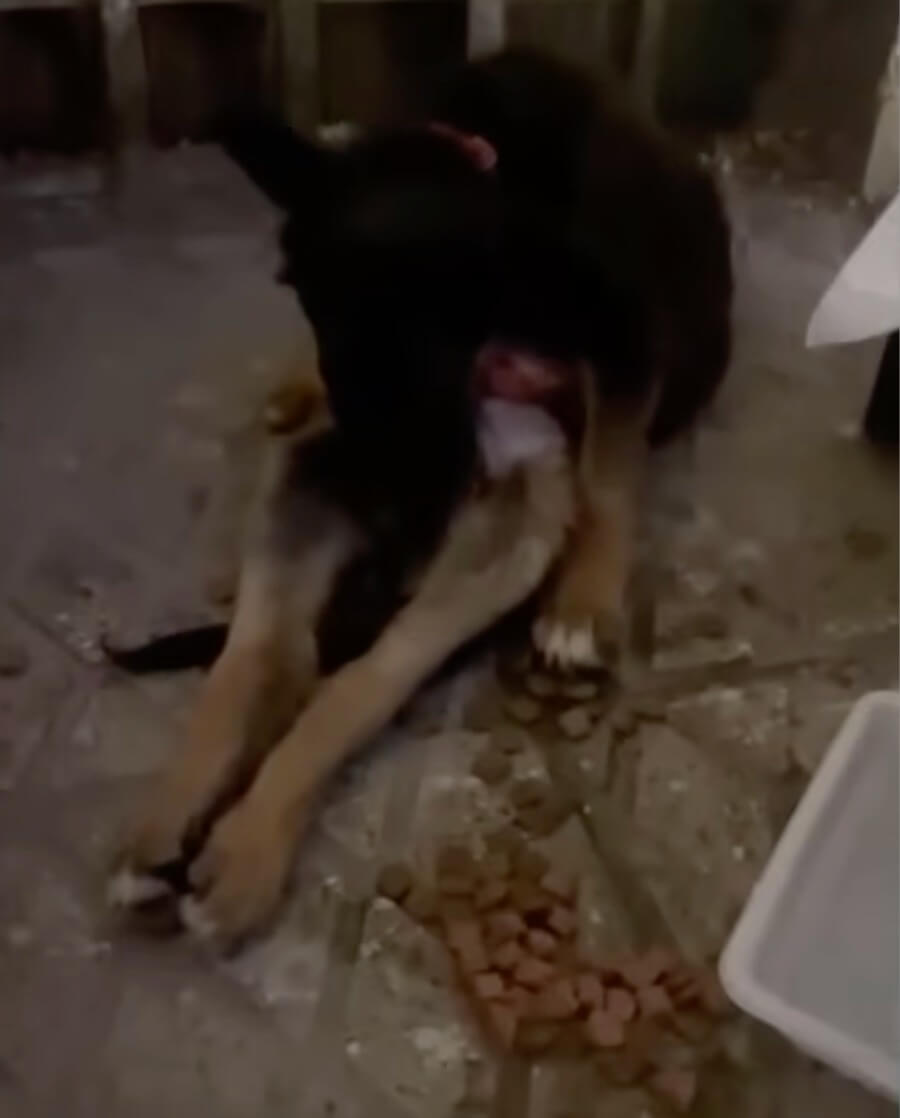
The puppy, later named Sean, sat in a position that looked unnatural for a dog his age.
His body appeared stiff and fragile. Instead of standing or attempting to walk, Sean remained seated in the same posture as if his legs could not support him.
The rescuers who later shared the story explained that the puppy’s position immediately raised concern. His posture suggested something more serious than exhaustion or fear.
Sean watched the people around him carefully. His eyes followed every movement, but he did not try to run. In fact, he barely moved at all.
For a young puppy, that kind of stillness often signals fear, pain, or severe weakness.
The woman knew waiting could make things worse. Sean needed medical attention as quickly as possible.
She carefully brought the puppy to a veterinary clinic so doctors could examine him.
A Diagnosis That Explained Everything
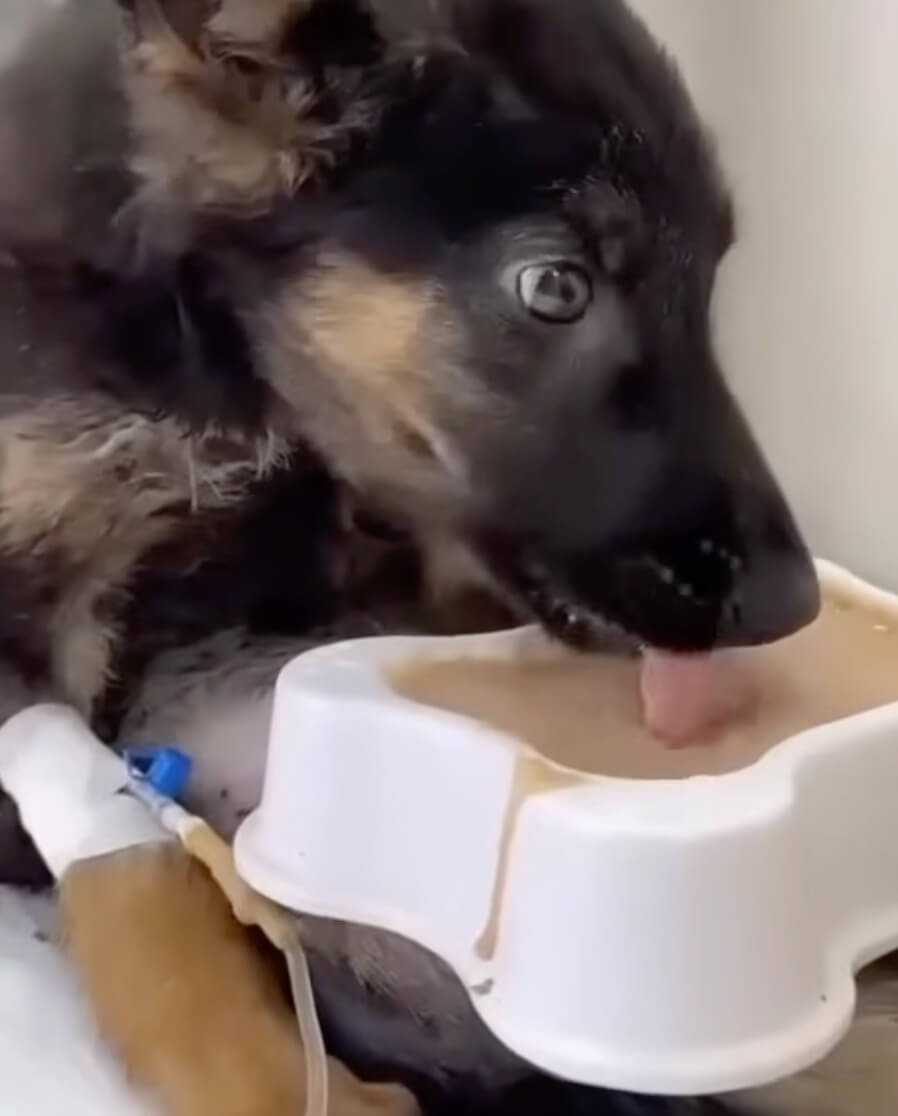
At the clinic, veterinarians began evaluating Sean’s fragile condition.
The examination quickly revealed that the puppy’s body had been struggling long before he was found beside the trash bin.
Sean was diagnosed with severe rickets, a disease that affects bone development in young animals when their bodies lack the nutrients required for healthy growth.
The illness had weakened his bones so much that standing and walking normally had become extremely difficult.
Rickets often develops in puppies that experience serious malnutrition during early development.
According to the Merck Veterinary Manual, “Rickets is a rare disease of young, growing animals that causes soft and deformed bones.”
That explanation matched what the veterinary team was seeing in Sean’s body. His fragile posture was not temporary weakness. It was the result of bones that had developed without the strength they needed.
But as the examination continued, the veterinarians noticed something else.
The Mystery of Sean’s Wounds
Sean’s back showed several scratches and painful sores.
At first, rescuers believed the wounds might have come from rough surfaces or debris where he had been left. Yet when the veterinarian examined the injuries more closely, they appeared more serious than simple scrapes.
The veterinary team suspected the wounds could have been caused by something stronger than friction or contact with the ground.
For the rescuers, that possibility was deeply unsettling.
Sean was already suffering from severe malnutrition and weakened bones. The thought that he might have endured additional harm before being abandoned made his situation even more heartbreaking.
Still, the focus quickly shifted to what could be done to help him survive.
Sean needed treatment, nutrition, and time.
The Difficult First Days of Recovery
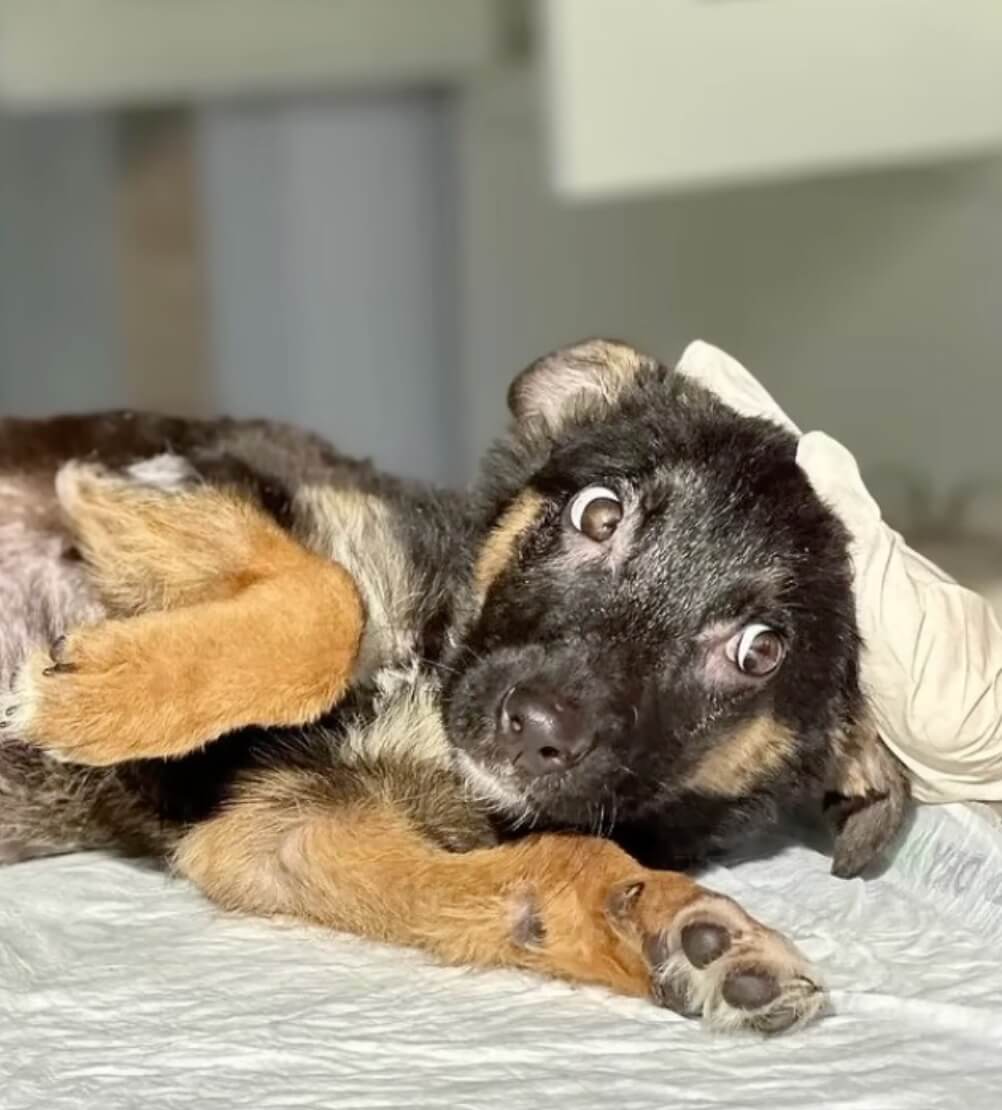
At first, doctors considered surgical options that might help improve Sean’s condition.
But his body was too weak.
Instead, the veterinary team focused on stabilizing him. Sean began receiving intravenous support, careful feeding, and constant monitoring as his body slowly started rebuilding strength.
Recovery in cases like this requires patience and specialized care.
According to VCA Animal Hospitals, “Veterinary rehabilitation uses targeted physical therapies (e.g., massage, therapeutic exercise, heat, cold, transcutaneous electrical nerve stimulation – TENS, ultrasound, laser, hydrotherapy) to improve a pet’s mobility and reduce pain.”
Sean was still far from that stage of rehabilitation. The first goal was simply helping his body regain enough strength to heal.
During those early days, Sean remained cautious around people.
After experiencing abandonment and illness, trust does not return quickly.
But the rescuers continued caring for him patiently, allowing him to adjust to safety at his own pace.
The First Signs of Change
After about two weeks of treatment, small improvements began to appear.
The inflammation in Sean’s wounds started to calm. The painful areas on his back slowly began healing. His body began responding to proper nutrition and medical care.
The rescuers noticed something else changing as well.
Sean’s expression began to soften.
Instead of watching people only with fear, he started observing them with curiosity. His eyes followed the caregivers around the clinic as if he was slowly realizing that these people meant him no harm.
The transformation was quiet but meaningful.
Still, one difficult question remained.
Would Sean ever be able to walk normally?
Accepting a Different Future
Eventually, the veterinary team reached a difficult conclusion.
Because Sean’s bones had been severely affected during early development, the chances of him regaining full mobility were very small.
The damage caused by rickets had likely left him permanently paralyzed.
For the rescuers, hearing that news was painful.
But it did not mean Sean’s life would be without happiness.
Many animals with mobility challenges learn to adapt and live fulfilling lives with the right support.
According to the American Kennel Club, “Most dogs are able to compensate well and live a normal, good-quality life.”
That understanding gave the rescue team hope.
Sean might face physical limits, but those limits would not define the life he could still live.
A New Chapter at the Shelter

After two months of treatment, Sean was strong enough to leave the veterinary clinic.
He moved into a shelter where other rescued dogs lived, including animals who also faced mobility challenges.
For the first time in his life, Sean began experiencing simple joys.
Toys quickly became one of his favorite discoveries.
He spent time outside whenever possible, watching the other dogs and exploring the shelter environment in the ways his body allowed.
Plans were also being made to provide Sean with a wheelchair that would allow him to move more freely.
In the shelter, Sean was surrounded by people who believed animals with special needs deserved the same chance at happiness as any other dog.
A Story Worth Sharing
Sean’s life began again the moment someone decided he was worth saving.
From a freezing night beside a trash bin to a shelter filled with care, his journey shows how quickly a life can change when compassion steps in.
The place where someone once thought his story would end became the beginning of something new.
If Sean’s story touched your heart, consider sharing it so more people can see what kindness can do for animals who have nowhere else to turn.
Sometimes the smallest lives simply need someone to stop and care.
You may also want to read these rescue stories:
They Heard Crying Beneath the Concrete and Found a Puppy Fighting to Survive
He Spent His Early Life Hidden Away, But Rescue Changed Everything


