
This Dog Couldn’t Even Sit Up After the Accident, But He Never Stopped Trying
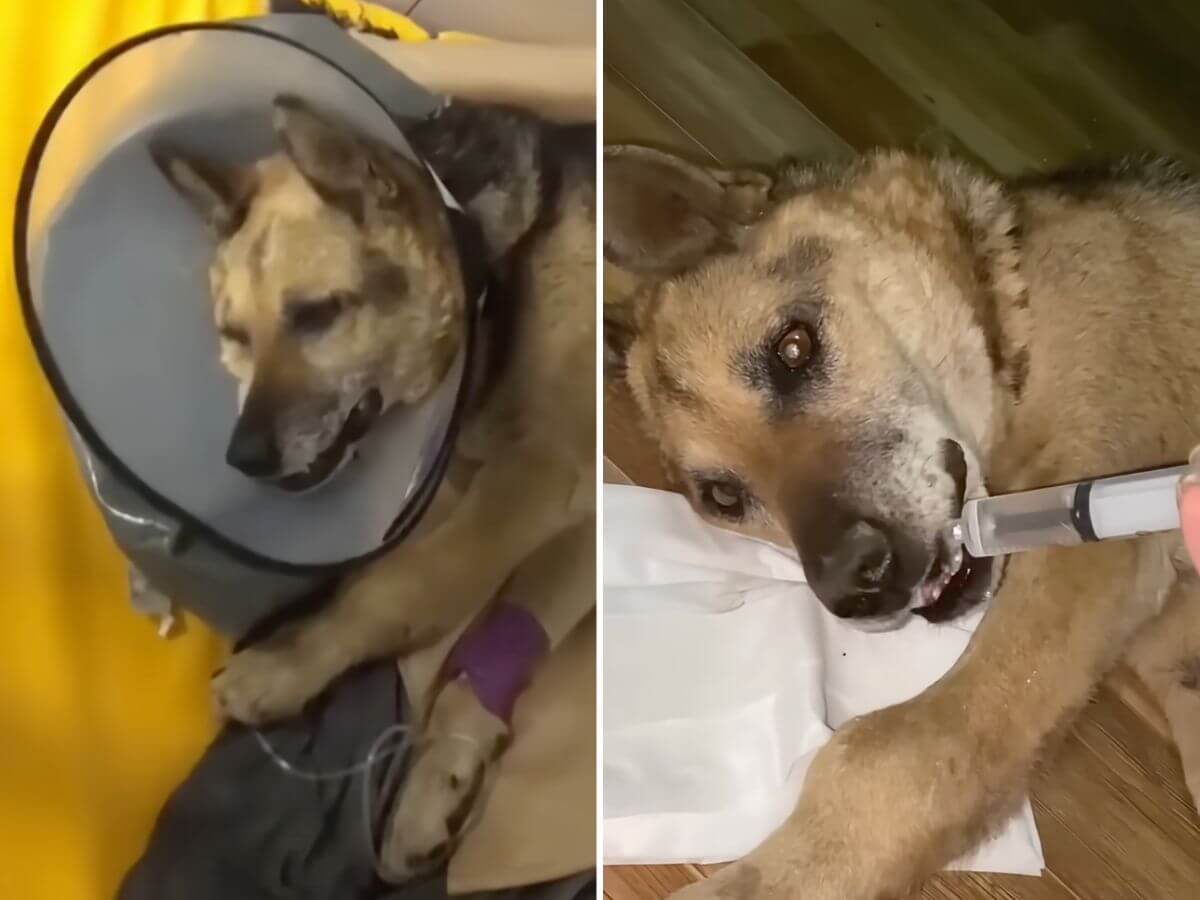
Stephen tried lifting himself the moment rescuers came closer.
But his body would not cooperate.
The injured dog trembled against the ground, his front legs shaking each time he tried to push himself upright. For a second, he managed to lift part of his body before collapsing again almost immediately. His breathing came in shallow bursts that seemed to leave him weaker after every movement.
Still, he kept trying.
People nearby could only watch as the frightened dog struggled to stay alert through the pain. According to the rescuers, Stephen had reportedly been dragged away after a devastating accident and left unable to properly move on his own.
By the time rescuers finally reached him, his condition had already become critical.
And over the next several days, nobody knew whether his body would survive what had already happened to him.
He Could Barely Hold His Head Up
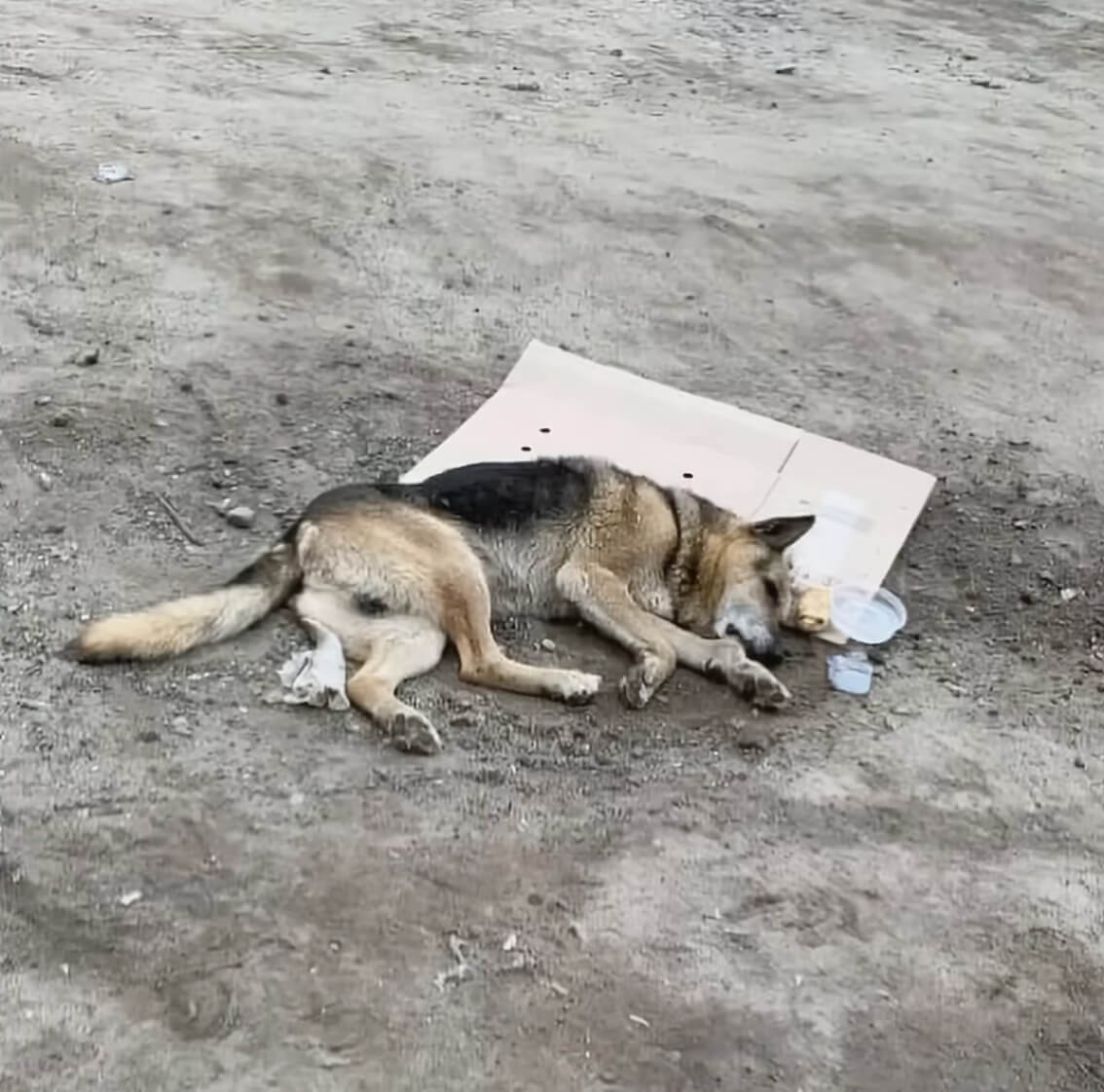
According to the rescue team, Stephen was in unbearable pain when they first found him.
A young girl who witnessed the situation reportedly became emotional and contacted Pride Animal Rescue for help after realizing how badly the dog was suffering. By then, Stephen could barely lift his head or react to the people around him.
Even drinking water appeared difficult.
His body looked exhausted in a way that immediately alarmed rescuers. He stayed low against the ground, breathing heavily while people carefully tried moving him to safety.
Moments like that are especially dangerous when spinal trauma may be involved.
According to the ASPCA, “Take care to support his neck and back in case he’s suffered any spinal injuries.” That type of careful handling becomes extremely important during emergency rescues involving severe accidents.
Rescuers later shared that Stephen appeared terrified throughout those first moments. Yet despite everything happening around him, he still resisted being dragged away, almost as if he understood he was being abandoned at the worst possible moment of his life.
Rescuers Realized His Injuries Were Worse Than They Feared
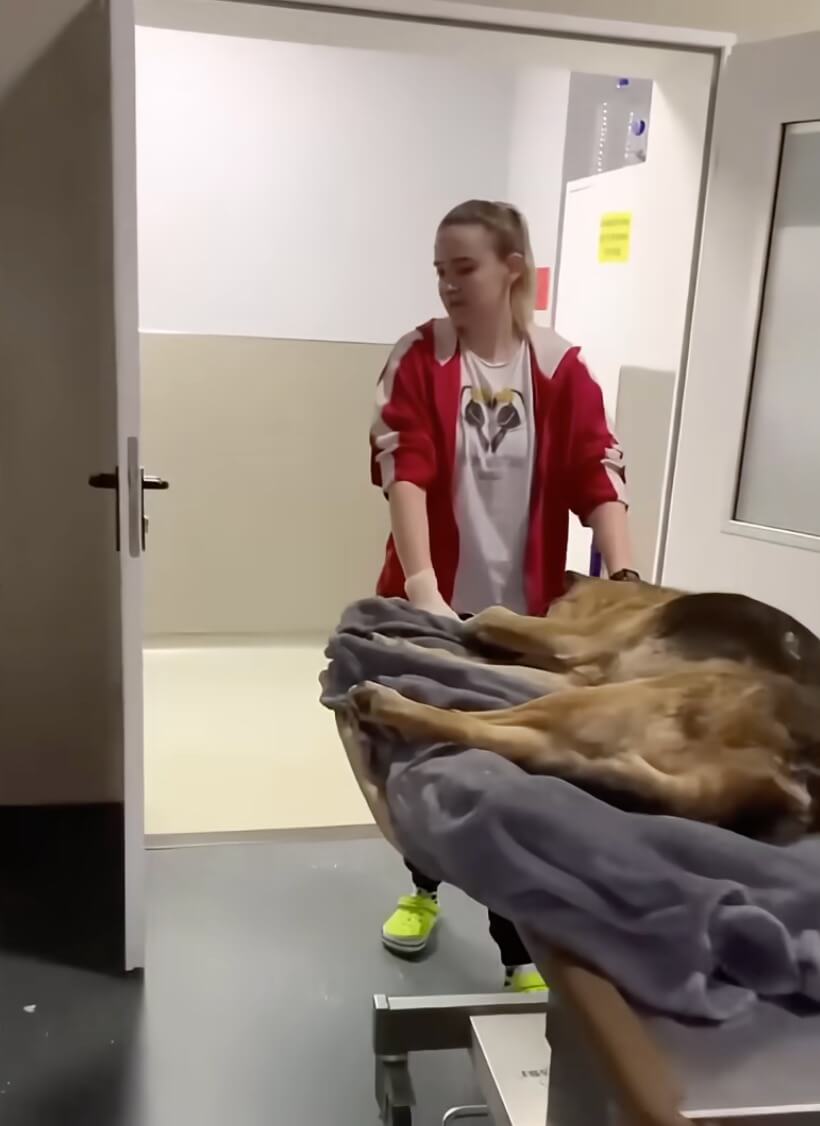
Stephen was rushed for emergency treatment soon after the rescue.
Doctors quickly discovered the situation was far more serious than anyone initially hoped. His abdominal cavity and intestines had suffered major trauma. He was severely anemic, dangerously weak, and struggling just to remain stable.
The following morning, rescuers transferred him to another veterinary clinic where specialists performed additional scans and examinations.
That was when the full extent of his injuries became clear.
Veterinarians reportedly discovered severe fractures in his front leg along with spinal injuries that explained why he could not properly move or sit upright. Surgery carried serious risks, and nobody could confidently predict whether his body would survive the stress of treatment.
For days, Stephen remained in fragile condition.
Rescuers monitored every small change carefully, worried that things could suddenly become worse overnight.
Every Small Improvement Felt Like a Victory
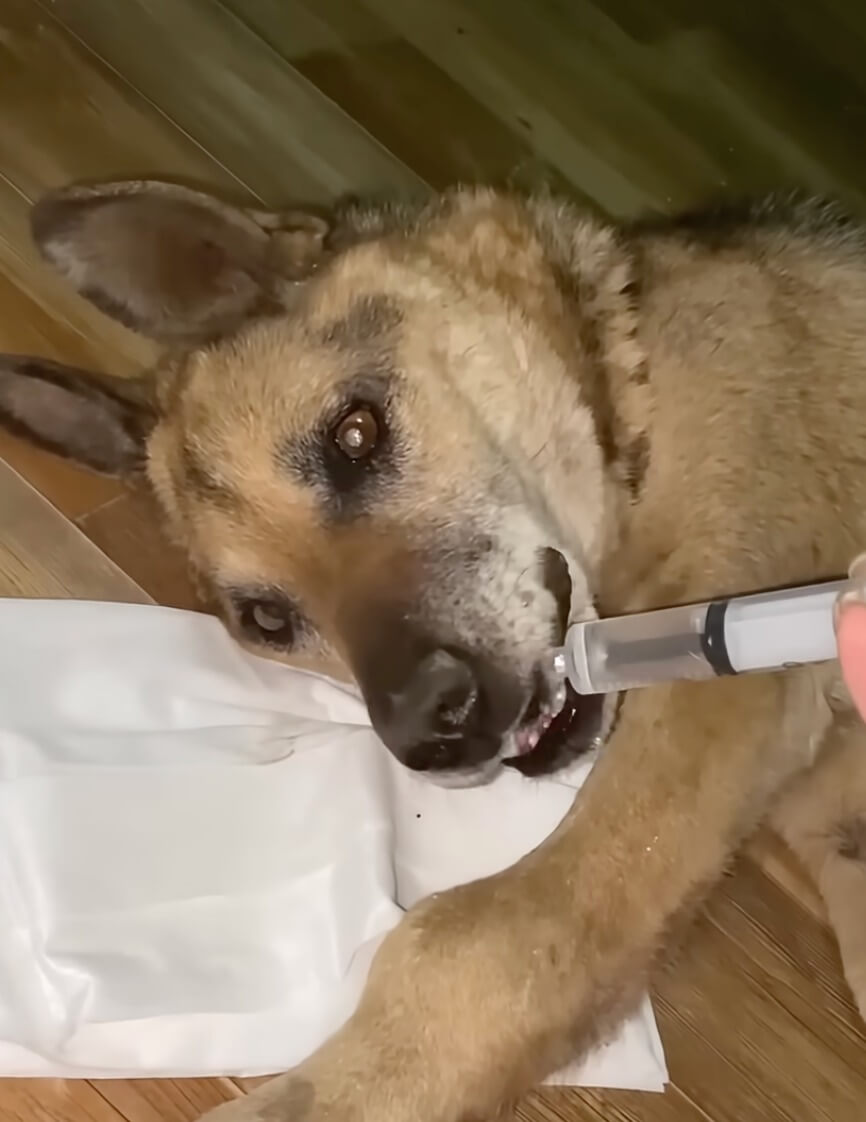
During the first week of recovery, Stephen could not eat on his own.
Rescuers stayed beside him constantly, feeding him milk slowly through a syringe while trying to keep his strength from slipping further. Sleep became difficult for the people caring for him because they feared his condition could suddenly decline during the night.
Then something started changing.
Five days into treatment, Stephen managed to eat by himself.
It may have seemed like a small moment to outsiders. For the rescue team, it felt enormous.
Not long afterward, Stephen began trying to sit up whenever rescuers approached him. His body still struggled badly, but the effort itself meant something important.
He had not given up.
The rescue team eventually brought Stephen into a quieter home environment so he could continue recovering somewhere calm and familiar. That shift appeared to help him emotionally as much as physically.
Little by little, the fear in his body started easing.
Learning to Live With a New Body
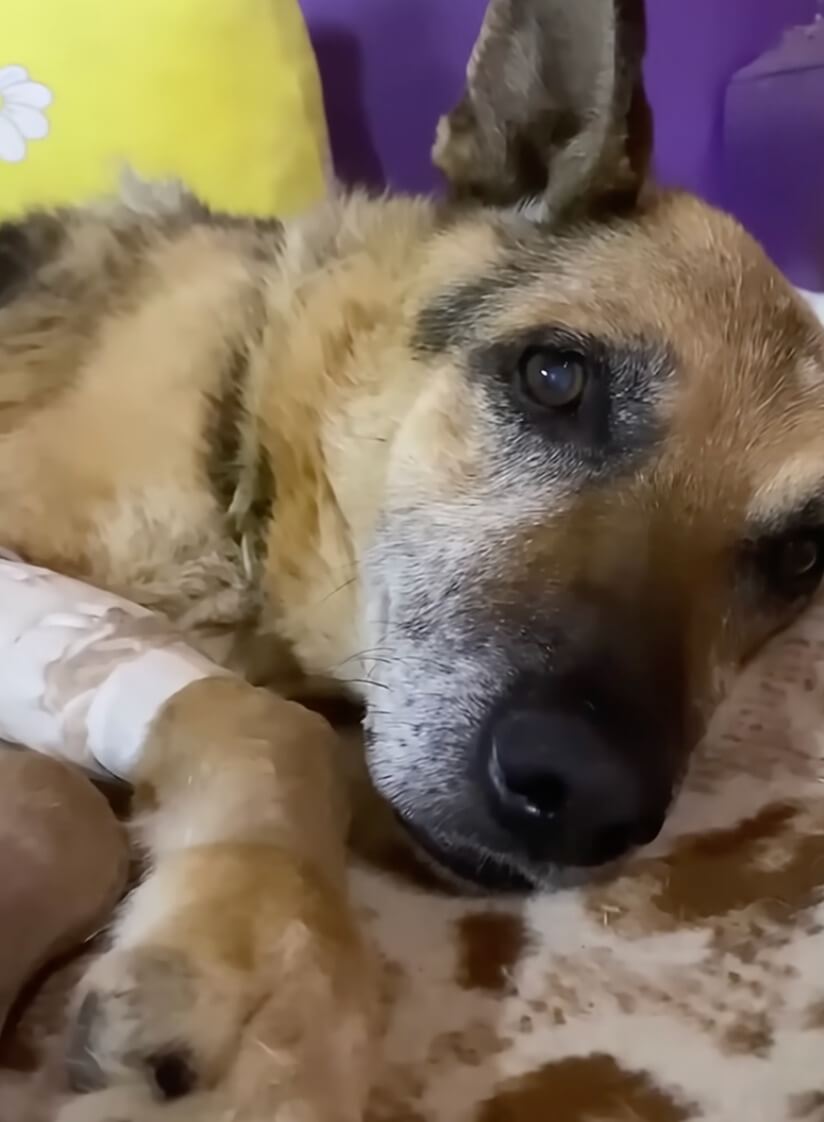
Stephen still faced enormous challenges after leaving the clinic.
Because of the spinal damage, he needed daily rehabilitation exercises designed to help strengthen his muscles safely over time. Some days were harder than others. Rescuers worked patiently beside him, allowing him to rest whenever his body became too tired.
Eventually, Stephen received a wheelchair to help support his movement during recovery.
That moment became a turning point.
Instead of remaining completely dependent on others for mobility, he finally had a way to move through the world again. Rescuers later shared videos showing Stephen sniffing grass outdoors, resting peacefully beside caregivers, and slowly rebuilding strength little by little.
Physical rehabilitation often becomes an important part of recovery after serious injuries like Stephen’s.
According to Texas A&M School of Veterinary Medicine & Biomedical Sciences, “When dogs have an injury or chronic condition, such as arthritis, physical rehabilitation can ease their pain and improve their strength and flexibility.”
For dogs recovering from trauma, those routines can also help rebuild confidence alongside physical movement.
Stephen seemed to respond to that consistency every day.
Why Mobility Support Can Change Recovery
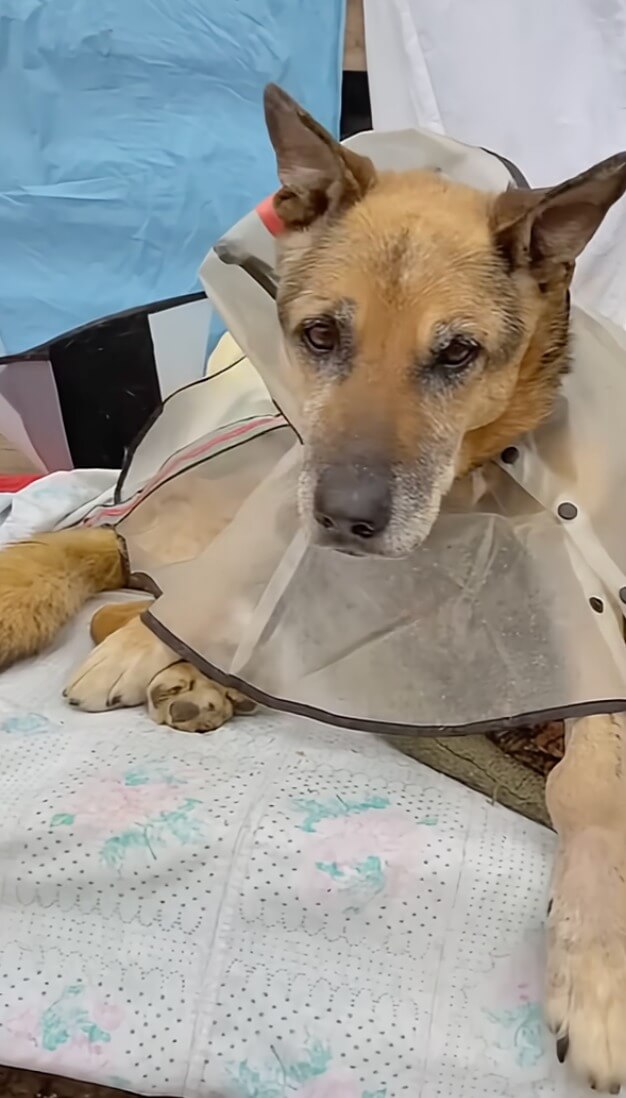
Dogs recovering from spinal injuries often require long periods of careful rehabilitation.
Progress usually happens slowly. Tiny improvements that seem insignificant at first can eventually become life-changing milestones over time.
That is one reason mobility devices can matter so much during recovery.
According to The Royal (Dick) School of Veterinary Studies at the University of Edinburgh, “Dogs recovering from spinal conditions can respond well to support when standing or walking, and a wheelchair can make a big difference to their progress.”
For Stephen, the wheelchair became more than physical support.
It gave him freedom.
It allowed him to explore outside again. It allowed his muscles to continue working safely while his body healed. And emotionally, it seemed to help him reconnect with life beyond survival and pain.
Stephen Never Stopped Trying
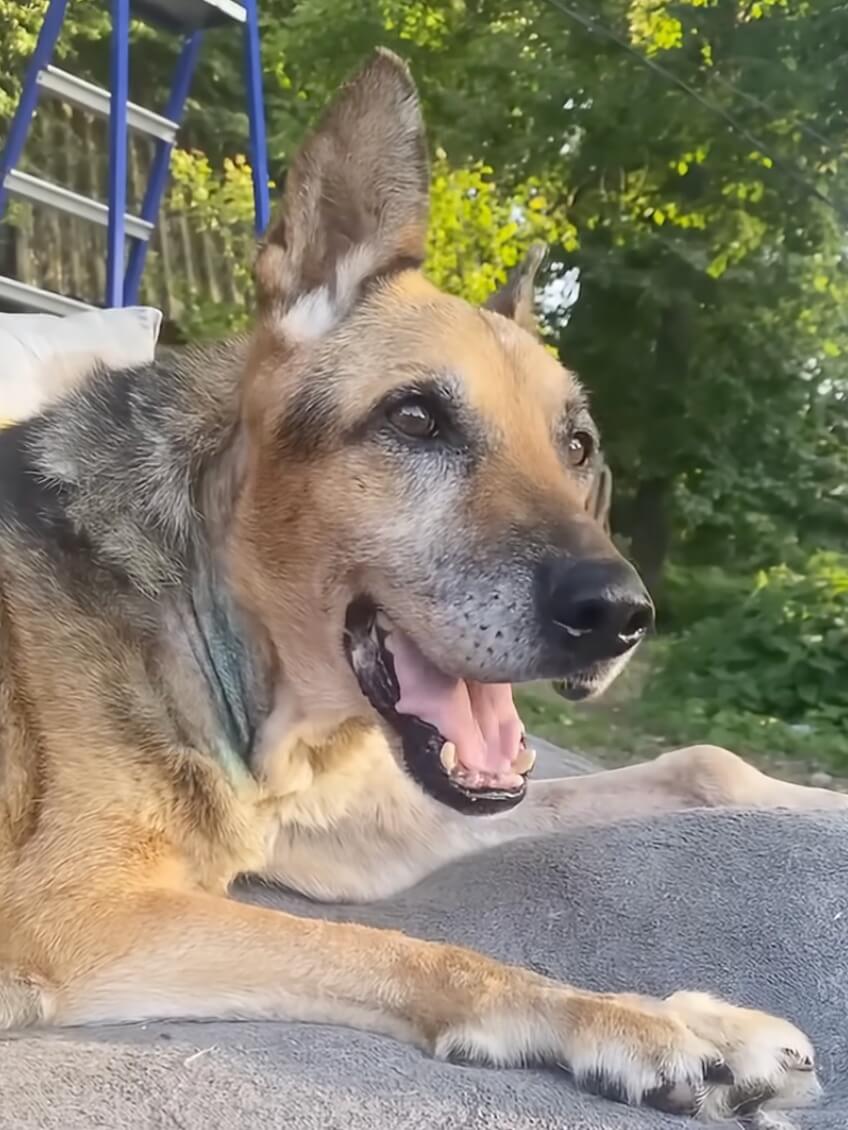
What affected rescuers most was not only the severity of Stephen’s injuries.
It was his determination.
Even after everything his body had endured, Stephen continued trying to stand, move, explore, and respond to the people caring for him. The frightened dog who once lay gasping on the ground slowly became more alert, curious, and emotionally present with each passing week.
The rescue team later learned authorities had reportedly identified the vehicle involved in the accident, bringing at least some accountability to the situation.
What saddened rescuers most, though, was realizing nobody appeared to be searching for Stephen.
Rescuers returned to the area multiple times but could not locate an owner or anyone willing to claim him.
Still, Stephen no longer had to face recovery alone.
Today, he continues rehabilitation surrounded by people who refused to walk away when his chances looked almost hopeless.
Nobody knows with certainty whether he will fully walk normally again.
One thing became clear during his recovery.
The dog who once could not even sit upright after the accident is still fighting for his future every single day.
And after everything he survived, that determination feels impossible not to admire.
If Stephen’s recovery touched your heart, consider sharing his story so more people can see how much a second chance can mean to an animal fighting to survive.
You may also want to read:


