
He Didn’t Lift His Head When Help Arrived, But Love Still Found Him in Time
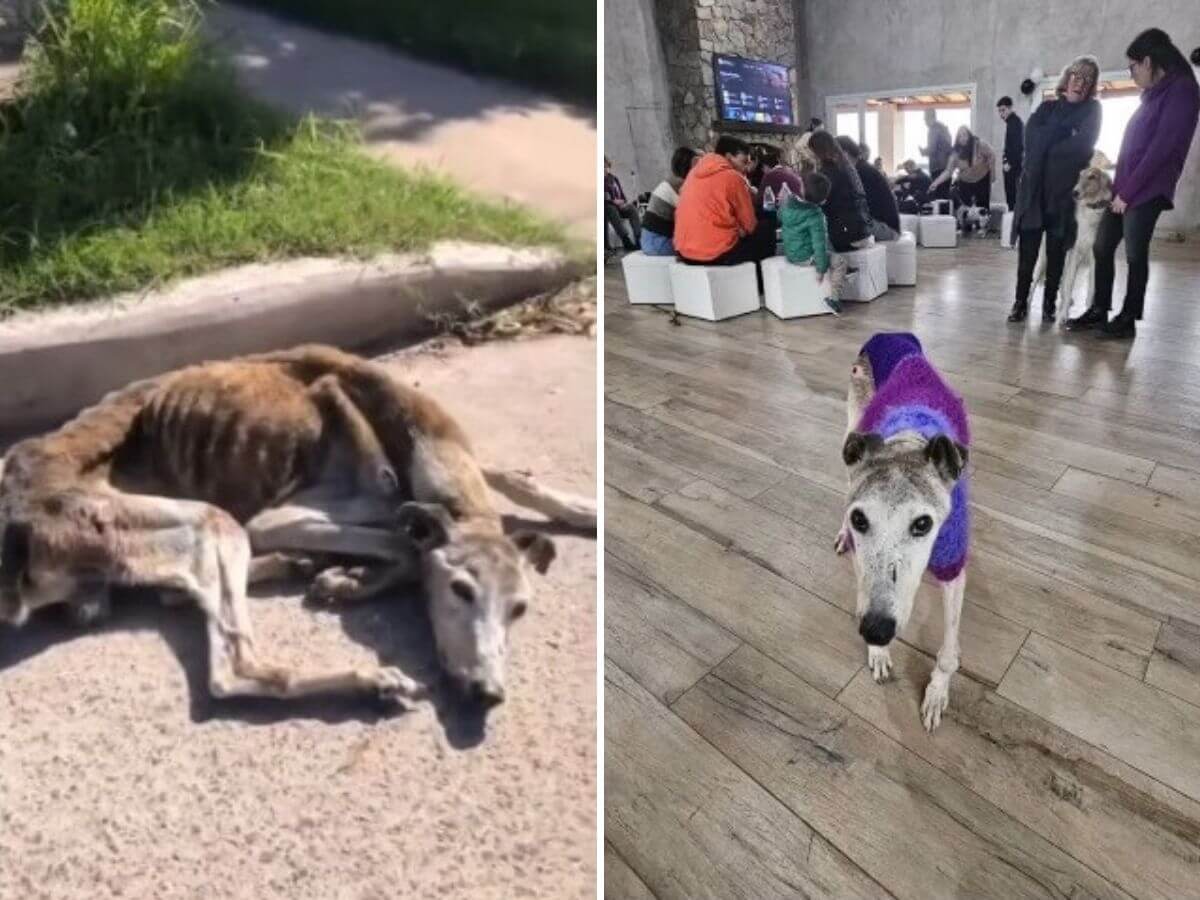
When help finally reached him, Stick did not lift his head.
He did not flinch. He did not try to crawl away. He stayed exactly where he was, pressed against the cold ground of an empty residential area. After years of pain, he had learned not to expect anything else.
Neighbors had noticed him lying there day after day, unmoving in the same spot. This was the place where his family once lived before leaving him behind.
By the time someone realized he could not get up on his own, his body was painfully thin. His ribs pressed sharply beneath dull, lifeless fur. He could not stand anymore. He could not control his body.
When people approached, something unsettling became clear. Stick did not move away or react. He simply stayed still, as if movement itself had become too heavy to attempt.
When rescuers from Hogar Amor de Galgo knelt beside him, the scene felt different from most rescues. This was not panic or fear. It was resignation.
His eyes told the rest of the story. They were not wide with fear. They were clouded with exhaustion, the kind that comes from enduring pain for years without relief. When gentle hands touched him, Stick trembled, not in resistance, but in surrender.
Old scars marked his body. Missing toes told quiet stories of injuries never treated. The question lingered as he was gently lifted from the ground. Had anyone noticed how much he hurt before this, or had he simply faded into the background?
Stick did not cry. He did not struggle. As he was carried toward help, he remained completely still, as if he had already accepted that suffering was his normal.
What no one knew yet was how long that suffering had been building, or how close he was to being lost entirely.
What the Veterinary Exam Finally Explained
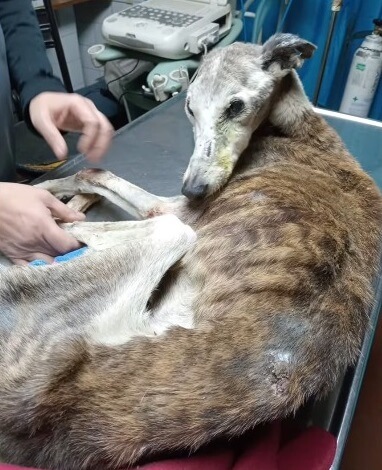
At the veterinary clinic, the truth became unavoidable.
Stick was dealing with chronic illness, severe spinal degeneration, and kidney issues. This pain had not started recently. It had been building slowly, year after year. Every movement must have hurt.
Here is why that matters.
According to PetMD, “A dog’s pain can become evident through physical symptoms, behavioral changes, and/or mobility issues.” In senior dogs, those signs are often missed or dismissed, especially when the decline happens gradually.
Stick’s spinal condition explained his loss of control and inability to stand. The American Kennel Club notes that “The first signs of DM (Degenerative Myelopathy) can be subtle, like your dog dragging a rear foot, having a wobbly gait.” Over time, those subtle changes can turn into complete mobility loss.
His kidney disease explained the rest. The MSD Veterinary Manual states that “In later stages of CKD, dogs and cats are particularly vulnerable to inappetence, weight loss, and cachexia.” Stick’s frail body showed exactly that pattern.
The veterinary team and rescuers understood something important that day. This was not about fixing everything. This was about comfort.
One rescuer reflected that Stick seemed to understand this moment was “not for a miracle, but for comfort.” The decision was made that day. Stick would not suffer anymore.
The First Days of Safety
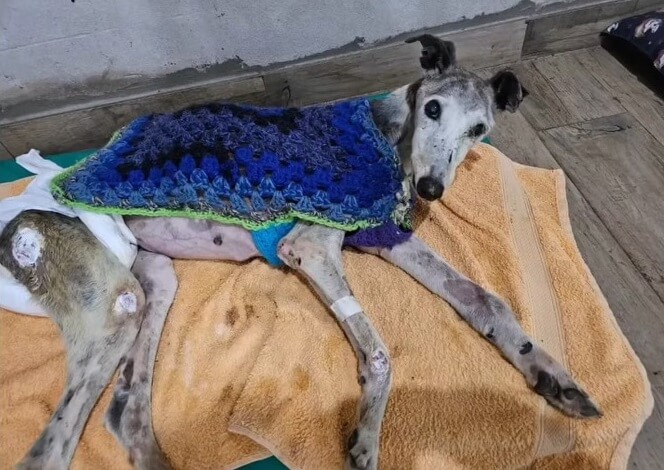
The first days were slow and careful.
Stick was given pain relief, fluids, warmth, and something he had been denied for a long time. He was allowed to rest without fear. For the first time in years, he slept deeply, long stretches of uninterrupted sleep that his body desperately needed.
When food was offered, he did not rush. He sniffed it first, then took a few small bites. Hunger was not driving him. Trust was.
Dogs who live with long-term pain often eat less, not because they are stubborn, but because discomfort suppresses appetite. Once pain is managed, basic behaviors like eating can slowly return.
By the end of the first week, something shifted. Stick began eating more regularly. His eyes followed people as they entered the room. When a rescuer named Eduardo sat beside him, Stick did not turn away. He stayed.
That moment mattered. Quiet hope entered the room.
The First Signs of Change
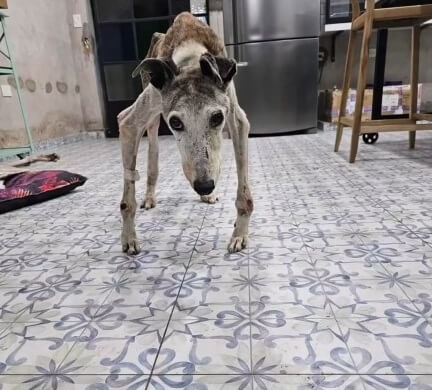
Week two brought progress that no one rushed.
One morning, Stick shifted his weight and tried to stand. His legs shook violently, and he collapsed soon after. Still, for a brief moment, he was upright. That was enough.
Pain management made movement easier. Vitamins helped support his weakened body. Slowly and carefully, Stick tried again. He stood for a little longer this time. Then he took a step. Then another.
Some days were harder than others. Recovery was not linear. No one expected it to be.
Next steps came naturally, guided by what Stick could handle and nothing more.
Seen at Last
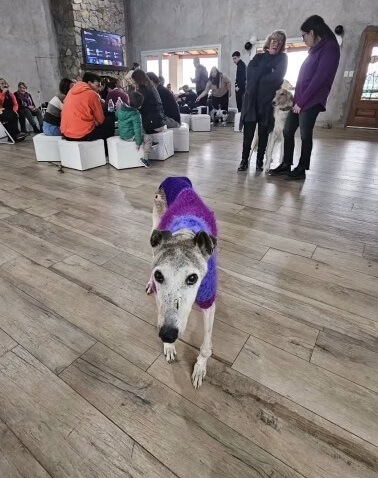
Today, Stick lives indoors, surrounded by patience and care. Medication remains part of his daily routine, and his body carries permanent limitations. Still, his life is no longer defined by pain.
He rests in warm corners.
He walks when he wants to.
He leans into affection freely.
After years of silent suffering, Stick is finally seen.
His story was shared by Pets In Love YouTube channel, but it belongs to every older dog who has been overlooked simply because their suffering was quiet.
Old dogs are not broken. They are waiting. Waiting for someone to choose kindness, even when time feels short.
Sometimes love does not need years.
Sometimes, it just needs to arrive in time.
If Stick’s story stayed with you, consider sharing it with someone who might need to read it today. Quiet stories like his are how overlooked dogs get noticed, and how kindness reaches them in time.
Related rescue stories:
Found Shaking in the Rain and Dying in Pain, This Tiny Puppy Refused to Give Up
She Crawled Through a Landfill on a Broken Leg to Protect Her Puppies: Wendy’s Story


