
Tilly Survived a Hurricane but Couldn’t Walk. Then Her Back Legs Began to Move
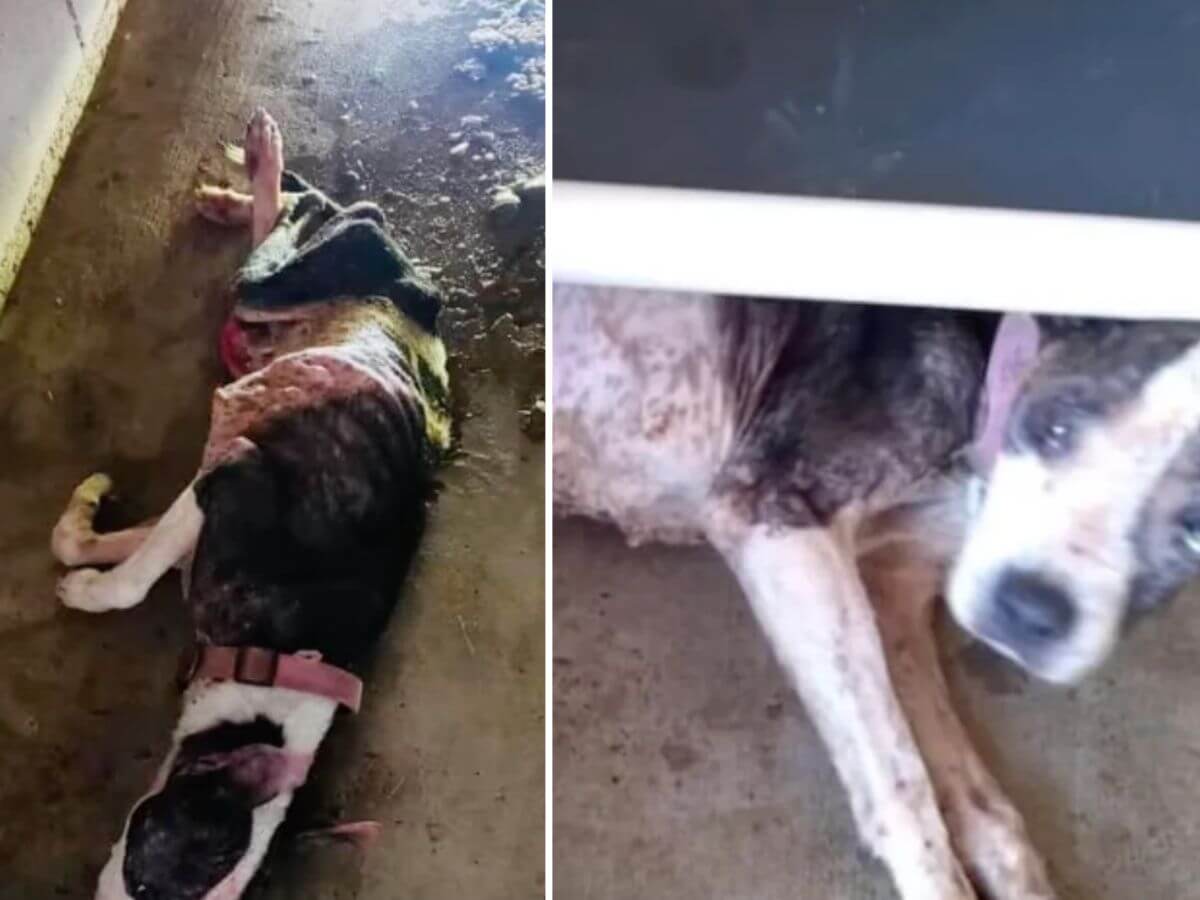
Tilly could stand on her back legs for only a few moments. After everything she had been through, those moments were worth watching.
The little dog had survived hurricane floodwaters that left her unable to walk on her back legs. Reaching safety was only the beginning. She still needed care, help moving around and someone willing to stay beside her.
Her foster caregiver reached out for help. Support followed, including wheels that helped Tilly get around while her recovery continued.
Then her back legs began to move.
She still couldn’t walk on them, but her days were changing. There was a garden to investigate, other dogs nearby and someone watching closely as she tried to stand.
After the Storm, Tilly Still Needed Help
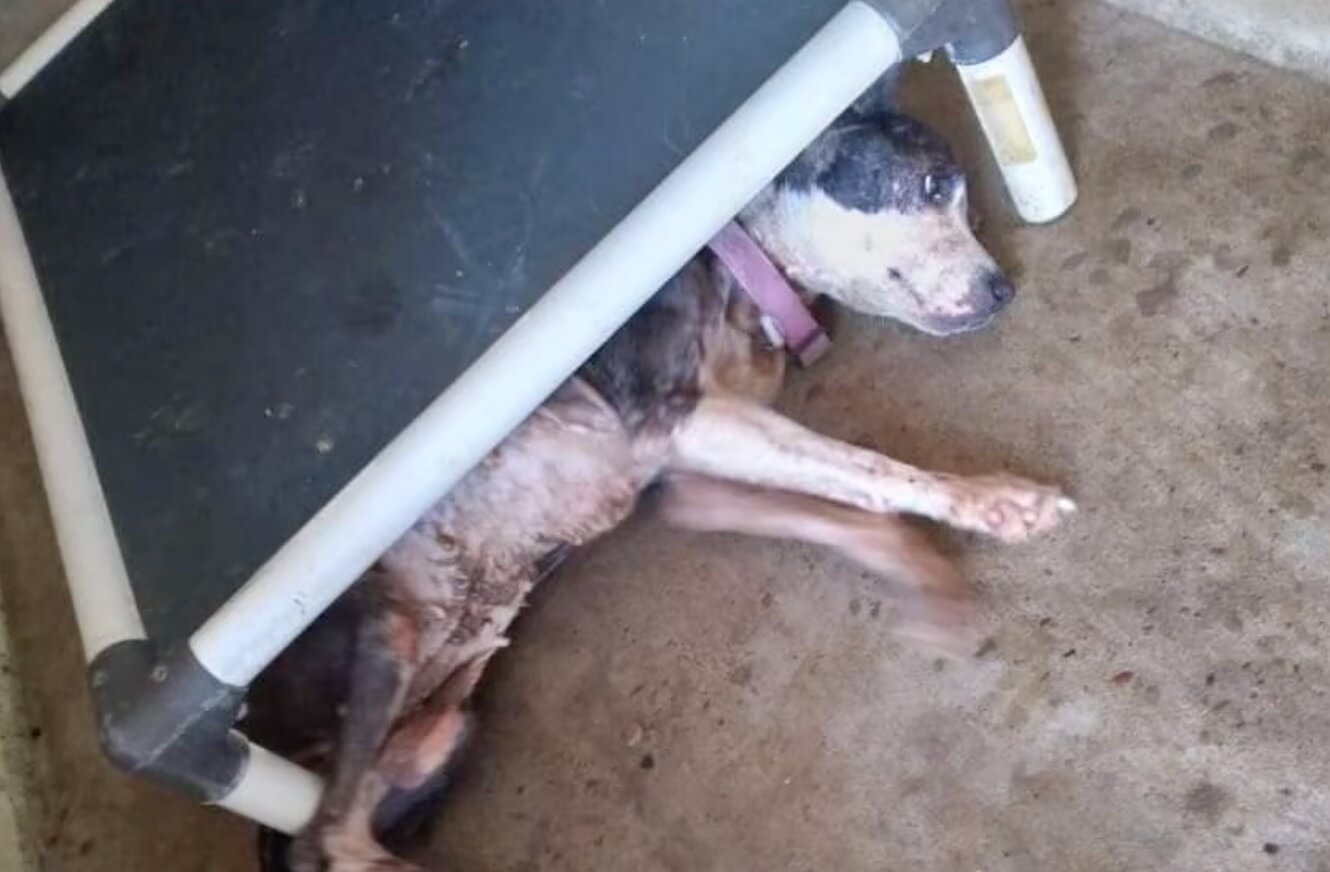
Tilly’s story was shared on the Animal Rescue YouTube channel. According to the video’s narration, powerful floodwaters dragged her around a pole, twisting her leg and leaving her struggling to move.
The account describes her lying on cold concrete after being abandoned by her previous owner. She had survived the storm, but she still needed somewhere to recover and someone to care for her.
Her foster caregiver asked for help.
According to the rescue video’s narration, “My foster mother refused to give up. She contacted Renee and asked for help.”
The narration speaks from Tilly’s point of view, describing how her caregiver reached out to Renee. Attention and support followed, including care packages and mobility equipment.
That help changed what Tilly’s days could look like. Her needs were being noticed, and people were finding ways to meet them.
As Humane World for Animals explains, “Fostering is a temporary commitment to care for a pet.”
For someone considering fostering, that care can involve more than offering a spare bed. In Tilly’s case, it meant looking after a dog who needed help moving and whose recovery was still uncertain.
Her caregiver didn’t know how the story would end. She reached out anyway.
Her Wheels Gave Her Somewhere to Go
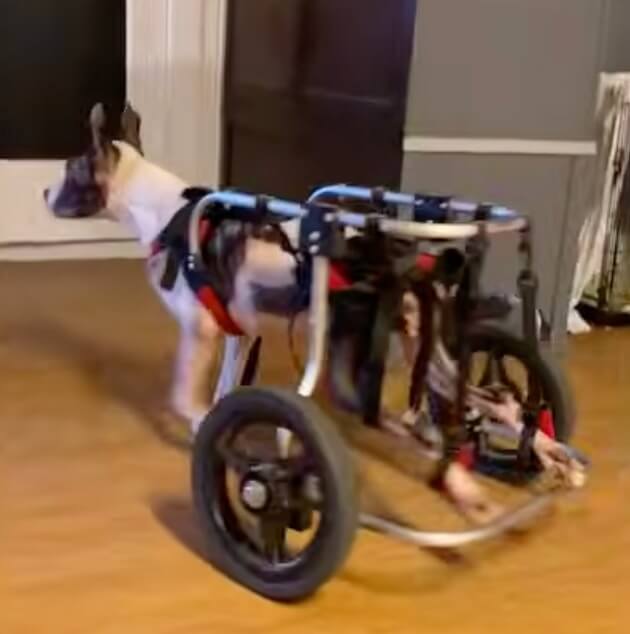
During her recovery, the little dog received the name Tilly. She also received wheels to support her while her back legs remained weak.
With that help, she could take part in more of what was happening around her.
The account describes Tilly spending time with other dogs and investigating plants in her caregiver’s garden. There was water in a small pool and the discovery that a drink from the hose could be a pleasure of its own.
These moments gave her days something beyond waiting for another change in her legs.
She could go outside. She could be near the other dogs. She could follow her curiosity with a little help.
In its guidance about pets with hind-limb paralysis who drag their hindquarters, VCA Animal Hospitals notes, “Those pets can benefit from support such as a sling, harness, or wheelchair.”
If your dog has trouble using their back legs, ask your veterinary team what support suits their condition. Tilly’s account doesn’t give enough medical information to suggest that another dog should follow the same care plan.
For her, the wheels offered a way to move while her recovery continued. They weren’t presented as a cure, and she didn’t have to leave them behind before enjoying the garden.
Then Her Back Legs Began to Move
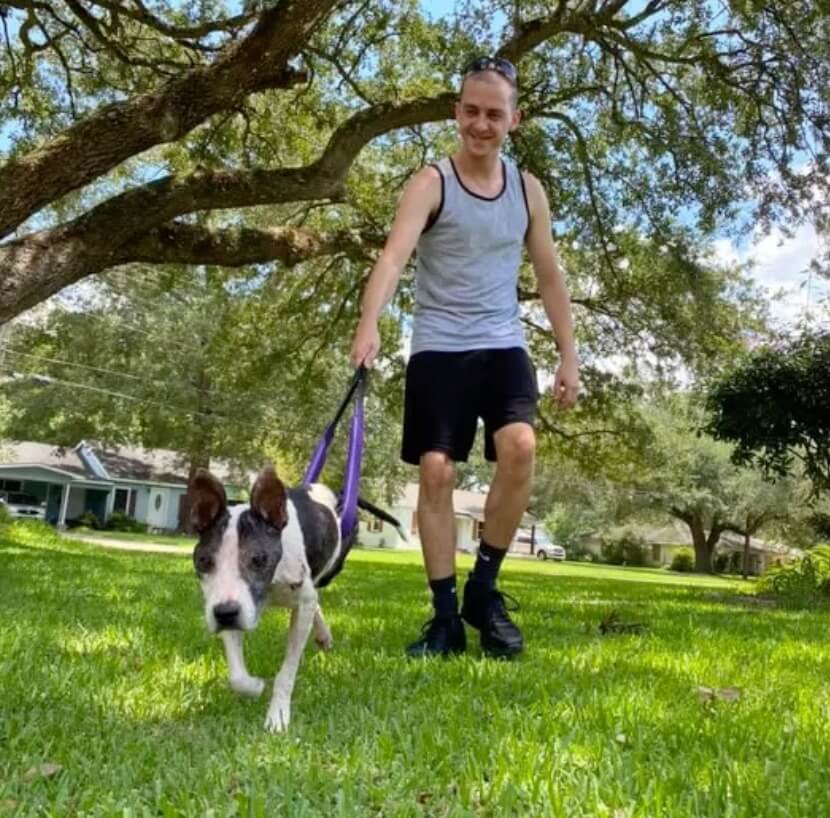
The changes in Tilly’s legs came gradually.
The account describes movement returning and brief moments when she could stand on her back legs. These were encouraging developments after she had been unable to use them to walk.
The narration also makes clear that she still needed help.
As the rescue video’s narration explains, “Every day, my little legs grew stronger. I still couldn’t walk using my back legs.”
Both parts of that update matter. Tilly was making progress, and independent walking remained beyond what she could do.
Her wheels continued helping her get around. Attempts to stand became part of her recovery rather than a finish line she had already crossed.
For anyone watching an injured pet recover, a little movement can bring a rush of hope. It can also leave you wondering what that movement means.
According to PetMD, “The likelihood of a dog returning to full function depends on the cause of their paralysis.”
That general guidance cannot predict Tilly’s outcome. Her account doesn’t supply a confirmed diagnosis or establish that she later regained independent walking.
What it does describe is a change her caregiver could see. Tilly’s legs were moving, and sometimes they could support her briefly.
There was room to celebrate those moments without knowing what would come next.
Her Care Continued Beyond Those First Movements
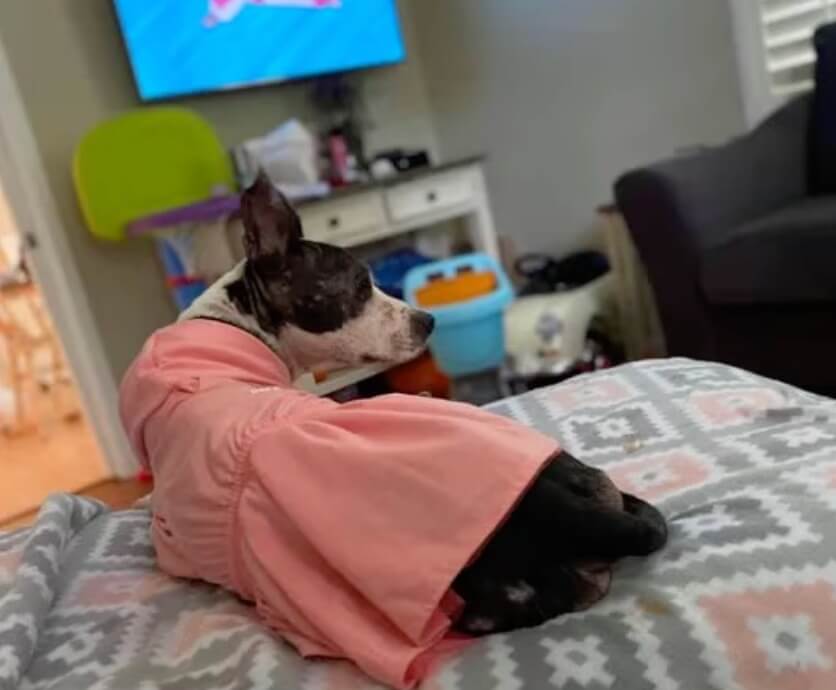
Later in the account, Tilly’s veterinarians determined that she was healthy enough to be spayed and receive vaccinations.
It was another step in her care. She had received support, begun using her wheels and started showing movement in her back legs.
By the last update described in the video, Tilly was still using her wheels. The account does not confirm that she later walked independently.
She was spending time outdoors, enjoying water and being around other dogs. Her life included comfort, companionship and activity while her care continued.
Her recovery didn’t need a dramatic final scene for those changes to matter.
A Life Worth Enjoying While She Healed
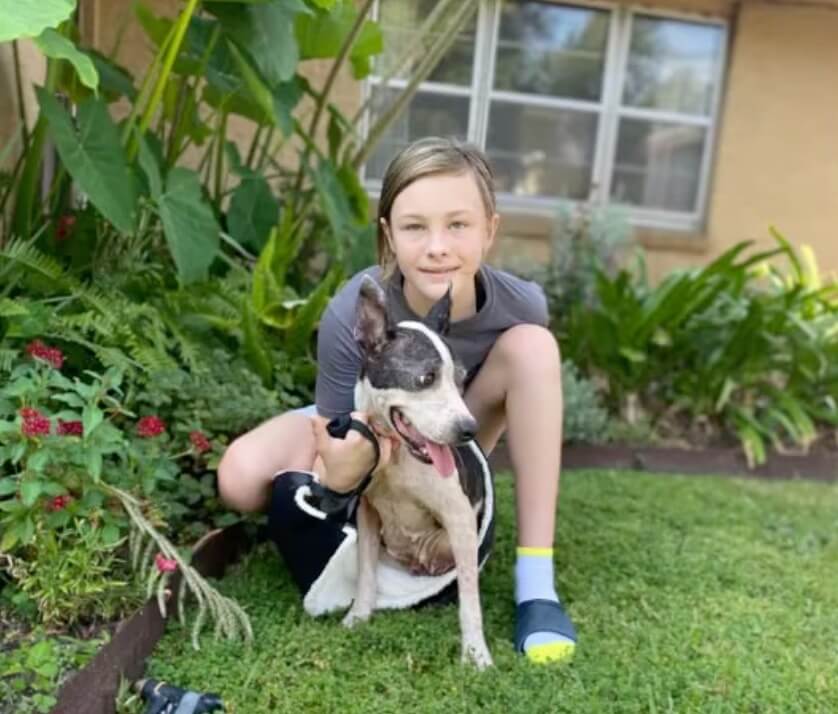
The account credits Tilly’s foster caregiver, Renee, the veterinary team and the supporters who sent supplies and mobility equipment.
Their help appears throughout her story, from the first request for assistance to the wheels that helped her join in. It also appears in the quieter moments, when she had somewhere to go and something to enjoy.
A garden to investigate. Other dogs nearby. A drink from the hose.
Tilly still needed support, but she no longer had to wait for a complete recovery before taking part in her day.
If Tilly’s story touched you, consider sharing it to help more people see what patient foster care can mean for an injured animal.
Also read:
Sirius Learned to Trust on His Walks With Maria. When Walking Grew Hard, She Stayed Beside Him


