
She Looked Like a Sheep on the Road. When They Stopped, They Realized She Was a Dog Still Alive
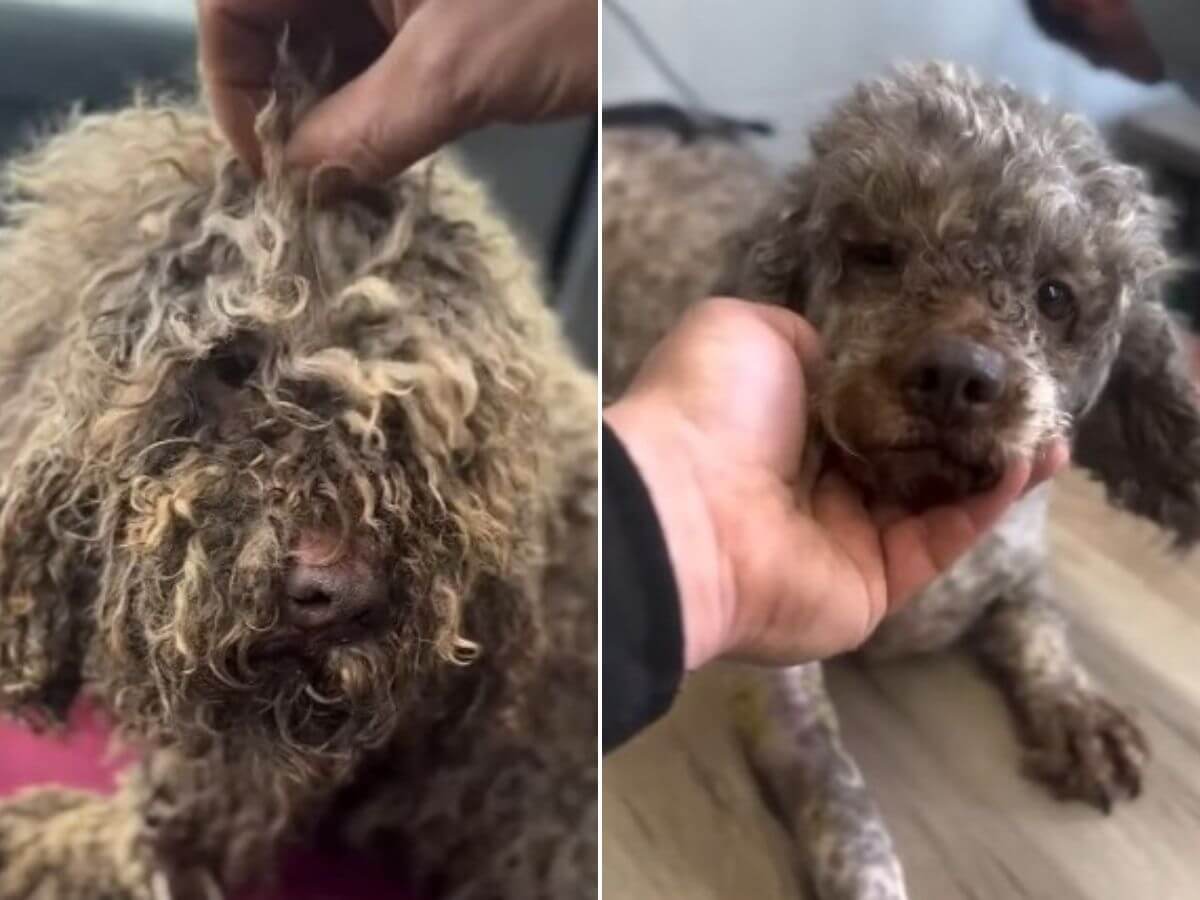
For a split second, she looked like a sheep wandering near the road.
That split second saved her life.
Lou was driving to pick up a friend from the airport when something pale near the roadside caught his eye at the very last moment. He almost passed it. Traffic was moving quickly, and the moment could have been gone just as fast.
Instinct took over.
He slowed down, turned the car around, and went back to look again.
The rescuer later said, “Honestly, I thought it was a sheep.”
What he found instead was a dog still alive and in urgent need of help.
Stopping Before It Was Too Late
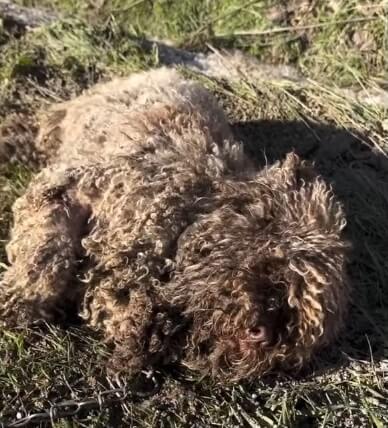
When Lou pulled over, the truth became clear. The white shape near the road was a dog. She was alive, but barely. Her body lay still, her breathing shallow, her strength nearly gone.
Her fur was severely matted, hanging over her face so completely that she could not see. Dirt packed deep into her ears meant she could not hear either. She lay there confused and disoriented, unaware of the danger around her.
Everything about her condition suggested she had been struggling like this for a long time.
How Tina Likely Ended Up on the Road
From what Lou could tell, the dog appeared to have been chained for an extended period. Dogs kept tethered without care often develop extreme matting that blocks their vision and traps debris. When they escape, they move blindly and without direction.
That loss of awareness can place them directly in harm’s way.
Lou believed she had likely broken free and wandered into the road, unable to sense what was coming. At some point, she was struck by a vehicle.
She survived because someone noticed her in time.
The Moment Walking Away Was No Longer Possible
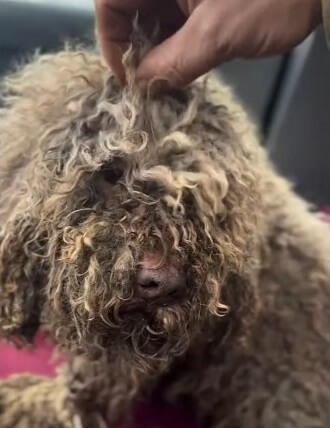
Picking her up was not an easy decision.
Lou later described it as a real struggle between logic and emotion. Fear crept in. Responsibility followed. The weight of what caring for an injured animal would require became clear in seconds.
Then he reached out.
She leaned toward his hand, searching for reassurance she could neither see nor hear. That moment ended the debate.
The rescuer said, “When I looked into her eyes, I couldn’t ignore her.”
They named her Tina.
The Long Drive to Emergency Care
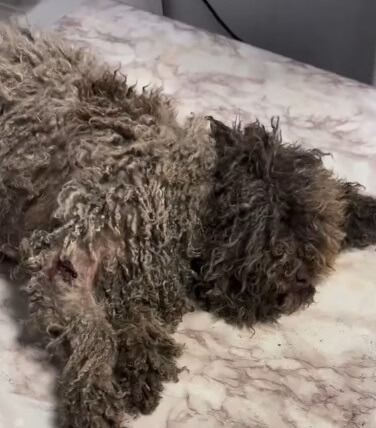
It took three hours to reach veterinary care. Tina stayed quiet the entire way, conserving what little energy she had left.
At the clinic, the veterinary team acted quickly. Full-body X-rays were ordered, along with blood tests and biochemistry panels. These steps are standard when animals are found after suspected roadside trauma.
According to American College of Veterinary Surgeons, “Your veterinarian will likely recommend x-rays of the affected region.” Imaging helps identify fractures that are not always visible from the outside, especially when swelling or shock is present.
Tina’s X-rays revealed two fractures in her front legs.
This explains why animals found after roadside accidents often appear still even when injuries are severe.
Deep wounds on both limbs required immediate cleaning and stitching. Urgent surgery was needed to put her legs back into place.
What the Blood Tests Revealed
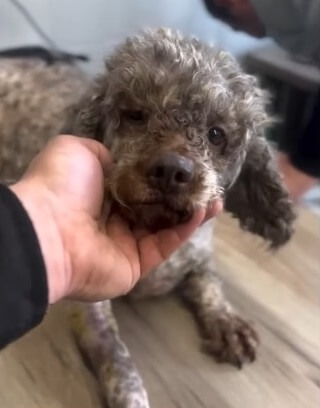
Blood work often provides insight into how the body is responding internally. In trauma cases, changes in white blood cell levels can signal how hard the immune system is working.
According to VCA Animal Hospitals, “Elevated white blood cell counts often indicate infection or inflammation; the specific white blood cell type that is abnormally elevated can often provide additional information about a possible diagnosis.”
For Tina, the results confirmed that her body was under intense strain from injury and stress.
Her surgery went well.
The First Week of Recovery
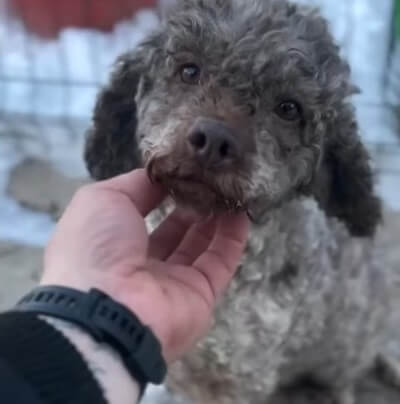
After a week, Tina was discharged and allowed to go home. Her bandages were removed shortly after, replaced by a cone she would need to wear for several weeks.
Her instructions were strict. Six to eight weeks of bed rest. Short trips into the garden only for toileting. No unnecessary movement.
She barely moved at all.
Inside the house, Tina rested quietly, saving her strength. Care required constant attention, patience, and monitoring. Even routine follow-up results were watched closely.
Recovery like this takes time.
According to American Animal Hospital Association, “Enrichment during post-surgical confinement does more than simply manage behavior.” Calm routines and reduced stress play a role in helping animals cope during long periods of limited movement.
The Change No One Expected
Just twelve days after her rescue, Tina began to surprise everyone.
She relaxed indoors. She healed steadily. She adjusted to confinement far better than expected. Despite everything she had endured, she showed affection freely.
She loved belly rubs.
No one knew why. She leaned into kindness as if it had been missing for a long time. Her weight increased to 13.9 kilograms, a positive sign that her body was recovering.
Her fear faded as her strength returned.
Tina Today
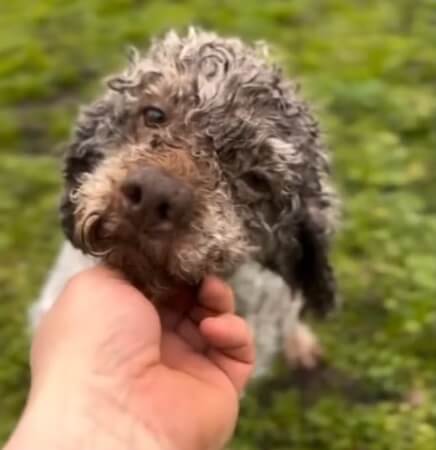
Today, Tina is no longer the dog mistaken for a sheep on the side of the road.
She moves carefully, but with confidence. She trusts the people around her. Her healing continues at a steady pace, supported by patience and care.
The dog once lying unnoticed near traffic now lives in safety.
It all began because someone chose to stop when it would have been easier to keep driving.
If you ever find a pet collapsed or injured, contact a local veterinarian, animal control, or a shelter right away.
If Tina’s story stayed with you, please share this article so someone else might be reminded to look twice.
Related rescue stories:
They Threw Him Away. 150 Days Later, This Dog Proved the World Wrong
They Found Him Crying Alone in the Woods. What Freddy Survived Changed Everything


