
Left on the Sidewalk: How Valentino’s Rescue Restored His Strength and Dignity
Some stories begin in shelters.
This one began on a sidewalk.
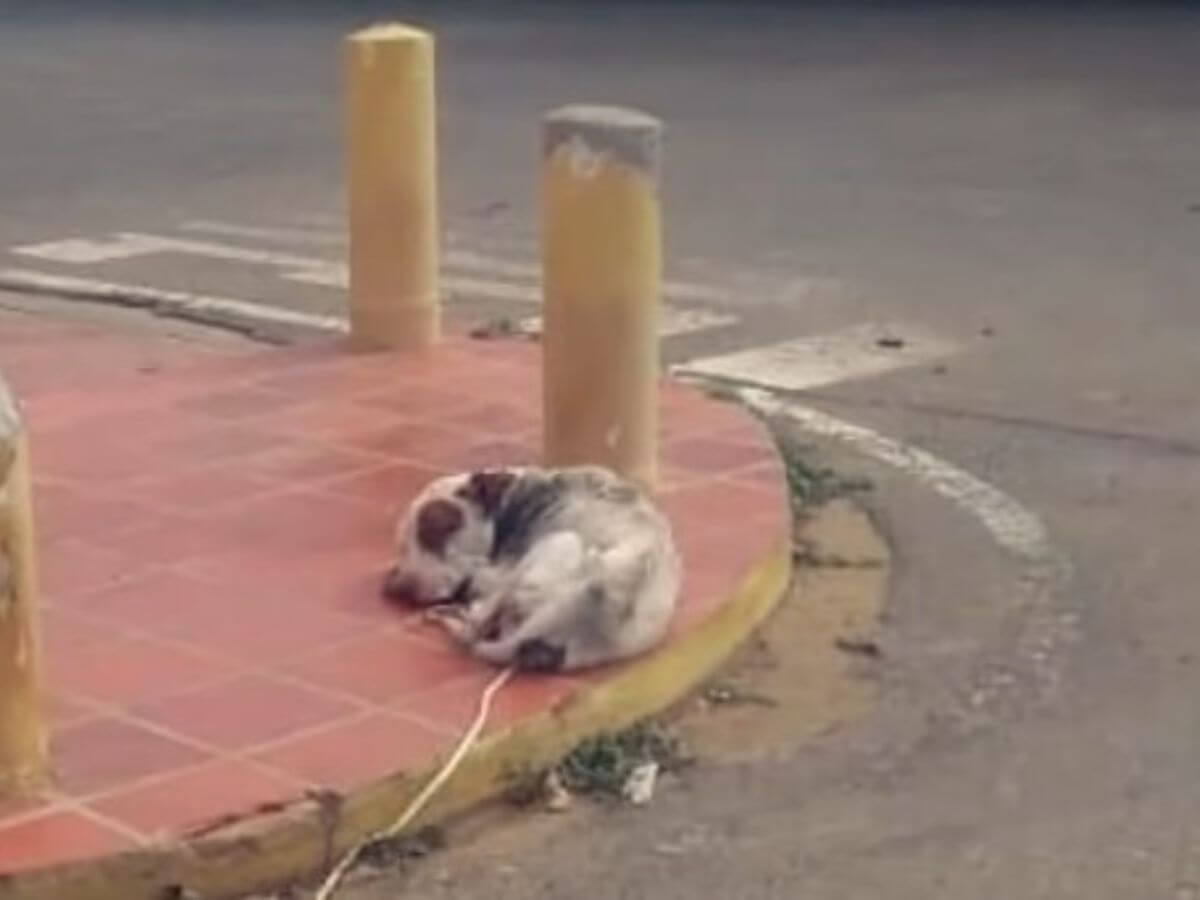
When rescuers from ManadaGPT arrived, they did not find a lost dog wandering with hope. They found a body curled against cold concrete. Traffic moved past him. Footsteps echoed nearby. He did not lift his head.
Later, the team would describe his body as “completely broken…”
Ticks covered him. His ribs pressed sharply against thinning skin. His breathing was shallow. His eyes carried exhaustion more than fear.
They named him Valentino.
According to ManadaGPT, whose rescue footage was later shared through the Dog Haven YouTube channel, Valentino appeared to have been abandoned after years of service. There was no collar. No one searching. Just a dog left where people would see him and keep walking.
Valentino’s story did not begin in a clinic.
It began on concrete.
Thrown Away After a Lifetime of Loyalty
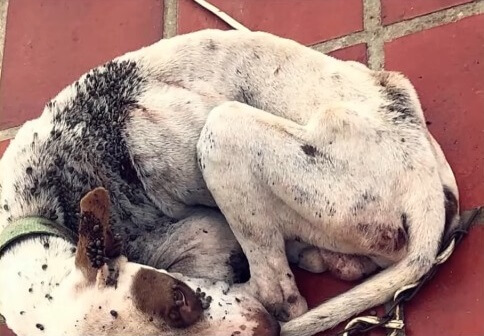
Rescuers believed he had once belonged to someone. His posture suggested he had lived close to people. He did not snap or growl. He endured.
But endurance has limits.
His coat was infested. Ticks clung to his ears, neck, legs, and underbelly. Removing them immediately was risky.
According to the ASPCA, “Ticks are parasites that feed on the blood of unlucky host animals, such as cats and dogs.”
When dozens attach to a weakened dog, blood loss compounds malnutrition. That explained part of Valentino’s collapse.
A Body Overrun
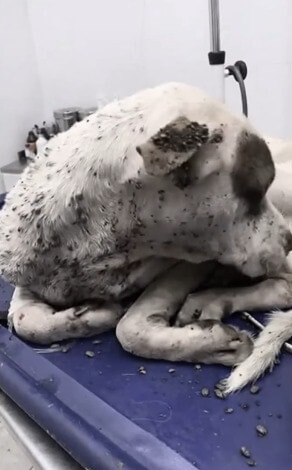
At the clinic, veterinarians confirmed he was weak, dehydrated, and severely infested.
Heavy tick burdens can be life-threatening. According to the MSD Veterinary Manual, “Severe tick infestations can lead to anemia and death.”
Anemia reduces oxygen delivery throughout the body. For an underfed dog, that creates a dangerous decline.
The team faced a choice. Remove everything at once and risk shock. Or stabilize him first.
They chose stabilization.
Small meals. Clean water. Rest.
Only then did removal attempts begin.
The First Attempt
They tried manual removal that first day.
It did not go as planned.
His skin was sensitive. His strength was low. Each movement drained him.
According to the rescuers, “The tick removal was very difficult,” especially given his poor health.
They stopped.
Sometimes the strongest decision is to wait.
Why Severe Tick Infestations Are Dangerous
Tick infestations are not cosmetic issues.
They create systemic risk.
According to PetMD, “Ticks can be found anywhere in the United States and their bite can cause skin infections, anemia, and tick paralysis, which is a serious and life-threatening condition to cats.”
While that statement references cats, the biological risks apply broadly. Ticks transmit disease. They drain blood. They weaken already fragile animals.
This case highlights the risks of severe tick infestation in abandoned dogs and the importance of early veterinary intervention.
Cases like Valentino’s show how quickly tick infestations can become life-threatening without intervention.
That is why medication was applied before aggressive removal.
Stabilizing Before Saving
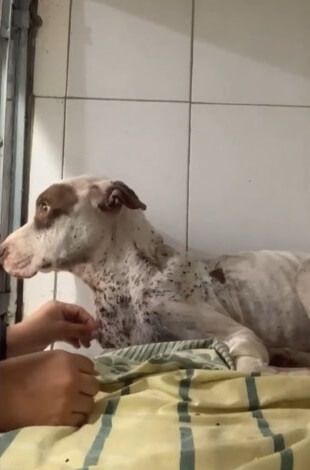
The next morning, they returned to the task.
After fluids and nourishment, his body was stronger. Medication had begun weakening the parasites.
Tick by tick, they cleared his skin.
Underneath the infestation was a dog who had been fighting quietly to survive.
Fighting for Strength
Over the first week, Valentino began eating consistently. His posture shifted. His eyes followed movement again.
As previously noted by the MSD Veterinary Manual, severe infestations can lead to anemia and even death. That warning shaped every decision.
Gradually, strength returned.
He stood longer. He walked short distances. He rested without trembling.
Rebuilding Trust
Physical recovery can be measured in bloodwork and weight gain.
Emotional recovery shows itself in smaller ways.
Valentino began leaning toward gentle hands instead of shrinking away. He responded to calm voices. He stayed close to caregivers.
Trust does not rebuild overnight.
It rebuilds through repetition.
Weeks of Change
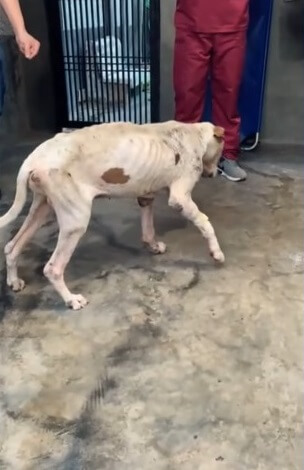
Week two brought visible improvement. His coat began to regain texture. His appetite stabilized.
Week three showed confidence returning to his gait.
Veterinary monitoring continued, mindful of the systemic risks previously noted in medical guidance. Follow-up matters even after visible parasites are gone.
By the end of the month, Valentino walked confidently. He responded to his name. His body no longer appeared defeated.
A Second Chance
The team did not rescue him to keep him.
They rescued him to restore him.
Their goal is placement in a safe home. A home where aging is not a liability. Where strength fading does not erase worth.
Valentino now rests in a clean space. He eats regular meals. He greets caregivers at the door.
The dog once found motionless on concrete now stands ready for adoption.
What This Story Teaches
If you encounter a dog abandoned outdoors, do not assume the situation is harmless.
Look for warning signs. Heavy tick coverage. Lethargy. Visible ribs. Slow movement.
Severe infestations can cause anemia and systemic illness. Early veterinary intervention can prevent long-term damage.
Time matters.
Contact local animal control or a humane organization. Reporting early can save a life.
Today
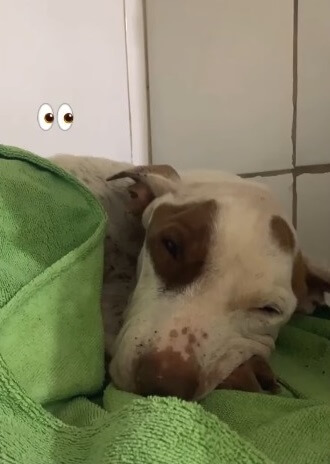
Today, Valentino walks with steady steps.
His coat is healthier. His eyes are bright. His posture is upright.
The dog who once looked “completely broken…” now waits for a family who will see him differently.
Not as disposable.
But as a companion.
If Valentino’s journey moved you, share his story. Awareness leads to intervention. Intervention leads to survival.
Related rescue stories you may want to read:
They Left Her Paralyzed in the Snow. One Woman Refused to Let Her Die
She Collapsed in Cold Rain After Days of Seizures. Someone Refused to Look Away


