
No One Noticed Her Collar Was Hurting Her Until a Neighbor Heard Her Cry
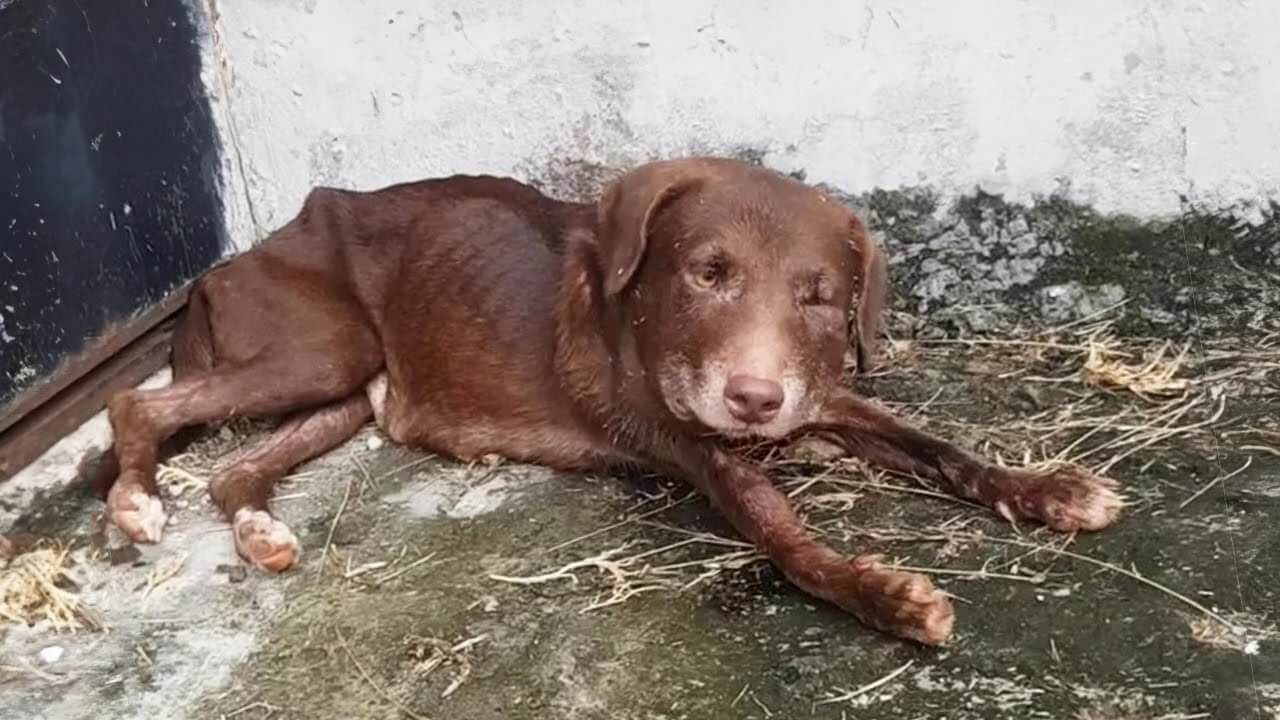
She did not bark.
She did not pull at the chain.
She did not fight back.
All Vida could do was cry.
For years, she lived tied in place with the same collar she had worn as a puppy. As her body grew, the collar did not. Her neck thickened. The space disappeared.
Day by day, the collar pressed deeper into her skin, closing in on her throat, turning something meant for safety into a slow, constant injury.
No one stepped in.
No one adjusted it.
No one noticed how hard it had become for her to breathe.
Cases like Vida’s do not happen overnight. They happen quietly, through neglect that looks small at first and grows dangerous over time.
By the time a neighbor finally spoke up and rescuers were called, Vida was already fading.
A Neighbor Who Could Not Look Away
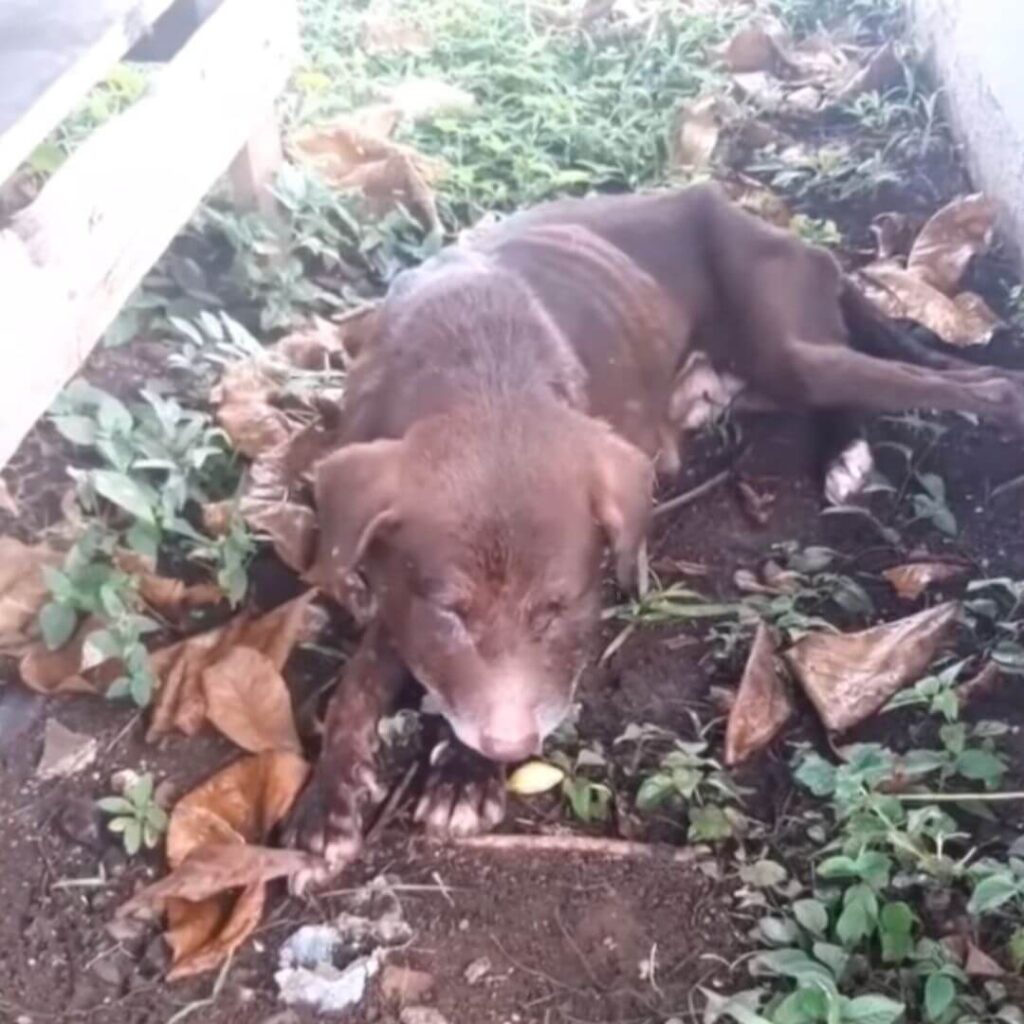
Everything changed the day a neighbor finally noticed Vida.
“She wasn’t barking or causing trouble,” the neighbor later said. “She was just crying. That kind of crying that doesn’t stop.”
It was the kind of sound that lingers.
Unable to ignore it any longer, the neighbor managed to get Vida free and called for help immediately. Her voice shook through the phone.
“You won’t believe what I’m seeing,” she cried. “Please, you have to help this dog.”
That call reached the rescue team of Animal Defenders Panama. Within minutes, a rescue team was on the way, unaware of how close Vida was to losing her life.
When the team arrived, the scene stunned them into silence.
“The collar was buried into her neck,” one rescuer said. “It wasn’t sitting on her skin anymore. It had become part of the wound.”
Vida’s face was swollen and tight. She struggled to swallow. Each breath produced a wet, strained sound as air passed through damaged tissue.
“We could hear her breathing through the opening in her neck,” the team said. “That’s when we knew how serious this was.”
The wound had reached her trachea. Infection had spread. Tissue was breaking down.
“We couldn’t believe she was still alive,” a rescuer said. “It didn’t make sense.”
Emergency Care and a Body That Gave In
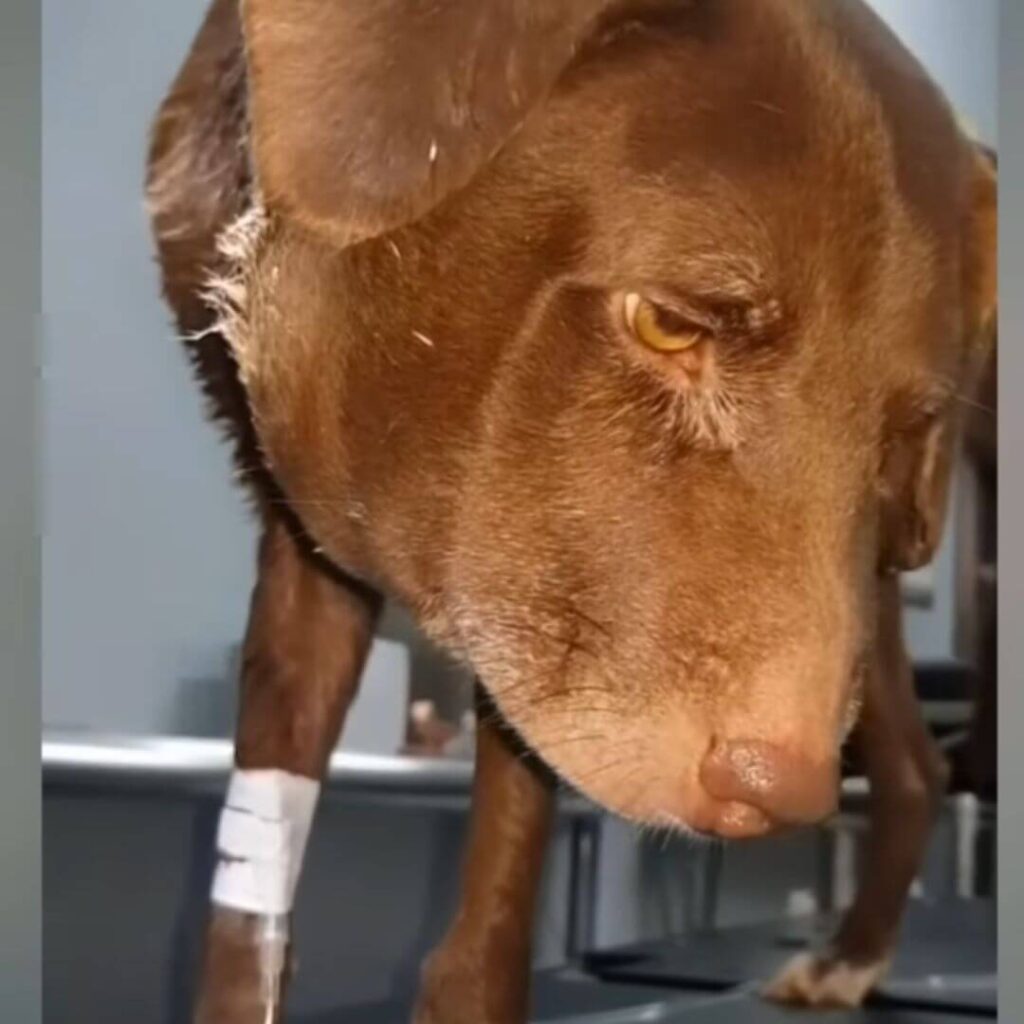
Vida was rushed for immediate veterinary treatment.
The wound was cleaned and disinfected. Antibiotics were started. When the collar was finally removed, it left behind a deep channel of damaged flesh.
As the pain eased, Vida collapsed into sleep.
“She passed out almost instantly,” the rescuer recalled. “It felt like her body had been holding on for years and finally let go.”
Authorities were notified soon after.
“How does someone see this and do nothing?” the rescue team asked. “How does it reach this point?”
The Discovery That Changed Everything
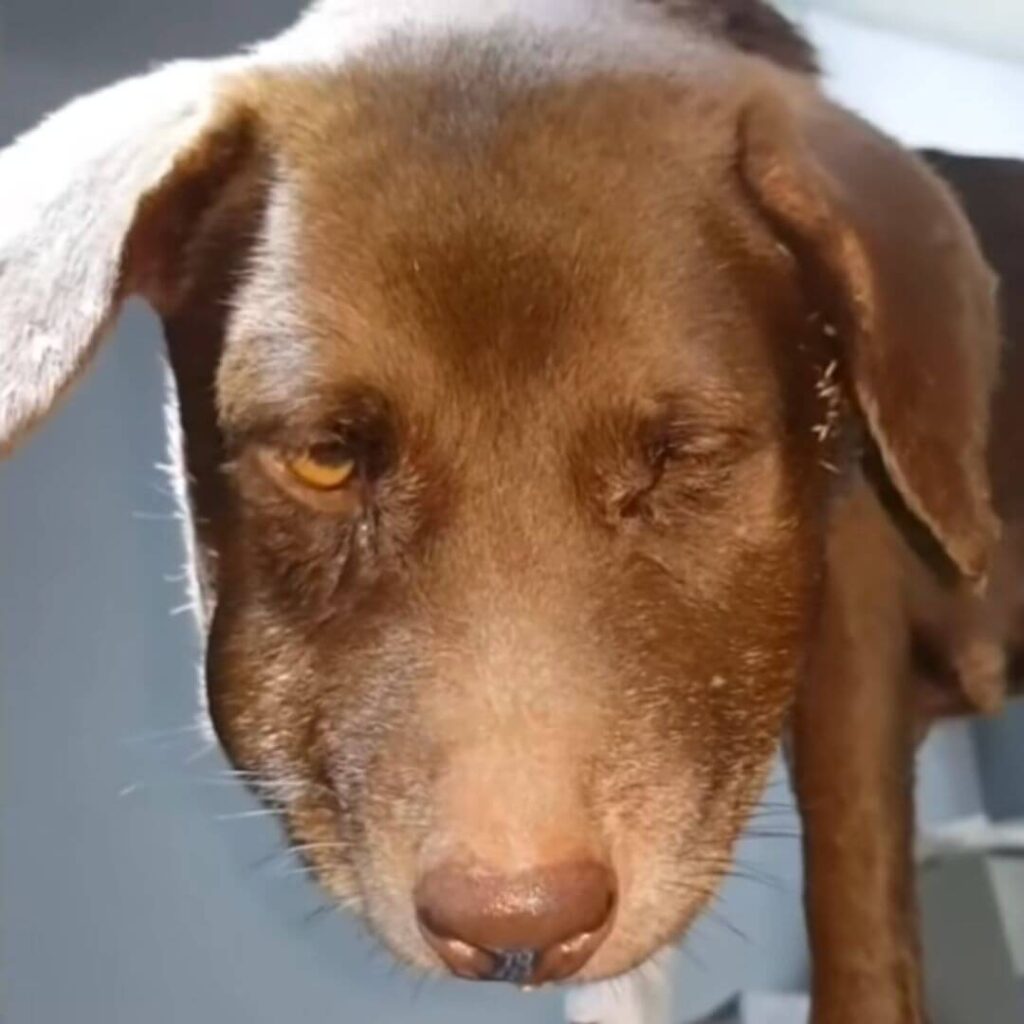
At first, rescuers believed Vida’s sadness came only from pain.
They were wrong.
During a medical exam, the veterinarian noticed something unexpected. Vida was still producing milk.
“She had recently given birth,” the rescuer said. “That’s when everything made sense.”
Her puppies were gone.
Authorities later confirmed that the owner had sold the puppies. The buyers had no knowledge of Vida’s condition.
“At least the puppies were placed in safe homes,” the rescue team said. “But knowing what she endured broke us.”
Vida was not just injured.
She was grieving.
Cases like Vida’s do not happen suddenly.
Animal welfare organizations warn that collars left unchecked can tighten as dogs grow, slowly restricting airflow and damaging skin and muscle.
Guidance from veterinary groups explains that a properly fitted flat collar should allow space for fingers to slide comfortably between the collar and the neck. When that space disappears, pressure can build slowly, restricting airflow and damaging skin and muscle.
Educational resources from groups like VCA Animal Hospitals, the RSPCA, and Humane World for Animals all stress the same point. Collar fit should be checked often, especially for growing dogs or dogs kept outdoors for long periods. Injuries caused by tight collars tend to worsen quietly, which makes them easy to miss until the damage is severe.
That is what makes neglect so dangerous.
Neglect does not always look dramatic. Sometimes, it looks silent.
As treatment continued, the swelling in Vida’s face eased. The infection cleared. Her breathing softened.
“She fought so hard,” the rescue team said. “She never gave up.”
Emotionally, healing took longer.
Vida froze in open spaces. Street sounds startled her. Every movement made her tense.
“She stayed alert all the time,” a rescuer said. “Like she was waiting for something bad to happen.”
Patience became part of her care. So did time.
Day 30: Out of Immediate Danger

By day thirty, the veterinarian confirmed that Vida was out of immediate danger. The wound had healed. The infection was gone.
“We cried,” the rescue team admitted. “Happy tears.”
For the first time, peace reached her eyes.
She began seeking comfort, wrapping her paws around her rescuer and pressing her face into them.
“When she hugs me,” one rescuer said, “it feels like I am her whole world.”
Three Months Later
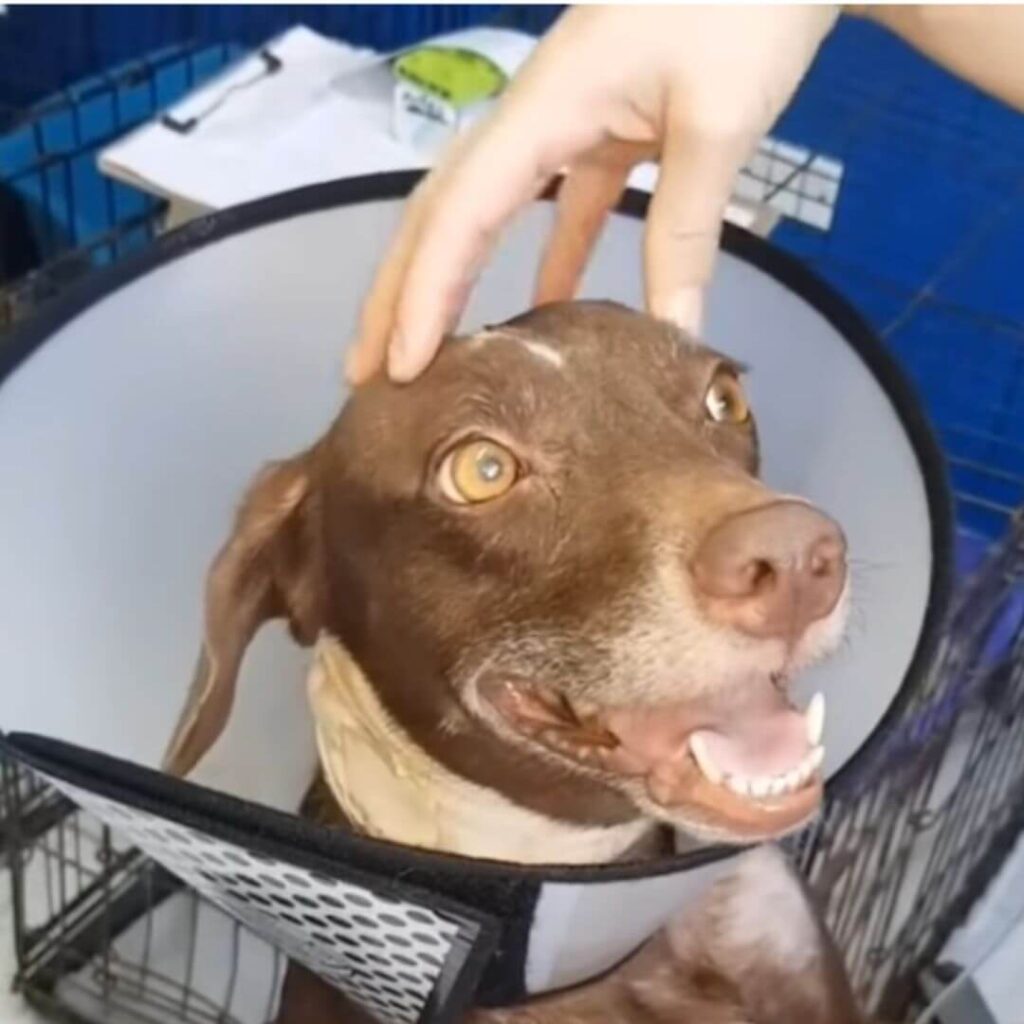
Three months later, Vida walked out of the clinic a different dog.
She slept on a warm bed.
She stepped outside without freezing.
She learned that hands could be gentle.
“The day she walked freely, I couldn’t stop crying,” her rescuer said. “She was finally ready.”
Ready for safety.
Ready for kindness.
Ready for the life she should have had all along.
Why Vida’s Story Matters
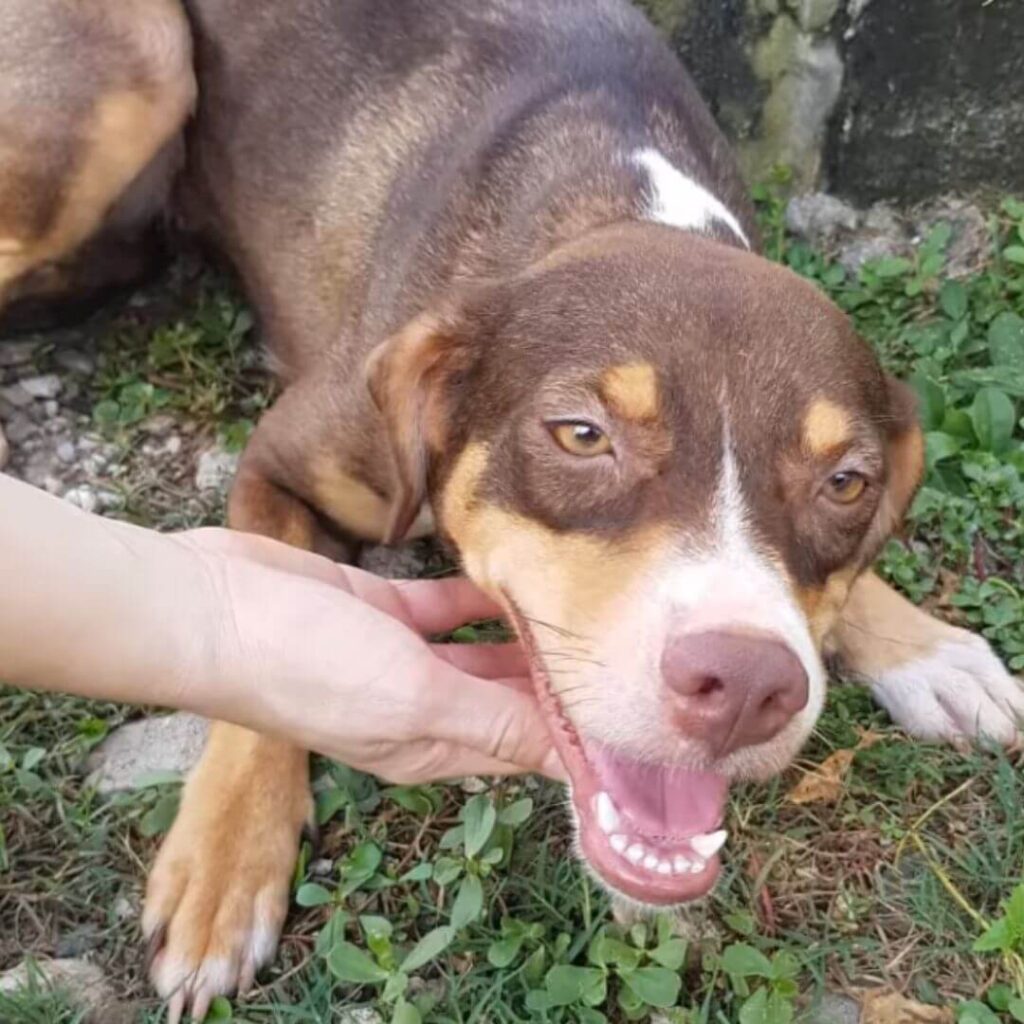
Vida survived because one person chose not to look away.
Stories like hers remind us that suffering is not always loud. Sometimes, it waits quietly until someone notices.
Please share her story. Someone out there may be ignoring a silent cry, and this might be the moment that changes everything.
Also check out these rescues:
Once Loved for His Looks, This Dog Was Left Behind When Illness Took Them Away
Rescuers Gave Him a 30% Chance to Live — Rico Proved Them Wrong


