
He Was Bred for Profit. Now He’s Finally Living for Joy
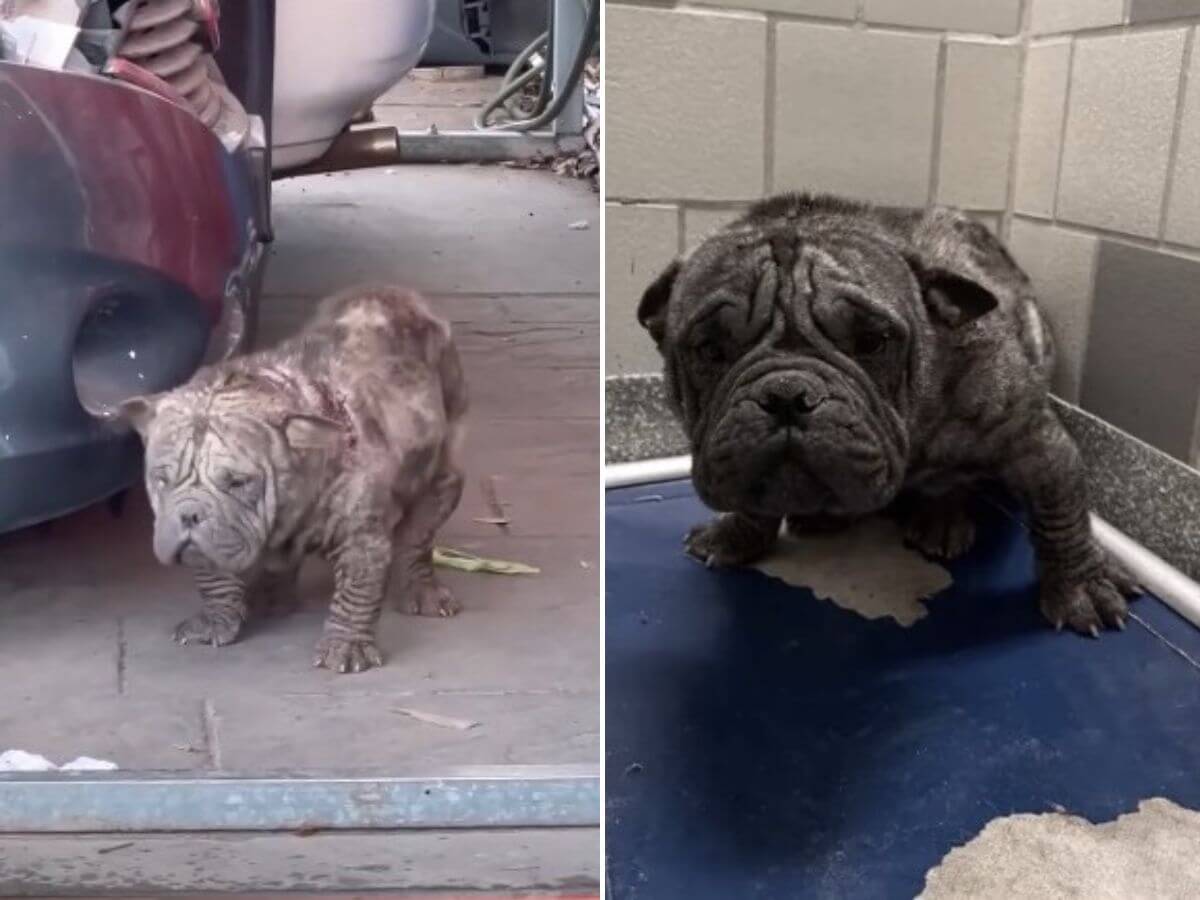
Zuul did not look like a young dog when he first arrived at the veterinary clinic.
He was only about four years old. Yet he moved carefully, like every step had to be negotiated with his own body. His legs bowed under his weight. His breathing carried effort. His skin looked irritated and tender, as if even standing required patience.
The staff expected fear. Or resistance. Or exhaustion.
What they saw instead was something far more complicated.
It was not loud or chaotic. It was quiet. Clinical. Heavy in a way that lingers.
He had been born into a backyard breeding operation where profit came first. He was purchased without preparation. He was later abandoned when the medical reality became inconvenient.
He never chose any of it.
But what happened next would challenge assumptions about damage, recovery, and how much a single dog can endure before he stops trying.
When Profit Comes Before Welfare
Dogs like Zuul often pay the price for irresponsible breeding practices.
According to the ASPCA, “To turn a profit, corners need to be cut, which means poor care for dogs in puppy mills.” That line explains a great deal without exaggeration.
When breeding prioritizes volume over health screening, dogs can inherit preventable medical issues. Heart conditions. Structural deformities. Skin disease. Airway problems.
Zuul carried several of those burdens at once.
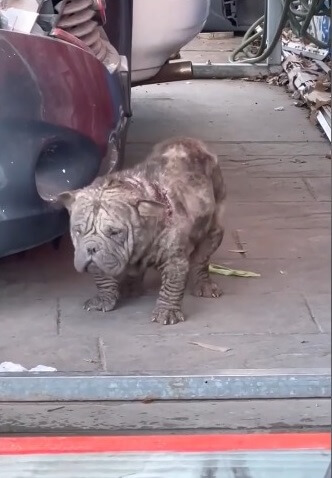
At only four years old, he had a grade 5 heart murmur. His legs struggled to support his frame. His skin showed signs of mange. His eyes required surgical correction. His nostrils were so narrow that breathing itself required effort.
He had been bred to look a certain way.
He was left to live with the consequences.
Gentle in the Midst of Pain
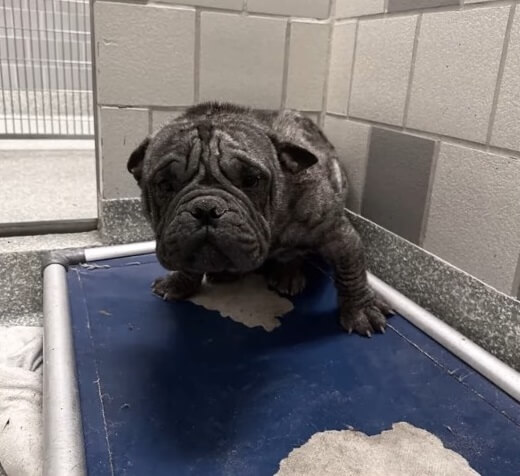
When Zuul first arrived at the vet, the team prepared for fear or defensive behavior. Pain can make animals reactive. Chronic discomfort can create tension.
Instead, he leaned in.
According to the rescuers, he was a “perfect gentleman.” No snapping. No lunging. No resistance.
He allowed exams. He tolerated touch. He met unfamiliar hands with quiet acceptance.
For a dog who had been let down repeatedly, that gentleness spoke volumes.
He had a constantly running nose. His eyes were inflamed. His skin was irritated and itchy. But he still sought connection.
The team at Caitie’s Foster Fam did not see a lost cause. They saw potential layered under neglect.
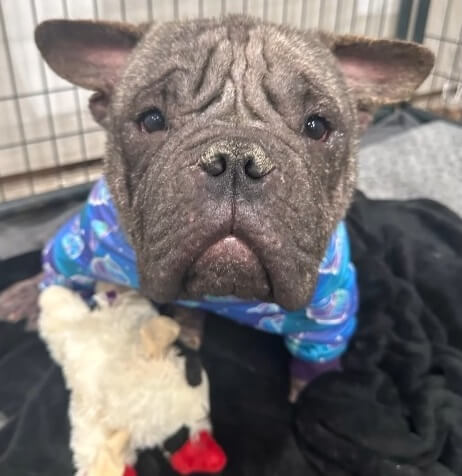
Medication began. Medicated baths followed. Soft pajamas protected fragile skin. Blankets were arranged around him to create warmth and stability.
Progress came in small increments.
Understanding the Medical Reality
A grade 5 heart murmur is not a vague diagnosis. It signals turbulent blood flow inside the heart.
As MedlinePlus explains, “A heart murmur is a blowing, whooshing, or rasping sound heard during a heartbeat. The sound is caused by turbulent (rough) blood flow through the heart valves or near the heart.”
For Zuul, that meant careful monitoring and long-term planning.
His skin condition required equal attention. Mange, which he was battling, is not uncommon in dogs from neglected environments.
The American Kennel Club explains, “Mange is a skin disease caused by mites on your dog.”
The treatment process is rarely glamorous. As the mites die off, hair falls out. Skin flakes. Dogs can look worse before they look better.
Zuul went through that stage.
Dead fur shed in patches. His body appeared even more fragile for a brief period. But beneath the shedding skin, healing was beginning.
If you have ever adopted a dog with medical needs, you know this phase. The stage where improvement feels invisible. The stage where patience feels like the only tool available.
This is where many people give up. The rescue team did not.
The Fight to Stabilize
By the third week, subtle changes began to show.
Zuul’s energy shifted. He attempted small, awkward hops. He followed other dogs with curious eyes. He leaned into affection instead of bracing against it.
The team scheduled necessary procedures. He was neutered. He underwent entropion repair to protect his eyes. He had stenotic nares correction to improve airflow.
These surgeries were not cosmetic. They were functional. They gave him the ability to breathe easier, see more comfortably, and exist without constant strain.
Recovery was not instant. But each week built on the last.
The dog who once needed to be carried because walking exhausted him began choosing movement.
When Healing Changes More Than the Body
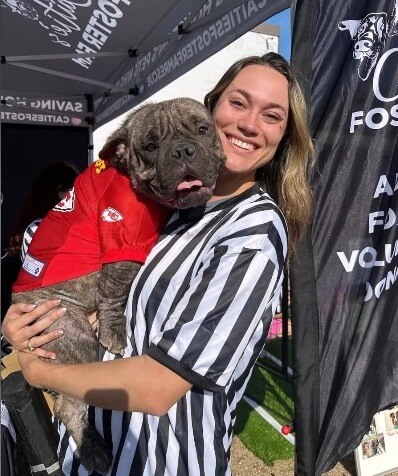
Physical recovery often reveals emotional recovery.
Zuul started stretching in the sun as if he trusted tomorrow would arrive. He discovered squeaky toys. He learned that blankets were not just for warmth but for comfort.
The rescuers later reflected that “Healing wasn’t just physical anymore. It was emotional.”
That distinction matters.
When a dog who once moved with hesitation begins running toward other dogs with playful energy, you are not just witnessing medical improvement. You are witnessing trust rebuild.
His fur grew thicker. His breathing steadied. His posture lifted. His eyes brightened.
The 50-pound dog who once staggered into the clinic now moved with intention.
What His Story Teaches
Zuul’s recovery is deeply personal. But it also carries a broader lesson.
Irresponsible breeding does not just produce puppies. It produces preventable suffering. It produces long-term medical costs. It places emotional strain on families unprepared for complex care.
If you are considering adding a dog to your home, research matters. Health screening matters. Ethical breeding practices matter. Rescue adoption matters.
Ask questions.
Request documentation.
Understand the breed’s common health conditions.
Compassion is powerful. Informed compassion protects both animals and families.
From Fragile to Free

Today, Zuul moves differently.
He stretches out comfortably. He engages in play. He approaches people without hesitation.
He is no longer defined by the conditions he inherited.
He is defined by the care he received.
He once staggered into a clinic, moving like an elderly dog at four years old.
Now he runs toward toys with ears perked and eyes bright.
That shift did not happen overnight. It happened through medication, surgery, patience, structure, and steady affection.
It happened because someone chose to intervene.
If Zuul’s journey stayed with you, share it.
Stories like his do more than inspire. They remind people to ask better questions, make informed choices, and support ethical care.
Some dogs are born into hardship.
With the right hands, they can still grow into joy.
You may also want to read:
Used, Abandoned, and Left Behind, Bodam Chose to Live and Love One More Time
She Begged at Her Owner’s Gate While 9 Weeks Pregnant. What Happened Next Changed Everything


