
Greta Was Found Tied to a Stake With No Food or Water. Months Later, She Was Running With Friends
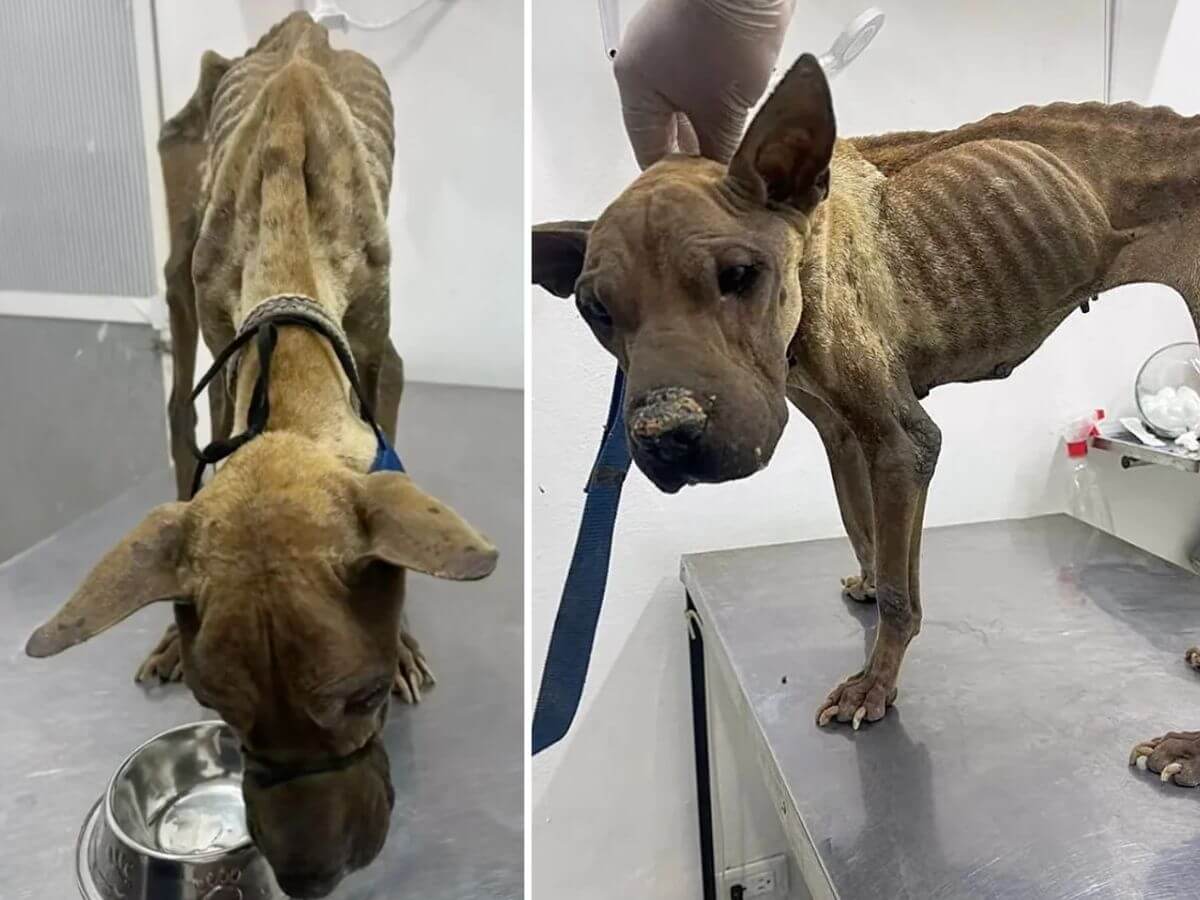
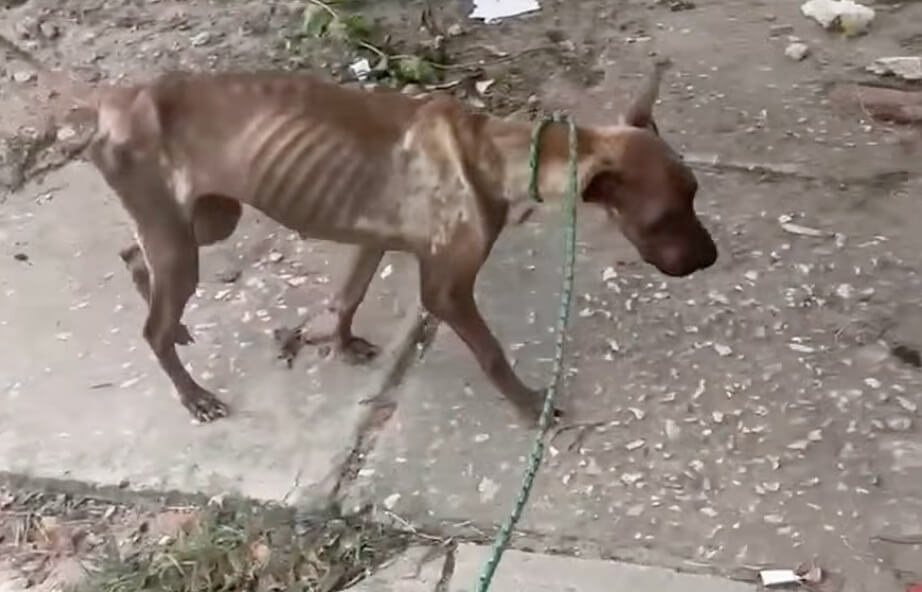
Greta was tied to a wooden stake on an isolated stretch of land along the Colombian coast. She had no food or water, and the rope kept her from leaving to find either.
When help reached her, she was weak, severely underweight and suffering from painful skin problems.
Getting her to a clinic was the beginning. Her recovery would take months, and there were times when her slow weight gain worried her caregiver. But long before her body had filled out, Greta began greeting people with a wagging tail and looking for other dogs to play with.
Someone Came to Take Her Away From the Stake
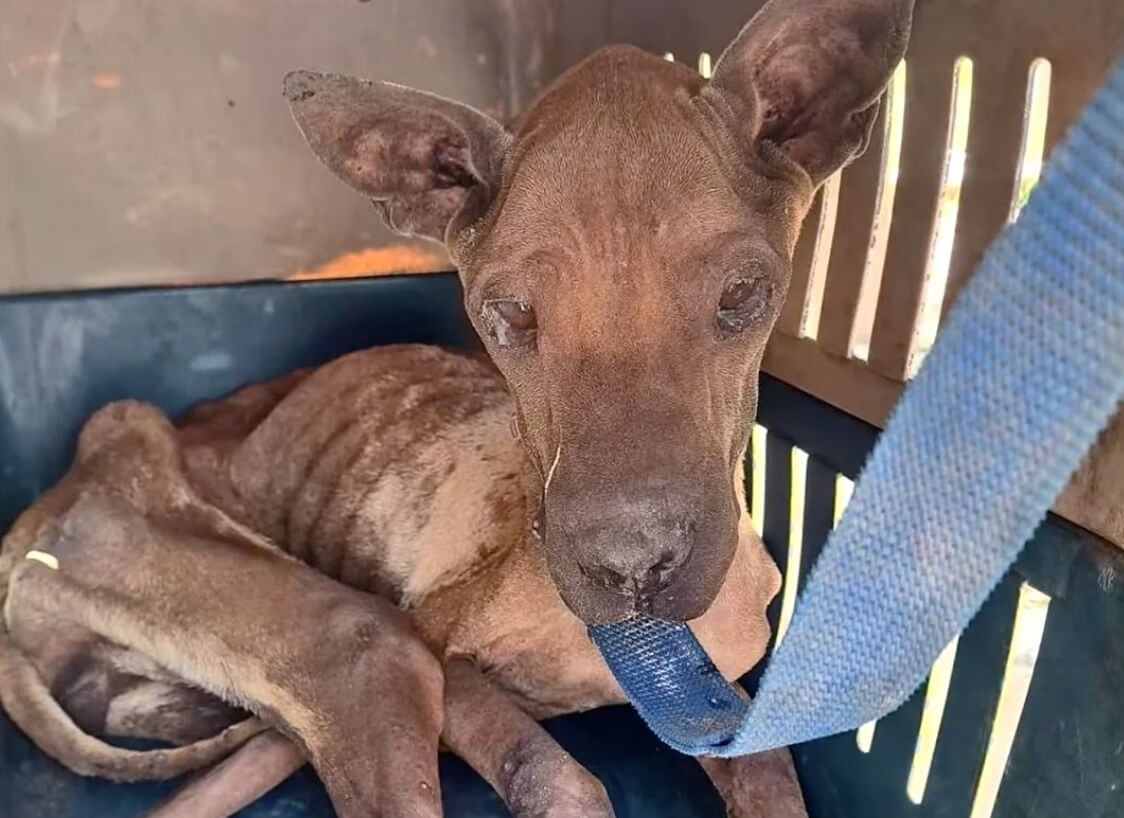
The rescue account is credited to Camino a Casa Colombia and shared in a video published by Dogs Are Family.
It describes Greta being found tied on deserted coastal land, exposed to the heat without food or water. The people who reached her could not establish how long she had been there.
What they could see was enough to know she needed help.
Greta was taken to a veterinary clinic, where the account describes her as malnourished, dehydrated and injured, with painful skin problems.
Her care needed to address more than hunger. She needed an examination, treatment and a feeding plan suited to her condition.
For people helping a severely underweight animal, veterinary guidance matters from the start. The number on a scale can reflect more than the return of body tissue.
ASPCApro notes, “Keep in mind that these dogs are frequently dehydrated, and part of their initial weight gain may be due to rehydration.”
Ask your veterinarian how to feed and monitor an emaciated dog. Offering more food without a plan is not a substitute for assessing what the animal’s body can safely manage.
For Greta, leaving the stake meant she finally had people attending to those needs.
Greta Began Greeting the People Caring for Her
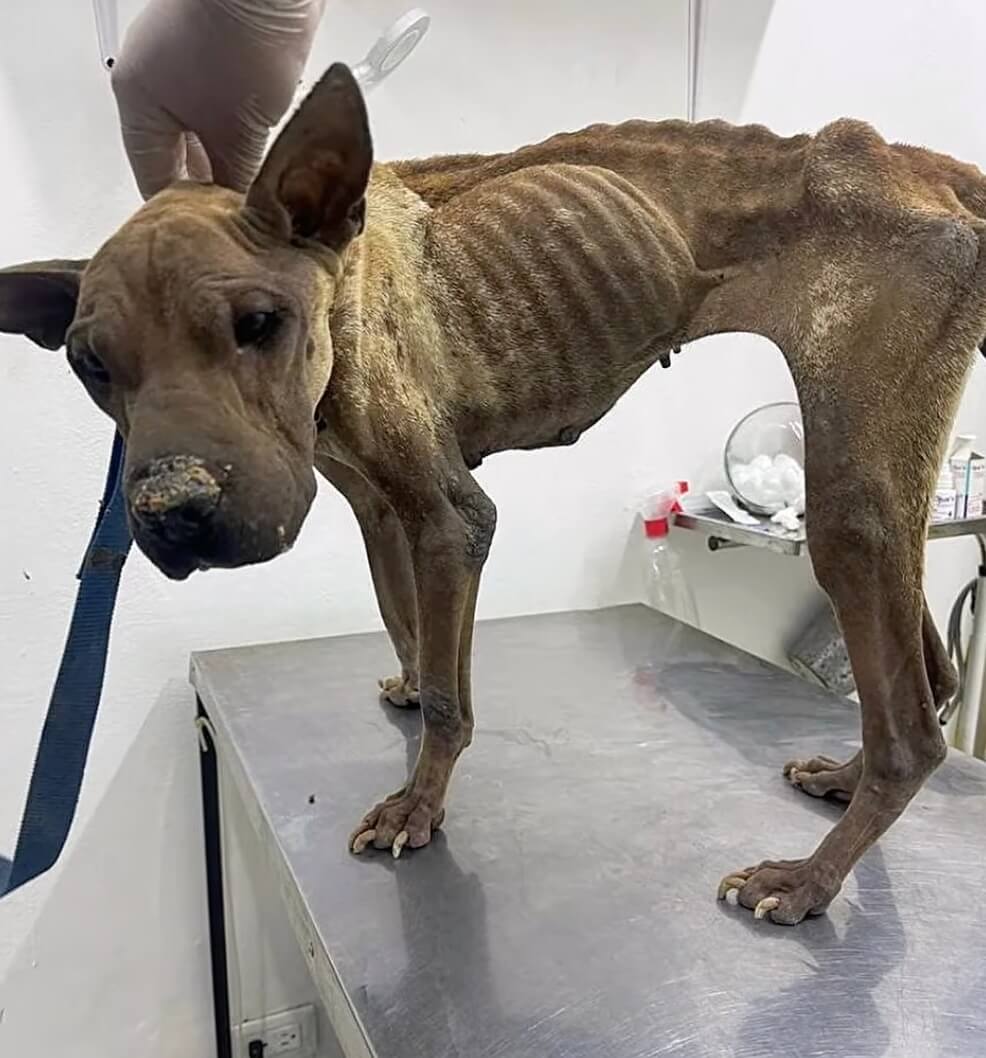
As the days passed, Greta became more comfortable around her caregivers.
The account describes her growing stronger and beginning to play. She greeted people, followed them around and wagged her tail when they came near.
Those responses gave her caregivers something to look forward to each day.
The dog they had found alone was now seeking company. She wanted to be close to the people looking after her.
Her changing behavior was encouraging, but her physical recovery was still underway. Greta remained very thin.
Food, treatment and attention had become part of her routine. Each needed to continue even as she became more active and affectionate.
Her Weight Took Longer to Return
Greta’s caregiver watched for changes while continuing her daily care.
Meals had to be planned, treatments kept up and her condition monitored. There was no quick way to undo everything her body had been through.
At one point, while bathing her, the caregiver described worrying that she wasn’t gaining weight as quickly as hoped.
That concern sat alongside the good moments. Greta could be playful, eager for company and still need help rebuilding her body.
The American Animal Hospital Association explains, “Underweight patients often have loss of both body fat and muscle mass, yet BCS and MCS should still be scored separately.”
BCS means body condition score, while MCS means muscle condition score. These assessments help a veterinary team look at fat and muscle separately when following a pet’s progress.
If you are caring for an underweight dog, keep the recommended checkups even when energy and appetite improve. Tell your veterinarian about changes in eating, activity and weight so the care plan can be reviewed.
Greta’s caregiver continued noticing the small things while waiting for more visible changes. She greeted people each morning. She played. She took an interest in the life around her.
She Found Other Dogs to Play With
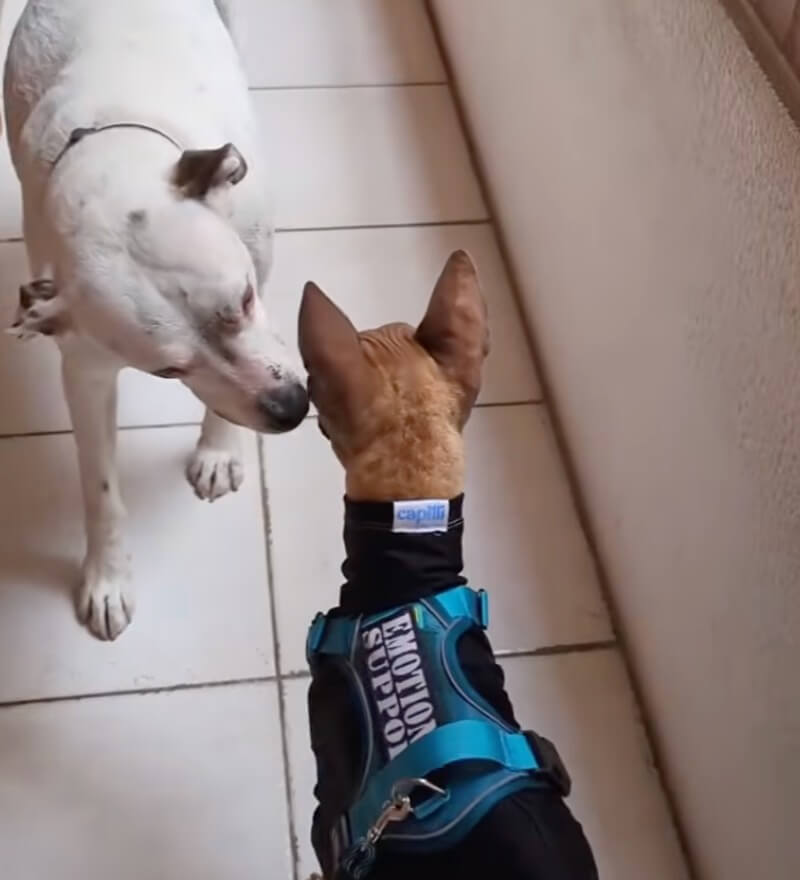
In the place where she was now living, Greta began spending time with other dogs.
The rescue account describes her fitting in, making friends and playing beside them. After being found alone at the stake, she now had daily company.
She ran and wagged her tail. Her caregivers could watch her join in rather than remain on her own.
Those moments brought relief during a recovery that still required patience. Greta was enjoying her days while her weight and skin continued improving.
Her painful skin problems remained another part of her care.
PDSA explains, “Skin problems can be very irritating and painful and can be caused by many different things.”
For people noticing sore skin, hair loss or persistent scratching in their own dog, a veterinary examination can help establish the cause. Don’t assume that a bath or a change of shampoo will address it.
Greta’s account does not name her skin diagnosis or medications. It does describe continued treatment and, later, the disappearance of the skin problems that had troubled her.
Her Caregiver Kept Looking for the Small Victories
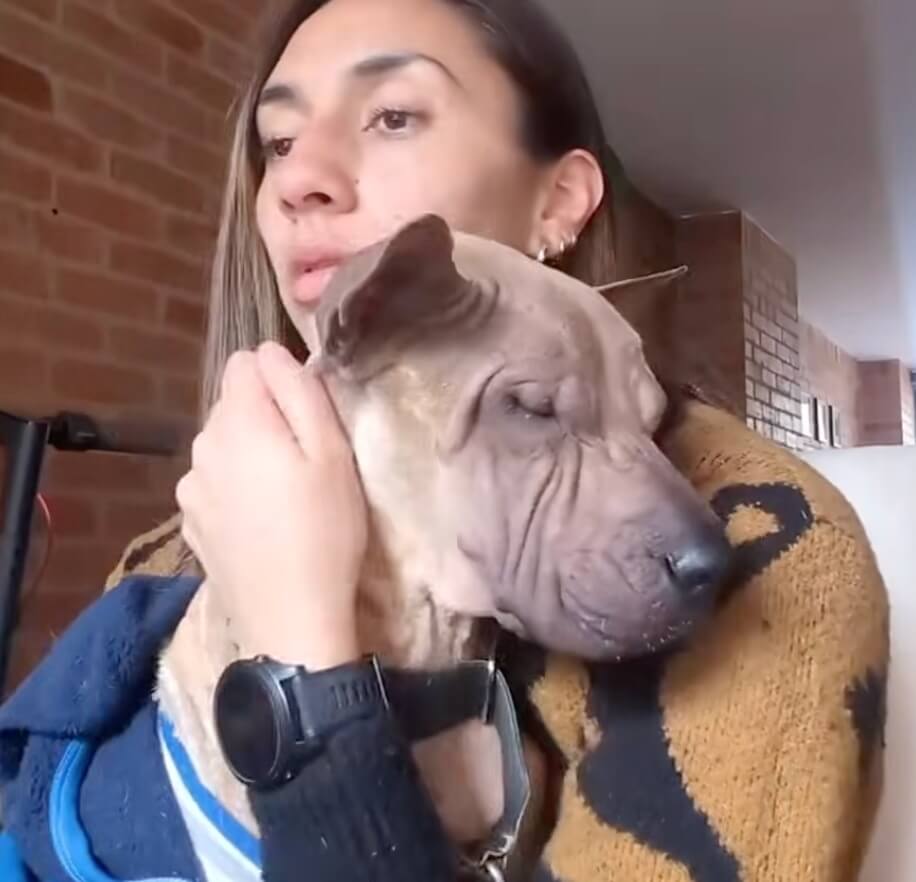
During the slower part of Greta’s recovery, her caregiver chose to notice more than her appearance.
She had energy. She greeted people with a wagging tail. She enjoyed playing with the other dogs.
The worry about her weight had not disappeared, but neither had those daily signs of progress.
Greta had someone watching how she ate, how she moved and how she felt. When progress seemed slow, her care continued.
Over the months that followed, the physical changes became easier to see.
Her body filled out. Her coat looked healthier. The account reported that her painful skin problems had cleared.
She was still running and playing, now with a stronger body to support her.
The Rope Was No Longer Part of Her Days
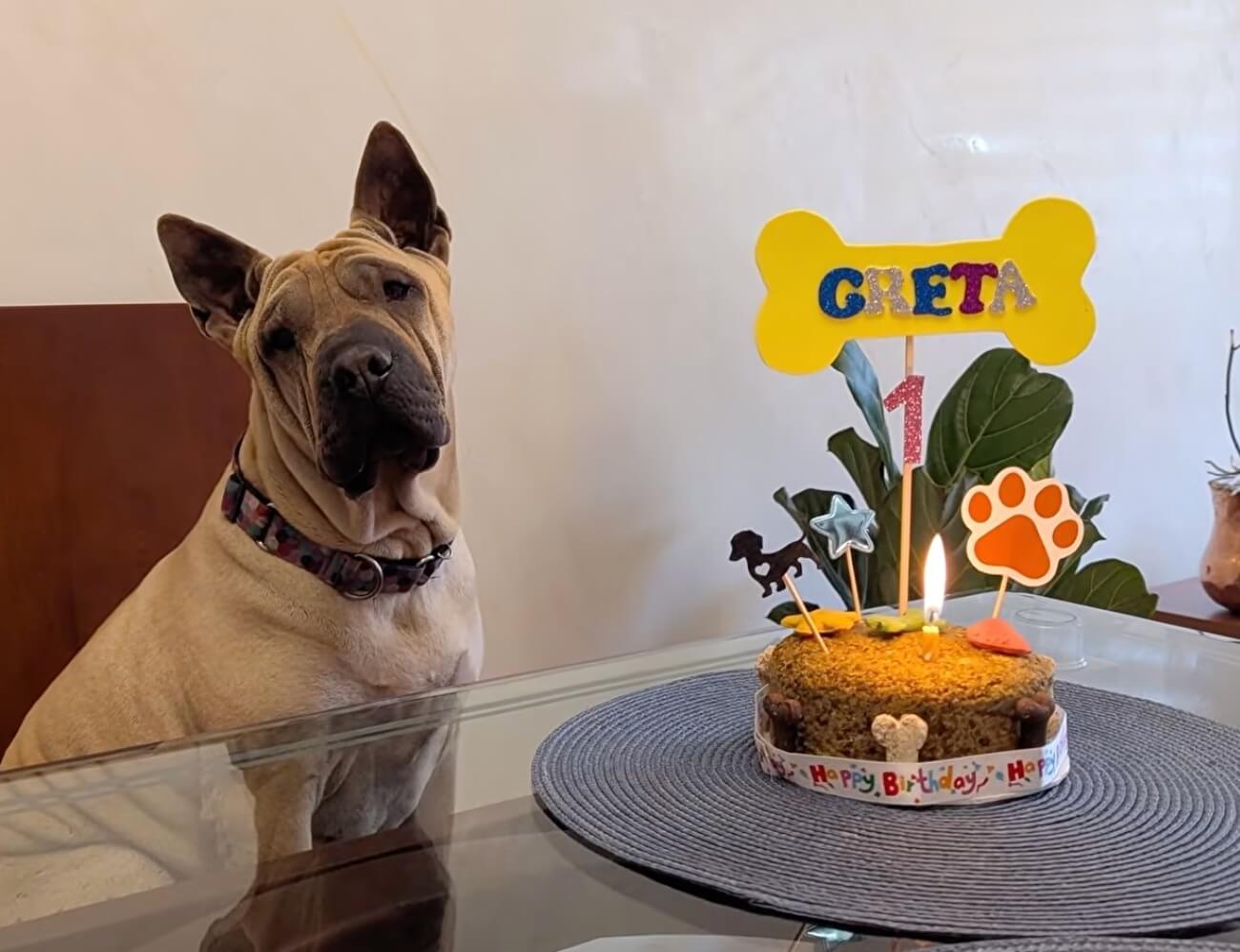
By the end of the account, Greta looked very different from the dog found beside the wooden stake.
Her recovery had taken months of meals, treatment and patient attention. Her caregivers had stayed through the uncertainty, including the days when she remained thin despite seeming happier and more energetic.
The later updates describe her with a healthy coat, more strength and canine friends beside her.
Greta’s story closes with her enjoying that life. It does not identify a separate adoption or give a final weight.
What it does show through the rescue account is a dog whose days had changed. She could move freely, seek affection and play with other dogs while people continued looking after her.
If Greta’s story touched you, consider sharing it to acknowledge the people who answer rescue calls and stay involved through the slower months of recovery.
Also read:
Manguita Couldn’t See or Walk. The Man Who Rescued Her Promised to Love Her Anyway


