
Chained for Years, Now Free: Maximus’ Emotional Recovery Story
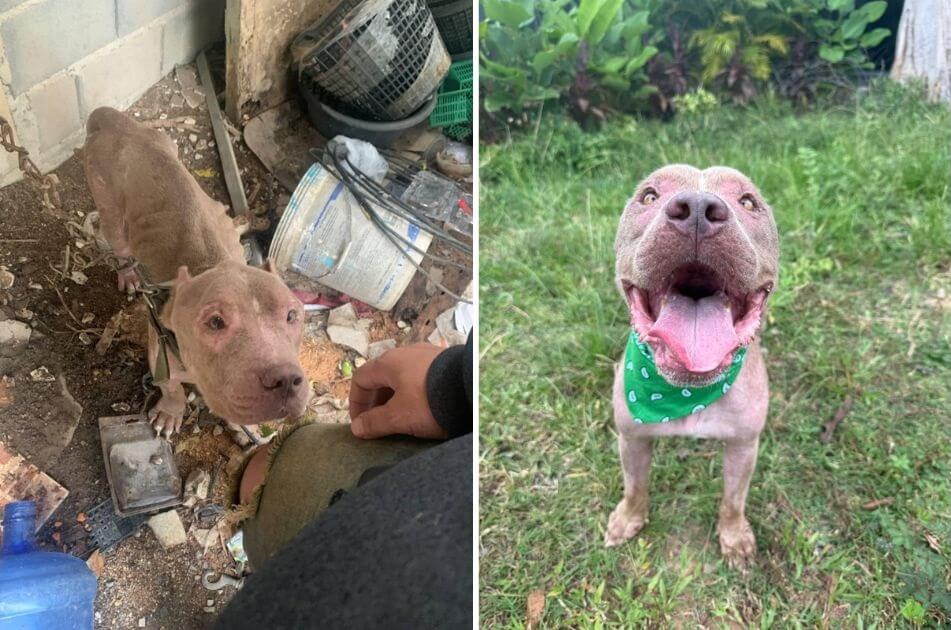
When rescuers first learned about Maximus, they braced themselves for the kind of scene that stays with a person long after the rescue ends.
Witnesses described a dog tethered to a short chain, thin enough for his ribs to show and quiet enough that workers wondered how long he had been enduring it.
Before anyone stepped in, Maximus had stopped expecting anything good from people. His world had become a patch of hardened dirt, a collar too tight for comfort, and the sound of his own breathing to remind him he was still alive.
That changed the day a rescue team arrived.
Maximus’ rescue was first shared by rescuer Niall Harbison, who provided photos and updates from her recovery
Life on a Chain: What Long-Term Tethering Does to a Dog

Veterinary experts have warned for years that long-term tethering harms a dog’s physical and mental health.
A welfare review from Purdue explains that extended tethering can lead to stress behaviors, weakened muscles, and poor social development in dogs due to lack of movement and stimulation.
The Vermont Veterinary Medical Association also describes continuous chaining as “inhumane,” citing risks like injuries, fear, and behavioral instability.
More detailed research into tethering conditions in Slovakia found that dogs kept on restrictive chains often develop frustration, chronic stress, and physical discomfort.
Maximus’ condition reflected those findings: stiff joints, weakened muscles, and the flat, disconnected gaze seen in dogs who have gone too long without comfort.
The Rescue: A Dog’s First Steps Into Freedom
When the collar finally came loose, Maximus didn’t bolt. He didn’t bark. He simply stood still.
I’ll never forget that first step. In his eyes, it wasn’t just the weight of the chain falling away — it was the weight of years of fear. For the first time he seemed to wonder if kindness might be real. – Niall Harbison
He took one step. Then another.
His first walk across the grass was slow and unsteady. Behavioral researchers explain that dogs emerging from severe stress often move with hesitation because their nervous systems remain on alert even after the threat is gone.
Moments later, Maximus began sniffing the ground with gentle curiosity. His tail lifted. His head rose. He moved like a dog discovering the outdoors for the first time.
The First 48 Hours: Medical Care and Safety After Neglect
Dogs freed from long-term tethering usually need immediate medical checks.
Maximus began receiving small, nutrient-rich meals to rebuild strength without overwhelming his digestion.
Trauma research on abused dogs shows that many animals display heightened fear, avoidance behaviors, and anxiety after mistreatment — signs that matched Maximus’ early days.
Over time, food, rest, and safety worked together to soften his posture and calm his breathing. His naps grew longer. His vigilance faded.

Healing the Spirit: Why Abused Dogs Cry or Show Emotional Release
When dogs appear to “cry” or release emotion after trauma, science suggests there may be more happening beneath the surface.
A 2022 study in Current Biology found that dogs produced more tears when reunited with owners, linked to the hormone oxytocin.
Coverage in The Guardian highlighted that these tear changes may strengthen social bonds, offering a window into the emotional depth dogs can experience.
Those findings help explain the soft whines and trembling Maximus showed during early care — behaviors experts say can appear when a dog begins to feel safe after long fear.
Behavioral Breakthroughs: Signs That a Traumatized Dog Is Recovering
Progress in fearful dogs often comes through consistent routines, gentle handling, and time.
A study shows that structured rehabilitation programs helped many traumatized dogs regain stability and thrive in long-term homes.
A separate study examined how harsh early experiences can lead to lasting fear responses, but also showed that supportive environments help dogs rebuild trust and social bonds.
For Maximus, the breakthroughs arrived in small, meaningful moments:
A slow wag.
A relaxed sleep.
The first time he approached a caretaker instead of waiting for them to come closer.
These moments indicated that the wall between survival and living had finally begun to fall.
The Bigger Picture: How Widespread Neglect and Abandonment Really Are
Maximus’ story mirrors a global challenge affecting millions of animals.
Reports say that the world may have nearly 200 million stray dogs, based on World Health Organization estimates.
The World Organisation for Animal Health outlines the urgent need for humane population management and better welfare standards to protect both stray and owned dogs.
World Animal Protection emphasizes that poor access to veterinary care, weak enforcement, and poverty all contribute to widespread neglect and abandonment.
These numbers show how many animals are still waiting for someone to intervene the way rescuers did for Maximus.
Why Cases Like Maximus Still Happen
There are several reasons why dogs remain chained or neglected across the world.
– Economic hardship.
– Limited awareness of welfare laws.
– Cultural norms in rural or underserved communities.
– Low access to spay and neuter services.
A report from APNM outlines that persistent tethering not only affects welfare but may increase aggression and create public safety concerns.
Maximus’ case reflects those underlying issues — neglect doesn’t appear randomly, but in areas where resources, awareness, or support are stretched thin.
What You Can Do: Safe, Evidence-Backed Ways to Help a Dog in Distress
Several reputable groups offer guidance for anyone who wants to help:
- Report suspected cruelty directly to local animal control or law enforcement.
- Veterinary organizations provide tools to help professionals identify and report signs of neglect.
- Pets for Patriots lists the most common indicators of cruelty — from poor body condition to lack of shelter or chronic fear.
Recognizing the signs can save a dog long before conditions reach the severity Maximus endured.
Maximus Today: A Life Rewritten
Months after his rescue, Maximus now explores open fields with confidence.
He enjoys soft ground beneath his paws, steady meals, and the quiet peace that comes when fear finally fades. His caretakers say he greets each morning with curiosity instead of caution.
Stories like his serve as reminders that cruelty can exist anywhere — but hope arrives the moment someone chooses not to look away.
Maximus isn’t just safe now.
He’s free.
His freedom is a reminder that change begins with awareness — and awareness begins with us.
If Maximus’ story moved you, consider sharing it to help more senior strays get seen.
You can also read these rescues:
Rio, the dog who was left to die in a sewer
A Puppy Covered in Tumors at Just 1.5 Years Old — His Fight to Live Stunned Rescuers


